To save content items to your account,
please confirm that you agree to abide by our usage policies.
If this is the first time you use this feature, you will be asked to authorise Cambridge Core to connect with your account.
Find out more about saving content to .
To save content items to your Kindle, first ensure no-reply@cambridge.org
is added to your Approved Personal Document E-mail List under your Personal Document Settings
on the Manage Your Content and Devices page of your Amazon account. Then enter the ‘name’ part
of your Kindle email address below.
Find out more about saving to your Kindle.
Note you can select to save to either the @free.kindle.com or @kindle.com variations.
‘@free.kindle.com’ emails are free but can only be saved to your device when it is connected to wi-fi.
‘@kindle.com’ emails can be delivered even when you are not connected to wi-fi, but note that service fees apply.
The design of π-conjugated molecules and polymers has driven the increase in efficiency of bulk heterojunction organic photovoltaic devices from <1% to over 12%. The pathways to generation of free charge carriers are still being uncovered. By focusing on blends of conjugated polymers with fullerenes, recent work has highlighted the impact of the design of donor–acceptor polymers on optoelectronic properties and phase-separated morphologies. This morphology of the active layer is largely controlled by processing conditions, such as use of processing additives. Developing a deep understanding of the impact of polymer chemistry and processing at the laboratory scale is key to translating the technology of organic photovoltaics from the research scale to large-area modules.
The crystal structure of levalbuterol hydrochloride polymorph A has been solved and refined using synchrotron X-ray powder diffraction data, and optimized using density functional techniques. Levalbuterol hydrochloride polymorph A crystallizes in space group P21 (#4) with a = 8.499 352(15), b = 6.511 726(13), c = 13.182 256(25) Å, β = 102.1157(2)°, V = 713.327(2) Å3, and Z = 2. The most prominent feature of the structure is the two different sorts of hydrogen bonds. Both of the ammonium hydrogens and O17–H40 act as donors to Cl18. The graph sets are C1,2(4) and C1,2(7). The result is a zig-zag chain parallel to the b-axis. The two hydroxy groups at the phenyl end of the molecule form another set of chains, both with graph set C1,1(6), also resulting in a chain parallel to the b-axis. The bulk of the molecule connects these chains in the (101) plane to form a three-dimensional network. The powder pattern is included in the Powder Diffraction File™ as entry 00-064-1494.
The growth kinetics of gold nanoparticles (NPs) during the reduction of HAuBr4 by hydrazine in the reverse micelles of oxyethylated surfactant Tergitol NP 4 was studied in situ by UV–vis spectroscopy. Kinetic mechanism includes the steps of slow, continuous nucleation and fast, autocatalytic surface growth. Both steps are under kinetic control of the precursor reduction. The rate of nucleation is limited by reaction in the droplets of the aqueous phase forming the cores of reverse micelles, and growth rate is limited by the reaction on the surface of gold NPs growing inside the micelles. The chemical mechanism of reduction of halogenated forms of gold AuX4– by hydrazine is the same in the case of X = Cl, Br and includes the equilibria of formation and redox decomposition of the intermediate complexes AuIII(N2H4)X3 and AuI(N2H4)X. The initial form of AuX4– (X = Cl, Br) does not affect the size of the final NPs synthesized in micellar solution of oxyethylated surfactant.
The emergence of methyl-ammonium lead halide (MAPbX3) perovskites motivates the identification of unique properties giving rise to exceptional bulk transport properties, and identifying future materials with similar properties. Here, we propose that this “defect tolerance” emerges from fundamental electronic-structure properties, including the orbital character of the conduction and valence band extrema, the charge-carrier effective masses, and the static dielectric constant. We use MaterialsProject.org searches and detailed electronic-structure calculations to demonstrate these properties in other materials than MAPbX3. This framework of materials discovery may be applied more broadly, to accelerate discovery of new semiconductors based on emerging understanding of recent successes.
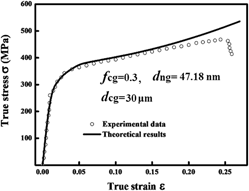
A new theoretical model is proposed to describe the mechanical properties of bimodal nanocrystalline (BNC) materials. This composite model is comprised of coarse grains evenly distributed in the nanocrystalline (NC) matrix. In this study, we have studied the effect of grain size distribution on the constitutive behavior of BNC materials. During the plastic deformation, effects of nanocracks and dislocation emission from crack tips on the constitutive behavior of BNC materials are also analyzed. Numerical calculations have been carried out according to the model, and it is found that the nanocracks make a positive effect on the strain hardening, and the results show that this model can describe the enhanced strength and strain hardening of BNC materials successfully. The prediction of the bimodal Cu–Ag material is in good agreement with the experimental results.
Electronically active block polymers based on π-conjugated macromolecules have been investigated for applications where nanostructured electrodes are of prime import; however, controlling the nanoscale order of these materials has proven challenging. Here, we demonstrate that diblock copolymers that utilize a non-conjugated radical polymer moiety as the electronically active block assemble into ordered thin-film nanostructures. Specifically, the diblock copolymer polydimethylsiloxane-b-poly(2,2,6,6-tetramethylpiperidinyloxy methacrylate) (PDMS–PTMA) was synthesized via atom transfer radical polymerization to generate polymers with readily controlled molecular properties. Importantly, solvent annealing of the PDMS–PTMA thin films led to well-defined nanostructures with domain spacings of the order of ~30–40 nm.
Depolymerizable polymers are stimuli-responsive materials triggered to depolymerize rapidly and completely into their constituent monomers on command. Applications include triggerable vehicles for controlled release, restructurable materials, disappearing or sacrificial composites, and lithographic resists. Owing to their widespread utility, significant efforts have aimed to prepare and explore depolymerizable polymers and their corresponding triggers. This “Prospective” highlights advances since their discovery over a half-century ago, discusses methods in their preparation, and presents recent developments in triggered depolymerization. It also surveys applications that harness these polymers’ unique properties, while offering insights into research directions that may contribute to progress in this dynamic field.
X-ray powder diffraction data, unit cell parameters, and space group for a new organometallic compound, lanthanum trilactate trihydrate, LaC9H21O12, are reported [a = 9.986(1) Å, b = 9.158(1) Å, c = 11.200(1) Å, α = 115.08(1), β = 117.41(1), γ = 88.61(1), unit cell volume V = 804.70 Å3, Z = 2 and space group P1]. All measured lines were indexed. No detectable impurity was observed.
The crystal structure of rilpivirine has been solved and refined using synchrotron X-ray powder diffraction data, and optimized using density functional techniques. Rilpivirine crystallizes in space group P21/c (#14) with a = 8.39049(3), b = 13.89687(4), c = 16.03960(6) Å, β = 90.9344(3)°, V = 1869.995(11) Å3, and Z = 4. The most prominent features of the structure are N–H···N hydrogen bonds. These form a R2,2(8) pattern which, along with C1,1(12) and longer chains, yield a three-dimensional hydrogen bond network. The powder pattern has been submitted to International Centre for Diffraction Data, ICDD, for inclusion in future releases of the Powder Diffraction File™.
A model with which to predict the effect of coplanar electrode geometry on diffraction uniformity in photorefractive polymer display devices was developed. Assumptions made in the standard use cases are no longer valid in the regions of extreme electric fields present in this type of device. Using electric-field induced second-harmonic generation through multiphoton microscopy, the physical response in regions of internal electric fields which fall outside the standard regimes of validity were probed. Adjustments to the standard model were made and the results of the new model corroborated through holographic four-wave mixing measurements.
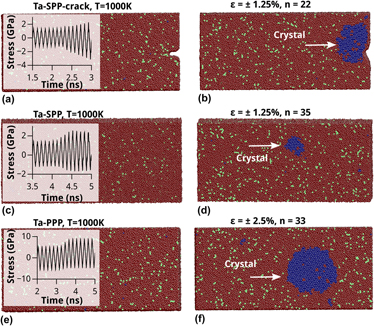
While conventional metallic glass (MG) is usually an alloy that contains at least two types of different elements, monatomic metallic glass (MMG) in body-centered cubic metals has recently been vitrified experimentally through ultrafast quenching. In this research, MMG in Ta was vitrified by molecular dynamics simulations and used as a model system to explore the atomistic mechanism of hardening in MG under cyclic loading well below the yield point. It was found that significant structural ordering was caused during the elastic cycling without accumulating apparent plastic strain, which ultimately led to the crystallization of MG that has been long conjectured but rarely directly proved before. It was also revealed that tensile stresses were more likely to induce structural ordering and crystallization in MG than compressive stresses.
In our day to day life we come across several instances in which one form of energy is converted into the other form. When you rub your hands they become hot; similarly, if a metal is hammered, it becomes hot. In both the above examples, mechanical energy is converted into heat energy. On the other hand, you are well aware that when water is heated steam is generated that is used to move turbines for the generation of electricity. Here heat energy produces mechanical work. There can be numerous examples of the conversion of one form of energy into another. The science that deals with the interconversion of heat to work or any other form of energy is termed as thermodynamics. The term is self-indicative of what is happening – ‘thermo’ from temperature, which means energy and ‘dynamics’ pertains to motion or work. Chemical thermodynamics is that portion of thermodynamics that deals with the study of the processes in which chemical energy is involved.
The principles of interconversion of energy in various forms are summarized in the three basic laws of thermodynamics. The first law is a statement of the law of conservation of energy, i.e., energy cannot be created or destroyed, it can merely be converted from one form to another. The second law of thermodynamics explains the occurrence of various reactions spontaneously. It introduces the concept of ‘entropy’ or ‘disorder’ or ‘randomness’ to predict the spontaneous occurrence of chemical reactions. The third law of thermodynamics relates, among other things, to the experimental approach to absolute zero.
Thermodynamics is a powerful tool for chemists. It studies the relationship between the effects of temperature on physical systems at the macroscopic scale. It helps in predicting whether a reaction will occur or not. It also helps to predict the direction in which a chemical reaction will occur.
However, thermodynamics does not show how fast a reaction will proceed. Let us now deal with the fundamental concept of thermodynamics
Terminology of Thermodynamics
It is necessary to define certain terms and expressions commonly used in thermodynamics.
System and surroundings
System A thermodynamic system may be defined as that portion of the universe which is under observation or study.
Surroundings It is that portion of the universe that is not a part of the system.
Solids are substances that have a definite shape and volume. They are highly incompressible and rigid and have high mechanical strength. The atoms, molecules and ions constituting the solid are closely packed and held together by strong intermolecular forces. The constituent particles occupy fixed positions in the solid and cannot move about freely. They can only oscillate about their mean positions. A true solid is characterized by a sharp melting point, a characteristic heat of fusion, incompressibility and a definite three-dimensional arrangement.
Types of Solids
Solids are of two types—crystalline and amorphous.
Crystalline solids
In crystalline solids, the atoms, molecules or ions constituting the solid are arranged in a regular manner to form a characteristic three-dimensional pattern. The regular arrangement of atoms is repeated several times throughout the molecule. Crystalline solids have long-range order and the arrangement of particles is so regular that if the arrangement of one area is known, the arrangement of particles in the entire crystal can be predicted. Moreover, a crystalline solid has the same geometry irrespective of the source from which it is obtained. Some examples of crystalline solids are NaCl, KCl, etc.
Amorphous solids
Amorphous (from the Greek word, amorphos meaning no form) solids have no regular arrangement of their atoms or molecules. In other words, they are characterized by a random arrangement of particles. They lack long-range order and can be regarded as supercooled liquids having structural units with a short-range order.
However, unlike liquids they have rigidity due to their enhanced viscosities and their constituent particles occupy fixed positions. Amorphous solids do not have sharp melting points—they melt over a range of temperature. Common examples of amorphous solids are glass, rubbers, plastics etc.
The introduction of ‘nano’ car by TATA motors has greatly popularized the term ‘nano’ among the Indian masses. The word nano signifying very small objects of the range of 1–100 nm has gained importance in the last two decades. Nano literally means dwarf (10–9) and can be used as a prefix to the fundamental properties such as mass, time and length to give important scientific properties such as:
nanogram 10–9 g
nanosecond 10–9 s
nanometer 10–9 m.
The science of small objects has grown rapidly in the past two decades as the behavior of matter at ‘nano’ level is considerably different from the bulk behavior of the matter. The physical, chemical, electrical, optical and magnetic properties of nanomaterials are significantly different from the properties of the same material of bigger size. For example, a metal with a grain size of 10 nm is seven times harder and tougher than its counterpart with the size of hundreds of nanometers.
Moreover, the nanomaterials have a relatively larger surface area than ordinary materials and this has a significant effect on their physical properties and chemical reactivities. It has been observed that certain substances that are ordinarily unreactive become reactive in their nanoscale form because of their high surface area. The quantum effects of matter at bulk level and nano level varies significantly. (The specific surface area increases three times when the dimensions decrease from μm to nm).
Nanoscience and Nanochemistry It is the science of nanoparticles or the particles whose size varies from 1 to 10 nm in at least one dimension. Nanochemistry exploits this size range for various chemical reactions and chemical purposes, which would not be possible otherwise at the bulk level. Nanotechnology utilizes the behavior of particles at the ‘nano’ level in various production processes.
How much is a nanometer?
One nanometer is equivalent to one billionth (one thousand millionth) of a meter. These particles are not visible to the human eye and can be seen only under a powerful microscope. The size of various objects can help to have a visual perception of a nano-sized objects.
The phase rule was given by Gibbs and explains the equilibrium existing in heterogeneous systems. It states that the equilibrium between different phases is influenced by temperature, pressure and concentration only and not by gravity, electrical or magnetic forces. The number of degrees of freedom (F), which will be explained later, is related to the number of components (C) and phases (P) by the following phase rule equation.
F = C − P + 2
Explanation of Terms
Phase A phase is a homogenous, physically distinct and mechanically separable portion of a system which is separated from other parts of the system by a definite boundary.
Examples
1. A gaseous mixture, being thoroughly miscible in all proportions constitutes one phase only.
2. If two liquids are immiscible (for example, oil and water), they will constitute two separate phases.
3. Two miscible liquids (for example, water and alcohol) constitute one phase only.
4. A solute completely dissolved in a solvent constitutes a single phase, for example, a solution of glucose in water, salt in water, etc.
5. At freezing point, water consists of three phases.
Ice (s) ⇌ Water (l) ⇌ Water vapour (g)
6. Each solid constitutes a separate phase. A mixture of rhombic and monoclinic sulphur is a two phase system.
A solid solution irrespective of the number of solids present is a single phase system.
Calcium carbonate decomposes as follows
CaCO3(s) ⇌ CaO(s) + CO2(g)
The above equilibrium has three phases (two solid and one gaseous)
Similarly,
Fe(s) + H2O (g) ⇌ FeO(s) + H2(g)
Here there are two solid phases, Fe and FeO and one gaseous phase consisting of H2O(g) and H2(g). Hence, there are three phases in equilibrium.
7. A homogenous solution of Mohr's salt [FeSO4.(NH4)2SO4.6H2O] constitutes a single phase.
Components The number of components of a system at equilibrium is the smallest number of independently variable constituents by means of which the composition of each phase present can be expressed either directly or in the form of a chemical equation. While expressing the composition of a phase in terms of its components, zero and negative quantities are permissible. The components of a system do not represent the number of constituents or chemical individuals present in the system.
Organic chemistry is defined as the study of compounds of carbon or the chemistry of hydrocabons and its derivatives. The term ‘organic’ is misleading. Earlier the term organic chemistry was used to describe the study of compounds obtained from living organisms, while the term inorganic chemistry was used for the study of compounds obtained from non living sources. With the synthesis of urea, the first organic compound in the laboratory it was proved that organic compounds can also be prepared artificially. Urea was synthesised from an inorganic compound i.e., from ammonium cyanate (NH4CNO). Later on Kolbe (1845) succeeded in preparing acetic acid, the first organic compound in laboratory from its elements. Today most of the organic compounds can be synthesized. Still the division between organic and inorganic is retained till date. Presently the term organic is used to describe the compounds of carbon. Carbon atoms have a unique property of attaching themselves to one another to an extent not possible for atoms of any other element. This property is called ‘catenation’. The carbon atoms can form long chains (linear, branched and cross link) or rings of all sizes. Organic molecules have ‘covalent bonds’ formed by the sharing of electrons between the bonded atoms. Covalent bonding imparts properties to organic compounds which are quite different from those of inorganic compounds. The general concepts and principles underlined in the forthcoming sections will give a better understanding of the organic compounds, their mechanism of bond cleavage and organic reaction mechanisms.
Cleavage of Covalent Bonds
Organic reactions involve breaking and formation of covalent bonds. It is essential to understand the ways in which a covalent bond can break. A covalent bond generally breaks in two ways depending on the nature of organic compound, nature of attacking reagent and the reaction conditions. The different possibilities are illustrated below-
(i) Homolytic cleavage As we know that a covalent bond is formed by sharing of electrons between the two atoms. In a homolytic cleavage, the bond breaks symmetrically in such a way that each species retains one electron of the shared pair.