To save content items to your account,
please confirm that you agree to abide by our usage policies.
If this is the first time you use this feature, you will be asked to authorise Cambridge Core to connect with your account.
Find out more about saving content to .
To save content items to your Kindle, first ensure no-reply@cambridge.org
is added to your Approved Personal Document E-mail List under your Personal Document Settings
on the Manage Your Content and Devices page of your Amazon account. Then enter the ‘name’ part
of your Kindle email address below.
Find out more about saving to your Kindle.
Note you can select to save to either the @free.kindle.com or @kindle.com variations.
‘@free.kindle.com’ emails are free but can only be saved to your device when it is connected to wi-fi.
‘@kindle.com’ emails can be delivered even when you are not connected to wi-fi, but note that service fees apply.
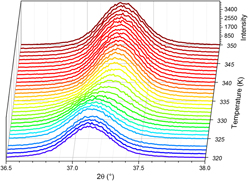
Proximity effects and exchange coupling across interfaces of hybrid magnetic heterostructures present unique opportunities for functional material design. In this review, we present an overview of recent experiments on magnetic hybrid materials in which magnetism was controlled by proximity to an active material. In particular, we discuss interfacial strain coupling of ferromagnetic materials in contact with a material undergoing a structural deformation. Bilayers containing VO2 and V2O3 as active materials are shown to strongly affect the magnetization and coercivity of ferromagnetic materials due to stress anisotropy caused by a temperature-dependent structural displacement in the oxide. The possibilities of tuning the system by sample morphology and materials choice are discussed in detail. In addition, we highlight a length-scale competition between magnetic and structural domains which leads to a maximum change in the coercivity in a narrow temperature window of the vanadium oxide phase transition.
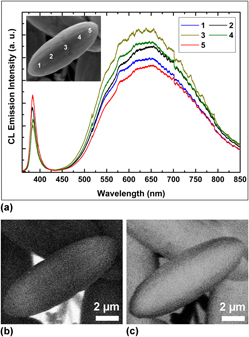
A facile and reproducible low-temperature (80 °C) solution route has been introduced to synthesize ZnO ellipsoids on silicon substrate without any pretreatment of the substrate or organic/inorganic additives. Scanning electron microscopy, transmission electron microscopy, and x-ray diffraction spectroscopy are performed to analyze the structural evolution, the single crystalline nature, and growth orientation at different stages of the synthetic process. The sequential formation mechanisms of heterogeneous nucleation in primary and secondary crystal growth behaviors have been discussed in detail. The presented results reveal that the morphology of micro/nanostructures with desired features can be optimized. The optical properties of grown structures at different stages were investigated using cathodoluminescence (CL). The monochromatic CL images were recorded to examine the UV and visible band emission contributions from the different positions of the intermediate and final structures of the individual ZnO ellipsoid. Significant enhancement in the defect level emission intensity at the central position of the structure reveals that the quality of the material improves as the reaction time is extended.
Gadolinium-based transparent polycrystalline ceramic garnet scintillators are being developed for gamma spectroscopy detectors. The scintillator light yield and energy resolution depend on many of the ceramic characteristics, including composition, homogeneity, and presence of secondary phases. To investigate phase stability dependence on composition, three base compositions – Gd3Ga2.2Al2.8O12, Gd1.5Y1.5Ga2.2Al2.8O12, and Gd1.5Y1.5Ga2.5Al2.5O12 were studied, and for each composition the rare earth content was varied according to the formula (Gd,Y,Ce)3(YXGa1−X)2(Ga,Al)3O12; where −0.01 < X < 0.05. We have found that yttrium and gallium help to stabilize the garnet crystal structure in the ceramics by allowing interionic substitution among the cationic garnet sites. Specifically, a composition of Gd1.49Y1.49Ce0.02Ga2.5Al2.5O12 can accommodate approximately 2 at.% excess rare earth ions from the perfect garnet stoichiometry and remain a phase pure transparent ceramic with optimal performance as a radiation detector. This expanded phase stability region helps to enable the fabrication of large transparent ceramics from powder with tolerance for flexibility in chemical stoichiometric precision.
The X-ray diffraction powder patterns were prepared and the crystal structures were refined for the double-perovskite series of compounds, Sr2RSbO6 (R = Pr, Nd, Sm, Eu, Gd, Dy, Ho, Y, Er, Tm, Yb, and Lu). We found the structures of the entire Sr2RSbO6 series to be monoclinic with space group P21/n (no. 14), and Z = 2. From R = Lu to Pr, the lattice parameters “a” range from 5.7779(2) to 5.879 05(8) Å, “b” range from 5.7888(2) to 5.969 52(9) Å, “c” range from 8.1767(3) to 8.369 20(12) Å, “β” range from 90.112(2)° to 90.313(1)°, and “V” range from 273.483(4) to 293.714(7) Å3. These lattice parameters follow the well-established trend of “lanthanide contraction”. The R3+ and Sb5+ ions are found to be fully ordered in the double-perovskite arrangement of alternating corner-sharing octahedra in a zigzag fashion. The SrO12, RO6, and SbO6 cages are all found to have distorted coordination environments. Powder diffraction patterns of these compounds have been prepared, submitted, and published in the Powder Diffraction File.
Knowledge of the composition of many cultural heritage objects is limited, resulting in many unanswered questions in regards to the provenance, composition, and production methods. In this paper, our objective is to show that dual beam scanning electron microscope (SEM) and focused ion beam (FIB) can be used rapidly and non-destructively to determine the surface and bulk metal compositions in small cultural heritage objects. We show, for the first time, that this novel FIB technique can be successfully applied non-destructively to cultural heritage objects by examining three representative silver plated objects (Candelabra, “Century” spoon, and New York World’s Fair spoon) from the Dallas Museum of Art’s unparalleled collection of modern American silver. In each case, we successfully reveal and characterize the bulk metal as well as the Ag-plating, up to ∼80 µm deep and show that there is no visual damage resulting from the milling process of the FIB. This novel characterization technique can be applied, due to its ease of availability and rapid use, to many other problems in addition to silver plated objects, making dual beam SEM/FIB a possible cornerstone technique in the study of cultural heritage objects.
Additive manufacturing (AM) holds tremendous promise in terms of revolutionizing manufacturing. However, fundamental hurdles limit the widespread adoption of this technology. First, production rates are extremely low. Second, the physical size of the parts is generally small, less than a cubic foot. Third, the mechanical properties of the polymer parts are generally poor, limiting the potential for direct part replacement and functional use of the polymer components. This article describes various ways in which carbon fibers (CFs) can be used to address these fundamental hurdles. First, CF-reinforced polymers developed for AM have demonstrated specific strengths approaching aerospace-quality aluminum. Second, CF additions can radically reduce the distortion and warping of the material during deposition, which enables large-scale, out-of-the-oven, high deposition rate manufacturing. Finally, the complementary nature of CF technology and AM is discussed, showing how merging the two manufacturing processes enables the construction of complex components that would not be possible with either technology alone.
In this study, the precipitation behavior of the pretwinned extruded Mg–6Al–1Zn alloy was investigated. It was observed that the precipitates preferentially nucleated at the twin boundaries or within the preexistent twins. This distribution of the precipitates led to the distinguishing influences on subsequent compression and tension process, which were dominated by twinning and detwinning of the preexistent twins, respectively. The compressive yield strength after aging was a little lower than the stress when the precompression was interrupted, which meant that the impeding effect of precipitation on twin expansion was relatively smaller than that of dislocations induced by precompression. However, the tensile yield strength of aged samples was extremely higher than that of non-aged samples as the migration of the twin boundaries during detwinning was considerably hindered because of the preferential precipitation within the preexistent {10-12} twins.
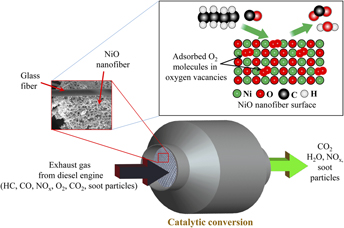
In this study, nickel acetate tetrahydrate (NACTH)/poly(styrene-co-acrylonitrile) (SAN) sol was used for the fabrication of nanocrystalline NiO nanofibers. An indigenous setup was developed to use these nanofibers for the oxidation of carbon monoxide (CO) and unburnt hydrocarbons (HC) from diesel engine exhaust. The morphological, compositional, and crystalline properties of the NiO nanofibers obtained after calcination were studied by scanning electron microscopy, Fourier transform infrared (FTIR) spectroscopy, and x-ray diffraction (XRD). Clear evidence of defects in the fibers was observed in ultraviolet–visible–near infrared (UV-Vis-NIR) spectra, Raman spectra, and magnetic property measurements. The NiO nanofiber mats supported by glass fiber mats were efficient in oxidizing CO and HC from diesel engine exhaust, and the maximum efficiency was achieved by using NiO nanofibers with the maximum amount of defects.
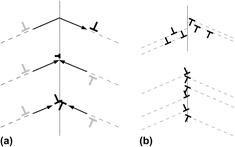
Gradient plasticity provides an effective theoretical framework to interpretheterogeneous and irreversible deformation processes on micron and submicronscales. By incorporating internal length scales into a plasticity framework,gradient plasticity gives access to size effects, strain heterogeneities atinterfaces, and characteristic lengths of strain localization. To relate themagnitude of the internal length scale to parameters of the dislocationmicrostructure of the material, 3D discrete dislocation dynamics (DDD)simulations were performed for tricrystals of different dislocation sourcelengths (100, 200, and 300 nm). Comparing the strain profiles deduced from DDDwith gradient plasticity predictions demonstrated that the internal length scaledepends on the flow-stress-controlling mechanism. Different dislocationmechanisms produce different internal lengths. Furthermore, by comparing agradient plasticity framework with interfacial yielding to the simulations itwas found that, even though in the DDD simulations grain boundaries (GBs) werephysically impenetrable to dislocations, on the continuum scale the assumptionof plastically deformable GBs produces a better match of the DDD data than theassumption of rigid GBs. The associated effective GB strength again depends onthe dislocation microstructure in the grain interior.
The aluminothermic reduction and nitridation method using microsized Al powder and nanosized alumina powder was employed to fabricate AlON powder under N2 atmosphere. Single-phase aluminum oxynitride (AlON) can be prepared at a relatively low temperature (1700 °C) with a holding time of 3 h. The powder is ball milled, doped with different amounts of Y2O3 (0.1–0.9 wt%) as a sintering additive, and then shaped into pellets. The pellet sintering is carried out at two relatively low temperatures (1860 and 1880 °C) for 10 h. The transmittance and hardness of the obtained samples varies as the amount of Y2O3 varies. The sample sintered under optimal conditions can reach an ultimate transmittance of 65% with 2 mm thickness. The Vickers hardness of highly transparent AlON ceramic is about 15.95 ± 0.17 GPa, indicating that our method has a promising future in transparent AlON ceramic production. The sintering promoting mechanisms of Y2O3 are also discussed in detail.
Ta2O5 added MgCuZn ferrites are prepared by the microwave-hydrothermal (M-H) processing. The nanocrystalline ferrites are sintered to a temperature of 900 °C using conventional sintering (CS) and microwave sintering (MW) methods. The effect of Ta2O5 addition on the microstructure, d.c. resistivity, and Curie temperature of the ferrites has been studied. By the addition of Ta2O5 to MgCuZn ferrites, resistivity decreases without grain growth. The complex permittivity and complex permeability of the prepared samples were measured in the frequency range from 10 kHz to 1.8 GHz. The value of ε′ and tan δ for all the samples decreases from 10 to 100 kHz and almost remains constant up to 300 MHz and increases further by increasing the frequency up to 1 GHz. The µ* spectra are analyzed into two magnetization processes with a focus on the grain size of the ferrite samples. The present ferrites exhibited high values of permeability (>1000) in the frequency range of 10 kHz to 50 MHz. Then the values of permeability are found to decrease with an increase in frequency up to 180 MHz and finally, frequency dispersion occurred at 200 MHz.
We report the effect of nonstoichiometry on the terahertz absorption of fully dense optical ceramics of Y3Al5O12 and compare to that of undoped and 1 at.% Nd3+ doped single crystals. Our research is motivated primarily by the necessity of having better control of stoichiometry during the preparation of transparent yttrium aluminum garnet (YAG) ceramics. A set of twenty ceramic samples was prepared by solid-state sintering of Y2O3 and Al2O3 powder mixtures with compositions ranging from −0.62 to +0.96 mol% of Y2O3 on each side of the stoichiometric garnet composition. After sintering, the samples were highly translucent in the visible range, with attenuations better than 2 cm−1. These samples were characterized using time-domain terahertz spectroscopy between 0.06 and 2.8 THz. Ceramic and single-crystal samples exhibit a similar broad absorption band, which we assign to a 2-phonon difference process, and whose width and intensity depend upon composition.
The crystal structure of the novel metal organic framework (MOF) Zn(C3H5NO2S)2 is described. This MOF can serve as a model for active sites in metalloproteins, on diverse activities such as structural or catalytic functions. Each half of the amino acid act as a bidentate ligand to one Zn and as a monodentate ligand to another Zn, while the disulphide bond presents an important structural function, stabilizing the crystal packing. The structure has been obtained ab initio from synchrotron X-ray powder diffraction data. The compound crystallizes in the orthorhombic system (space group P212121), with a = 20.0906(7), b = 9.5842(3), c = 5.018 89(13), and V = 966.40(5) Å3, with Z = 4. The structure was determined using a direct space approach, by means of the Monte Carlo technique, followed by Rietveld refinement.
The solid-state reaction of yttrium aluminum garnet (YAG, Y3Al5O12) during the heat treatment of Y2O3 and Al2O3 powder mixtures, differing in particle size and size ratio, was quantified using in situ high-temperature x-ray analysis and Rietveld refinement. Y2O3 particle size has the most profound effect on YAG formation. When the Y2O3 particle size was decreased from 5000 to 30 nm (on reaction with 270 nm Al2O3), the YAG formation rate increased from 20 to 48 vol% min−1 over the temperature range of 1350–1450 °C. In this case, the final YAG content increased from 75 to 91 vol%. A simple model that includes the reactant particle coordination number, and thus particle size ratio, shows that when the size ratio (dA/dY) is >1 diffusion through the alumina powder is rate controlling whereas when the ratio is <1, diffusion through the yttria, intermediate phases, and YAG is rate controlling.
Single-walled carbon nanotubes (SWCNTs), which have a unique electronic structure, nanoscale diameter, high curvature, and extra-large surface area, are ideal for making a new class of nanocomposites. In this study, under the condensed phase optimized molecular potentials for atomistic simulation studies force field, classical molecular dynamics simulation is used to study the molecular interactions between SWCNTs and the molecules of binaphthyl core-based chiral phenylene dendrimers (G0–G2). The simulation results revealed that both G2 and G1 molecules have obvious attractive interactions with SWCNTs, and theoretically demonstrated the possibility of noncovalent functionalization of SWCNTs with chiral dendrimers. The influence of temperature on composites was also studied, and the results indicate that the interaction decreases strongly for SWCNTs@G1 and SWCNTs@G2 with increasing temperature. The possibility during real-world composite processing would create the desired structure bridges between nanotubes and chiral dendrimers, which can be used to produce nanocomposites such as highly sensitive as well as enantioselective fluorescent sensors.
TiO2 has attracted tremendous research interest for photocatalytic water splitting, solar hydrogen generation, environmental pollution removal, dye-sensitized solar cells, lithium-ion batteries, supercapacitors, and field emission. Microwave absorption materials (MAMs) play important roles in many military (e.g., the stealth coating on the B-2 bomber) and civil (e.g., telecommunications, noise reduction, information security, signal, and data protection) applications. However, TiO2 is not a good MAM due to its poor absorption in the microwave region. Here, we report that via hydrogenation excellent and tunable microwave absorption is achieved with hydrogenated TiO2 nanocrystals. After hydrogenation, 4.3x and 103x improvements have been obtained in storing and dissipating the electric energy of the microwave electromagnetic field. Their permittivity values are higher than those of the current carbonaceous MAMs. Instead of relying on the dipole rotation or ferromagnetic resonance mechanisms for traditional MAMs, the hydrogenated TiO2 nanocrystals work as good MAMs based on a newly proposed collective-movement-of-interfacial-dipole (CMID) mechanism. Although there is still no direct physical evidence of the interface effects of the CMID mechanism, the CMID as a hypothesis at this point successfully explained the origin of the enhanced microwave absorption of the hydrogenated TiO2 nanoparticles. This study thus may open new applications for TiO2 nanocrystals and also stimulate new approaches for new MAM development.