To save content items to your account,
please confirm that you agree to abide by our usage policies.
If this is the first time you use this feature, you will be asked to authorise Cambridge Core to connect with your account.
Find out more about saving content to .
To save content items to your Kindle, first ensure no-reply@cambridge.org
is added to your Approved Personal Document E-mail List under your Personal Document Settings
on the Manage Your Content and Devices page of your Amazon account. Then enter the ‘name’ part
of your Kindle email address below.
Find out more about saving to your Kindle.
Note you can select to save to either the @free.kindle.com or @kindle.com variations.
‘@free.kindle.com’ emails are free but can only be saved to your device when it is connected to wi-fi.
‘@kindle.com’ emails can be delivered even when you are not connected to wi-fi, but note that service fees apply.
Professor Frank Ko is a recognized expert on the production, braiding and weaving of textile fibers, with strong interests in polymer science. He and I worked together in the mid 1990s, in a cooperative research effort supported by the US Army, on new polymer fibers, including nanofibers. Our complementary experience and knowledge were synergistic.
Early information about nanofibers made by electrospinning was sequestered in the research departments of a few filter manufacturers, and in the notebooks and memories of engineers from the former Soviet Union, who designed and manufactured gas masks. Since the 1930 patents of A. Formhals, little research on nanofibers was published except for a paper by P. K. Baumgarten in 1971 and papers by R. St. J. Manley in 1981, until my publications that began in 1995, with graduate student Jayesh Doshi.
Other polymer scientists soon began to develop their interests in electrospinning and nanofibers. The number of publications on nanofibers grew exponentially. By 2003, a paper on this subject, with mathematical models of co-author Alexander Yarin, was credited as “the frequently cited paper in a fast moving front of materials science,” a part of materials science previously left almost entirely to scientists in industrial textile fiber laboratories. Activity in the form of research and nanofiber manufacturing in the filtration industry, development of other useful products, and the establishment of startup companies, has ramified into a multitude of industries and now extends throughout the world.
The field of materials science and engineering (MSE) has undergone a tremendous development since it was defined for the first time in the 1950s. Materials science and engineering has supplanted traditional curricula centered on metallurgy, ceramics, and polymers. In the USA alone, there are over 50 MSE academic university departments. Materials science and engineering has initially merged metals, polymers, ceramics, and composites into a broad and unified treatment. Whereas the twentieth century was marked by revolutionary discoveries in physics and chemistry, the twenty-first century has been prognosticated to be dominated by biology. Indeed, medical and biological discoveries are bound to have a profound effect on our future. Consistent with the increasing demands of engineering students to acquire basic working tools in this domain, many engineering curricula are adding appropriate courses or modifying existing courses to address biological aspects. Within MSE, the nascent field of biological materials science encompasses three areas.
Biological (or natural) materials: materials that comprise cells, extracellular materials, tissues, organs, and organisms.
Biomaterials: synthetic materials used to correct, repair, or supplement natural functions in organisms.
Biomimetics: this area encompasses the materials and structures inspired in biological systems and/or functions.
This book focuses on these three areas in a balanced manner. This is a necessity of space, and many curricula offer separate biomaterials courses. The book has 13 chapters, and the contents can be covered comfortably in one semester (one chapter per week).
The fabrication of Ce3+-doped lutetium oxyorthosilicate (Lu2SiO5:Ce, LSO:Ce) scintillation ceramics was investigated by pressureless sintering starting from synthetic submicrometer polycrystalline LSO:Ce powder. It was found that translucent LSO ceramics were densified successfully with relative density of 99.5% under sintering condition of 1720 °C for 4 h. As-sintered LSO ceramics were pore-free with average grain size of 5 μm and exhibited a translucent state. The broad emission spectra centered at 419 nm of the LSO:Ce ceramics under vacuum ultraviolet (VUV) and UV excitation at room temperature. Under x-ray excitation, the overall emission intensity of obtained LSO ceramics achieved twice of that of bismuth germanium oxide (also known as bismuth germanate) single crystal at room temperature. Under excitation of 356 nm and emission of 420 nm, the luminescence decay time of the obtained LSO scintillation ceramics reached only 21.2 ns. The light yield of the LSO ceramics was 21,300 ph/MeV, which reached 91% of that of LSO single crystal.
Additive manufacturing technologies, also known as 3D printing, have demonstrated the potential to fabricate complex geometrical components, but the resulting microstructures and mechanical properties of these materials are not well understood due to unique and complex thermal cycles observed during processing. The electron beam melting (EBM) process is unique because the powder bed temperature can be elevated and maintained at temperatures over 1000 °C for the duration of the process. This results in three specific stages of microstructural phase evolution: (a) rapid cool down from the melting temperature to the process temperature, (b) extended hold at the process temperature, and (c) slow cool down to the room temperature. In this work, the mechanisms for reported microstructural differences in EBM are rationalized for Inconel 718 based on measured thermal cycles, preliminary thermal modeling, and computational thermodynamics models. The relationship between processing parameters, solidification microstructure, interdendritic segregation, and phase precipitation (δ, γ′, and γ″) are discussed.
High energy laser (HEL) systems are currently being evaluated for various land, sea, and air based platforms. Some of these systems operate in or have to withstand harsh environment of sand storm, hurricane, and rain. The exit aperture on a HEL system operating in harsh environment can become the single point of failure. Current HEL systems operating in 1–2 µm wavelength use fused silica windows which are at risk of damage in the theater. Rugged window materials such as sapphire, ALON, and spinel are currently being evaluated as a potential replacement. One of the major parameters in window selection apart from its ruggedness is its absorption loss coefficient at laser wavelength. This paper reports on 3 different methods to reduce absorption loss in spinel ceramic from 100,000 ppm/cm down to 75 ppm/cm. The results are compared with ALON and sapphire.
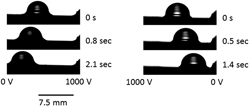
Using phase separation, alumina-based porous ceramics with three-dimensional frameworks were prepared, with fine structural roughness created by subsequent hot-water treatment. The pore volume of the porous alumina and its specific surface area increased concomitantly with increasing hot-water treatment time. Porous alumina/fluorinated oil bulk composites were prepared by coating hydrophobic silane onto the porous ceramic surface and subsequently impregnating fluorinated oil. A wetting ridge formed at the bottom of the water droplets on the composites. Partial contact between the water and solid surface was inferred from a comparison of interface energies in the system. The composites provided a smaller sliding angle (SA) than that of the sample without impregnating fluorinated oil. The composite with fine roughness exhibited longer sustainability of a small SA than that without fine roughness. Particle image velocimetry revealed that the dominant sliding mode for water droplets on this composite was slipping. The droplets moved on the surface under an external electric field. Coulombic force contributes to this motion.
Material extrusion 3D printing (ME3DP) based on fused deposition modeling (FDM) technology is currently the most commonly used additive manufacturing method. However, ME3DP suffers from a limitation of compatible materials and typically relies upon amorphous thermoplastics, such as acrylonitrile butadiene styrene (ABS). The work presented here demonstrates the development and implementation of binary and ternary polymeric blends for ME3DP. Multiple blends of acrylonitrile butadiene styrene (ABS), styrene ethylene butadiene styrene (SEBS), and ultrahigh molecular weight polyethylene (UHMWPE) were created through a twin screw compounding process to produce novel polymer blends compatible with ME3DP platforms. Mechanical testing and fractography were used to characterize the different physical properties of these new blends. Though the new blends possessed different physical properties, compatibility with ME3DP platforms was maintained. Also, a decrease in surface roughness of a standard test piece was observed for some blends as compared with ABS.
An attempt to reduce the effect of major toxic components namely phosphine ligands and unsaturated solvents as being used in conventional nanocrystal synthesis, has been made with a new binary ligand, and a reusable solvent N-octadecane for a smokeless and clean synthesis procedure. The optimized effects of the two ligands oleic acid and octadecyl amine on the nucleation rate and growth of CdSe nanocrystals (NCs) are reported and substantiated by AFM analysis. Oleic acid accelerates particle ripening and nuclei growth, but inhibits nucleation whereas octadecyl amine catalyses nucleation and very gradually improves growth to obtain small stable NCs. Another important feature of the present study is the replacement of 1-octadecene by a competitive N-octadecane as a solvent in such ligand mediated nanocrystal synthesis. The GCMS analysis reports a recovery of 95% of solvent after reuse, thus opening a scope for environmental friendly processes.
Indium-tin-oxide (ITO) thin films were prepared by reactive magnetron sputtering; their optical constants and thickness were determined by spectral reflectometry (SR) in the wavelength range from 400 nm to 800 nm and spectroscopic ellipsometry (SE) in the wavelength range from 191 nm to 1690 nm. A comparative evaluation of the measured data from SR and SE has been made using the same single layer optical model based on the Cauchy dispersion relation. The introduction of a surface roughness layer into the optical model considerably improved the fit quality during evaluation of SE data. Vertical inhomogeneity of the ITO thin films was assessed using a multilayer optical model describing porosity gradient and the three-layer optical model suggested by Jung [Y.S. Jung, Thin Solid Films467, 36 (2004)] from the SE data.
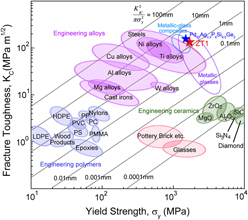
Bulk metallic glasses (BMGs) exhibit high yield strength but little tensile ductility. For this class of materials, damage tolerance is a key mechanical design parameter needed for their engineering use. Recently we have discovered a correlation between the local structural characteristics in the glass and the propensity for shear transformations. Based on the dependence of glass structure on alloy composition, zirconium (Zr)-rich Zr–titanium (Ti)–copper (Cu)–aluminum (Al) compositions are predicted to be more prone to spread-out plastic deformation and hence profuse shear banding. This structural perspective has guided us to locate a Zr61Ti2Cu25Al12 (ZT1) BMG that exhibits a record-breaking fracture toughness, on par with the palladium (Pd)-based BMG recently developed at Caltech. At the same time, the new BMG consists of common metals and has robust glass-forming ability. Interestingly, the ZT1 BMG derives its high toughness from its high propensity for crack deflection and local loading-mode change (from mode I to substantially mode II) at the crack tip due to extensive shear band interactions. A crack-resistance curve (R-curve) has been obtained following American Society for Testing and Materials (ASTM) standards, employing both “single-specimen” and “multiple-specimen” techniques as well as fatigue precracked specimens. The combination of high strength and fracture toughness places ZT1 atop all engineering metallic alloys in the strength–toughness Ashby diagram, pushing the envelop accessible to a structural material in terms of its damage tolerance.
The defense mechanism that nacre (mother-of-pearl) uses to protect its living organism against high-speed predatory attack can provide lessons for engineered armor design. However, the underlying physics responsible for nacre's dynamic energy dissipation has hitherto remained a mystery to be uncovered. Here we demonstrate a new energy dissipation mechanism hidden in nacre and activated only upon dynamic loading, where the crack terminates its propagation along nacre's biopolymer interlayers but straightly impinges the aragonite platelets (95 vol%) in a transgranular manner. This intergranular–transgranular transition promotes the fracture energy dissipation, far exceeding that of the currently-used engineered ceramics. The mechanistic origin accounting for the enhancement of fracture energy dissipation is attributed to the unique nanoparticle architectured aragonite platelets. The dynamic manifestation in nacre can inspire a new route to design stronger-and-tougher engineered ceramic armors.
Ultrasonic consolidation is a rapid manufacturing process for metal matrix composite (MMC) preimpregnated composite (prepreg) tapes or foils. One of the main advantages of this manufacturing technique over traditional MMC methods is the ability to produce multimaterial structures through the layer-by-layer build-up procedure. The interface of an ultrasonically consolidated bimaterial interface has not been studied on the nanometer scale through transmission electron microscopy (TEM), which can help better understand the bonding mechanisms. An ultrasonically consolidated copper–aluminum (Cu–Al) interface was explored through TEM, through which a 1-µm recrystallized subgrain region was observed on the aluminum side and dislocation pile-up was viewed between the subgrain and bulk aluminum interface. Phase changes were suspected due to varying contrast bands parallel to the Cu–Al interface and were confirmed through an x-ray energy dispersive spectroscopy (XEDS) linescan. An apparent diffusion coefficient was calculated, which supported bulk diffusion at the measured welding temperature of 493 °C and subgrain size of 20–50 nm.
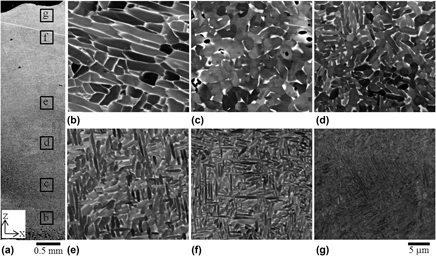
Ti–6Al–4V parts made by the additive manufacturing (AM) technique selective laser melting (SLM) generally show poor ductility due to their fine martensitic microstructure. This study was designed to assess whether a more suitable microstructure can be obtained when long laser/material interaction times are used. As-fabricated components with an α + β microstructure were produced and characterized with various microscopy techniques. The microstructural evolution was discussed in relation to the build platform temperature, the cyclic reheating, and the thermal stresses that developed during the process. The hardness of the samples was also evaluated and discussed. The hardness varied in relation to the different microstructure morphologies observed in the samples and different partitioning of the alloying elements. This study indicates a methodology through SLM to obtain Ti–6Al–4V with an as-deposited α + β microstructure which is more desirable than that the typical fully martensitic microstructure typically obtained after SLM.
The most abundant proteins in the extracellular matrix are members of the collagen family. Collagen is composed largely of the amino acids glycine, proline, and hydroxyproline, which are often present as Gly–X–Y repeats (where X and Y are either proline or hydroxyproline). Tropocollagen is the subunit of collagen fibrils formed of three polypeptide strands (each offset by one amino acid), approximately 300 nm long and 1.5 nm in diameter. Each of the three parallel polypeptide strands is in a left-handed helical polyproline II-type coil with three residues to form a right-handed triple helix. The tropocollagen units assemble in a parallel, quarter-staggered arrangement. There is a 40-nm gap, also called the “hole zone,” between the ends of each of these units, with 27 nm of overlap between adjacent units. The chemistry underlying the formation of these tissues is all quite similar; the fundamental differences depend on their hierarchical fibrillar architectures. More than 20 human collagens have been reported, many of which display a 67-nm periodicity, due to the axial packing of the individual collagen molecules [1, 2].
Collagens constitute an important family of proteins in the vertebrate body and serve as extracellular matrix molecules for many soft and hard connective tissues, including cornea, skin, tendon, cartilage, and bone [1, 3]. Collogen provides cellular recognition for regulating cell attachment and functions. Collagen favors cell adhesion that is normally found in joint tissues and those exogenous cells embedded in a collagen delivery device. Almost all of the connective tissues with collagen fibrils as the basic building blocks have remarkably similar chemistry at the macromolecular and fibrillar levels of structure. However, differentiation in the hierarchical structure takes place as these fibrils are arranged in the specific architecture required for the construction of special tissues each with unique functions, which is generally considered the function of other, non-collagen, molecules.
Polymer nanofibers have several properties that make them an extremely promising material in regenerative medicine. These favorable properties are derived from their high surface-area-to-volume ratios, their size relationship to that of cells, and their geometric similarity to natural extracellular matrix (ECM) fibers such as collagen. The literature in the field of tissue engineering generally defines nanofibers as those with diameters less than 1000 nm, while fibers larger than that are described as microfibers. The high surface-area-to-volume ratio of nanofibers allows them to interact with biomolecules at very high efficiency. In addition, nanofibers and microfibers are valuable in tissue engineering because their size is suitable for assembling complex three-dimensional (3D) architectures that can be perceived and populated by cells.
It has become increasingly apparent that cell behaviors are highly dependent on the physical environment. Substrate microstructure cues such as size, orientation, and dimensionality modulate cell behaviors ranging from attachment and morphology to differentiation and ECM production. Specifically, it has been shown that polymer nanofibrous structures can improve cell attachment; increase cell viability, proliferation, and ECM production; and predictably push cells toward specific morphologies and differentiation paths [1]. Researchers have been exploring ways of designing polymer nanofiber scaffolds that elicit desired cell responses for specific tissue engineering applications. The vast majority of these designs start with the electrospinning fabrication method. The electrospinning method is a simple and relatively inexpensive process, yet demonstrates amazing versatility in terms of the types of fibers and structures that can be fabricated. This chapter will introduce the basics of electrospinning and describe in detail strategies to make nanofiber structures for tissue engineering applications. These strategies will be focussed on electrospinning fibers with desired biofunctionality, electrospinning fiber arrays with uniaxial alignment, and methods of assembling individual fibers into 3D scaffolds conducive to cell population. It is our hope that the tools presented here can be used to design better electrospun scaffolds for applications in regenerative medicine.
This chapter begins by reviewing the structure and origin of polysaccharides commonly used in hydrogels and then moves on to a brief discussion of the role of structural polysaccharides throughout tissues in the body. Common chemical modification techniques are discussed, followed by approaches used to crosslink polysaccharides into insoluble hydrogels. The authors will also describe recent research approaches for polysaccharide hydrogel materials as scaffolds for tissue engineering, vehicles for drug delivery, and tissue adhesives. The goal of this chapter is to provide the reader with an overview of the exciting potential of polysaccharide-based hydrogels in medicine.
Structure and origin of common polysaccharides
Polysaccharides are large linear or branched carbohydrate molecules composed of repeating monomer units. They can perform structurally, as in the extracellular matrix of animals and cell walls of plants [1], or provide energy storage capacity in the instances of glycogen and starch [2]. Every organism on the planet has the ability to produce polysaccharides. Solubilities of polysaccharides in water vary depending on the chemical structure [3]. Monomer units often contain chemical groups that can be functionalized chemically in order to modify their material properties. Important structural polysaccharides in the human body are known as glycosaminoglycans (GAGs), which are anionic, linear polysaccharides composed of repeating disaccharide units. The repeat unit is comprised of a hexosamine and either a hexose or hexuronic acid.
from
Part I
-
Introduction to stem cells and regenerative medicine
By
David Mack, University of Washington,
Aleksander Skardal, The Wake Forest Institute for Regenerative Medicine,
Shay Soker, The Wake Forest Institute for Regenerative Medicine,
Anthony Atala, The Wake Forest Institute for Regenerative Medicine
Edited by
Peter X. Ma, University of Michigan, Ann Arbor
Stem cells are defined by their unique ability to self-renew and produce progeny that differentiate into specialized cells. Naturally occurring stem cells are usually broken down into three principal categories. Embryonic stem cells (ESCs) are derived from the inner cell mass of a preimplantation embryo and are considered pluripotent, meaning able to produce cell types of all three germ layers. Second, adult somatic stem cells exist at a very low frequency in almost all tissues and organs of the body and are usually considered lineage-restricted to the subset of cell types that make up their tissue of origin. Lastly, fetal stem cells can be obtained from various fetal tissues, including primordial germ cells, blood, liver, bone marrow and amniotic fluid, as well as extra-embryonic tissues such as the placenta and umbilical cord. In terms of multipotentiality these fetal stem cells lie somewhere between ESCs and more committed adult somatic stem cells. A new fourth, artificially generated type of stem cell now exists, namely the so-called induced pluripotent stem (iPS) cell, which results from the transcriptional reprogramming of a terminally differentiated somatic cell. Each one of these stem cell types has advantages and disadvantages in cell-based therapies and undoubtedly no one cell type will fit all applications. For example, ES cells are attractive because of their inherent plasticity, but their derivation elicits ethical concerns and the likelihood of forming teratomas after transplantation makes them, for now, a therapeutic dead end. Adult somatic stem cells, like bone marrow mesenchymal stromal cells (BM-MSCs) are being used clinically [45, 62], but their applications are restricted by limited proliferative capacity in culture and a predisposition to differentiate down primarily mesenchymal lineages. iPS cells have been shown to be genetically unstable and also have the potential to form teratomas after transplantation [33], especially if the efficiency of the differentiation protocols is not optimized. Fetal stem cells can be isolated from two distinct sources, the fetus proper and the extra-embryonic support tissues such as the amniotic fluid, placenta, and umbilical cord (especially Wharton’s jelly) [1]. Isolating stem cells from the fetus is replete with moral, ethical, and legal concerns and will therefore not be discussed further here. The use of fetal stem cells from extra-embryonic tissues, on the other hand, elicits no ethical or moral concerns because their isolation does not put a developing fetus at risk.