To save content items to your account,
please confirm that you agree to abide by our usage policies.
If this is the first time you use this feature, you will be asked to authorise Cambridge Core to connect with your account.
Find out more about saving content to .
To save content items to your Kindle, first ensure no-reply@cambridge.org
is added to your Approved Personal Document E-mail List under your Personal Document Settings
on the Manage Your Content and Devices page of your Amazon account. Then enter the ‘name’ part
of your Kindle email address below.
Find out more about saving to your Kindle.
Note you can select to save to either the @free.kindle.com or @kindle.com variations.
‘@free.kindle.com’ emails are free but can only be saved to your device when it is connected to wi-fi.
‘@kindle.com’ emails can be delivered even when you are not connected to wi-fi, but note that service fees apply.
In this study, a conductive polymer, poly(3,4-ethylenedioxythiophene) or PEDOT, was used as binder in the sulfur electrode to study electrochemical performance of lithium–sulfur (Li–S) batteries. PEDOT-based sulfur electrode was compared with that of polyvinylidene difluoride binder based sulfur electrode. Different particle size sulfur materials including commercial micrometric sulfur particles and synthesized colloidal nanometric sulfur powders were chosen as active materials to study the impact of particle size on the cell performance. Different electrolytes including lithium bis(trifluoromethanesulfonyl)imide in polyethylene glycol dimethyl ether (PEGDME) or 1,3-dioxolane-dimethoxy ethane were used in the Li–S batteries to investigate the impact of electrolyte on cell performance. The PEDOT and micrometric sulfur based electrode with PEGDME electrolyte had the best cycle performance, which showed a capacity retention of 68% and specific capacity of 578 mAh/g after 100 cycles. The increased conductivity by conductive polymer and the high viscosity of PEGDME play important roles in the improvement of cycle performance.
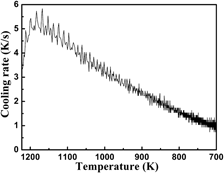
We report on the occurrence of sinter-hardening with concurrent improved plasticity in fine-grained Fe79.3Mo4.5P8.1C6.75B1.35 bulk alloys fabricated by spark plasma sintering (SPS) of metallic glass composite powder. When the sintering temperature is higher than the austenite transformation temperature, the as-fabricated bulk alloys are composed of expected wattle martensite plus Fe3P, Fe7C3, and Fe3Mo3C. Meanwhile, the martensite-containing bulk alloys exhibit increased hardness, fracture strength as well as concurrent improved plasticity. The fracture stress and strain of the martensite-containing bulk alloys are as high as 2573 MPa and 8.6%, respectively. The formation of the martensite microstructure is attributed to that high sintering temperature leads to the austenitization transformation and consequently formed austenite partially transforms into martensite under rapid cooling rate provided by SPS system. The results obtained provide insight into fabrication of iron alloys with good mechanical property by powder metallurgy.
For years, substituted iron nitrides have been studied by various types of approaches: physical, chemical, and materials engineering, both experimental and theoretical. More recently, substituted iron nitrides have been studied by theoretical models for calculation of electronic structure, presenting the advantage of being economically viable. The properties of these compounds have potential application not only as a recording material but also in other areas: as resistance to corrosion and wear. The changes occurred in the alloys when transformed into nitrides still require further studies. Thus, the electronic and magnetic structure of IrFe3 and Ir3Fe alloys and the changes caused in their ground state properties when the nitrogen atoms were included in their stoichiometry, turning them into substituted iron nitrides type Ir3FeN and IrFe3N, will be investigated in this study. The electronic structure of these compounds was modeled using the linearized augmented plane waves (LAPW), an augmented plane wave (APW – method of Slater) modification. The following methodology was used in this study: the cohesive energy for steady state was calculated and then the ground state properties, such as charge transfer, magnetic moment, hyperfine properties, and the density of states, were obtained. The ground state properties are also assessed from the pressure variation experienced by these compounds, that way, the induced changes in the alloys caused by introducing the nitrogen atom are obtained. This study may assist in obtaining new and better nitrides.
Isothermal annealing in the temperature range of 300–600 °C, microstructural characterization, and analysis of the grain growth kinetics during annealing were carried out for Cu–5 vol% Al2O3 nanocomposite powder particles produced by high energy mechanical milling. When the annealing temperature was 400 °C or lower, only reduction in dislocation density occurred during annealing. When the annealing temperature was 500 °C or higher, reduction in dislocation density, abnormal grain growth of the nanocrystalline Cu matrix, and coarsening of the Al2O3 nanoparticles occurred. It has been found that the microstructure of the nanocrystalline Cu matrix of the nanocomposite exhibits a far higher thermal stability than that of monolithic nanocrystalline Cu, even though the apparent activation energy of the grain growth of the former is similar to that of the latter over the temperature range of 400–600 °C, showing the dramatic drag effects of finely distributed Al2O3 nanoparticles and Al3+/O2− clusters on the grain boundary motion.
Stability of Na-titanate-based nanotubes at high temperature and pressure is investigated using X-ray diffraction and energy-dispersive X-ray diffraction (EDXRD). Our results show that the nanotubes can be stable at ~400 °C. Higher temperature annealing of nanotubes result in opening and flattening of the nanotubes, and subsequent structural transformation to Na2Ti6O13-based structure via an intermediate phase with Na0.23TiO2-like structure. In situ EDXRD using diamond anvil cell indicates that the nanotubes collapse at about 15 GPa, and are finally transformed into an amorphous phase at about 30 GPa. The nanotubes kept in an amorphous state were further compressed to 50 GPa according to our in situ EDXRD observation. Titanate nanotubes are mechanically stronger than carbon nanotubes under static compression.
The human eye is continuously exposed to the environment yet little is known about how much of toxins, specifically heavy metals are present in its different parts and how they influence vision and acuity. To shed light into this subject, aqueous humor and lens samples were collected from 14 cataract patients to study the presence and concentration of selected metals in the eye. Subjects undergoing routine cataract surgery were consecutively enrolled for study by simple random sampling. Prior to surgery, subject demographic were compiled. The surgical procedure involved small incision cataract removal using phacoemulsification. During the procedure, a small aliquot of aqueous humor was retained for analysis, whereas homogenized lens fragments were obtained during phacoemulsification. A balanced salt solution was used as control for each set of samples. Both ocular specimens were analyzed by total reflection X-ray fluorescence spectrometry after dilution and addition of an internal standard. The data obtained show substantial variations in elemental signature between the two media (aqueous humor and lens) and the patients themselves. Most commonly found heavy metals in both types of media were chromium and manganese. Barium was found in the lens, but not in aqueous tissue, whereas nickel was found only in the aqueous humor. Concentrations were generally higher in aqueous samples. Further study and increased sample size are required to more accurately elucidate the relationship between systemic and ocular metal accumulation and the impact of metal accumulation on measures of visual function and ocular disease.
With multiple elements mixed at equal or near-equal molar ratios, the emerging, high-entropy alloys (HEAs), also named multi-principal elements alloys (MEAs), have posed tremendous challenges to materials scientists and physicists, e.g., how to predict high-entropy phase formation and design alloys. In this paper, we propose some guidelines in predicting phase formation, using thermodynamic and topological parameters of the constituent elements. This guideline together with the existing ones will pave the way toward the composition design of MEAs and HEAs, as well as property optimization based on the composition–structure–property relationship.
Titanium carbide (TiC) twins are believed to be extremely unstable because of their high twin boundary energy. Here, we report that TiC twins are always presented in platelets with dimensions of 2–3 μm in length and less than 300 nm in width. In-depth microstructural characterizations by high-resolution transmission electron microscopy demonstrate that Al atoms at the twin boundary play a decisive role in stabilizing TiC twins. With different amounts of Al, perfect and defective TiC twins are formed. For perfect twins, three types of twin boundaries can be formed depending on the amount of remaining Al at the twin boundary. With inadequate Al, the TiC twins become defective with certain degrees of deviation from the perfect twin orientation. Based on a detailed analysis of the microstructure of the twin boundaries, a mechanism for the formation and stabilization of TiC twins is proposed.
This paper aims to develop an integrated method to extract elastic–plastic parameters from a single instrumented spherical indentation curve. The expression of unloading work is chosen to be combined with the previous work [P. Jiang, T.H. Zhang et al, J. Mater. Res.24(3), 1045 (2009)]. An extensive numerical study was performed to examine the effectiveness of the method. Refitting Jiang's similarity solution based on the numerical study was also performed to simplify the form of the expression and improve the accuracy of the elastic–plastic parameters extracted. The results show that the error of our solution was less than ±5%. We also examined its sensitivity by assessing levels of artificial error introduced into the testing parameters used in the method. These results show that this method can provide reasonable estimates of the elastic–plastic parameters for most common metals.
Interest in atmospheric aerosol issues has been increasing worldwide. X-ray fluorescence (XRF) is an important atmospheric aerosol monitoring tool for inorganic component analysis, because XRF is a rapid and easy analysis method. In particular, Energy dispersive X-ray fluorescence (EDXRF) has drawn attention for aerosol analysis. However, EDXRF has difficulties that: (1) many overlapping peaks exist for aerosol filter analysis and (2) many thin-film standard samples are required when an empirical calibration method is employed. Accurate analysis method of aerosol filter samples without the need for large sets of standards by semi-quantitative analysis software RPF–SQX (Rigaku profile fitting–spectra quant X), which includes the exact profile fitting and thin-film fundamental parameter (FP) method, is described using the EDXRF spectrometer equipped with secondary targets and polarized optics.
Cobalt crystals with hcp or hcp/fcc mixed structure were prepared by a solvothermal process based on the dosages of N2H4·H2O and the effect of crystal structure on their magnetic properties and Congo red (CR) removal abilities was studied. To our best knowledge, it is the first report on CR removal by micrometer and submicrometer sizes of Co crystals with the best CR removal ability reaching 694.4 mg g−1. For the hcp and fcc mixed structure, the degree of mixing can be clearly observed from the high-resolution transmission electron microscopy images. The micrometer and submicrometer sizes of Co crystals will be good for magnetic separation after CR removal.
Microcellular injection molding, a process capable of mass-producing complex plastic parts, and particle leaching methods were combined to fabricate porous thermoplastic polyurethane tissue engineering scaffolds. Water soluble polyvinyl alcohol (PVOH) and sodium chloride (NaCl) were used as porogens to improve the porosity and interconnectivity as well as the hydrophilicity of the scaffolds. It was found in the study that the microcellular injection molding process was effective at producing high pore density and porosity. The addition of PVOH decreased the pore diameter and increased the pore density. Furthermore, scaffolds with NaCl and PVOH porogens showed more interconnected pores. The 3T3 fibroblast cell culture was used to confirm the biocompatibility of the scaffolds. Residual PVOH content after leaching increased the hydrophilicity of the scaffolds and further improved cell adhesion and proliferation. The resulting scaffolds offer an alternative scalable tissue scaffold fabrication method for soft tissue scaffold production.
Diketopyrrolopyrrole (DPP) is a pigment widely used in modern paints for industrial and artistic applications. Identification of this pigment in paint for art authentication and forensics has previously been accomplished with gas chromatography/mass spectrometry or Laser Raman. Three commercial artist's paints containing DPP were analyzed by x-ray diffraction (XRD). Alpha phase DPP was identified in two of the samples, barite extender the only crystalline component identified in the other sample. In conclusion, XRD analysis of paint samples can identify DPP, as can other organic analyses, but has the advantage of being non-destructive and also identifying the crystal structure. However, the fact that in one sample only extender could be identified does impose some limitations on the analysis of paints.
Two-dimensional X-ray diffraction (XRD2) pattern can be described by the diffraction intensity distribution in both 2θ and γ-directions. The XRD2 images can be reduced to two kinds of profiles: 2θ-profile and γ-profile. The 2θ-profile can be evaluated for phase identification, crystal structure refinement, and many applications with many existing algorithms and software. In order to evaluate the materials structure associated with the intensity distribution along γ-angle, either the XRD2 pattern should be directly analyzed or the γ-profile can be generated by 2θ-integration. A γ-profile contains information on texture, stress, crystal size, and crystal orientation relations. This paper introduces the concept and fundamental algorithms for stress, texture, and crystal size analysis by the γ-profile analysis.
At the Institute of Microstructure Technology (IMT) of the Karlsruhe Institute of Technology (KIT), a new type of refractive X-ray optics has been developed. Owing to its comparably easy fabrication method and the large aperture, the so-called Rolled X-ray Prism Lenses (RXPL) have the potential to be used with X-ray tubes in an industrial environment as a low-cost alternative to existing optics. The lens itself is built out of a micro-structured foil which is cut into shape and rolled around a winding core to form a refracting element for X-rays. The resulting refractive structure can be used as illumination optics. Diffractometry experiments with an NIST 1976a sample were performed and showed up to an 18-fold enhanced integrated intensity compared to that acquired with a steel tube collimator.
The growth mechanism of an icosahedral quasicrystal and solute partitioning in a Mg-rich Mg–Zn–Y alloy were investigated. It is found that the preferred growth directions of the icosahedral quasicrystalline phase (I-phase) are along 5-fold axes and the planes perpendicular to the 5-fold axes grow in a facet manner. Due to the local compositional change at the solid/liquid interface, the planar growth is gradually replaced by cellular growth. During the nucleation of the primary I-phase, on a microscale, the distribution of the Y element is changed and concentrated along 5-fold directions in the remaining liquid. If the cooling rate is relatively slow, there will be more Y element in the remaining liquid after the formation of the primary I-phase. It causes that (I-phase + α-Mg) eutectic structures form around the primary I-phase. Almost all the Y element is exhausted after this stage. Especially, under a relatively slow cooling rate, the solute partitioning occurs during the growth process of the primary I-phase, which leads to the microshrinkage cavity and crack defects at the edge of the primary I-phase.
Two phases of nickel sulfide (α-NiS and β-NiS) nanoarchitectures were successfully and controllably synthesized by a facile solvothermal method with two different solvents of alcohol and water, respectively. The products were characterized by x-ray diffraction, scanning electron microscopy, transmission electron microscopy, and UV-vis diffuse reflectance spectrophotometer. The sphere-like shape for α-NiS and cross-like shape composed of nanorods for β-NiS are uniform and well distributed as well as their size. Both α-NiS and β-NiS powders were used as counter electrodes (CEs) in dye-sensitized solar cells (DSSCs). It is found that the DSSC with an α-NiS CE performs much better than the one with a β-NiS CE. The energy conversion efficiency of the former was 5.2%, whereas the latter was 4.2%, about 20% increment.
CaTi1−xSnxO3 (x = 0.0–1.0) solid solutions were prepared by solid-state reaction at 1450 °C. Rietveld refinement of their powder X-ray diffraction patterns revealed that all the solid solutions crystallized in orthorhombic cells with the perovskite-type structure, the space group Pbnm. The refined unit-cell parameters linearly increased with nominal tin contents x.