To save content items to your account,
please confirm that you agree to abide by our usage policies.
If this is the first time you use this feature, you will be asked to authorise Cambridge Core to connect with your account.
Find out more about saving content to .
To save content items to your Kindle, first ensure no-reply@cambridge.org
is added to your Approved Personal Document E-mail List under your Personal Document Settings
on the Manage Your Content and Devices page of your Amazon account. Then enter the ‘name’ part
of your Kindle email address below.
Find out more about saving to your Kindle.
Note you can select to save to either the @free.kindle.com or @kindle.com variations.
‘@free.kindle.com’ emails are free but can only be saved to your device when it is connected to wi-fi.
‘@kindle.com’ emails can be delivered even when you are not connected to wi-fi, but note that service fees apply.
Distinguished by a marked combination of high strength and high fracture toughness, 18Ni-300 maraging steel (MS) is widely used for intricate tool and die applications. MS is also amenable to the powder bed fusion additive manufacturing process, providing unique opportunities to make small features and incorporate cooling channels in molds. In this study, tensile test samples were fabricated using selective laser melting to investigate the effects of built height and orientations on the evolution of the microstructure and the mechanical properties of the samples. The microstructure of the as-fabricated samples consists of the primary α-martensite phase and fine cellular microstructure (~0.66–0.83 μm) with the retained austenite γ-phase aggregated at the boundaries of the cells, resulting in an enhanced mechanical performance compared with traditional counterparts under the same condition (without post-heat treatments). Random grain orientations with weak textures are revealed in all samples. The XY-built samples display better tensile performance when compared to the Z-built samples due to the fine grain sizes and the retained γ phase. The bottom of the Z-built sample exhibits a higher hardness than other parts of the sample, which could be attributed to its finer cellular structure.
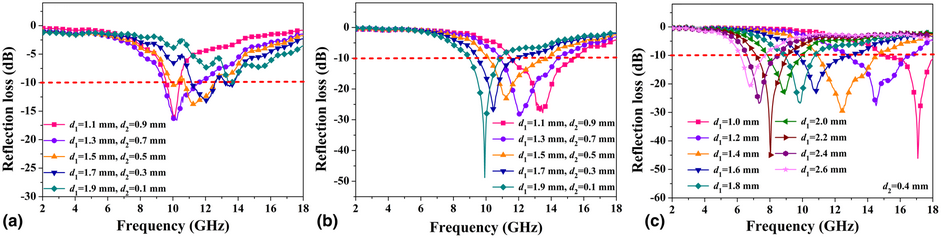
Double-layer absorbers have recently been extensively studied because single-layer absorbers can hardly meet the requirements of advanced absorbing materials. However, determining how to couple the matching and absorption layers remains a challenge. In the present work, we applied the hydrothermal method to prepare an ultrasmall Fe3O4 nanoparticle and a hierarchical MXene/Fe3O4 composite and then studied the microwave attenuation capabilities of single- and double-layer absorbers containing these two materials with different thicknesses. Absorbers with well-coupled layers showed improved absorption performance on account of the excellent impedance matching behavior of the Fe3O4 layer and the high microwave attenuation capability of the MXene/Fe3O4 layer. When the thickness of the matching layer filled with Fe3O4 was 0.1 mm and that of the absorption layer filled with MXene/Fe3O4 was 1.9 mm, a maximum reflection loss of −48.7 dB was achieved at 9.9 GHz. More importantly, when the thicknesses of the matching and absorption layers were 0.9 and 1.1 mm, respectively, the effective bandwidth was nearly 3.9 GHz. The double-layer absorbers with enhanced absorption properties may be regarded as a new generation of materials for electromagnetic wave absorption.
High-temperature (1500 °C) interactions of promising environmental-barrier coating (EBC) ceramics in the rare-earth (RE) pyrosilicate system, Yb(2-x)YxSi2O7 (x = 0, 0.2, 1, or 2), with three different calcia–magnesia–aluminosiliate (CMAS) glass compositions, are explored. Only the Ca/Si ratio is varied in the CMAS: 0.76, 0.44, or 0.10. Interaction between the highest Ca/Si CMAS and the EBC ceramic with the lowest x (=0, Yb2Si2O7) promotes no reaction but the formation of “blister” cracks. In contrast, the highest x (=2, Y2Si2O7) promotes the formation of an apatite reaction product, but no “blister” cracks. Observationally, it is found that a decrease in the CMAS Ca/Si ratio (0.76–0.10) and a decrease in Y-content decreases the propensity for reaction crystallization (apatite formation) and “blister” cracks. These results are rationalized based on the relative affinities between Ca2+ in the CMAS and Y3+ or Yb3+ in the EBC ceramics, suggesting a way to tune the CMAS interactions in RE pyrosilicate solid solutions.
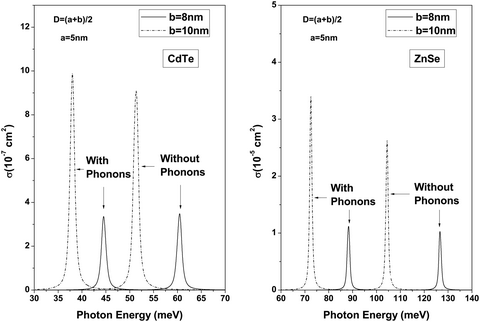
In this paper, we report a recent theoretical study of the calculation of the binding energy and photoionization cross section of a single dopant in a spherical hollow or core/shell quantum dot taking into account the interaction of the electron with longitudinal optical phonons. Using Frolich approach and Lee-low Pines transformation, we determine the impact of different parameters such as shell thickness and dopant position on the energy and optical response of a bound polaron for two types of ionic II–VI semiconductors CdTe and ZnSe with different phonon coupling constants. Regardless of the material used, the electron–phonon interaction visibly reduces binding energy. For photoionization cross section, a redshift of resonance peaks was found when the effect of phonons is taken into consideration or when the donor is moved away from the shell center. These calculations provide us insights when choosing between materials for optoelectronic applications.
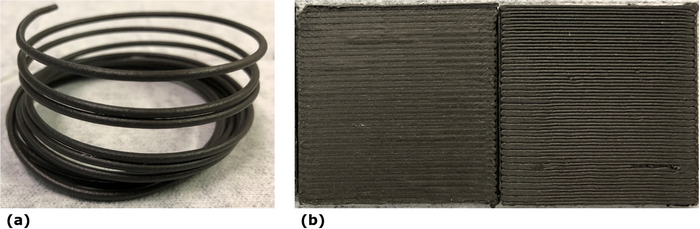
Vast improvements have been made to the capabilities of advanced manufacturing (AM), yet there are still limitations on which materials can effectively be used in the technology. To this end, parts created using AM would benefit from the ability to be developed from feedstock materials incorporating additional functionality. A common three-dimensional (3D) printing polymer, acrylonitrile butadiene styrene, was combined with bismuth and polyvinylidene fluoride via a solvent treatment to fabricate multifunctional composite materials for AM. Composites of varying weight percent loadings were extruded into filaments, which were subsequently 3D printed into blocks via fused filament fabrication. Investigating the material properties demonstrated that in addition to the printed blocks successfully performing as radiation shields, the chemical, thermal, and mechanical properties are suitable for AM. Thus, this work demonstrates that it is possible to enhance AM components with augmented capabilities while not significantly altering the material properties which make AM possible.
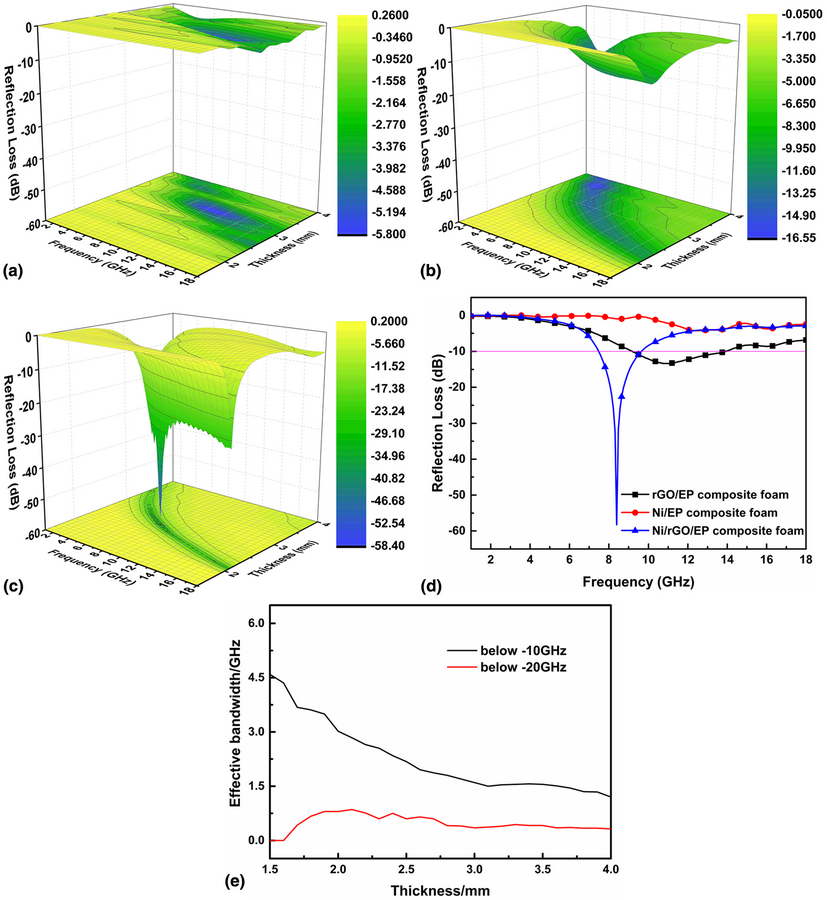
In this study, the Ni/rGO hollow microspheres were synthesized and combined with epoxy foam to prepare structural absorbing materials. The diameter of obtained rGO hollow microspheres loaded with Ni nanoparticles was around 10 μm and the thickness of the spherical wall was about 70 nm. The Ni/rGO/EP composite foam exhibited better microwave absorption properties than that of rGO/EP and Ni/EP composite foam. The minimum reflection loss value (RLmin) could reach −58.23 dB at 8.4 GHz with a thickness of 2.5 mm, and the effective bandwidth with RLmin lower than −10 dB is 2.21 GHz ranging from 7.46 to 9.67 GHz. The porous structure of Ni/rGO hollow microspheres and their filled epoxy foam can refract and absorb the electromagnetic waves repeatedly, which equals to extend the propagation path of microwave, thus, electromagnetic loss capacity was improved obviously.
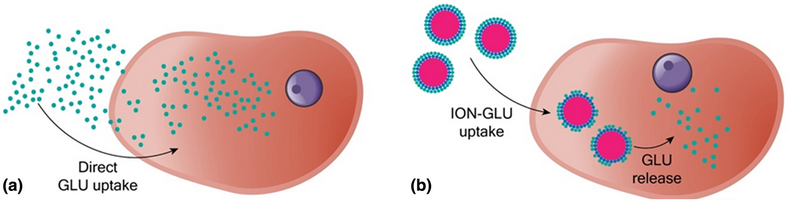
Herein, we report a synthetic route capable of producing superparamagnetic, stable and biocompatible glucosamine (GLU) nanocarriers, composed by colloidal iron oxide nanoparticles (ION, ~6 nm) surface-functionalized with GLU dispersed in physiological media (pH 7.2). The route consists first of the preparation of ION by aqueous alkaline co-precipitation of 1:2 Fe(II)/Fe(III) followed by surface treatment with citric acid, activation of acidic groups via carbodiimide intermediary and further amidation using GLU as the amine reactant. Results from cell viability tests performed with human dental pulp tissue cells suggest that ION–GLU nanocolloids are biocompatible and non-toxic for two different concentrations and several hours of incubation. Moreover, optical microscopy shows that ION–GLU adsorbs at the cells walls and also transposes them, reaching cytoplasm and nucleus as well. All findings point out the promising use of ION–GLU as biocompatible nanocarriers for GLU delivery such as in articulation diseases.
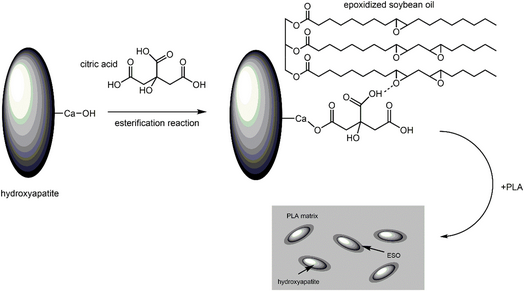
The addition amount and dispersion of inorganic particles into poly(lactic acid) (PLA) still remain a great difficulty, and in the present study, epoxidized soybean oil was used to improve the compatibility between hydroxyapatite (HA) and PLA via the melt blending method. Scanning electron microscopy shows that HA particles can be well dispersed in the PLA matrix when the addition amount is less than 20% in mass, whereas the agglomeration of HA particles and a discrete phase of PLA could be observed when the amount increases to 30%. Therefore, the maximum amount of HA particles can be achieved for the composite with 20% HA which can be also maintaining the bending strength of 71.6 MPa. The osteoblast cells were used to characterize the biocompatibility of the HA/PLA composite, and the results indicate that the number of cells in per unit volume cultured on the HA/PLA composite is 10% higher than that of the PLA. Based on the improved cell biocompatibility and mechanical strength compared to PLA, the composite of HA/PLA prepared in the present study can be served as a potential candidate for the bone fracture repair.
The photothermal experiments on the incident light angle dependence are carried out using simulated solar light on thin films of both iron oxides (Fe3O4 and Fe3O4@Cu2-xS) and porphyrin compounds (chlorophyll and chlorophyllin). Fe3O4 and Fe3O4@Cu2-xS are synthesized using various solution methods that produce mono-dispersed nanoparticles on the order of 10 nm. Chlorophyll is extracted from fresh spinach and chlorophyllin sodium copper is a commercial product. These photothermal (PT) materials are dispersed in polymethyl methacrylate (PMMA) solutions and deposited on glass substrates via spin coating that result in clear and transparent thin films. The iron-oxide based thin films show distinctive absorption spectra; Fe3O4 exhibits a strong peak near UV and gradually decreases into the visible and NIR regions; the absorption of Fe3O4@Cu2-xS is similar in the UV region but shows a broad absorption in the NIR region. Both chlorophyll and chlorophyllin are characterized with absorption peaks near UV and NIR showing a “U”-shaped spectrum, ideally required for efficient solar harvest and high transparency in energy-efficient single-pane window applications. Upon coating of the transparent PT films on the window inner surfaces, solar irradiation induces the photothermal effect, consequently raising the film temperature. In this fashion, the thermal loss through the window can be significantly lowered by reducing the temperature difference between the window inner surface and the room interior, based on a new concept of so-called optical thermal insulation (OTI) without any intervention medium, such as air/argon, as required in the glazing technologies. Single-panes are therefore possible to replace double- or triple panes. As OTI is inevitably affected by seasonal and daily sunlight changes, an incident light angle dependence of the photothermal effect is crucial in both thin film and window designs. It is found that the heating curves reach their maxima at small angles of incidence while the photothermal effect is considerably reduced at large angles. This angle dependence is well explained by light reflection by the thin film surface, however, deviated from what is predicted by the Fresnel's law, attributable to non-ideal surfaces of the substrates. The angle dependence data provide an important reference for OTI that window exposure to the sun is greater at winter solstice while that is considerably reduced in the summer. This conclusion indicates much enhanced solar harvesting and heat conversion via optically insulated windows in the winter season, resulting in much lower U-factors.
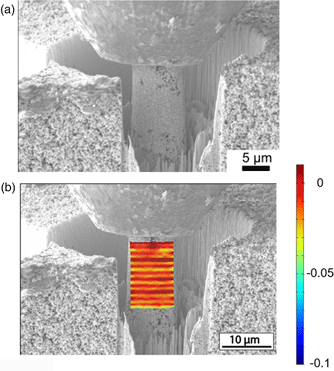
Porous metals represent a class of materials where the interplay of ligament length, width, node structure, and local geometry/curvature offers a rich parameter space for the study of critical length scales on mechanical behavior. Colloidal crystal templating of three-dimensionally ordered macroporous (3DOM, i.e., inverse opal) tungsten provides a unique structure to investigate the mechanical behavior at small length scales across the brittle–ductile transition. Micropillar compression tests show failure at 50 MPa contact pressure at 30 °C, implying a ligament yield strength of approximately 6.1 GPa for a structure with 5% relative density. In situ SEM frustum indentation tests with in-plane strain maps perpendicular to loading indicate local compressive strains of approximately 2% at failure at 30 °C. Increased sustained contact pressure is observed at 225 °C, although large (20%) nonlocal strains appear at 125 °C. The elevated-temperature mechanical performance is limited by cracks that initiate on planes of greatest shear under the indenter.
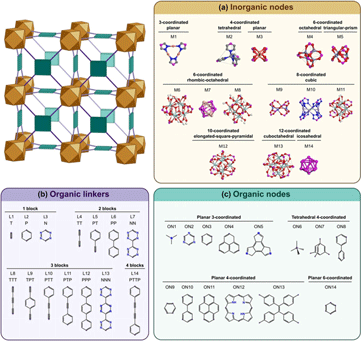
Metal–organic frameworks (MOFs) possess tuneable properties and a variety of important applications in the areas of catalysis, adsorption, gas storage, and separation, among others. Herein, recent computational studies by density functional theory (DFT) applied for simulations of MOF structure and complex architecture determination, prediction of properties, and computational characterization, including large-scale screening and geometrical properties of hypothetical MOFs, diffusion and adsorption processes in MOFs, are reviewed. DFT calculations have been applied in the MOF area to study chemical stability; mechanical, photophysical, optical, and magnetic properties; photoluminescence; porosity; and semiconductor or metallic character. The prediction of MOF analogs with open-metal sites, studies of chemical bonding and the prediction of energies by quantum mechanics allows reducing experimental efforts in the creation of MOF/polymer membranes, adsorbents for CO2 uptake, separation of C2H2/CH4, C2H2/CO2, and inert gases, radionuclides sequestration, and water adsorption, as well as other promising advances. For the MOF-derived carbons, a lack of profound DFT investigations is currently observed, being mainly restricted to the electrocatalysis area (nitrogen reduction reaction, oxygen evolution reaction, and hydrogen evolution reaction), resulting applications in batteries and other storage devices, CO2 sequestration, and absorbance of organic substances.
Gravity is commonly considered negligible when the surface tension is dominant; i.e., the Bond number is less than 1. In this paper, however, the authors present a technique in which drops slide over surfaces with zero effective gravity. Our study compared the sliding motion of water drops on hydrophilic and hydrophobic surfaces in scenarios: one in which effective gravity = 1 (1 g) and one in which it = 0 (0 g). The authors found that the lateral retention force was greater under 1 g than it was under 0 g. Also, the results showed that retention forces calculated by Furmidge equation are higher than the measured forces.
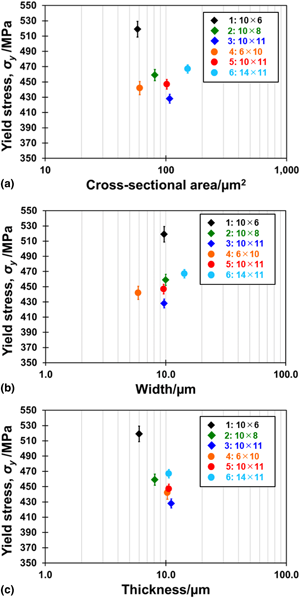
Sample geometry effects on mechanical strengths of gold micro-cantilevers are evaluated by a micro-bending test. Six micro-cantilevers with the same length of 50 μm are prepared, and the width and the thickness are varied to examine individual effects on the yield stress. The yield stress increases from 428 to 519 MPa when the thickness decreases from 11.1 to 6.0 μm. No obvious dependency is observed when varying the width. The results reveal that the thickness and the width each has a different influence on the yield stresses of micro-cantilevers evaluated by the bending test, which is the sample geometry effect.
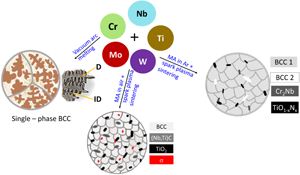
Two different processing routes of mechanical alloying followed by the spark plasma sintering (powder metallurgy) and vacuum arc melting (casting route) were employed to understand the role of processing routes on the phase and microstructural evolution in an equiatomic CrMoNbTiW refractory high-entropy alloy. Besides a major BCC solid solution, a small fraction of carbide, σ phase, nitride, and oxide phases were observed in the alloys prepared by the powder metallurgy route in contrast to a single-phase BCC solid solution in the casting route. The milling atmosphere (dry milling in air and Ar) has significantly influenced the phase and microstructural evolution, illustrating the substantial role of contaminants. Good thermal stability of microstructure at high homologous temperatures was shown based on the long-term heat treatment at 1300 °C for 240 h. The phase evolution predictions via Calphad studies were found to be in reasonable agreement with the experimental observations, albeit with some limitations.
Polysaccharide-based nanoparticles such as pectin had always been of greatest interest because of its excellent solubility and mucoadhesive nature and are highly suitable for oral drug delivery for drug administration. In this study, we used commercially available pectin samples based on their degree of esterification, and nanoparticles were fabricated by the ionotropic gelation method using magnesium (Mg2+) as the divalent cross-linker. We conducted a comparative analysis on the three pectin NPs—high methoxylated pectin (HMP), low methoxylated pectin (LMP), and amidated LMP (AMP)—to examine the difference in characteristics such as shape, size, and biocompatibility. HMP and AMP were found to be similar in size (~850 nm), whereas LMP was found to be of ~700 nm. The three NPs were also tested for their biocompatibility toward THP-1 cells. All three NPs were found to have the potential as a nanocarrier of therapeutic and preventive drugs, especially through oral routes.
Residual strain in electrodeposited Li films may affect safety and performance in Li metal battery anodes, so it is important to understand how to detect residual strain in electrodeposited Li and the conditions under which it arises. To explore this Li films, electrodeposited onto Cu metal substrates, were prepared under an applied pressure of either 10 or 1000 kPa and subsequently tested for the presence or absence of residual strain via sin2(ψ) analysis. X-ray diffraction (XRD) analysis of Li films required preparation and examination within an inert environment; hence, a Be-dome sample holder was employed during XRD characterization. Results show that the Li film grown under 1000 kPa displayed a detectable presence of in-plane compressive strain (−0.066%), whereas the Li film grown under 10 kPa displayed no detectable in-plane strain. The underlying Cu substrate revealed an in-plane residual strain near zero. Texture analysis via pole figure determination was also performed for both Li and Cu and revealed a mild fiber texture for Li metal and a strong bi-axial texture of the Cu substrate. Experimental details concerning sample preparation, alignment, and analysis of the particularly air-sensitive Li films have also been detailed. This work shows that Li metal exhibits residual strain when electrodeposited under compressive stress and that XRD can be used to quantify that strain.
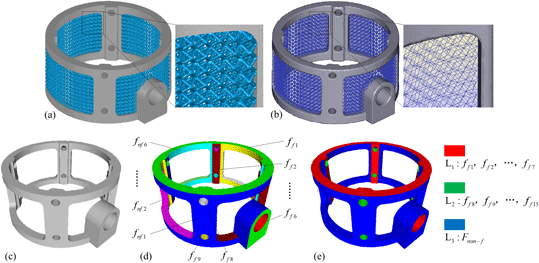
Additive manufacturing has enabled the development of lightweight lattice structures, which are widely used in orthopedic implant, aerospace and filtration fields. The traditional method of optimizing part build orientation has been unable to meet the demand for lightweight lattice parts. This paper proposes a novel method to obtain an optimum build orientation for lightweight lattice parts based on selective laser melting by considering two factors at a time, namely processability of lattice structures and the surface quality of functional features. First, the overhang structure area model for the evaluation of the processability of lattice structures is established; then, mesh segmentation and feature level classification of the lightweight part frame are carried out. On this basis, the adaptive feature roughness model for the evaluation of the surface quality of functional features is established; finally, a multicriteria genetic algorithm is used to solve the build orientation optimization problem of lightweight lattice parts to obtain a Pareto optimal set.
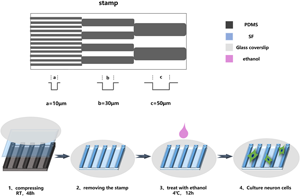
The surface topology of biomaterial has a definite effect on the growth behavior of nerve cells for peripheral nerve regeneration. In this study, the silk fibroin (SF) film with different anisotropic microgroove/ridge was constructed by micropatterning technology. The effects of topologies width on the directional growth of dorsal root ganglion (DRG) neurons were evaluated. The results showed that the topological structure of the SF film with higher SF concentration was more clear and complete. The microtopography of the SF film with a concentration of 15% and a groove width of around 30 μm could effectively guide the directional growth of the nerve fibers of DRG. And nerve fibers could obviously form nerve fiber bundles which may have a certain pavement effect on the recovery of nerve function. The study indicated that the SF film with a specific width of the topological structure may have potential applications in the field of directional nerve regeneration.
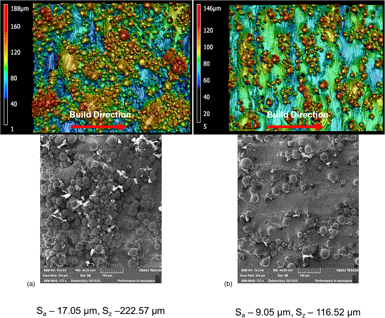
Additively manufactured parts produced via laser powder bed fusion (LPBF) have limitations in their applications due to post-processing requirements caused by high surface roughness. The characteristics of side-skin surfaces are generally assumed to be dominated by adhered powder particles. This work aims to analyze and interpret the effects of LPBF processing parameters on side-skin surfaces. As such, this work has two sections to investigate the effect of (i) core and (ii) border LPBF parameters on side-skin surface roughness for Ti–6Al–4V. The findings show that there is a robust correlation between both core and border LPBF parameters on side-skin surface morphologies. In terms of core LPBF parameters, an interaction between laser power and beam velocity is shown to influence side-skin surface roughness, resulting in Sa values in the range of 11–26 μm. Additionally, a preliminary investigation into the effect of melting mode phenomena at the border leads to a possibility of obtaining Sa values of <10 μm, with reduced effects of adhered and partially fused powder.
The crystal structure of oseltamivir phosphate has been refined using synchrotron X-ray powder diffraction data and optimized using density functional techniques. Oseltamivir phosphate crystallizes in space group P21212 (#18) with a = 24.0079(3), b = 24.6716(2), c = 7.45254(5) Å, V = 4414.24(5) Å3 at 295 K, and Z = 8. Prominent in the crystal structure are hydrogen bonds between the phosphate groups and the ammonium groups of the oseltamivir cations. The strong hydrogen bonds link the cations and the anions into columns parallel to the c-axis, with van der Waals interactions between the columns. Thermal expansion between 120 and 295 K is anisotropic. The powder pattern is included in the Powder Diffraction File™ as entry 00-068-1107.