To save content items to your account,
please confirm that you agree to abide by our usage policies.
If this is the first time you use this feature, you will be asked to authorise Cambridge Core to connect with your account.
Find out more about saving content to .
To save content items to your Kindle, first ensure no-reply@cambridge.org
is added to your Approved Personal Document E-mail List under your Personal Document Settings
on the Manage Your Content and Devices page of your Amazon account. Then enter the ‘name’ part
of your Kindle email address below.
Find out more about saving to your Kindle.
Note you can select to save to either the @free.kindle.com or @kindle.com variations.
‘@free.kindle.com’ emails are free but can only be saved to your device when it is connected to wi-fi.
‘@kindle.com’ emails can be delivered even when you are not connected to wi-fi, but note that service fees apply.
The structural, electronic, and magnetic properties of quasi-one-dimensional MoS2nanowires (NWs), passivated by extra sulfur, have been determined using ab initio density functional theory. The nanostructures were simulated using several different models based on experimental electron microscopy images and theoretical literature. It is found that independently of the geometrical details and the coverage of extra sulfur at the Mo edge, quasi-one-dimensional metallic states are predominant in all the low-energy model structures despite their reduced dimensionality. These metallic states are localized mainly at the edges. However, the electronic and magnetic character of the NWs does not depend only on the S saturation but also on the symmetry configuration of the S edge atoms. Our results show that for the same S saturation, the magnetization can be decreased by increasing the pairing of the S and Mo edge atoms. In spite of the observed pairing of S dimers at the Mo edge, the NWs do not experience a Peierls-like metal–insulator transition.
We report on Ni-modified TiO2 nanotubes with improved photocatalytic properties. Using the as-anodized TiO2 nanotubes as templates, Ni was electrodeposited using pulsed current waveforms. It was found that the Ni deposition was first initiated at the bottoms of the intertubular voids and then grew upward, resulting in a Ni/TiO2 coaxial nanostructure with Ni wrapping around the TiO2 nanotubes. Moreover, the tube inside was kept empty and tube openings unclogged for the fabricated Ni/TiO2 nanocomposites. Further photodegradation tests using methyl red revealed that the fabricated Ni/TiO2 nanocomposites possess higher photocatalytic efficiency than the counterparts of pristine TiO2 nanotubes. The observed improved photocatalytic efficiency is ascribed to the Schottky barriers formed between Ni and TiO2.
In the present work, proton conducting nanocomposite electrolytes containing poly(vinylphosphonic acid) (PVPA) and TiO2 have been prepared and characterized. In the nanocomposite materials, the TiO2 content was varied from 5% to 20% (w/w) to improve mechanical strength and stability. The thermal stability, proton conductivity, as well as morphology of the electrolytes were investigated. The interaction existed between PVPA and TiO2 was confirmed by Fourier transform infrared spectroscopy. Thermogravimetric analysis showed that the samples are thermally stable up to approximately 200 °C. Differential scanning calorimetry results indicate that the Tg of the materials shift to higher temperatures as TiO2 content increases. Scanning electron microscopy results confirmed that the TiO2 nanoparticles were successfully incorporated and homogeneously distributed in the PVPA matrix. In the anhydrous state, the proton conductivity of PVPA(10)TiO2(in situ) has been found to be 0.004 S/cm at 120 °C. The proton conductivity of these membranes are also measured and compared with previous studies.
Most CuIn(SexS1−x)2 (CISS) thin films are deposited via conventional two-stage process. However, a significant problem related to the conventional two-stage process is the separation of CuInSe2 and CuInS2 phases. In this article, single-phase CISS thin films have been successfully prepared by selenizing sulfides of copper and indium. The mixed sulfides of Cu–In precursors were synthesized by coprecipitation method and then partly reduced. The inks containing partly reduced powders and organic binders were deposited onto glass substrate using a spin-coating technique. After coating, the precursor films were selenized to get CISS. X-ray diffraction and energy dispersive x-ray spectroscopy data show that the single (112) peak position changed with the variation of Se/S ratio. The absorption energy Egchanges linearly with Se/(Se + S) calculated by ultraviolet–vis absorption spectra. Those results confirm the formation of single-phase CISS with homogenous composition.
The ability of silver (Ag)-containing borate bioactive glass (BG) coatings to improve the biocompatibility and antibacterial properties of titanium (Ti) implants was investigated in vitro and in vivo in a rabbit tibial fracture model. Dense coatings of borate BG (thickness ≈ 20 μm) containing 0, 0.75, and 1.0 wt% Ag2O were prepared by depositing a layer of particles on Ti plates, followed by sintering at 900 °C. The as-prepared coatings had an adhesive strength of 10 ± 1 MPa, and when immersed in an aqueous phosphate (K2HPO4) solution, the coatings converted to hydroxyapatite, releasing Ag+ ions continuously for over 4 wk. After implantation of BG-coated Ti constructs in a rabbit tibial fracture model and of methicillin-resistant Staphylococcus aureus-induced osteomyelitis, the BG coating doped with 1.0 wt% Ag2O was most effective for the simultaneous eradication of the infection and fracture fixation. Implants coated with Ag-containing BG coatings could provide an approach for reducing implant-related bone infection.
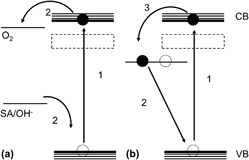
Nanostructured tungsten trioxide films were prepared by reactive dc magnetron sputtering at different working pressures Ptot = 1–4 Pa. The films were characterized by scanning electron microscopy, x-ray diffraction, Rutherford backscattering spectroscopy, Raman spectroscopy, and ultraviolet–visible spectrophotometry. The films were found to exhibit predominantly monoclinic structures and have similar band gap, Eg ≈ 2.8 eV, with a pronounced Urbach tail extending down to 2.5 eV. At low Ptot, strained film structures formed, which were slightly reduced and showed polaron absorption in the near-infrared region. The photodegradation rate of stearic acid was found to correlate with the stoichiometry and polaron absorption. This is explained by a recombination mechanism, whereby photoexcited electron–hole pairs recombine with polaron states in the band gap. The quantum yield decreased by 50% for photon energies close to Eg due to photoexcitations to band gap states lying below the O2affinity level.
The indentation hardness of three different pure forms of silicon was investigated by two different methods. The hardness was probed by direct imaging of the residual impressions and by instrumented indentation using the Oliver–Pharr method. The forms of silicon used were a defective form of amorphous silicon, an amorphous form close to a continuous random network, and a crystalline silicon. The first form deforms via plastic flow and the latter two via phase transition. Two different unloading rates, fast and slow, were used to vary the phase transition behavior. This influenced the relative hardness as measured by instrumented indentation, which is not a reliable method to quantify hardness values in phase transforming materials. Thus, for our phase transforming silicon system, the relative hardness between samples can only be determined correctly by direct imaging, provided that the image accurately reveals the extent of the phase transformed volume.
Single and multilayer diamond films were grown on silicon by varying substrate distance in hot-filament chemical vapor deposition. The grown films were characterized by scanning electron microscope (SEM) and Raman spectroscopy. From SEM surface images, it was observed that the films grown at substrate distances of 8, 7, and 6 mm and temperatures of 740, 780, and 830 °C possessed cauliflower, pseudocubes, and finally well-faceted cubes morphology. SEM fracture cross-sectional investigations revealed that growth of pseudocubes initiated on the top of cauliflower structure. By using the parametric relations gathered from single layer diamond growth studies, first time, multilayer diamond coatings were grown in situ with tunable thickness by only varying the substrate distance from filament assembly during deposition.
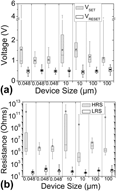
Resistive memory devices have the potential to replace flash technology due to their increased scalability, low voltage of operation, and compatibility with silicon semiconductor manufacturing. We report a spin-on resistive switching material, hydrogen silsesquioxane (HSQ), which is a commonly used electron beam resist. We demonstrate device scalability from 100 μm to 48 nm and show that the switching properties do not depend on the device size. Set voltages were typically <3 V, while reset voltages were <1 V when analyzing the positive unipolar switching properties of these devices. The ratio of the high resistance to the low resistance was ranged from 101 to 102, creating a distinct memory window between the memory states. Composition–depth profiling revealed that copper from the bottom electrode migrated into the HSQ films as a result of annealing. It is therefore speculated that copper may play a role in the switching properties of devices based on this material.
Silver nanoparticle inks printed on temperature-sensitive substrates can be converted into structures with high electrical conductivities within fractions of a second by photonic flash sintering. The key principle is the selective heating of the ink by the absorption of strongly focused pulsed light for which the substrate is transparent. The influence of process parameters like intensity and flashing frequency on the sintering speed is investigated. Furthermore, a setup is demonstrated for monitoring the temperature development in an ink during flash sintering, revealing that the substrate's glass transition point is exceeded only for very short time intervals, which prevents deformation.
Powder diffraction data are presented for 3,4-methylenedioxymethylamphetamine hydrochloride monohydrate, the hydrated form of MDMA.HCl, the drug of abuse commonly known as Ecstasy. Samples of pure MDMA.HCl were recrystallized from a variety of solvents, and powder diffraction patterns of the resulting products recorded. Data were collected at room temperature using iron-filtered CoKα radiation.
X-ray powder diffraction data, unit-cell parameters, and space group for a new chiral Kemp's acid diamide, C21H26N2O3, are reported [a = 16.061(4) Å, b = 14.340(5) Å, c = 8.361(2) Å, β = 97.678(4)°, unit-cell volume V = 1908,54 Å3, Z = 4, and space group P21]. All measured lines were indexed and found to be consistent with the P21 space group. No detectable impurity was observed.
M2(dhtp)·nH2O (M = Mn, Co, Ni, Zn; dhtp = 2,5-dihydroxyterephthalate), known as MOF74, is a family of excellent sorbent materials for CO2 that contains coordinatively unsaturated metal sites and a honeycomb-like structure featuring a broad one-dimensional channel. This paper describes the structural feature and provides reference X-ray powder diffraction patterns of these four isostructural compounds. The structures were determined using synchrotron diffraction data obtained at beam line 11-BM at the Advanced Photon Source (APS) in the Argonne National Laboratory. The samples were confirmed to be hexagonal R 3 (No. 148). From M = Mn, Co, Ni, to Zn, the lattice parameter a of MOF74 ranges from 26.131 73(4) Å to 26.5738(2) Å, c from 6.651 97(5) to 6.808 83(8) Å, and V ranges from 3948.08 Å3 to 4163.99 Å3, respectively. The four reference X-ray powder diffraction patterns have been submitted for inclusion in the Powder Diffraction File (PDF).
Based only on a geometrical approach, we present a technique to index powder diffraction diagrams. This would allow us to find the cell parameters from the experimental data. It is well known that methods proposed in the literature make a direct use of the experimental data to build the cell, whereas our approach exploits them to calculate theoretical values, which could be multiples of two of the three vectors' lengths of the unit cell, and then uses them along with the experimental values. To show the effectiveness of the proposed algorithm, several examples, requiring only minor limitations in linear dimensions (<35 Å) and volume (<4500 Å3), are treated. For all considered cases, except the triclinic symmetry that is time consuming, the corresponding FORTRAN routine is executed in a reasonable time (<3 min with a 3 GHz processor).
A new compound Er0.33Sr1.67Ni0.8Cu0.2O4−δ (ErSr5Ni2.4Cu0.6O11) was prepared using the conventional solid state method and annealed at 1423 K in 1 atm of oxygen gas flow. The oxygen non-stoichiometry (δ = 0.47) was determined by iodometric titration. Rietveld refinement using powder X-ray diffraction data confirms that the sample adopts the K2NiF4-type structure (space group I4/mmm (Z = 2), a = 3.760 56(4) and c = 12.3889(1) Ǻ). The final reliability factors were: Rwp = 10.75%, χ2 = 2.51, Rp = 14.80%, RB = 4.77% and RF = 2.73%. Four probe electrical resistivity measurements were performed vs. temperature in the range of 320–540 K. A semiconducting behaviour over the whole range of temperature, with a maximum conductivity of 0.026 S cm−1 is observed at 439 K.