To save content items to your account,
please confirm that you agree to abide by our usage policies.
If this is the first time you use this feature, you will be asked to authorise Cambridge Core to connect with your account.
Find out more about saving content to .
To save content items to your Kindle, first ensure no-reply@cambridge.org
is added to your Approved Personal Document E-mail List under your Personal Document Settings
on the Manage Your Content and Devices page of your Amazon account. Then enter the ‘name’ part
of your Kindle email address below.
Find out more about saving to your Kindle.
Note you can select to save to either the @free.kindle.com or @kindle.com variations.
‘@free.kindle.com’ emails are free but can only be saved to your device when it is connected to wi-fi.
‘@kindle.com’ emails can be delivered even when you are not connected to wi-fi, but note that service fees apply.
Deposition of ibuprofen (IBU) into ordered mesoporous silica SBA-15 was carried out to prepare controlled release nanodrug using supercritical carbon dioxide (scCO2) as solvent at 17 MPa and 310.15 K. The maximum drug loading of IBU/SBA-15 was as high as 41.96%. The characterization of the obtained materials was performed using x-ray diffractometry (XRD), scanning electron microscopy (SEM), and nitrogen (N2) adsorption-desorption isotherms; the results indicate that most adsorbed drugs were inside the nanoscale channels. The in vitro study shows that the time of complete (100%) release significantly decreases as drug-loading decreases. The interesting aspect is that the samples with similar drug loading display different release rates, which may be due to differences in the drug quantity adsorbed inside the pores. In addition, the modified Noyes-Whitney equation was used to model the release kinetics for all the samples and a good agreement was obtained between the model representation and experimental data. In addition, the solubility of IBU in scCO2was tested through a high-pressure view cell at the temperature range of 298.15–320.15 K and pressure range of 7–17 MPa. The experimental solubility data were well correlated using Chrastil’s equation as well as Mendez-Santiago and Teja’s equation.
Luminescent nanocrystals or quantum dots (QDs) have great potential for bioanalysis as well as optoelectronics. Here we report an effective and inexpensive fabrication method of silicon carbide quantum dots (SiC QDs), with diameter below 8 nm, based on electroless wet chemical etching. Our samples show strong violet-blue emission in the 410–450 nm region depending on the solvents used and particle size. The cytotoxic properties of the SiC QDs based on alamarBlueTM assay cells were studied. The presence of the QDs dots does not affect cell growth in a wide concentration range. Two-photon excitation showed significant response from SiC nanocrystals that were injected into hippocampal CA1 pyramidal cells.
The unique set of mechanical properties found in rigid biological tissues, which combine high strength and stiffness with superior toughness, offer inspiration for the design of advanced functional structural materials with outstanding performance. This paper reports on the first utilization of one such biogenic material—siliceous sponge spicules, the skeletal elements of sponges (Poriphera)—as a unique naturally nanostructured template for vacuum deposition, while also reporting on the effects of the required chemical and thermal treatments for template preparation on the material’s microstructure and mechanical properties. The confined space within the central channel of spicules from the sponge Euplectella acts simultaneously as a nanotemplate and as a biogenic, optically transparent, glassy microchamber for the preparation of micrometer-sized clusters of fullerene-C60 through vacuum deposition onto the nanostructured surface. This biological material allows an unprecedented and unique microporous morphology of C60 particles to be obtained.
We review our work on combinatorial search and investigation of morphotropic phase boundaries (MPBs) in chemically substituted BiFeO3 (BFO). Utilizing the thin-film composition spread technique, we discovered that rare-earth (RE = Sm, Gd, and Dy) substitution into the A-site of the BFO lattice results in a structural phase transition from the rhombohedral to the orthorhombic phase. At the structural boundary, both the piezoelectric coefficient and the dielectric constant are substantially enhanced. It is also found that the observed MPB behavior can be universally described by the average A-site ionic radius as a critical parameter, indicating that chemical pressure effect due to substitution is the primary cause for the MPB behavior in RE-substituted BFO. Our combinatorial investigations were further extended to the A- and B-site cosubstituted BFO in the pseudoternary composition spread of (Bi1−xSmx)(Fe1−yScy)O3. Clustering analysis of structural and ferroelectric property data of the fabricated pseudoternary composition spread reveals close correlations between the structural and ferroelectric properties. We show that the evolution in structural and ferroelectric properties is controlled solely by the A-site Sm substitution and not the B-site Sc substitution.
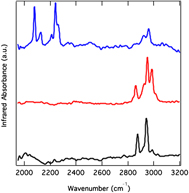
Single-walled carbon nanotube (SWNT) radical anions will react with tetrahydrofuran and generate ethylene, enolates, and a partially hydrogenated nanotube backbone. The experimental evidence suggests that there are sp3 C–H binding interactions. The total gravimetric content of hydrogen on a sample averages from 3.5% to 3.9% w/w, about four times the total amount observed for nanotubes hydrogenated via traditional Birch reduction reactions. Furthermore, the hydrogen desorbs at temperatures up to 400 °C less than those observed for the hydrogenated SWNTs formed after the Birch reduction. Finally, the first room temperature electron spin resonance spectrum of a nanotube radical ion is also reported.
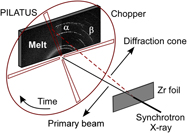
We have studied dynamic thermo-mechano-chemical responses of reactive metallic systems, both in clouds of small oxygen-free particles (∼1–10 μm in diameter) produced by fracturing Zr-rich bulk metallic glass and in pure Zr metal foils (∼25 μm thin), under thermal (laser ablation or pulse electrical heating) and mechanical loadings. The mechanical fracture/fragmentation and fragments reactions were time resolved using an integrated set of fast six-channel optical pyrometer, high-speed microphotographic camera, and time- and angle-resolved synchrotron x-ray diffraction. These small-scale tabletop real-time experiments performed on or near surfaces of reactive metals provide fundamental data, in atomistic scales or of particle clouds, regarding fragmentation mechanics, combustion mechanisms and kinetics, and dynamics of energy release under thermal and mechanical loadings. We present the results of pure Zr and Zr-rich amorphous metals, not only signifying diversified combustion mechanisms depending on microstructures, particle sizes, oxygen pressure, and ignition conditions but also providing fundamental data that can be used to develop and validate thermochemical and mechanochemical models for reactive materials.
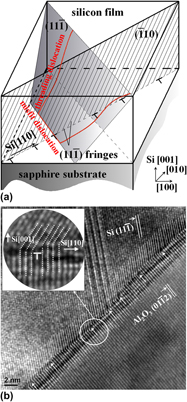
In a thin film system involving dissimilar materials, the residual stresses and microstructural defects are inevitable due to the misfits of lattice structures and thermal properties of the materials. Unfortunately, the relationship between the stresses and interface defects is still unclear to date. This article aims to clarify such an important relationship by a finite element (FE) analysis incorporating the dislocation distribution from high-resolution transmission electron microscopy. Layer removal and Raman spectroscopy were also conducted to explore the film-thickness effect. It was found that that residual stress variation in a thin film system is caused by the coupled effect of lattice-thermal misfits and discrete interfacial dislocations, that the residual stresses are dependent on the film thickness, and that it is particularly important to identify the correct density of interface dislocations for an accurate residual stress calculation by a FE analysis.
The increased use of viscous electrolytes in dye-sensitized solar cells (DSSCs) has revitalized the interest in three-dimensionally ordered macroporous (3DOM) structures as potential electrodes. The simplest approach to a 3DOM structure, such as inverse opals, is colloidal assembly followed by precursor infiltration and calcination. However, current assembly methods are often optimized for very narrow particle size ranges due to the colloidal forces specific to the method used. Using five particle sizes, ranging from 0.5 to 10 μm, we have studied the particle-size dependence of six commonly used colloidal assembly methods and its effect on the resulting inverse opal structure using scanning electron microscopy and Fast Fourier Transforms. Our results indicate a clear correlation between particle size and colloidal assembly method. The information provided by our study will enable systematic studies on inverse opal TiO2 electrodes with various pore sizes, in which the influence of the inverse opal preparation methods used is minimized.
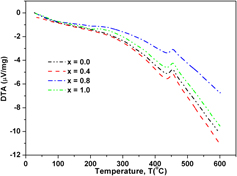
The structural and magnetic properties of the Al cosubstituted cubic spinel ferrite series MgAlxFe2−xO4 (x = 0.0, 0.4, 0.8, and 1.0) synthesized through a coprecipitation method were characterized by means of x-ray powder diffraction, infrared (IR) spectroscopy, transmission electron microscopy (TEM), differential thermal analyses, and vibrating sample magnetometer. Lattice constants determined from x-ray diffraction (XRD) measurements exhibit a decrease with increasingAl3+ ions in the ferrites system. The particle size using TEM was ∼33 nm for magnesium ferrite, which is in good agreement with values obtained by XRD method. The crystallization spinel formation for the parent ferriteMgFe2O4 using differential thermal analysis (DTA) technique was 454 °C. The two main bands observed in the IR spectra (tetrahedral and octahedral) were in the range (568–628 cm−1) and (431–460 cm−1), respectively. Magnetization curve shows the highest value for the sample with concentration x = 0.4.
Dielectric measurements (permittivity and hysteresis loop) of monocrystals of bis-thiourea pyridinium bromide inclusion compound have revealed for the first time ferroelectric properties of the studied samples. In the present article, a model of ferroelectric ordering on the basis of single-crystal x-ray diffraction data is described. In the low-temperature phase, the spontaneous polarization is directed along the a axis and ferroelectricity is of the mixed type (displacement and order-disorder component), whereas in the intermediate phase the spontaneous polarization is directed along the c axis and ferroelectricity is of the order-disorder type.
Silicon nanocrystals (Si-nc) present several plus points as advanced fluorescent biomarkers but suffer from difficulties met in controlling their intrinsic photoluminescence (PL). Here, we first consider the reasons for this difficulty, showing results that support an interface defect-related origin of the PL. Attainment of a controlled PL emission would then require tuning of defects in the capping oxide, a hard and yet unaddressed task. Alternatively, we demonstrate the possible use of Si-nc as antennas, or sensitizers, of a luminescent rare-earth ion in an engineered fluorophore. In this approach the relatively high and broadband optical absorption of Si-nc was exploited, keeping the advantages of a near-infrared inorganic light emitter. Another fundamental part of the assessment of Si-nc for bioimaging is their biocompatibility. Here, we report toxicity tests based on the lactate dehydrogenase release and 3-(4,5-dimethylthiazol-2-yl)-2,5-diphenyltetrazolium bromide assays on epithelial cells and fibroblasts, confirming that Si-nc in concentration suitable for luminescent labeling do not affect significantly the cells viability.
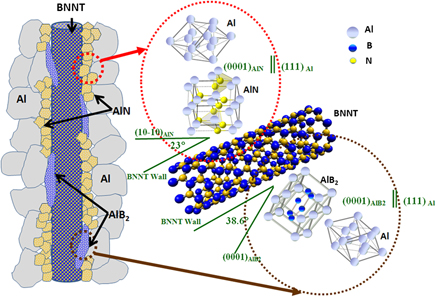
Nature and mechanism of interfacial reactions between boron nitride nanotubes (BNNTs) and aluminum matrix at high temperature (650 °C) are studied using high-resolution transmission electron microscopy (HRTEM). This study analyzes the feasibility of the use of BNNTs as reinforcement in aluminum matrix composites for structural application, for which interface plays a critical role. Thermodynamic comparison of aluminum (Al)-BNNT with analogous Al-carbon nanotube (Al-CNT) system reveals lesser amount of reaction in the former. Experimental observation also reveals thin (∼7 nm) reaction-product formation at Al-BNNT interface even after 120 min of exposure at 650 °C. The spatial distribution of the reaction-product species at the interface is governed by the competitive diffusion of N, Al, and B. Morphology of the reaction products are influenced by their orientation relationship with BNNT walls. A theoretical prediction on Al-BNNT interface in macroscale composite suggests the formation of strong bond between the matrix and reinforcement phase.
Nanocrystalline anatase was synthesized, using both domestic and laboratory microwave ovens, from different precursors. Nanoparticulate anatase was obtained after microwave irradiation of tetra-butyl orthotitanate solution in benzyl alcohol. As-synthesized samples have orange color due to the presence of organics that were eliminated after annealing at 500 °C, whereas the size of small anatase nanocrystals (around 8 nm) was preserved. Other nanocrystalline anatase samples were obtained from hexafluorotitanate-organic salt ionic liquid-like precursors. In this case, use of a domestic microwave oven and very short processing times (1–3 min irradiation time) were involved. Good specific capacity values and capacity retention at high C rates for insertion/deinsertion of Li+were recorded when testing such nanoparticles as electrode material in lithium cells. The electrochemical performances were found be strongly dependent on the phase composition, which in turn could be tuned through the synthetic procedure.
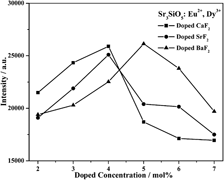
Yellow-emitting long afterglow phosphors Sr3−xSiO5, xMF2: Eu2+, Dy3+ (0 ≤ x ≤ 0.15, M: Ba, Sr, Ca) have been prepared by high-temperature solid-state reaction method followed with rapid cooling process. Photoluminescence measurement reveals that the main emission of the phosphors locates at 575 nm, corresponding to the 4f65d1–4f7 transition of Eu2+. The introduction of alkaline earth metal fluoride effectively enhances the luminescence intensity and prolongs the afterglow time. Especially, the afterglow of the Sr2.95SiO5, 0.05BaF2: Eu2+, Dy3+ phosphor can last for 12 h. Thermal luminescence measurement shows that the trap density of Sr3SiO5: Eu2+, Dy3+ phosphor can be adjusted by adding different alkaline earth metal fluorides, which offers a feasible way to improve the afterglow properties of silicate phosphors.
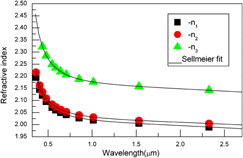
Nd-doped LaVO4 crystals with the concentration up to 0.94 at.% were successfully grown by the Czochralski method. X-ray powder diffraction measurement reveals that this crystal belongs to a monoclinic space group P21/n. Refractive indices of Nd:LaVO4 have been measured with two right angle prisms for the first time to our knowledge and show that they are anisotropic. Its absorption and fluorescence spectra are also investigated. With the Judd–Ofelt theory, the optical parameters calculated are Ω2 = 2.142 × 10⁻²⁰ cm2, Ω4 = 3.704 × 10⁻²⁰ cm2, and Ω6 = 2.948 × 10⁻²⁰ cm2. By these parameters, the absorption oscillator strengths, line strengths, transition probabilities, fluorescence branch ratios, radiative lifetime, and integrated emission cross section are also derived and compared with familiar vanadates, which show that Nd:LaVO4 is a atypical material and has potential applications in the lasers, especially in the pulsed lasers.
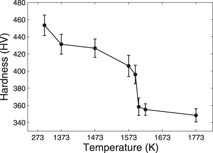
Electropulsing treatment (EPT) has been first applied to the recrystallization of a refractory metal—tungsten (W). We have three major observations: (i) the recrystallization temperature of a rolled pure W under EPT is ∼900 K higher than its conventional recrystallization temperature (1603 K); (ii) the time required for recrystallization is significantly reduced compared with that of conventional heat treatment (CHT); (iii) the recrystallized grains are also much finer than the ones under CHT. Based on quantitative analysis, we conclude that the huge increase of the recrystallization temperature of the rolled pure W under EPT is due to the high heating rate generated by EPT and high activation energy for vacancy diffusion of W, and the accelerated recrystallization and grain refinement have resulted from the coupling of thermal and electromigration effects of EPT at relatively high temperatures.
Titanium dioxide (TiO2) and mixed oxides, i.e., mixtures of magnesium oxide and titanium dioxide (MgO–TiO2) with different ratios were synthesized by two methods—flame synthesis and aerogel, for comparison of their properties. The samples were characterized by powder x-ray diffraction (pXRD), energy-dispersive x-ray spectroscopy, Fourier transform infrared spectroscopy, Brunauer-Emmet-Teller method of surface area measurements, ultraviolet-visible spectroscopy (UV-vis), and transition electron microscopic analysis. The pXRD patterns of different mixed oxides with different mole ratios revealed that there were formations of different compositions and phases. These mixed oxides were also used as photocatalysts in the UV-vis light to oxidize acetaldehyde, and carbon dioxide (CO2) was measured as a product. The mixed oxides with low content of MgO (∼1–2 mol%) were found to be more UV-active photocatalysts for the degradation of acetaldehyde than the degradation by Degussa P25 and as-synthesized TiO2, the highest by the MgO–TiO2 mixed oxides of 1:50 ratio when comparisons were carried out among the samples prepared by the same method. Furthermore, the mixed oxides prepared by the aerogel method were found to be superior photocatalysts compared with the mixed oxides of equal ratio prepared by flame synthesis. This effect of insulator, MgO, on the photocatalytic activity of semiconductor, TiO2, was found to be interesting and can be applied for other applications as environmentally friendly materials.
Copper–zinc alloy (Cu/Zn) powders with different Zn to Cu molar ratios were prepared by the combustion synthesis technique using a CuO + 0.15(C2H4)n + kZn (0.2 ≤ k ≤ 1.6 mol) reactive mixture. Depending on the Zn concentration, the combustion wave developed a temperature between 950 and 1040 °C and passed through the sample with a speed of 0.04–0.08 cm/s, resulting in almost single-stage temperature distributions. Cu/Zn alloy powders with Zn concentrations ranging from 0.5 to 45 wt% were obtained. It was shown that alloy particles become spherical and well dispersed with increasing Zn concentration. Inert dilution test with KCl salt was also performed to determine the influence of temperature degradation in the combustion wave on the morphology and composition of alloy powders.