To save content items to your account,
please confirm that you agree to abide by our usage policies.
If this is the first time you use this feature, you will be asked to authorise Cambridge Core to connect with your account.
Find out more about saving content to .
To save content items to your Kindle, first ensure no-reply@cambridge.org
is added to your Approved Personal Document E-mail List under your Personal Document Settings
on the Manage Your Content and Devices page of your Amazon account. Then enter the ‘name’ part
of your Kindle email address below.
Find out more about saving to your Kindle.
Note you can select to save to either the @free.kindle.com or @kindle.com variations.
‘@free.kindle.com’ emails are free but can only be saved to your device when it is connected to wi-fi.
‘@kindle.com’ emails can be delivered even when you are not connected to wi-fi, but note that service fees apply.
Ferrites are promising materials for enabling solar-thermochemical cycles. Such cycles utilize solar-thermal energy to reduce the metal oxide, which is then re-oxidized by H2O or CO2, producing H2 or CO, respectively. Mixing ferrites with zirconia or yttria-stabilized zirconia (YSZ) greatly improves their cyclabilities. In order to understand this system, we have studied the behavior of iron oxide/8YSZ (8 mol-% Y2O3 in ZrO2) using in situ X-ray diffraction and thermogravimetric analyses at temperatures up to 1500 °C and under controlled atmosphere. The solubility of iron oxide in 8YSZ measured by XRD at room temperature was 9.4 mol-% Fe. The solubility increased to at least 10.4 mol-% Fe when heated between 800 and 1000 °C under inert atmosphere. Furthermore iron was found to migrate in and out of the 8YSZ phase as the temperature and oxidation state of the iron changed. In samples containing >9.4 mol-% Fe, stepwise heating to 1400 °C under helium caused reduction of Fe2O3 to Fe3O4 to FeO. Exposure of the FeO-containing material to CO2 at 1100 °C re-oxidized FeO to Fe3O4 with evolution of CO. Thermogravimetric analysis during thermochemical cycling of materials with a range of iron contents showed that samples with mostly dissolved iron utilized a greater proportion of the iron atoms present than did samples possessing a greater fraction of un-dissolved iron oxides.
Quantitative X-ray diffraction (XRD) analysis is performed on 172 samples mainly containing paleosol sections of Unayzah and Basal Khuff clastics taken from the core of one well drilled by Saudi Aramco. Quantitative XRD bulk mineralogical determination is achieved using the Rietveld refinement method whereas quantitative XRD clay mineralogical determination of clay-size fraction is obtained using the reference intensity ratio method. The XRD results indicate that the samples from paleosol sections consist mainly of quartz and feldspar (microcline and albite) as framework constituents. Cement minerals include dolomite, hematite, anhydrite, siderite, gypsum, calcite, and pyrite. Clay minerals are important constituents in paleosols. The XRD results show that clay minerals in the samples are illite, mixed-layer illite/smectite, kaolinite, and chlorite. No discrete smectite is present in the samples. The clay mineral associations in these samples of paleosol sections can be classified into three types: Type I predominantly consists of illite and a mixed layer of illite/smectite; Type II of kaolinite; and Type III of illite and a mixed layer of illite/smectite, but also significant amounts of kaolinite. The change of clay mineral association type with sample depth can indicate the change of paleoclimate and paleoenvironment. For example, kaolinite usually forms under strongly leaching conditions such as abundant rainfall, good drainage, and acid waters. Therefore, XRD mineralogical data of paleosol sections are important for petroleum geologists to study paleoclimate and paleoenvironment and to predict the reservoir quality of the associated rock formations.
Reciprocal space mapping using synchrotron-based x-ray diffraction has been used to study the effects of strain and strain relaxation in (111) oriented thin films of In2O3 on cubic Y-stabilized ZrO2 over a range of epilayer thicknesses between 35 and 420 nm. Maps around the epilayer (1026) reflection show that the 35-nm film is highly strained with a lateral periodicity close to that of the substrate, while the 420-nm film is almost completely relaxed. Analysis of the map for the former sample leads to an estimate of 0.31 for the Poisson ratio for In2O3. The mosaic spread deduced from transverse scans through the epilayer (444) and (666) reflections increases from 0.1° for the 35-nm-thick film to 0.3° for the 420-nm-thick film. These changes are discussed in relation to the morphological changes observed by atomic force microscopy.
The thicknesses and oxygen concentration of tantalum oxide (TaO) and hafnium oxide (HfO) films, prepared by magnetron sputtering Ta and Hf in oxygen onto heated silicon (100) substrates, were measured by three different techniques. The first method uses X-ray reflectivity, which yields a thickness value independent of the film composition. The second method uses the simultaneous measurement of Ta and Hf fluorescence counts. For these <200-nm-thick films there is very little matrix effect so that the Ta and Hf fluorescence counts are expected to, and are observed to, increase linearly with the film thickness. The third method uses the attenuation of the Si Kα X-ray line from the underlying Si excited by a glancing incident X-ray beam for measurement. The TaO and HfO films were observed to grow for the sputtering conditions employed, in an initial mode characterized by a high mass absorption times density product and then grow as characterized by a lower mass absorption times density product. This change over occurred for the HfO films, at a film thickness of 13 nm. The change over occurred for the TaO films at a film thickness of 23 nm. Pure Ta and Hf films were also made by magnetron sputtering from Ta and Hf targets in argon. All X-ray measurements, including the reflectivity measurements, were made, with the addition of an X-ray fluorescence detector, using a Panalytical MRD system.
Nitinol is a shape memory alloy based on the inter-atomic compound having a composition of 50 at% each of Ni and Ti, NiTi. The shape memory effect results from a reversible martensitic phase transformation. An increasing solubility range with temperature on the Ni-rich side can produce a precipitation reaction resulting in a slight matrix composition adjustment with appropriate heat treatment. Electrolytic phase extraction (Andrews and Hughes, 1957) is used to evaluate the secondary phases in the alloy and Ti2Ni and TiC are positively identified using powder wide-angle X-ray diffraction procedures. Two samples of an Ni-rich alloy at 57 and 60 at% are also analyzed. These Ni-rich samples show Ti2Ni and an additional phase, Ni3Ti.
To interpret highly superimposed diffraction patterns, the Rietveld method together with conventional X-ray powder diffraction techniques were carried out on a series of heat-treated weldments of cast super duplex stainless steel. High temperature processing of this type of alloys causes embrittlement and loss of corrosion resistance owing to precipitation of intermediate phases, principally sigma-phase. The annealing processing of the samples proceeded at temperatures in the range of 800–950 °C for periods of time from 1 to 96 h. This procedure permitted an accurate quantification of the microstructural components such as austenite, ferrite and sigma-phase in all studied samples. The contents of sigma-phase in the heat-affected zones of all weldments reached asymptotical values of 30–38 wt% after 96 h of heat treatment.
Multivariate statistical analysis (MSA) is applied to the extraction of chemically relevant signals acquired with a micro-X-ray fluorescence (μ-XRF) mapping (full-spectral imaging) system. The separation of components into individual histograms enables separation of overlapping peaks, which is useful in qualitatively determining the presence of chemical species that have overlapping emission lines, and holds potential for quantitative analysis of constituent phases via these same histograms. The usefulness of MSA for μ-XRF analysis is demonstrated by application to a geological rock core obtained from a subsurface compressed air energy storage (CAES) site. Coupling of the μ-XRF results to those of quantitative powder X-ray diffraction analysis enables improved detection of trace phases present in the geological specimen. The MSA indicates that the spatial distribution of pyrite, a potentially reactive phase by oxidation, has low concentration and thus minimal impact on CAES operations.
Graphite oxide (GO) is generated by treating graphite with strong oxidizers. GO retains the structure of graphite, but does so with a larger and irregular basal plane spacing. The oxidation of graphite results in the formation of epoxide groups, as well as C–OH and COOH groups. It is the presence of some of these moieties that allows GO to be dispersed in water, allowing for its use in waterborne formulations. Although GO does not possess the electrical properties of single-sheet graphene, it can be swelled in water, which allows for intercalation of hydrophilic polymer between GO sheets, resulting in a composite that can be coated to produce a continuous film. After coating it may be possible to chemically convert GO to a reduced graphite oxide (r-GO) with improved electrical conductivity. X-ray diffraction (XRD) is ideally suited to evaluate GO–polymer composite samples for evidence of intercalation or exfoliation of GO. Examples of GO–polymer analysis by XRD are presented, along with results that demonstrate the effect of relative humidity (RH) on neat GO. Knowing the ambient RH during XRD data collection was found to be important to correctly assess the extent of polymer intercalation within the GO lattice.
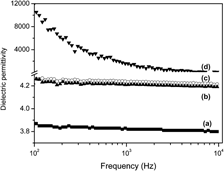
High permittivity antimony-doped tin oxide (ATO)/polyimide (PI) composite films consisting of narrow size distribution ATO fillers prepared by inverse microemulsion method and PI host are synthesized by in situ polymerization. The microstructure and thermal stability of composite films are characterized by scanning electron microscopy and thermal gravimetric analyses, respectively. Dielectric properties of composite films with different concentrations of ATO particles of variable size are investigated in the frequency range of 102 to 2.5 × 10⁶ Hz. The hydrophilic surface of ATO is not helpful of tight connection between the filler and host. The addition of ATO contributes slight increase of the thermal stability. However, the permittivity of composite films can be remarkably increased due to Maxwell–Wagner–Sillars polarization as well as a large number of tiny capacitors formed by ATO particles with narrow distribution and small size. The dielectric constant behavior of composite films fits well to the usual percolation theory.
A metal-supported solid oxide fuel cell (SOFC) using Ce0.8Sm0.2O2 (Sm-doped ceria, SDC) buffer layer and La0.9Sr0.1Ga0.8Mg0.2O3 (LSGM) electrolyte films showed a small degradation in the cell performance after a long-term operation because of La migration from the electrolyte to the buffer layer, resulted in a formation of a less conductive phase. Thus, various ceramic materials such as doped ceria and perovskite-related oxides were investigated for an effective buffer layer with respect to fabricating reliable metal-supported SOFCs using a LSGM electrolyte film. In particular, La-doped CeO2 (LDC) and Pr-doped LaCrO3 (LPCr) were investigated as buffer layer material since the materials showed chemical compatibility with the LSGM and anode materials. The cell using a LDC buffer layer showed a prior stability during the operation for 100 h at 973 K, while the power density of the cell was slightly low owing to the low electrical conductivity of LDC compared with that of SDC or LPCr. In contrast, the cell using a LPCr buffer layer revealed significantly low open circuit voltage (OCV) and power density, which were attributed to Pr decomposition in the LPCr caused by the reactivity with water vapor. However, the metal-supported cell with a multilayer electrolyte film including LSGM/LPCr/SDC layers showed an almost theoretical OCV and reasonably high power density with no degradation after a long-term operation for 100 h at 973 K, suggesting that the LPCr layer effectively prevented La migration and the SDC layer led to avoid the Pr decomposition. Thus, a LPCr is an effective buffer layer material for reliable metal-supported SOFCs using a LSGM electrolyte thin film.
The temperature dependence of diffusion length, lifetime, and diffusivity of the free exciton is measured in a commercial ZnO-substrate as well as in an epitaxial ZnO quantum well using nm-spatially and ps-time-resolved cathodoluminescence spectroscopy. The characteristic temperature dependence of the exciton mobility gives information of the underlying excitonic scattering processes. Since excitons are neutral particles, scattering at ionized impurities should be not effective. On both samples, with decreasing temperature, the diffusion lengths, lifetimes, and diffusivity give rise to a monotonic increase of the excitonic mobility. Two different methods will be discussed and are used for determining the excitonic transport parameters. On the one hand, we are able to perform completely pulsed excitation experiments, and on the other hand, a combination of cw excitation and pulsed excitation in two independent measurements is used.
Seals are required for a functioning solid oxide fuel cell (SOFC). These seals must function at high temperatures of 600–900 °C and in oxidizing and reducing environments of the fuels and air. Among the different type of seals, the metal–ceramic seals require significant attention, research, and development because the brittle nature of ceramics and glasses leads to fracture and loss of seal integrity and functionality. A novel concept of self-healing/self-repairable glass seals is proposed, developed, and used for making metal–glass–ceramic seals for application in SOFC for enhancing reliability and life. Glasses and glass–ceramics displaying self-healing behavior are investigated and used to fabricate seals. The performance of these seals under long-term exposure at higher temperatures coupled with thermal cycling is characterized. Self-repairability of these glass seals is also demonstrated by leak tests along with the long-term performance. An approach for studying the kinetics of crack healing in glasses and glass–ceramics responsible for self-repair is briefly described.
The proton conducting perovskite MZr1−xLnxO3−δHz ceramics are promising electrolytic membranes for fuel cell and water steam electrolyser applications. Simultaneous elastic/quasielastic and diffraction neutron studies were performed in a wide temperature range (25–1150 °C) on protonated Yb-modified BaZrO3 ceramics: dense (97% of theoretical density) and ultradense (99%) using the triple axis spectrometers. The results allowed us to determine: (i) the real content of bulk protonic species ∼1–5 10−3 mol/mol, (ii) the structural modifications caused by the proton doping, and (iii) the bulk proton dynamics. The quasielastic neutron scattering (QNS) results are discussed in the light of neutron diffraction, conductivity, Raman, thermogravimetric, and thermal expansion measurements. The highest bulk proton motion appears in the temperature range where the structural modifications and the energy activation changes are detected. This allows defining the optimum temperature range for the proton dynamics between 400 and 560 °C.
Controllable degradation of scaffolds plays an important role in tissue engineering applications. Here, we describe a biomimetic approach to control chitosan scaffold degradation by incorporating lysozyme-loaded poly(D,L-lactic-co-glycolic acid) microspheres in 3D chitosan scaffolds. In vitro degradation tests reveal that the degradation rate increased when the mass ratio of microspheres-to-chitosan increased whereas the contrast group showed a visible turning point at 28d. In vivo degradation rate was much faster than that in vitro, and the relationship between in vitro degradation and in vivo degradation was correlative. Finally, for determining the primary biocompatibility of the combined scaffolds, studies such as cytotoxicity assay, cell attachment study and histological evaluation were carried out. It is concluded that the combination method of enzyme and scaffold is suitable for chitosan scaffold degradation; it also demonstrates an alternative strategy for other biomaterials used in tissue engineering.
The transport properties of doped and undoped, high quality, plasma-assisted molecular beam epitaxy grown tin dioxide (SnO2) thin films are reviewed. Intentional doping can vary the SnO2 resistivity over more than seven orders of magnitude from a transparent conducting oxide-like conductivity up to the semi-insulating range. A region of high unintentional n-type conductivity was identified in the substrate interface region and had to be accounted for. Sb was a well-behaved shallow donor up to the regime of conducting oxides. In and Ga were too deep acceptors to achieve p-type conductivity but were suitable to render SnO2 semi-insulating. While the surface accumulation layer strongly influenced contact properties, its conductance was negligible. The methodology used here for studying the transport can also be applied to other semiconducting oxides.