Refine search
Actions for selected content:
26063 results in Abstract analysis
On a class of bivariate distributions built of q-ultraspherical polynomials
- Part of
-
- Journal:
- Proceedings of the Royal Society of Edinburgh. Section A: Mathematics , First View
- Published online by Cambridge University Press:
- 02 December 2024, pp. 1-34
-
- Article
- Export citation
PEM series 2 volume 67 issue 4 Cover and Front matter
-
- Journal:
- Proceedings of the Edinburgh Mathematical Society / Volume 67 / Issue 4 / November 2024
- Published online by Cambridge University Press:
- 02 December 2024, pp. f1-f2
-
- Article
-
- You have access
- Export citation
Analysis of a model describing bacterial colony expansion in radial geometry driven by chemotaxis
- Part of
-
- Journal:
- European Journal of Applied Mathematics / Volume 36 / Issue 5 / October 2025
- Published online by Cambridge University Press:
- 02 December 2024, pp. 910-947
-
- Article
-
- You have access
- Open access
- HTML
- Export citation
Generic properties of topological groups
- Part of
-
- Journal:
- Proceedings of the Royal Society of Edinburgh. Section A: Mathematics , First View
- Published online by Cambridge University Press:
- 02 December 2024, pp. 1-31
-
- Article
-
- You have access
- Open access
- HTML
- Export citation
A note on the Winterbottom shape
- Part of
-
- Journal:
- Proceedings of the Royal Society of Edinburgh. Section A: Mathematics , First View
- Published online by Cambridge University Press:
- 02 December 2024, pp. 1-14
-
- Article
-
- You have access
- Open access
- HTML
- Export citation
Vanishing of Nil-terms and negative K-theory for additive categories
- Part of
-
- Journal:
- Proceedings of the Royal Society of Edinburgh. Section A: Mathematics / Volume 154 / Issue 6 / December 2024
- Published online by Cambridge University Press:
- 02 December 2024, pp. 1945-2023
- Print publication:
- December 2024
-
- Article
-
- You have access
- Open access
- HTML
- Export citation
PRM volume 154 issue 6 Cover and Front matter
-
- Journal:
- Proceedings of the Royal Society of Edinburgh. Section A: Mathematics / Volume 154 / Issue 6 / December 2024
- Published online by Cambridge University Press:
- 28 March 2025, pp. f1-f2
- Print publication:
- December 2024
-
- Article
-
- You have access
- Export citation
Poincaré complex diagonals and the Bass trace conjecture – CORRIGENDUM
-
- Journal:
- Proceedings of the Royal Society of Edinburgh. Section A: Mathematics / Volume 154 / Issue 6 / December 2024
- Published online by Cambridge University Press:
- 28 March 2025, p. 1841
- Print publication:
- December 2024
-
- Article
-
- You have access
- Open access
- HTML
- Export citation
PRM volume 154 issue 6 Cover and Back matter
-
- Journal:
- Proceedings of the Royal Society of Edinburgh. Section A: Mathematics / Volume 154 / Issue 6 / December 2024
- Published online by Cambridge University Press:
- 28 March 2025, pp. b1-b2
- Print publication:
- December 2024
-
- Article
-
- You have access
- Export citation
Andrew Ranicki
-
- Journal:
- Proceedings of the Royal Society of Edinburgh. Section A: Mathematics / Volume 154 / Issue 6 / December 2024
- Published online by Cambridge University Press:
- 28 March 2025, pp. 1635-1638
- Print publication:
- December 2024
-
- Article
- Export citation
Index
-
- Book:
- K-Theory and Representation Theory
- Published online:
- 06 November 2024
- Print publication:
- 28 November 2024, pp 212-214
-
- Chapter
- Export citation
Contents
-
- Book:
- K-Theory and Representation Theory
- Published online:
- 06 November 2024
- Print publication:
- 28 November 2024, pp v-vi
-
- Chapter
- Export citation
Isometric dilations for representations of product systems
- Part of
-
- Journal:
- Proceedings of the Royal Society of Edinburgh. Section A: Mathematics , First View
- Published online by Cambridge University Press:
- 28 November 2024, pp. 1-42
-
- Article
-
- You have access
- Open access
- HTML
- Export citation
-
We discuss representations of product systems (of $W^*$-correspondences) over the semigroup $\mathbb{Z}^n_+$ and show that, under certain pureness and Szegö positivity conditions, a completely contractive representation can be dilated to an isometric representation. For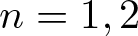 $n=1,2$ this is known to hold in general (without assuming the conditions), but for $n\geq 3$, it does not hold in general (as is known for the special case of isometric dilations of a tuple of commuting contractions). Restricting to the case of tuples of commuting contractions, our result reduces to a result of Barik, Das, Haria, and Sarkar (Isometric dilations and von Neumann inequality for a class of tuples in the polydisc. Trans. Amer. Math. Soc. 372 (2019), 1429–1450). Our dilation is explicitly constructed, and we present some applications.


Preface
-
- Book:
- K-Theory and Representation Theory
- Published online:
- 06 November 2024
- Print publication:
- 28 November 2024, pp ix-x
-
- Chapter
- Export citation
On finite presentability of subsemigroups of the monogenic free inverse semigroup
- Part of
-
- Journal:
- Glasgow Mathematical Journal / Volume 67 / Issue 2 / May 2025
- Published online by Cambridge University Press:
- 28 November 2024, pp. 185-196
-
- Article
-
- You have access
- Open access
- HTML
- Export citation
-
The monogenic free inverse semigroup $FI_1$ is not finitely presented as a semigroup due to the classic result by Schein (1975). We extend this result and prove that a finitely generated subsemigroup of $FI_1$ is finitely presented if and only if it contains only finitely many idempotents. As a consequence, we derive that an inverse subsemigroup of $FI_1$ is finitely presented as a semigroup if and only if it is a finite semilattice.


4 - Representation Theory of p-Adic Reductive Groups
-
- Book:
- K-Theory and Representation Theory
- Published online:
- 06 November 2024
- Print publication:
- 28 November 2024, pp 157-211
-
- Chapter
- Export citation
1 - Group C*-Algebras, C*-Correspondences and K-Theory
-
- Book:
- K-Theory and Representation Theory
- Published online:
- 06 November 2024
- Print publication:
- 28 November 2024, pp 1-36
-
- Chapter
- Export citation
Frontmatter
-
- Book:
- K-Theory and Representation Theory
- Published online:
- 06 November 2024
- Print publication:
- 28 November 2024, pp i-iv
-
- Chapter
- Export citation
2 - Tempered Representations of Semisimple Lie Groups
-
- Book:
- K-Theory and Representation Theory
- Published online:
- 06 November 2024
- Print publication:
- 28 November 2024, pp 37-98
-
- Chapter
- Export citation
Spectral stability of constrained solitary waves for a generalized Ostrovsky equation
- Part of
-
- Journal:
- Proceedings of the Royal Society of Edinburgh. Section A: Mathematics , First View
- Published online by Cambridge University Press:
- 28 November 2024, pp. 1-32
-
- Article
- Export citation
-
We consider the existence and stability of constrained solitary wave solutions to the generalized Ostrovsky equation
where the homogeneous nonlinearities \begin{align*}\partial_x\left(\partial_t u+ \alpha\partial_x u+\partial_x(f(u))+\beta \partial_x^3u\right)=\gamma u,\quad \|u\|_{L^2}^2=\lambda \gt 0,\end{align*} $f(s)=\alpha_0|s|^p+\alpha_1|s|^{p-1}s$, with p > 1. If $\alpha_0,\alpha_1 \gt 0$, $\alpha\in\mathbb{R}$, and γ < 0 satisfying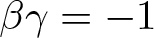 $\beta\gamma=-1$, we show that for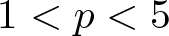 $1 \lt p \lt 5$, there exists a constrained ground state traveling wave solution with travelling velocity $\omega \gt \alpha-2$. Furthermore, we obtain the exponential decay estimates and the weak non-degeneracy of the solution. Finally, we show that the solution is spectrally stable. This is a continuation of recent work [1] on existence and stability for a water wave model with non-homogeneous nonlinearities.
