Refine search
Actions for selected content:
26063 results in Abstract analysis
Hypergraph independence polynomials with a zero close to the origin
- Part of
-
- Journal:
- Combinatorics, Probability and Computing / Volume 34 / Issue 4 / July 2025
- Published online by Cambridge University Press:
- 22 January 2025, pp. 486-490
-
- Article
- Export citation
-
For each uniformity $k \geq 3$, we construct $k$ uniform linear hypergraphs $G$ with arbitrarily large maximum degree $\Delta$ whose independence polynomial $Z_G$ has a zero $\lambda$ with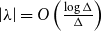 $\left \vert \lambda \right \vert = O\left (\frac {\log \Delta }{\Delta }\right )$. This disproves a recent conjecture of Galvin, McKinley, Perkins, Sarantis, and Tetali.


On properties of effective topological complexity and effective Lusternik–Schnirelmann category
- Part of
-
- Journal:
- Proceedings of the Royal Society of Edinburgh. Section A: Mathematics , First View
- Published online by Cambridge University Press:
- 22 January 2025, pp. 1-36
-
- Article
- Export citation
Nef vector bundles on a quadric threefold with first Chern class two
- Part of
-
- Journal:
- Proceedings of the Edinburgh Mathematical Society / Volume 68 / Issue 2 / May 2025
- Published online by Cambridge University Press:
- 22 January 2025, pp. 526-565
-
- Article
-
- You have access
- Open access
- HTML
- Export citation
Strict Faber–Krahn-type inequality for the mixed local–nonlocal operator under polarization
- Part of
-
- Journal:
- Proceedings of the Edinburgh Mathematical Society / Volume 68 / Issue 2 / May 2025
- Published online by Cambridge University Press:
- 22 January 2025, pp. 506-525
-
- Article
- Export citation
-
Let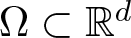 $\Omega \subset \mathbb{R}^d$ with $d\geq 2$ be a bounded domain of class ${\mathcal C}^{1,\beta }$ for some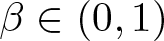 $\beta \in (0,1)$. For $p\in (1, \infty )$ and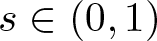 $s\in (0,1)$, let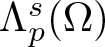 $\Lambda ^s_{p}(\Omega )$ be the first eigenvalue of the mixed local–nonlocal operator $-\Delta _p+(-\Delta _p)^s$ in Ω with the homogeneous nonlocal Dirichlet boundary condition. We establish a strict Faber–Krahn-type inequality for $\Lambda _{p}^s(\cdot )$ under polarization. As an application of this strict inequality, we obtain the strict monotonicity of $\Lambda _{p}^s(\cdot )$ over the annular domains and characterize the rigidity property of the balls in the classical Faber–Krahn inequality for $-\Delta _p+(-\Delta _p)^s$.


TWISTED RUELLE ZETA FUNCTION ON HYPERBOLIC MANIFOLDS AND COMPLEX-VALUED ANALYTIC TORSION
- Part of
-
- Journal:
- Journal of the Institute of Mathematics of Jussieu / Volume 24 / Issue 3 / May 2025
- Published online by Cambridge University Press:
- 22 January 2025, pp. 813-845
- Print publication:
- May 2025
-
- Article
-
- You have access
- Open access
- HTML
- Export citation
-
In this paper, we study the twisted Ruelle zeta function associated with the geodesic flow of a compact, hyperbolic, odd-dimensional manifold X. The twisted Ruelle zeta function is associated with an acyclic representation $\chi \colon \pi _{1}(X) \rightarrow \operatorname {\mathrm {GL}}_{n}(\mathbb {C})$, which is close enough to an acyclic, unitary representation. In this case, the twisted Ruelle zeta function is regular at zero and equals the square of the refined analytic torsion, as it is introduced by Braverman and Kappeler in [6], multiplied by an exponential, which involves the eta invariant of the even part of the odd-signature operator, associated with $\chi $.

The abelianization of the elementary group of rank two
- Part of
-
- Journal:
- Proceedings of the Edinburgh Mathematical Society / Volume 68 / Issue 2 / May 2025
- Published online by Cambridge University Press:
- 20 January 2025, pp. 487-505
-
- Article
- Export citation
-
For an arbitrary ring A, we study the abelianization of the elementary group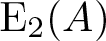 $\mathit{{\rm E}}_2(A)$. In particular, we show that for a commutative ring A there exists an exact sequence
 \begin{equation*}{\rm K}_2(2,A)/{\rm C}(2,A) \rightarrow A/M \rightarrow \mathit{{\rm E}}_2(A)^{\rm ab} \rightarrow 1,\end{equation*}
where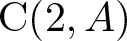 ${\rm C}(2,A)$ is the central subgroup of the Steinberg group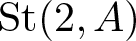 $\mathit{{\rm St}}(2,A)$ generated by the Steinberg symbols and M is the additive subgroup of A generated by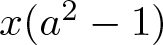 $x(a^2-1)$ and $3(b+1)(c+1)$, with $x\in A, a,b,c \in {A^\times}$.


FANO FOURFOLDS WITH LARGE ANTICANONICAL BASE LOCUS
- Part of
-
- Journal:
- Journal of the Institute of Mathematics of Jussieu / Volume 24 / Issue 3 / May 2025
- Published online by Cambridge University Press:
- 20 January 2025, pp. 1021-1051
- Print publication:
- May 2025
-
- Article
-
- You have access
- Open access
- HTML
- Export citation
Harnack type estimates to non-linear elliptic systems in the plane
- Part of
-
- Journal:
- Proceedings of the Royal Society of Edinburgh. Section A: Mathematics , First View
- Published online by Cambridge University Press:
- 20 January 2025, pp. 1-14
-
- Article
- Export citation
Actions of nilpotent groups on nilpotent groups
- Part of
-
- Journal:
- Glasgow Mathematical Journal / Volume 67 / Issue 2 / May 2025
- Published online by Cambridge University Press:
- 16 January 2025, pp. 228-231
-
- Article
-
- You have access
- Open access
- HTML
- Export citation
-
For finite nilpotent groups $J$ and $N$, suppose $J$ acts on $N$ via automorphisms. We exhibit a decomposition of the first cohomology set in terms of the first cohomologies of the Sylow $p$-subgroups of $J$ that mirrors the primary decomposition of $H^1(J,N)$ for abelian $N$. We then show that if $N \rtimes J$ acts on some non-empty set $\Omega$, where the action of $N$ is transitive and for each prime $p$ a Sylow $p$-subgroup of $J$ fixes an element of $\Omega$, then $J$ fixes an element of $\Omega$.


Automorphisms of fine curve graphs for nonorientable surfaces
- Part of
-
- Journal:
- Glasgow Mathematical Journal / Volume 67 / Issue 2 / May 2025
- Published online by Cambridge University Press:
- 16 January 2025, pp. 232-244
-
- Article
-
- You have access
- Open access
- HTML
- Export citation
-
The fine curve graph of a surface was introduced by Bowden, Hensel, and Webb as a graph consisting of essential simple closed curves in the surface. Long, Margalit, Pham, Verberne, and Yao proved that the automorphism group of the fine curve graph of a closed orientable surface is isomorphic to the homeomorphism group of the surface. In this paper, based on their argument, we prove that the automorphism group of the fine curve graph of a closed nonorientable surface $N$ of genus $g \geq 4$ is isomorphic to the homeomorphism group of $N$.
$N$.


4-Torsion classes in the integral cohomology of oriented Grassmannians
- Part of
-
- Journal:
- Proceedings of the Royal Society of Edinburgh. Section A: Mathematics , First View
- Published online by Cambridge University Press:
- 15 January 2025, pp. 1-43
-
- Article
- Export citation
Category and Measure
- Infinite Combinatorics, Topology and Groups
-
- Published online:
- 14 January 2025
- Print publication:
- 23 January 2025
A Bonnet–Myers rigidity theorem for globally hyperbolic Lorentzian length spaces
- Part of
-
- Journal:
- Proceedings of the Royal Society of Edinburgh. Section A: Mathematics , First View
- Published online by Cambridge University Press:
- 13 January 2025, pp. 1-42
-
- Article
-
- You have access
- Open access
- HTML
- Export citation
-
We prove a synthetic Bonnet–Myers rigidity theorem for globally hyperbolic Lorentzian length spaces with global curvature bounded below by K < 0 and an open distance realizer of length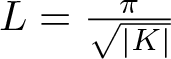 $L=\frac{\pi}{\sqrt{|K|}}$: It states that the space necessarily is a warped product with warping function $\cos: (-\frac{\pi}{2},\frac{\pi}{2})\to\mathbb{R}_+$. From this, one also sees that a globally hyperbolic spacetime with curvature bounded above by K < 0 and an open distance realizer of length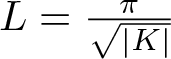 $L=\frac{\pi}{\sqrt{|K|}}$ is a warped product with warping function cos.
Well-posedness for strongly damped abstract Cauchy problems of fractional order
- Part of
-
- Journal:
- Proceedings of the Royal Society of Edinburgh. Section A: Mathematics , First View
- Published online by Cambridge University Press:
- 13 January 2025, pp. 1-27
-
- Article
- Export citation
-
Let X be a complex Banach space and B be a closed linear operator with domain $\mathcal{D}(B) \subset X,\,\, a,b,c,d\in\mathbb{R},$ and $0 \lt \beta \lt \alpha.$ We prove that the problem
 \begin{equation*}u(t) -(aB+bI)(g_{\alpha-\beta}\ast u)(t) -(cB+dI)(g_{\alpha}\ast u)(t) = h(t), \quad t\geq 0,\end{equation*}
where $g_{\alpha}(t)=t^{\alpha-1}/\Gamma(\alpha)$ and $h:\mathbb{R}_+\to X$ is given, has a unique solution for any initial condition on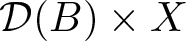 $\mathcal{D}(B)\times X$ as long as the operator B generates an ad-hoc Laplace transformable and strongly continuous solution family $\{R_{\alpha,\beta}(t)\}_{t\geq 0} \subset \mathcal{L}(X).$ It is shown that such a solution family exists whenever the pair $(\alpha,\beta)$ belongs to a subset of the set $(1,2]\times(0,1]$ and B is the generator of a cosine family or a C0-semigroup in $X.$ In any case, it also depends on certain compatibility conditions on the real parameters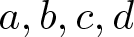 $a,b,c,d$ that must be satisfied.


ERRATUM TO THE PAPER ‘BREUIL–KISIN–FARGUES MODULES WITH COMPLEX MULTIPLICATION’
-
- Journal:
- Journal of the Institute of Mathematics of Jussieu / Volume 24 / Issue 2 / March 2025
- Published online by Cambridge University Press:
- 13 January 2025, pp. 585-586
- Print publication:
- March 2025
-
- Article
-
- You have access
- HTML
- Export citation
Spatio-temporal behaviour of SIR models with cross-diffusion and vital dynamics
- Part of
-
- Journal:
- European Journal of Applied Mathematics / Volume 36 / Issue 5 / October 2025
- Published online by Cambridge University Press:
- 09 January 2025, pp. 972-992
-
- Article
-
- You have access
- Open access
- HTML
- Export citation
Dichotomy spectrum and reducibility for mean hyperbolic systems
- Part of
-
- Journal:
- Proceedings of the Royal Society of Edinburgh. Section A: Mathematics , First View
- Published online by Cambridge University Press:
- 08 January 2025, pp. 1-19
-
- Article
- Export citation
-
The topological structure of ‘mean dichotomy spectrum’ is shown in this article, as an extension of Sacker–Sell spectrum and non-uniform dichotomy spectrum. With regard to mean hyperbolic systems, the coexistence of expansion and contraction behaviours can lead to non-hyperbolic phenomena during evolution process. To be precise, distinct from uniform and non-uniform hyperbolic cases, error hyperbolic degree $\varepsilon(t,\tau)$ is vital to depict the spectral manifolds. As application, the reducibility theorem for mean hyperbolic systems is provided to deduce block diagonalization.

Functions with small BMO norm
- Part of
-
- Journal:
- Proceedings of the Royal Society of Edinburgh. Section A: Mathematics , First View
- Published online by Cambridge University Press:
- 08 January 2025, pp. 1-15
-
- Article
- Export citation
-
We characterize the functions with ‘small’ bounded mean oscillation (BMO) norm by establishing the precise connection between the space BMO and class $A_\infty$ of Muckenhoupt weights. We prove that there exists a universal constant $c^*_2$ such that $\Vert f \Vert_{BMO} \lt c^*_2$ if and only if $\exp f \in A_2$, where $c^*_2$ is the sharp constant in the John and Nirenberg inequality. Similarly, in dimension one, we prove that $\Vert f \Vert_{BLO} \lt 1$ if and only if $\exp f \in A_1$. As application we introduce a structure of metric space in $A_\infty$ and prove that the closed unit ball of $A_\infty$ is a Banach space.


PROPER $\mathrm {CAT(0)}$ ACTIONS OF UNIPOTENT-FREE LINEAR GROUPS
- Part of
-
- Journal:
- Journal of the Institute of Mathematics of Jussieu / Volume 24 / Issue 2 / March 2025
- Published online by Cambridge University Press:
- 07 January 2025, pp. 587-601
- Print publication:
- March 2025
-
- Article
- Export citation
-
Let $\Gamma $ be a finitely generated group of matrices over $\mathbb {C}$. We construct an isometric action of $\Gamma $ on a complete $\mathrm {CAT}(0)$ space such that the restriction of this action to any subgroup of $\Gamma $ containing no nontrivial unipotent elements is well behaved. As an application, we show that if M is a graph manifold that does not admit a nonpositively curved Riemannian metric, then any finite-dimensional $\mathbb {C}$-linear representation of $\pi _1(M)$ maps a nontrivial element of $\pi _1(M)$ to a unipotent matrix. In particular, the fundamental groups of such 3-manifolds do not admit any faithful finite-dimensional unitary representations.


Mean field limits of co-evolutionary signed heterogeneous networks
- Part of
-
- Journal:
- European Journal of Applied Mathematics / Volume 37 / Issue 3 / June 2026
- Published online by Cambridge University Press:
- 06 January 2025, pp. 643-686
-
- Article
-
- You have access
- Open access
- HTML
- Export citation
