Refine search
Actions for selected content:
26063 results in Abstract analysis
JMJ volume 24 issue 1 Cover and Back matter
-
- Journal:
- Journal of the Institute of Mathematics of Jussieu / Volume 24 / Issue 1 / January 2025
- Published online by Cambridge University Press:
- 07 January 2025, pp. b1-b2
- Print publication:
- January 2025
-
- Article
-
- You have access
- Export citation
JMJ volume 24 issue 1 Cover and Front matter
-
- Journal:
- Journal of the Institute of Mathematics of Jussieu / Volume 24 / Issue 1 / January 2025
- Published online by Cambridge University Press:
- 07 January 2025, pp. f1-f2
- Print publication:
- January 2025
-
- Article
-
- You have access
- Export citation
The two membranes problem in a regular tree
-
- Journal:
- Proceedings of the Royal Society of Edinburgh. Section A: Mathematics , First View
- Published online by Cambridge University Press:
- 27 December 2024, pp. 1-30
-
- Article
- Export citation
Linear convergence of alternating inertial Tseng-type method for solving inclusion problems on Hadamard manifolds
- Part of
-
- Journal:
- Proceedings of the Edinburgh Mathematical Society / Volume 68 / Issue 2 / May 2025
- Published online by Cambridge University Press:
- 27 December 2024, pp. 463-486
-
- Article
-
- You have access
- Open access
- HTML
- Export citation
Double EPW sextics associated with Gushel–Mukai surfaces
- Part of
-
- Journal:
- Proceedings of the Royal Society of Edinburgh. Section A: Mathematics , First View
- Published online by Cambridge University Press:
- 23 December 2024, pp. 1-22
-
- Article
- Export citation
-
Works by O’Grady allow to associate with a two-dimensional Gushel–Mukai (GM) variety, which is a K3 surface, a double Eisenbud–Popescu–Walter (EPW) sextic. We characterize the $K3$ surfaces whose associated double EPW sextic is smooth. As a consequence, we are able to produce symplectic actions on some families of smooth double EPW sextics which are hyper-Kähler manifolds.
We also provide bounds for the automorphism group of GM varieties in dimension 2 and higher.

Structural convergence and algebraic roots
- Part of
-
- Journal:
- Combinatorics, Probability and Computing / Volume 34 / Issue 3 / May 2025
- Published online by Cambridge University Press:
- 23 December 2024, pp. 392-400
-
- Article
- Export citation
-
Structural convergence is a framework for the convergence of graphs by Nešetřil and Ossona de Mendez that unifies the dense (left) graph convergence and Benjamini-Schramm convergence. They posed a problem asking whether for a given sequence of graphs $(G_n)$ converging to a limit $L$ and a vertex $r$ of $L$, it is possible to find a sequence of vertices $(r_n)$ such that $L$ rooted at $r$ is the limit of the graphs $G_n$ rooted at $r_n$. A counterexample was found by Christofides and Král’, but they showed that the statement holds for almost all vertices $r$ of $L$. We offer another perspective on the original problem by considering the size of definable sets to which the root $r$ belongs. We prove that if $r$ is an algebraic vertex (i.e. belongs to a finite definable set), the sequence of roots $(r_n)$ always exists.


Finely quasiconformal mappings
- Part of
-
- Journal:
- Proceedings of the Royal Society of Edinburgh. Section A: Mathematics , First View
- Published online by Cambridge University Press:
- 23 December 2024, pp. 1-25
-
- Article
- Export citation
-
We introduce a relaxed version of the metric definition of quasiconformality that is natural also for mappings of low regularity, including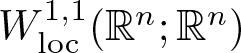 $W_{\mathrm{loc}}^{1,1}({\mathbb R}^n;{\mathbb R}^n)$-mappings. Then we show on the plane that this relaxed definition can be used to prove Sobolev regularity, and that these ‘finely quasiconformal’ mappings are in fact quasiconformal.
Discrete-to-continuum limits of optimal transport with linear growth on periodic graphs
-
- Journal:
- European Journal of Applied Mathematics / Volume 37 / Issue 3 / June 2026
- Published online by Cambridge University Press:
- 20 December 2024, pp. 614-642
-
- Article
-
- You have access
- Open access
- HTML
- Export citation
-
We prove discrete-to-continuum convergence for dynamical optimal transport on $\mathbb{Z}^d$-periodic graphs with cost functional having linear growth at infinity. This result provides an answer to a problem left open by Gladbach, Kopfer, Maas, and Portinale (Calc Var Partial Differential Equations 62(5), 2023), where the convergence behaviour of discrete boundary-value dynamical transport problems is proved under the stronger assumption of superlinear growth. Our result extends the known literature to some important classes of examples, such as scaling limits of $1$-Wasserstein transport problems. Similarly to what happens in the quadratic case, the geometry of the graph plays a crucial role in the structure of the limit cost function, as we discuss in the final part of this work, which includes some visual representations.


RANKS OF SOFT OPERATORS IN NOWHERE SCATTERED $\mathrm {C}^*$-ALGEBRAS
- Part of
-
- Journal:
- Journal of the Institute of Mathematics of Jussieu / Volume 24 / Issue 2 / March 2025
- Published online by Cambridge University Press:
- 20 December 2024, pp. 371-410
- Print publication:
- March 2025
-
- Article
-
- You have access
- Open access
- HTML
- Export citation
-
We show that for $\mathrm {C}^*$-algebras with the global Glimm property, the rank of every operator can be realized as the rank of a soft operator, that is, an element whose hereditary sub- $\mathrm {C}^*$-algebra has no nonzero, unital quotients. This implies that the radius of comparison of such a $\mathrm {C}^*$-algebra is determined by the soft part of its Cuntz semigroup.
Under a mild additional assumption, we show that every Cuntz class dominates a (unique) largest soft Cuntz class. This defines a retract from the Cuntz semigroup onto its soft part, and it follows that the covering dimensions of these semigroups differ by at most $1$.
$1$.


On quasi and weak Steinberg characters of general linear groups
- Part of
-
- Journal:
- Proceedings of the Edinburgh Mathematical Society / Volume 68 / Issue 2 / May 2025
- Published online by Cambridge University Press:
- 19 December 2024, pp. 403-420
-
- Article
- Export citation
-
Let G be a finite group and r be a prime divisor of the order of G. An irreducible character of G is said to be quasi r-Steinberg if it is non-zero on every r-regular element of G. A quasi r-Steinberg character of degree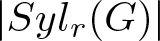 $\displaystyle |Syl_r(G)|$ is said to be weak r-Steinberg if it vanishes on the r-singular elements of $G.$ In this article, we classify the quasi r-Steinberg cuspidal characters of the general linear group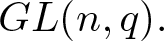 $GL(n,q).$ Then we characterize the quasi r-Steinberg characters of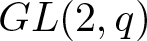 $GL(2,q)$ and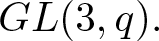 $GL(3,q).$ Finally, we obtain a classification of the weak r-Steinberg characters of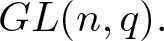 $GL(n,q).$

Ideals of equations for elements in a free group and Stallings folding
- Part of
-
- Journal:
- Proceedings of the Edinburgh Mathematical Society / Volume 68 / Issue 2 / May 2025
- Published online by Cambridge University Press:
- 19 December 2024, pp. 421-462
-
- Article
- Export citation
-
Let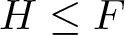 $H\le F$ be two finitely generated free groups. Given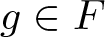 $g\in F$, we study the ideal $\mathfrak I_g$ of equations for g with coefficients in H, i.e. the elements $w(x)\in H*\langle x\rangle$ such that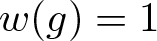 $w(g)=1$ in F. The ideal $\mathfrak I_g$ is a normal subgroup of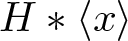 $H*\langle x\rangle$, and it’s possible to algorithmically compute a finite normal generating set for $\mathfrak I_g$; we give a description of one such algorithm, based on Stallings folding operations. We provide an algorithm to find an equation in w(x)\in $\mathfrak I_g$ with minimum degree, i.e. such that its cyclic reduction contains the minimum possible number of occurrences of x and x−1; this answers a question of A. Rosenmann and E. Ventura. More generally, we show how to algorithmically compute the set Dg of all integers d such that $\mathfrak I_g$ contains equations of degree d; we show that Dg coincides, up to a finite set, with either $\mathbb N$ or $2\mathbb N$. Finally, we provide examples to illustrate the techniques introduced in this paper. We discuss the case where ${\text{rank}}(H)=1$. We prove that both kinds of sets Dg can actually occur. We show that the equations of minimum possible degree aren’t in general enough to generate the whole ideal $\mathfrak I_g$ as a normal subgroup.


A note on the splittings of finitely presented Bestvina–Brady groups
- Part of
-
- Journal:
- Glasgow Mathematical Journal / Volume 67 / Issue 2 / May 2025
- Published online by Cambridge University Press:
- 19 December 2024, pp. 224-227
-
- Article
-
- You have access
- Open access
- HTML
- Export citation
-
We show that when a finitely presented Bestvina–Brady group splits as an amalgamated product over a subgroup $H$, its defining graph contains an induced separating subgraph whose associated Bestvina–Brady group is contained in a conjugate of $H$.
$H$.


The sectional curvature of the infinite dimensional manifold of Hölder equilibrium probabilities
- Part of
-
- Journal:
- Proceedings of the Edinburgh Mathematical Society / Volume 68 / Issue 2 / May 2025
- Published online by Cambridge University Press:
- 18 December 2024, pp. 348-402
-
- Article
- Export citation
-
Here we consider the discrete time dynamics described by a transformation $T:M \to M$, where T is either the action of shift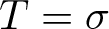 $T=\sigma$ on the symbolic space $M=\{1,2, \ldots,d\}^{\mathbb{N}}$, or, T describes the action of a d to 1 expanding transformation $T:S^1 \to S^1$ of class $C^{1+\alpha}$ (for example $x \to T(x) =\mathrm{d} x $ (mod 1)), where $M=S^1$ is the unit circle. It is known that the infinite-dimensional manifold $\mathcal{N}$ of Hölder equilibrium probabilities is an analytical manifold and carries a natural Riemannian metric. Given a certain normalized Hölder potential A denote by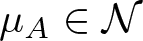 $\mu_A \in \mathcal{N}$ the associated equilibrium probability. The set of tangent vectors X (functions $X: M \to \mathbb{R}$) to the manifold $\mathcal{N}$ at the point µA (a subspace of the Hilbert space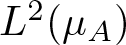 $L^2(\mu_A)$) coincides with the kernel of the Ruelle operator for the normalized potential A. The Riemannian norm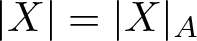 $|X|=|X|_A$ of the vector X, which is tangent to $\mathcal{N}$ at the point µA, is described via the asymptotic variance, that is, satisfies $ |X|^2 = \langle X, X \rangle = \lim_{n \to \infty}\frac{1}{n} \int (\sum_{i=0}^{n-1} X\circ T^i )^2 \,\mathrm{d} \mu_A$.
Consider an orthonormal basis Xi, $i \in \mathbb{N}$, for the tangent space at µA. For any two orthonormal vectors X and Y on the basis, the curvature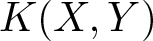 $K(X,Y)$ is
 \begin{equation*}K(X,Y) = \frac{1}{4}[ \sum_{i=1}^\infty (\int X Y X_i \,\mathrm{d} \mu_A)^2 - \sum_{i=1}^\infty \int X^2 X_i \,\mathrm{d} \mu_A \int Y^2 X_i \,\mathrm{d} \mu_A ].\end{equation*}
When the equilibrium probabilities µA is the set of invariant Markov probabilities on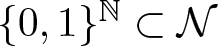 $\{0,1\}^{\mathbb{N}}\subset \mathcal{N}$, introducing an orthonormal basis $\hat{a}_y$, indexed by finite words y, we show explicit expressions for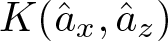 $K(\hat{a}_x,\hat{a}_z)$, which is a finite sum. These values can be positive or negative depending on A and the words x and z. Words $x,z$ with large length can eventually produce large negative curvature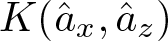 $K(\hat{a}_x,\hat{a}_z)$. If $x, z$ do not begin with the same letter, then $K(\hat{a}_x,\hat{a}_z)=0$.


Lyapunov stability of non-isolated equilibria for strongly irreversible Allen–Cahn equations
- Part of
-
- Journal:
- Proceedings of the Royal Society of Edinburgh. Section A: Mathematics , First View
- Published online by Cambridge University Press:
- 18 December 2024, pp. 1-21
-
- Article
- Export citation
Finite presentability of twisted Brin–Thompson groups
- Part of
-
- Journal:
- Proceedings of the Royal Society of Edinburgh. Section A: Mathematics , First View
- Published online by Cambridge University Press:
- 18 December 2024, pp. 1-22
-
- Article
-
- You have access
- Open access
- HTML
- Export citation
A note on right-nil and strong-nil skew braces
- Part of
-
- Journal:
- Proceedings of the Royal Society of Edinburgh. Section A: Mathematics , First View
- Published online by Cambridge University Press:
- 18 December 2024, pp. 1-9
-
- Article
- Export citation
-
Nilpotency concepts for skew braces are among the main tools with which we are nowadays classifying certain special solutions of the Yang–Baxter equation, a consistency equation that plays a relevant role in quantum statistical mechanics and in many areas of mathematics. In this context, two relevant questions have been raised in F. Cedó, A. Smoktunowicz and L. Vendramin (Skew left braces of nilpotent type. Proc. Lond. Math. Soc. (3) 118 (2019), 1367–1392) (see questions 2.34 and 2.35) concerning right- and central nilpotency. The aim of this short note is to give a negative answer to both questions: thus, we show that a finite strong-nil brace B need not be right-nilpotent. On a positive note, we show that there is one (and only one, by our examples) special case of the previous questions that actually holds. In fact, we show that if B is a skew brace of nilpotent type and $b\ \ast \ b=0$ for all $b\in B$, then B is centrally nilpotent.

Propagation dynamics for an epidemic patch model with variable incubation period
- Part of
-
- Journal:
- European Journal of Applied Mathematics / Volume 36 / Issue 5 / October 2025
- Published online by Cambridge University Press:
- 18 December 2024, pp. 948-971
-
- Article
-
- You have access
- Open access
- HTML
- Export citation
On the Hilbert scheme of smooth curves of degree d = 15 in $\mathbb{P}^5$
- Part of
-
- Journal:
- Proceedings of the Royal Society of Edinburgh. Section A: Mathematics , First View
- Published online by Cambridge University Press:
- 16 December 2024, pp. 1-38
-
- Article
- Export citation
-
We denote by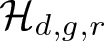 $\mathcal{H}_{d,g,r}$ the Hilbert scheme of smooth curves, which is the union of components whose general point corresponds to a smooth, irreducible, and non-degenerate curve of degree d and genus g in $\mathbb{P}^r.$ In this article, we study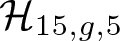 $\mathcal{H}_{15,g,5}$ for every possible genus g and determine when it is irreducible. We also study the moduli map $\mathcal{H}_{15,g,5}\rightarrow\mathcal{M}_g$ and several key properties such as gonality of a general element as well as characterizing smooth elements of each component.


Essential covers of the hypercube require many hyperplanes
- Part of
-
- Journal:
- Combinatorics, Probability and Computing / Volume 34 / Issue 3 / May 2025
- Published online by Cambridge University Press:
- 16 December 2024, pp. 326-337
-
- Article
- Export citation
-
We prove a new lower bound for the almost 20-year-old problem of determining the smallest possible size of an essential cover of the $n$-dimensional hypercube $\{\pm 1\}^n$, that is, the smallest possible size of a collection of hyperplanes that forms a minimal cover of $\{\pm 1\}^n$ and such that, furthermore, every variable appears with a non-zero coefficient in at least one of the hyperplane equations. We show that such an essential cover must consist of at least $10^{-2}\cdot n^{2/3}/(\log n)^{2/3}$ hyperplanes, improving previous lower bounds of Linial–Radhakrishnan, of Yehuda–Yehudayoff, and of Araujo–Balogh–Mattos.


Kirby diagrams of 4-dimensional open books
-
- Journal:
- Proceedings of the Edinburgh Mathematical Society / Volume 68 / Issue 2 / May 2025
- Published online by Cambridge University Press:
- 16 December 2024, pp. 319-347
-
- Article
-
- You have access
- Open access
- HTML
- Export citation
