Refine listing
Actions for selected content:
271 results in 57Mxx
Extending families of homeomorphisms over 4-dimensional handlebodies
- Part of
-
- Journal:
- Forum of Mathematics, Sigma / Volume 14 / 2026
- Published online by Cambridge University Press:
- 22 May 2026, e80
-
- Article
-
- You have access
- Open access
- HTML
- Export citation
-
Let $H_g$ denote the 4-dimensional handlebody of genus g and $U_g$ its boundary. We show that for all $g \ge 0$ the map from $B\!\operatorname {\mathrm {Homeo}}(H_g)$ to $B\!\operatorname {\mathrm {Homeo}}(U_g)$ induced by restriction to the boundary admits a section.


A note on combinatorial type and splitting invariants of plane curves
- Part of
-
- Journal:
- Canadian Journal of Mathematics , First View
- Published online by Cambridge University Press:
- 27 April 2026, pp. 1-34
-
- Article
- Export citation
Two-sided homological properties of special and one-relator monoids
- Part of
-
- Journal:
- Forum of Mathematics, Sigma / Volume 14 / 2026
- Published online by Cambridge University Press:
- 14 April 2026, e58
-
- Article
-
- You have access
- Open access
- HTML
- Export citation
-
A monoid presentation is called special if the right-hand side of each defining relation is equal to 1. We prove results which relate the two-sided homological finiteness properties of a monoid defined by a special presentation with those of its group of units. Specifically we show that the monoid enjoys the homological finiteness property bi-
 if its group of units is of type
  . We also obtain results which relate the Hochschild cohomological dimension of the monoid to the cohomological dimension of its group of units. In particular we show that the Hochschild cohomological dimension of the monoid is bounded above by the maximum of $2$ and the cohomological dimension of its group of units. We apply these results to prove a Lyndon’s Identity type theorem for the two-sided homology of one-relator monoids of the form $\langle A \mid r=1 \rangle $. In particular, we show that all such monoids are of type bi-
 . Moreover, we show that if r is not a proper power then the one-relator monoid has Hochschild cohomological dimension at most $2$, while if r is a proper power then it has infinite Hochschild cohomological dimension. For any nonspecial one-relator monoid M with defining relation $u=v$ we show that if there is no nonempty word w such that $u,v \in A^*w \cap w A^*$ then M is of type bi- $\mathrm {FP}_\infty $ and has Hochschild cohomological dimension at most $2$.
$2$.
 if its group of units is of type
  . We also obtain results which relate the Hochschild cohomological dimension of the monoid to the cohomological dimension of its group of units. In particular we show that the Hochschild cohomological dimension of the monoid is bounded above by the maximum of

 . Moreover, we show that if


Exotic non-orientable four-manifolds with prescribed fundamental group
- Part of
-
- Journal:
- Mathematical Proceedings of the Cambridge Philosophical Society , First View
- Published online by Cambridge University Press:
- 26 March 2026, pp. 1-8
-
- Article
- Export citation
Hamiltonian Sets of Polygonal Paths in Assembly Graphs
- Part of
-
- Journal:
- Proceedings of the Edinburgh Mathematical Society , First View
- Published online by Cambridge University Press:
- 05 March 2026, pp. 1-17
-
- Article
-
- You have access
- Open access
- HTML
- Export citation
-
We provide four equivalent combinatorial conditions for a simple assembly graph (rigid vertex graph where all vertices are of degree 1 or 4) to have the largest number of Hamiltonian sets of polygonal paths relative to its size. These conditions serve to prove the conjecture that such a maximum, which is equal to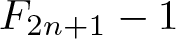 $F_{2n+1}-1$, where $F_k$ denotes the $k$th Fibonacci number, is achieved only for special assembly graphs, called tangled cords.


Correlation number for potentials with entropy gaps and cusped Hitchin representations
- Part of
-
- Journal:
- Ergodic Theory and Dynamical Systems , First View
- Published online by Cambridge University Press:
- 26 February 2026, pp. 1-45
-
- Article
- Export citation
Realizing polynomial ramification portraits
- Part of
-
- Journal:
- Ergodic Theory and Dynamical Systems , First View
- Published online by Cambridge University Press:
- 23 February 2026, pp. 1-25
-
- Article
-
- You have access
- Open access
- HTML
- Export citation
-
It is well known that the dynamical behavior of a rational map $f:\widehat {\mathbb C}\to \widehat {\mathbb C}$ is governed by the forward orbits of the critical points of f. The map f is said to be postcritically finite if every critical point has finite forward orbit, or equivalently, if every critical point eventually maps into a periodic cycle of f. We encode the orbits of the critical points of f with a finite directed graph called a ramification portrait. In this article, we study which graphs arise as ramification portraits. We prove that every abstract polynomial ramification portrait is realized as the ramification portrait of a postcritically finite polynomial and classify which abstract polynomial ramification portraits can only be realized by unobstructed maps.

Distortion elements in the group of diffeomorphisms of the 2-sphere
- Part of
-
- Journal:
- Ergodic Theory and Dynamical Systems / Volume 46 / Issue 5 / May 2026
- Published online by Cambridge University Press:
- 20 February 2026, pp. 1155-1165
- Print publication:
- May 2026
-
- Article
- Export citation
-
We characterize dynamics of every distortion element in the group of diffeomorphisms of the 2-sphere that has at least two fixed points and another recurrent point. The key result is that if f is such a diffeomorphism, then the homeomorphism $\check {f}_{\mathrm { ann}}$, which is a lift of the homeomorphism of the closed annulus $\overline {\mathcal {A}}$ obtained from $\mathbb {S}^2$ by blowing up two fixed points of f to the universal covering space of $\overline {\mathcal {A}}$, has a unique rotation number. Moreover, we find the differential of such a distortion element in the group of diffeomorphisms of the 2-sphere at each fixed point up to conjugacy.


Dense and empty BNSR-invariants of the McCool groups
- Part of
-
- Journal:
- Canadian Journal of Mathematics , First View
- Published online by Cambridge University Press:
- 13 February 2026, pp. 1-27
-
- Article
-
- You have access
- Open access
- HTML
- Export citation
-
An automorphism of the free group $F_n$ is called pure symmetric if it sends each generator to a conjugate of itself. The group $\mathrm {PSAut}_n$ of all pure symmetric automorphisms and its quotient $\mathrm {PSOut}_n$ by the group of inner automorphisms are called the McCool groups. In this article, we prove that every BNSR-invariant $\Sigma ^m$ of a McCool group is either dense or empty in the character sphere, and we characterize precisely when each situation occurs. Our techniques involve understanding higher generation properties of abelian subgroups of McCool groups, coming from the McCullough–Miller space. We also investigate further properties of the second invariant $\Sigma ^2$ for McCool groups using a general criterion due to Meinert for a character to lie in $\Sigma ^2$.


Liminal $\mathrm {SL}_2 \mathbb{Z}_{p}$-representations and odd-th cyclic covers of genus one two-bridge knots
- Part of
-
- Journal:
- Canadian Mathematical Bulletin , First View
- Published online by Cambridge University Press:
- 23 January 2026, pp. 1-11
-
- Article
- Export citation
-
Let K be a genus one two-bridge knot. Let p be a prime number and let ${\mathbb {Z}}_{p}$ denote the ring of p-adic integers. In the spirit of arithmetic topology, we observe that if $p\neq 2$ and p divides (or $p=2$ and $2^3$ divides) the size of the 1st homology group of some odd-th cyclic branched cover of the knot K, then its group $\pi _1(S^3-K)$ admits a liminal $\mathrm { SL}_2{\mathbb {Z}}_p$-character. In addition, we discuss the existence of liminal $\mathrm {SL}_2{\mathbb {Z}}_{p}$-representations and give a remark on a general two-bridge knot. In the course of the argument, we also point out a constraint for prime numbers dividing certain Lucas-type sequences by using the Legendre symbols.


The space of strictly convex real-projective structures on a closed manifold
- Part of
-
- Article
-
- You have access
- Open access
- HTML
- Export citation
-
We give a new proof of the fact that, if $M$ is a compact $n$-manifold with no boundary, then the set of holonomies of strictly convex real-projective structures on $M$ is a subset of ${\textrm {Hom}}(\pi _1M,\textrm {PGL}(n+1,\mathbb{R}))$ that is both open and closed.


A construction of minimal coherent filling pairs
- Part of
-
- Journal:
- Mathematical Proceedings of the Cambridge Philosophical Society / Volume 180 / Issue 3 / May 2026
- Published online by Cambridge University Press:
- 16 December 2025, pp. 509-530
- Print publication:
- May 2026
-
- Article
-
- You have access
- Open access
- HTML
- Export citation
-
Let $S_g$ denote the genus g closed orientable surface. A coherent filling pair of simple closed curves, $(\alpha,\beta)$ in $S_g$, is a filling pair that has its geometric intersection number equal to the absolute value of its algebraic intersection number. A minimally intersecting filling pair, $(\alpha,\beta)$ in $S_g$, is one whose intersection number is the minimal among all filling pairs of $S_g$. In this paper, we give a simple geometric procedure for constructing minimally intersecting coherent filling pairs on $S_g, \ g \geq 3,$ from the starting point of a coherent filling pair of curves on a torus. Coherent filling pairs have a natural correspondence to square-tiled surfaces, or origamis, and we discuss the origami obtained from the construction.


On the genera of symmetric unions of knots
- Part of
-
- Journal:
- Canadian Journal of Mathematics , First View
- Published online by Cambridge University Press:
- 03 November 2025, pp. 1-26
-
- Article
- Export citation
Entropy stability and Milnor–Thurston invariants for Bowen–Series-like maps
- Part of
-
- Journal:
- Ergodic Theory and Dynamical Systems / Volume 46 / Issue 2 / February 2026
- Published online by Cambridge University Press:
- 13 October 2025, pp. 337-372
- Print publication:
- February 2026
-
- Article
-
- You have access
- Open access
- HTML
- Export citation
-
We define a family of discontinuous maps on the circle, called Bowen–Series-like maps, for geometric presentations of surface groups. The family has $2N$ parameters, where $2N$ is the number of generators of the presentation. We prove that all maps in the family have the same topological entropy, which coincides with the volume entropy of the group presentation. This approach allows a simple algorithmic computation of the volume entropy from the presentation only, using the Milnor–Thurston theory for one-dimensional maps.


THE UNIFICATION TYPE OF ŁUKASIEWICZ LOGIC WITH A BOUNDED NUMBER OF VARIABLES
- Part of
-
- Journal:
- The Journal of Symbolic Logic , First View
- Published online by Cambridge University Press:
- 08 October 2025, pp. 1-18
-
- Article
-
- You have access
- Open access
- HTML
- Export citation
-
Building on the correspondence between finitely axiomatised theories in Łukasiewicz logic and rational polyhedra, we prove that the unification type of the fragment of Łukasiewicz logic with $n\geqslant 2$ variables is nullary. This solves a problem left open by V. Marra and L. Spada [Ann. Pure Appl. Logic 164 (2013), pp. 192–210]. Furthermore, we refine the study of unification with bounds on the number of variables. Our proposal distinguishes the number m of variables allowed in the problem and the number n in the solution. We prove that the unification type of Łukasiewicz logic for all $m,n \geqslant 2$ is nullary.


Ordered bases, order-preserving automorphisms and bi-orderable link groups
- Part of
-
- Journal:
- Mathematical Proceedings of the Cambridge Philosophical Society / Volume 180 / Issue 1 / January 2026
- Published online by Cambridge University Press:
- 02 October 2025, pp. 219-235
- Print publication:
- January 2026
-
- Article
-
- You have access
- Open access
- HTML
- Export citation
A partial resolution of Hedden’s conjecture on satellite homomorphisms
- Part of
-
- Journal:
- Mathematical Proceedings of the Cambridge Philosophical Society / Volume 180 / Issue 1 / January 2026
- Published online by Cambridge University Press:
- 29 August 2025, pp. 93-104
- Print publication:
- January 2026
-
- Article
-
- You have access
- Open access
- HTML
- Export citation
A solution to the degree-d twisted rabbit problem
- Part of
-
- Journal:
- Ergodic Theory and Dynamical Systems / Volume 45 / Issue 11 / November 2025
- Published online by Cambridge University Press:
- 06 August 2025, pp. 3490-3505
- Print publication:
- November 2025
-
- Article
-
- You have access
- Open access
- HTML
- Export citation
-
We solve generalizations of Hubbard’s twisted rabbit problem for analogs of the rabbit polynomial of degree $d\geq 2$. The twisted rabbit problem asks: when a certain quadratic polynomial, called the Douady rabbit polynomial, is twisted by a cyclic subgroup of a mapping class group, to which polynomial is the resulting map equivalent (as a function of the power of the generator)? The solution to the original quadratic twisted rabbit problem, given by Bartholdi and Nekrashevych, depended on the 4-adic expansion of the power of the mapping class by which we twist. In this paper, we provide a solution to a degree-d generalization that depends on the $d^2$-adic expansion of the power of the mapping class element by which we twist.


Posets arising from decompositions of objects in a monoidal category
- Part of
-
- Journal:
- Forum of Mathematics, Sigma / Volume 13 / 2025
- Published online by Cambridge University Press:
- 24 July 2025, e123
-
- Article
-
- You have access
- Open access
- HTML
- Export citation
-
Given a symmetric monoidal category ${\mathcal C}$ with product $\sqcup $, where the neutral element for the product is an initial object, we consider the poset of $\sqcup $-complemented subobjects of a given object X. When this poset has finite height, we define decompositions and partial decompositions of X which are coherent with $\sqcup $, and order them by refinement. From these posets, we define complexes of frames and partial bases, augmented Bergman complexes and related ordered versions. We propose a unified approach to the study of their combinatorics and homotopy type, establishing various properties and relations between them. Via explicit homotopy formulas, we will be able to transfer structural properties, such as Cohen-Macaulayness.
In well-studied scenarios, the poset of $\sqcup $-complemented subobjects specializes to the poset of free factors of a free group, the subspace poset of a vector space, the poset of nondegenerate subspaces of a vector space with a nondegenerate form, and the lattice of flats of a matroid. The decomposition and partial decomposition posets, the complex of frames and partial bases together with the ordered versions, either coincide with well-known structures, generalize them, or yield new interesting objects. In these particular cases, we provide new results along with open questions and conjectures.


A MATROID PROPERTY OF FILLING CURVES
- Part of
-
- Journal:
- Bulletin of the Australian Mathematical Society / Volume 113 / Issue 2 / April 2026
- Published online by Cambridge University Press:
- 21 July 2025, pp. 353-357
- Print publication:
- April 2026
-
- Article
- Export citation
