Refine search
Actions for selected content:
26063 results in Abstract analysis
Noetherianity of twisted Zhu’s algebras and bimodules
- Part of
-
- Journal:
- Proceedings of the Edinburgh Mathematical Society / Volume 68 / Issue 3 / August 2025
- Published online by Cambridge University Press:
- 03 February 2025, pp. 675-704
-
- Article
- Export citation
Functional Analysis
-
- Published online:
- 31 January 2025
- Print publication:
- 21 September 2023
-
- Textbook
- Export citation
GMJ volume 67 issue 1 Cover and Front matter
-
- Journal:
- Glasgow Mathematical Journal / Volume 67 / Issue 1 / January 2025
- Published online by Cambridge University Press:
- 31 January 2025, pp. f1-f2
-
- Article
-
- You have access
- Export citation
GMJ volume 67 issue 1 Cover and Back matter
-
- Journal:
- Glasgow Mathematical Journal / Volume 67 / Issue 1 / January 2025
- Published online by Cambridge University Press:
- 31 January 2025, pp. b1-b2
-
- Article
-
- You have access
- Export citation
Local delta invariants of weak del Pezzo surfaces with the anti-canonical degree $\geq 5$
- Part of
-
- Journal:
- Glasgow Mathematical Journal / Volume 67 / Issue 2 / May 2025
- Published online by Cambridge University Press:
- 30 January 2025, pp. 269-306
-
- Article
- Export citation
-
The delta invariant interprets the criterion for the K-(poly)stability of log terminal Fano varieties. In this paper, we determine local delta invariants for all weak del Pezzo surfaces with the anti-canonical degree $\geq 5$.


Large deviation principle for slow-fast rough differential equations via controlled rough paths
- Part of
-
- Journal:
- Proceedings of the Royal Society of Edinburgh. Section A: Mathematics , First View
- Published online by Cambridge University Press:
- 28 January 2025, pp. 1-31
-
- Article
- Export citation
-
We prove a large deviation principle for the slow-fast rough differential equations (RDEs) under the controlled rough path (RP) framework. The driver RPs are lifted from the mixed fractional Brownian motion (FBM) with Hurst parameter $H\in (1/3,1/2)$. Our approach is based on the continuity of the solution mapping and the variational framework for mixed FBM. By utilizing the variational representation, our problem is transformed into a qualitative property of the controlled system. In particular, the fast RDE coincides with Itô stochastic differential equation (SDE) almost surely, which possesses a unique invariant probability measure with frozen slow component. We then demonstrate the weak convergence of the controlled slow component by averaging with respect to the invariant measure of the fast equation and exploiting the continuity of the solution mapping.
Exponential turnpike property for particle systems and mean-field limit
- Part of
-
- Journal:
- European Journal of Applied Mathematics / Volume 36 / Issue 5 / October 2025
- Published online by Cambridge University Press:
- 27 January 2025, pp. 993-1011
-
- Article
-
- You have access
- Open access
- HTML
- Export citation
On perfect subdivision tilings
- Part of
-
- Journal:
- Combinatorics, Probability and Computing / Volume 34 / Issue 3 / May 2025
- Published online by Cambridge University Press:
- 27 January 2025, pp. 421-444
-
- Article
- Export citation
-
For a given graph $H$, we say that a graph $G$ has a perfect $H$-subdivision tiling if $G$ contains a collection of vertex-disjoint subdivisions of $H$ covering all vertices of $G.$ Let $\delta _{\mathrm {sub}}(n, H)$ be the smallest integer $k$ such that any $n$-vertex graph $G$ with minimum degree at least $k$ has a perfect $H$-subdivision tiling. For every graph $H$, we asymptotically determined the value of $\delta _{\mathrm {sub}}(n, H)$. More precisely, for every graph $H$ with at least one edge, there is an integer $\mathrm {hcf}_{\xi }(H)$ and a constant $1 \lt \xi ^*(H)\leq 2$ that can be explicitly determined by structural properties of $H$ such that $\delta _{\mathrm {sub}}(n, H) = \left (1 - \frac {1}{\xi ^*(H)} + o(1) \right )n$ holds for all $n$ and $H$ unless $\mathrm {hcf}_{\xi }(H) = 2$ and $n$ is odd. When $\mathrm {hcf}_{\xi }(H) = 2$ and $n$ is odd, then we show that $\delta _{\mathrm {sub}}(n, H) = \left (\frac {1}{2} + o(1) \right )n$.


Kostant’s problem for parabolic Verma modules
- Part of
-
- Journal:
- Proceedings of the Edinburgh Mathematical Society / Volume 68 / Issue 2 / May 2025
- Published online by Cambridge University Press:
- 27 January 2025, pp. 594-615
-
- Article
- Export citation
-
We give a complete combinatorial classification of the parabolic Verma modules in the principal block of the parabolic category $\mathcal{O}$ associated with a minimal or a maximal parabolic subalgebra of the special linear Lie algebra for which the answer to Kostant’s problem is positive.

A stability inequality for planar lens partition
- Part of
-
- Journal:
- Proceedings of the Royal Society of Edinburgh. Section A: Mathematics , First View
- Published online by Cambridge University Press:
- 27 January 2025, pp. 1-34
-
- Article
-
- You have access
- Open access
- HTML
- Export citation
ALGEBRAIC CLASSES IN MIXED CHARACTERISTIC AND ANDRÉ’S p-ADIC PERIODS
-
- Journal:
- Journal of the Institute of Mathematics of Jussieu / Volume 24 / Issue 4 / July 2025
- Published online by Cambridge University Press:
- 27 January 2025, pp. 1093-1138
- Print publication:
- July 2025
-
- Article
- Export citation
-
Motivated by the study of algebraic classes in mixed characteristic, we define a countable subalgebra of ${\overline {\mathbb {Q}}}_p$ which we call the algebra of André’s p-adic periods. The classical Tannakian formalism cannot be used to study these new periods. Instead, inspired by ideas of Drinfel’d on the Plücker embedding and further developed by Haines, we produce an adapted Tannakian setting which allows us to bound the transcendence degree of André’s p-adic periods and to formulate the p-adic analog of the Grothendieck period conjecture. We exhibit several examples where special values of classical p-adic functions appear as André’s p-adic periods, and we relate these new conjectures to some classical problems on algebraic classes.

Strongly dense representations of surface groups
- Part of
-
- Journal:
- Proceedings of the Edinburgh Mathematical Society / Volume 68 / Issue 2 / May 2025
- Published online by Cambridge University Press:
- 27 January 2025, pp. 583-593
-
- Article
- Export citation
-
The notion of a strongly dense subgroup was introduced by Breuillard, Green, Guralnick and Tao: a subgroup Γ of a semi-simple $\mathbb{Q}$ algebraic group $\mathcal{G}$ is called strongly dense if every pair of non-commuting elements generate a Zariski dense subgroup. Amongst other things, Breuillard et al. prove that there exist strongly dense free subgroups in $\mathcal{G}({\mathbb{R}})$ and ask whether or not a Zariski dense subgroup of $\mathcal{G}(\mathbb{R})$ always contains a strongly dense free subgroup. In this paper, we answer this for many surface subgroups of $\textrm{SL}(3,\mathbb{R})$.


Models for information propagation on graphs
- Part of
-
- Journal:
- European Journal of Applied Mathematics / Volume 36 / Issue 5 / October 2025
- Published online by Cambridge University Press:
- 24 January 2025, pp. 1040-1061
-
- Article
-
- You have access
- Open access
- HTML
- Export citation
Irreducible factors of a polynomial
- Part of
-
- Journal:
- Proceedings of the Edinburgh Mathematical Society / Volume 68 / Issue 2 / May 2025
- Published online by Cambridge University Press:
- 24 January 2025, pp. 573-582
-
- Article
- Export citation
-
Let (K, v) be a valued field and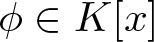 $\phi\in K[x]$ be any key polynomial for a residue-transcendental extension w of v to K(x). In this article, using the ϕ-Newton polygon of a polynomial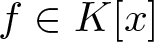 $f\in K[x]$ (with respect to w), we give a lower bound for the degree of an irreducible factor of f. This generalizes the result given in Jakhar and Srinivas (On the irreducible factors of a polynomial II, J. Algebra 556 (2020), 649–655).
Optimal linear sofic approximations of countable groups
- Part of
-
- Journal:
- Glasgow Mathematical Journal / Volume 67 / Issue 2 / May 2025
- Published online by Cambridge University Press:
- 24 January 2025, pp. 245-268
-
- Article
- Export citation
-
Let $G$ be a group. The notion of linear sofic approximations of $G$ over an arbitrary field $F$ was introduced and systematically studied by Arzhantseva and Păunescu [3]. Inspired by one of the results of [3], we introduce and study the invariant $\kappa _F(G)$ that captures the quality of linear sofic approximations of $G$ over $F$. In this work, we show that when $F$ has characteristic zero and $G$ is linear sofic over $F$, then $\kappa _F(G)$ takes values in the interval $[1/2,1]$ and $1/2$ cannot be replaced by any larger value. Further, we show that under the same conditions, $\kappa _F(G)=1$ when $G$ is torsion-free. These results answer a question posed by Arzhantseva and Păunescu [3] for fields of characteristic zero. One of the new ingredients of our proofs is an effective non-concentration estimates for random walks on finitely generated abelian groups, which may be of independent interest.


12 - Continuity and Coincidence Theorems
-
- Book:
- Category and Measure
- Published online:
- 14 January 2025
- Print publication:
- 23 January 2025, pp 184-202
-
- Chapter
- Export citation
Conditions for the supersolvability of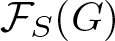 $\mathcal{F}_{S}(G)$
- Part of
-
- Journal:
- Proceedings of the Edinburgh Mathematical Society / Volume 68 / Issue 2 / May 2025
- Published online by Cambridge University Press:
- 23 January 2025, pp. 566-572
-
- Article
- Export citation
-
In this article,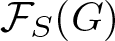 $\mathcal{F}_{S}(G)$ denotes the fusion category of G on a Sylow p-subgroup S of G where p denotes a prime. A subgroup K of G has normal complement in G if there is a normal subgroup T of G satisfying that G = KT and $T \cap K = 1$. We investigate the supersolvability of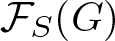 $\mathcal{F}_{S}(G)$ under the assumption that some subgroups of S are normal in G or have normal complement in G.
13 - * Non-separable Variants
-
- Book:
- Category and Measure
- Published online:
- 14 January 2025
- Print publication:
- 23 January 2025, pp 203-221
-
- Chapter
- Export citation
2 - Baire Category and Related Results
-
- Book:
- Category and Measure
- Published online:
- 14 January 2025
- Print publication:
- 23 January 2025, pp 34-50
-
- Chapter
- Export citation
Preface
-
- Book:
- Category and Measure
- Published online:
- 14 January 2025
- Print publication:
- 23 January 2025, pp xi-xiv
-
- Chapter
- Export citation
