Refine search
Actions for selected content:
26063 results in Abstract analysis
GAGA FOR HENSELIAN SCHEMES
- Part of
-
- Journal:
- Journal of the Institute of Mathematics of Jussieu / Volume 24 / Issue 4 / July 2025
- Published online by Cambridge University Press:
- 04 March 2025, pp. 1547-1589
- Print publication:
- July 2025
-
- Article
-
- You have access
- Open access
- HTML
- Export citation
-
The global analogue of a Henselian local ring is a Henselian pair – a ring R and an ideal I which satisfy a condition resembling Hensel’s lemma regarding lifting coprime factorizations of monic polynomials over $R/I$ to factorizations over R. The geometric counterpart is the notion of a Henselian scheme, which can serve as a substitute for formal schemes in applications such as deformation theory.
In this paper, we prove a GAGA-style cohomology comparison result for Henselian schemes in positive characteristic, making use of a ‘Henselian étale’ topology defined in previous work in order to leverage exactness of finite pushforward for abelian sheaves in the étale topology of schemes. We will also discuss algebraizability of coherent sheaves on the Henselization of a proper scheme, proving (without a positive characteristic restriction) algebraizability for coherent subsheaves. We can then deduce a Henselian version of Chow’s theorem on algebraization and the algebraizability of maps between Henselizations of proper schemes.

Unique compact representation of magnetic fields using truncated solid harmonic expansions
- Part of
-
- Journal:
- European Journal of Applied Mathematics / Volume 36 / Issue 5 / October 2025
- Published online by Cambridge University Press:
- 03 March 2025, pp. 1012-1039
-
- Article
-
- You have access
- Open access
- HTML
- Export citation
Non-additive derived functors via chain resolutions
- Part of
-
- Journal:
- Glasgow Mathematical Journal / Volume 67 / Issue 3 / September 2025
- Published online by Cambridge University Press:
- 28 February 2025, pp. 423-466
-
- Article
-
- You have access
- Open access
- HTML
- Export citation
-
Let $F:\; {\mathscr {C}} \to {\mathscr {E}} \ $ be a functor from a category $\mathscr {C} \ $ to a homological (Borceux–Bourn) or semi-abelian (Janelidze–Márki–Tholen) category $\mathscr {E}$. We investigate conditions under which the homology of an object $X$ in $\mathscr {C}$ with coefficients in the functor $F$, defined via projective resolutions in $\mathscr {C}$, remains independent of the chosen resolution. Consequently, the left derived functors of $F$ can be constructed analogously to the classical abelian case.
Our approach extends the concept of chain homotopy to a non-additive setting using the technique of imaginary morphisms. Specifically, we utilize the approximate subtractions of Bourn–Janelidze, originally introduced in the context of subtractive categories. This method is applicable when $\mathscr {C}$ is a pointed regular category with finite coproducts and enough projectives, provided the class of projectives is closed under protosplit subobjects, a new condition introduced in this article and naturally satisfied in the abelian context. We further assume that the functor $F$ meets certain exactness conditions: for instance, it may be protoadditive and preserve proper morphisms and binary coproducts—conditions that amount to additivity when $\mathscr {C}$ and $\mathscr {E}$ are abelian categories.
Within this framework, we develop a basic theory of derived functors, compare it with the simplicial approach, and provide several examples.


Theory of heat equations for sigma functions
- Part of
-
- Journal:
- Glasgow Mathematical Journal / Volume 67 / Issue 3 / September 2025
- Published online by Cambridge University Press:
- 28 February 2025, pp. 365-422
-
- Article
-
- You have access
- Open access
- HTML
- Export citation
-
Let $e$ and $q$ be fixed co-prime integers satisfying $1\lt e\lt q$. Let $\mathscr {C}$ be a certain family of deformations of the curve $y^e=x^q$. That family is called the $(e,q)$-curve and is one of the types of curves called plane telescopic curves. Let $\varDelta$ be the discriminant of $\mathscr {C}$. Following pioneering work by Buchstaber and Leykin (BL), we determine the canonical basis $\{ L_j \}$ of the space of derivations tangent to the variety $\varDelta =0$ and describe their specific properties. Such a set $\{ L_j \}$ gives rise to a system of linear partial differential equations (heat equations) satisfied by the function $\sigma (u)$ associated with $\mathscr {C}$, and eventually gives its explicit power series expansion. This is a natural generalisation of Weierstrass’ result on his sigma function. We attempt to give an accessible description of various aspects of the BL theory. Especially, the text contains detailed proofs for several useful formulae and known facts since we know of no works which include their proofs.


On a perturbed critical semilinear equation with singularity
- Part of
-
- Journal:
- Proceedings of the Royal Society of Edinburgh. Section A: Mathematics , First View
- Published online by Cambridge University Press:
- 27 February 2025, pp. 1-35
-
- Article
- Export citation
-
In this article, we investigate necessary and sufficient conditions on the perturbation ρ for the existence of positive least energy solutions of the critical singular semilinear elliptic equation $ -\Delta u = \frac{|u|^{2^{*}(s)-2}}{|x|^s}u + \rho(u) $ with Dirichlet boundary condition in a bounded smooth domain in $\mathbb R^n$ containing the origin, where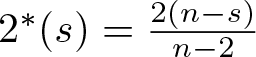 $2^*(s)=\frac{2(n-s)}{n-2}$, $0\leq s \lt 2 \lt n$. We show that the almost necessary and sufficient condition obtained for the case s = 0 in [1] differs conceptually when $0 \lt s \lt 2$.

Are free groups of different ranks bi-invariantly quasi-isometric?
- Part of
-
- Journal:
- Glasgow Mathematical Journal / Volume 67 / Issue 3 / September 2025
- Published online by Cambridge University Press:
- 26 February 2025, pp. 356-364
-
- Article
-
- You have access
- Open access
- HTML
- Export citation
POLYNOMIALS REPRESENTED BY NORM FORMS VIA THE BETA SIEVE
- Part of
-
- Journal:
- Journal of the Institute of Mathematics of Jussieu / Volume 24 / Issue 4 / July 2025
- Published online by Cambridge University Press:
- 25 February 2025, pp. 1463-1519
- Print publication:
- July 2025
-
- Article
-
- You have access
- Open access
- HTML
- Export citation
-
A central question in Arithmetic geometry is to determine for which polynomials $f \in \mathbb {Z}[t]$ and which number fields K the Hasse principle holds for the affine equation $f(t) = \mathbf {N}_{K/\mathbb {Q}}(\mathbf {x}) \neq 0$. Whilst extensively studied in the literature, current results are largely limited to polynomials and number fields of low degree. In this paper, we establish the Hasse principle for a wide family of polynomials and number fields, including polynomials that are products of arbitrarily many linear, quadratic or cubic factors. The proof generalises an argument of Irving [27], which makes use of the beta sieve of Rosser and Iwaniec. As a further application of our sieve results, we prove new cases of a conjecture of Harpaz and Wittenberg on locally split values of polynomials over number fields, and discuss consequences for rational points in fibrations.


An elliptic operator with a nonlocal term: maximum principle, principal eigenvalue, and applications to a logistic equation with indefinite weight
- Part of
-
- Journal:
- Proceedings of the Royal Society of Edinburgh. Section A: Mathematics , First View
- Published online by Cambridge University Press:
- 24 February 2025, pp. 1-38
-
- Article
- Export citation
Global well-posedness and Turing–Hopf bifurcation of prey-taxis systems with hunting cooperation
- Part of
-
- Journal:
- European Journal of Applied Mathematics / Volume 36 / Issue 6 / December 2025
- Published online by Cambridge University Press:
- 24 February 2025, pp. 1121-1147
-
- Article
-
- You have access
- Open access
- HTML
- Export citation
Multiple solutions for some classes of non-linear elliptic equations with variable exponents
- Part of
-
- Journal:
- Proceedings of the Royal Society of Edinburgh. Section A: Mathematics , First View
- Published online by Cambridge University Press:
- 24 February 2025, pp. 1-51
-
- Article
- Export citation
-
This article concerns the existence and multiplicity of solutions for the following class of non-linear elliptic equations with variable exponents
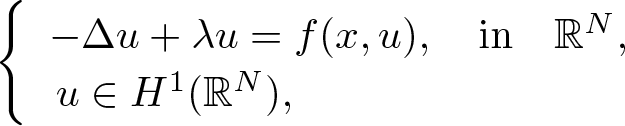 \begin{equation*}\left\{\begin{array}{l}-\Delta u+\lambda u=f(x,u), \quad \text{in} \quad \mathbb{R}^N, \\\,u\in H^{1}(\mathbb{R}^N),\\\end{array}\right.\end{equation*}
where λ > 0,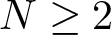 $N\geq 2$ and $f:\mathbb{R}^N \times \mathbb{R} \to \mathbb{R}$ is a function of the following types:
Type 1: The subcritical case:
 \begin{equation*}f(x,t)=|t|^{p(\varepsilon x)-2}t, \quad \forall (x,t) \in \mathbb{R}^N\times \mathbb{R}, N\geq3, \end{equation*}
Type 2: The critical case:
 \begin{equation*}f(x,t)=\mu|t|^{p(\varepsilon x)-2}t+|t|^{2^*-2}t, \quad \forall (x,t) \in \mathbb{R}^N\times \mathbb{R}, N\geq3, \end{equation*}
Type 3: The exponential subcritical growth case:
 \begin{equation*} f(x,t)=\mu|t|^{p(\varepsilon x)-2}te^{\alpha|t|^\beta}, \quad \forall (x,t) \in \mathbb{R}^2\times \mathbb{R}, \end{equation*}
where parameterɛ > 0, α > 0,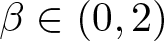 $\beta \in (0,2)$, $2^*=\frac{2N}{N-2}$ if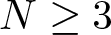 $N \geq 3$ and $2^*=+\infty$ if N = 2. Related to the function $p:\mathbb{R}^{N}\rightarrow \mathbb{R}$, we assume that it is a continuous function with $p_{\max}, p_{\min} \in (2,2^*)$, where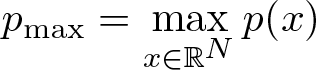 $p_{\max}=\displaystyle \max_{x \in \mathbb{R}^N}p(x)$ and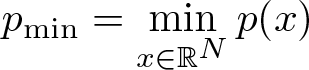 $p_{\min}=\displaystyle \min_{x \in \mathbb{R}^N}p(x)$.
We show that for each λ > 0 the number of solutions is associated with the number of global maximum or global minimum points of p when ɛ is small enough. The proof of is based on the variational methods, Ekeland’s variational principle, Trundiger–Moser inequality, and the monotonicity of the ground state energy with respect to p. Our results extend those of Cao and Noussair (Multiplicity of positive and nodal solutions for nonlinear elliptic problem in $\mathbb{R}^{N}$. Ann. Inst. Henri Poincaré, Anal. Non Linéaire. 13 (1996), 567–588) and Ji, Wang and Wu (A monotone property of the ground state energy to the scalar field equation and applications. J. Lond. Math. Soc., II. Ser. 100 (2019), 804–824).


On a general matrix-valued unbalanced optimal transport problem
- Part of
-
- Journal:
- European Journal of Applied Mathematics / Volume 36 / Issue 6 / December 2025
- Published online by Cambridge University Press:
- 24 February 2025, pp. 1063-1095
-
- Article
-
- You have access
- Open access
- HTML
- Export citation
-
We introduce a general class of transport distances $\mathrm {WB}_{\Lambda }$ over the space of positive semi-definite matrix-valued Radon measures $\mathcal {M}(\Omega, \mathbb {S}_+^n)$, called the weighted Wasserstein–Bures distance. Such a distance is defined via a generalised Benamou–Brenier formulation with a weighted action functional and an abstract matricial continuity equation, which leads to a convex optimisation problem. Some recently proposed models, including the Kantorovich–Bures distance and the Wasserstein–Fisher–Rao distance, can naturally fit into ours. We give a complete characterisation of the minimiser and explore the topological and geometrical properties of the space $(\mathcal {M}(\Omega, \mathbb {S}_+^n),\mathrm {WB}_{\Lambda })$. In particular, we show that $(\mathcal {M}(\Omega, \mathbb {S}_+^n),\mathrm {WB}_{\Lambda })$ is a complete geodesic space and exhibits a conic structure.


Two dynamical approaches to the notion of exponential separation for random systems of delay differential equations
- Part of
-
- Journal:
- Proceedings of the Royal Society of Edinburgh. Section A: Mathematics , First View
- Published online by Cambridge University Press:
- 24 February 2025, pp. 1-39
-
- Article
-
- You have access
- Open access
- HTML
- Export citation
-
This paper deals with the exponential separation of type II, an important concept for random systems of differential equations with delay, introduced in Mierczyński et al. [18]. Two different approaches to its existence are presented. The state space X will be a separable ordered Banach space with $\dim X\geq 2$, dual space $X^{*}$, and positive cone $X^+$ normal and reproducing. In both cases, appropriate cooperativity and irreducibility conditions are assumed to provide a family of generalized Floquet subspaces. If in addition $X^*$ is also separable, one obtains an exponential separation of type II. When this is not the case, but there is an Oseledets decomposition for the continuous semiflow, the same result holds. Detailed examples are given for all the situations, including also a case where the cone is not normal.


Forman–Ricci communicability curvature of graphs and networks
- Part of
-
- Journal:
- European Journal of Applied Mathematics / Volume 36 / Issue 6 / December 2025
- Published online by Cambridge University Press:
- 24 February 2025, pp. 1096-1120
-
- Article
-
- You have access
- Open access
- HTML
- Export citation
On the $\mu$-invariant of two-variable $2$-adic $\boldsymbol{L}$-functions
- Part of
-
- Journal:
- Glasgow Mathematical Journal / Volume 67 / Issue 3 / September 2025
- Published online by Cambridge University Press:
- 24 February 2025, pp. 325-355
-
- Article
- Export citation
-
Let $K={\mathbb {Q}}(\sqrt {-7})$ and $\mathcal {O}$ the ring of integers in $K$. The prime $2$ splits in $K$, say $2{\mathcal {O}}={\mathfrak {p}}\cdot {\mathfrak {p}}^*$. Let $A$ be an elliptic curve defined over $K$ with complex multiplication by $\mathcal {O}$. Assume that $A$ has good ordinary reduction at both $\mathfrak {p}$ and ${\mathfrak {p}}^*$. Write $K_\infty$ for the field generated by the $2^\infty$–division points of $A$ over $K$ and let ${\mathcal {G}}={\mathrm {Gal}}(K_\infty /K)$. In this paper, by adopting a congruence formula of Yager and De Shalit, we construct the two-variable $2$-adic $L$-function on $\mathcal {G}$. Then by generalizing De Shalit’s local structure theorem to the two-variable setting, we prove a two-variable elliptic analogue of Iwasawa’s theorem on cyclotomic fields. As an application, we prove that every branch of the two-variable measure has Iwasawa $\mu$ invariant zero.


SU(2)-bundles over highly connected 8-manifolds
- Part of
-
- Journal:
- Proceedings of the Royal Society of Edinburgh. Section A: Mathematics , First View
- Published online by Cambridge University Press:
- 18 February 2025, pp. 1-30
-
- Article
- Export citation
Singular SPDEs on homogeneous lie groups
- Part of
-
- Journal:
- Proceedings of the Royal Society of Edinburgh. Section A: Mathematics , First View
- Published online by Cambridge University Press:
- 18 February 2025, pp. 1-72
-
- Article
-
- You have access
- Open access
- HTML
- Export citation
-
The aim of this article is to extend the scope of the theory of regularity structures in order to deal with a large class of singular stochastic partial differential equations of the form
 \begin{equation*}\partial_t u = \mathfrak{L} u+ F(u, \xi),\end{equation*}
where the differential operator $\mathfrak{L}$ fails to be elliptic. This is achieved by interpreting the base space $\mathbb{R}^{d}$ as a non-trivial homogeneous Lie group $\mathbb{G}$ such that the differential operator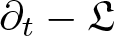 $\partial_t -\mathfrak{L}$ becomes a translation invariant hypoelliptic operator on $\mathbb{G}$. Prime examples are the kinetic Fokker-Planck operator $\partial_t -\Delta_v - v\cdot \nabla_x$ and heat-type operators associated with sub-Laplacians. As an application of the developed framework, we solve a class of parabolic Anderson type equations
 \begin{equation*}\partial_t u = \sum_{i} X^2_i u + u (\xi-c)\end{equation*}
on the compact quotient of an arbitrary Carnot group.


ON DEFORMATION THEORY IN HIGHER LOGARITHMIC GEOMETRY
-
- Journal:
- Journal of the Institute of Mathematics of Jussieu / Volume 24 / Issue 4 / July 2025
- Published online by Cambridge University Press:
- 18 February 2025, pp. 1337-1394
- Print publication:
- July 2025
-
- Article
-
- You have access
- Open access
- HTML
- Export citation
PEM series 2 volume 68 issue 1 Cover and Front matter
-
- Journal:
- Proceedings of the Edinburgh Mathematical Society / Volume 68 / Issue 1 / February 2025
- Published online by Cambridge University Press:
- 18 February 2025, pp. f1-f2
-
- Article
-
- You have access
- Export citation
PEM series 2 volume 68 issue 1 Cover and Back matter
-
- Journal:
- Proceedings of the Edinburgh Mathematical Society / Volume 68 / Issue 1 / February 2025
- Published online by Cambridge University Press:
- 18 February 2025, pp. b1-b2
-
- Article
-
- You have access
- Export citation
A sharp threshold for Trudinger–Moser type inequalities with logarithmic kernels in dimension N
- Part of
-
- Journal:
- Proceedings of the Royal Society of Edinburgh. Section A: Mathematics , First View
- Published online by Cambridge University Press:
- 17 February 2025, pp. 1-39
-
- Article
- Export citation
-
In the article, we investigate Trudinger–Moser type inequalities in presence of logarithmic kernels in dimension N. A sharp threshold, depending on N, is detected for the existence of extremal functions or blow-up, where the domain is the ball or the entire space $\mathbb{R}^N$. We also show that the extremal functions satisfy suitable Euler–Lagrange equations. When the domain is the entire space, such equations can be derived by a N-Laplacian Schrödinger equation strongly coupled with a higher order fractional Poisson’s equation. The results extends [16] to any dimension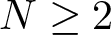 $N \geq 2$.

