Refine search
Actions for selected content:
26063 results in Abstract analysis
Hamiltonicity of sparse pseudorandom graphs
- Part of
-
- Journal:
- Combinatorics, Probability and Computing / Volume 34 / Issue 4 / July 2025
- Published online by Cambridge University Press:
- 25 March 2025, pp. 596-620
-
- Article
-
- You have access
- Open access
- HTML
- Export citation
-
We show that every $(n,d,\lambda )$-graph contains a Hamilton cycle for sufficiently large $n$, assuming that $d\geq \log ^{6}n$ and $\lambda \leq cd$, where $c=\frac {1}{70000}$. This significantly improves a recent result of Glock, Correia, and Sudakov, who obtained a similar result for $d$ that grows polynomially with $n$. The proof is based on a new result regarding the second largest eigenvalue of the adjacency matrix of a subgraph induced by a random subset of vertices, combined with a recent result on connecting designated pairs of vertices by vertex-disjoint paths in $(n,d,\lambda )$-graphs. We believe that the former result is of independent interest and will have further applications.


A note on digraph splitting
- Part of
-
- Journal:
- Combinatorics, Probability and Computing / Volume 34 / Issue 4 / July 2025
- Published online by Cambridge University Press:
- 21 March 2025, pp. 559-564
-
- Article
-
- You have access
- Open access
- HTML
- Export citation
-
A tantalizing open problem, posed independently by Stiebitz in 1995 and by Alon in 1996 and again in 2006, asks whether for every pair of integers $s,t \ge 1$ there exists a finite number $F(s,t)$ such that the vertex set of every digraph of minimum out-degree at least $F(s,t)$ can be partitioned into non-empty parts $A$ and $B$ such that the subdigraphs induced on $A$ and $B$ have minimum out-degree at least $s$ and $t$, respectively.
In this short note, we prove that if $F(2,2)$ exists, then all the numbers $F(s,t)$ with $s,t\ge 1$ exist and satisfy $F(s,t)=\Theta (s+t)$. In consequence, the problem of Alon and Stiebitz reduces to the case $s=t=2$. Moreover, the numbers $F(s,t)$ with $s,t \ge 2$ either all exist and grow linearly, or all of them do not exist.


Linearity of compact R-analytic groups
- Part of
-
- Journal:
- Proceedings of the Edinburgh Mathematical Society / Volume 68 / Issue 3 / August 2025
- Published online by Cambridge University Press:
- 21 March 2025, pp. 787-794
-
- Article
-
- You have access
- Open access
- HTML
- Export citation
Tate duality and transfer for symmetric algebras over complete discrete valuation rings
- Part of
-
- Journal:
- Proceedings of the Edinburgh Mathematical Society / Volume 68 / Issue 3 / August 2025
- Published online by Cambridge University Press:
- 21 March 2025, pp. 763-786
-
- Article
-
- You have access
- Open access
- HTML
- Export citation
TWISTED BLANCHFIELD PAIRINGS AND TWISTED SIGNATURES II: RELATION TO CASSON-GORDON INVARIANTS
-
- Journal:
- Journal of the Institute of Mathematics of Jussieu / Volume 24 / Issue 4 / July 2025
- Published online by Cambridge University Press:
- 20 March 2025, pp. 1139-1195
- Print publication:
- July 2025
-
- Article
-
- You have access
- Open access
- HTML
- Export citation
-
This paper studies twisted signature invariants and twisted linking forms, with a view toward obstructions to knot concordance. Given a knot K and a representation $\rho $ of the knot group, we define a twisted signature function $\sigma _{K,\rho } \colon S^1 \to \mathbb {Z}$. This invariant satisfies many of the same algebraic properties as the classical Levine-Tristram signature $\sigma _K$. When the representation is abelian, $\sigma _{K,\rho }$ recovers $\sigma _K$, while for appropriate metabelian representations, $\sigma _{K,\rho }$ is closely related to the Casson-Gordon invariants. Additionally, we prove satellite formulas for $\sigma _{K,\rho }$ and for twisted Blanchfield forms.


ON THE DEGREE OF IRRATIONALITY OF LOW GENUS $K3$ SURFACES
- Part of
-
- Journal:
- Journal of the Institute of Mathematics of Jussieu / Volume 24 / Issue 3 / May 2025
- Published online by Cambridge University Press:
- 19 March 2025, pp. 627-662
- Print publication:
- May 2025
-
- Article
-
- You have access
- Open access
- HTML
- Export citation
-
Given a general polarized $K3$ surface $S\subset \mathbb P^g$ of genus $g\le 14$, we study projections
  of minimal degree and their variational structure. In particular, we prove that the degree of irrationality of all such surfaces is at most $4$, and that for $g=7,8,9,11$ there are no rational maps
  of degree $3$ induced by the primitive linear system. Our methods combine vector bundle techniques à la Lazarsfeld with derived category tools and also make use of the rich theory of singular curves on $K3$ surfaces.


 of minimal degree and their variational structure. In particular, we prove that the degree of irrationality of all such surfaces is at most
 of degree

STATED SKEIN MODULES OF 3-MANIFOLDS AND TQFT
- Part of
-
- Journal:
- Journal of the Institute of Mathematics of Jussieu / Volume 24 / Issue 3 / May 2025
- Published online by Cambridge University Press:
- 19 March 2025, pp. 663-703
- Print publication:
- May 2025
-
- Article
-
- You have access
- Open access
- HTML
- Export citation
-
We study the behaviour of Kauffman bracket skein modules of 3-manifolds under gluing along surfaces. For this we extend this notion to $3$-manifolds with marking consisting of open intervals and circles in the boundary. The new module is called the stated skein module.
The first results concern non-injectivity of certain natural maps defined when forming connected sums along spheres or disks. These maps are injective for surfaces or for generic quantum parameter, but we show that in general they are not when the quantum parameter is a root of 1. We show that when the quantum parameter is a root of 1, the empty skein is zero in a connected sum where each constituent manifold has non-empty marking. We also prove various non-injectivity results for the Chebyshev-Frobenius map and the map induced by deleting marked balls.
We then interpret stated skein modules as a monoidal symmetric functor from a category of “decorated cobordisms” to a category of algebras and their bimodules. We apply this to deduce properties of stated skein modules as a Van-Kampen like theorem, a computation through Heegaard decompositions and a relation to Hochshild homology for trivial circle bundles over surfaces.

ON K-STABILITY OF CALABI-YAU FIBRATIONS
-
- Journal:
- Journal of the Institute of Mathematics of Jussieu / Volume 24 / Issue 3 / May 2025
- Published online by Cambridge University Press:
- 19 March 2025, pp. 961-1019
- Print publication:
- May 2025
-
- Article
- Export citation
3D Navier–Stokes–Voigt equations with damping and double delays on unbounded domains: Well-posedness, pullback attractors, and limit measures
- Part of
-
- Journal:
- Proceedings of the Royal Society of Edinburgh. Section A: Mathematics , First View
- Published online by Cambridge University Press:
- 18 March 2025, pp. 1-39
-
- Article
- Export citation
COVERING INTEGERS BY $x^2 + dy^2$
- Part of
-
- Journal:
- Journal of the Institute of Mathematics of Jussieu / Volume 24 / Issue 3 / May 2025
- Published online by Cambridge University Press:
- 18 March 2025, pp. 847-889
- Print publication:
- May 2025
-
- Article
-
- You have access
- Open access
- HTML
- Export citation
-
What proportion of integers $n \leq N$ may be expressed as $x^2 + dy^2$ for some $d \leq \Delta $, with $x,y$ integers? Writing $\Delta = (\log N)^{\log 2} 2^{\alpha \sqrt {\log \log N}}$ for some $\alpha \in (-\infty , \infty )$, we show that the answer is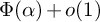 $\Phi (\alpha ) + o(1)$, where $\Phi $ is the Gaussian distribution function $\Phi (\alpha ) = \frac {1}{\sqrt {2\pi }} \int ^{\alpha }_{-\infty } e^{-x^2/2} dx$.
A consequence of this is a phase transition: Almost none of the integers $n \leq N$ can be represented by $x^2 + dy^2$ with $d \leq (\log N)^{\log 2 - \varepsilon }$, but almost all of them can be represented by $x^2 + dy^2$ with $d \leq (\log N)^{\log 2 + \varepsilon}\kern-1.5pt$.


PROJECTIVELY FLAT FOLIATIONS
- Part of
-
- Journal:
- Journal of the Institute of Mathematics of Jussieu / Volume 24 / Issue 3 / May 2025
- Published online by Cambridge University Press:
- 18 March 2025, pp. 763-812
- Print publication:
- May 2025
-
- Article
- Export citation
-
We describe the structure of regular codimension $1$ foliations with numerically projectively flat tangent bundle on complex projective manifolds of dimension at least $4$. Along the way, we prove that either the normal bundle of a regular codimension $1$ foliation is pseudo-effective, or its conormal bundle is nef.


NOMBRE DE PETITS POINTS SUR UNE VARIÉTÉ ABÉLIENNE
- Part of
-
- Journal:
- Journal of the Institute of Mathematics of Jussieu / Volume 24 / Issue 3 / May 2025
- Published online by Cambridge University Press:
- 18 March 2025, pp. 705-761
- Print publication:
- May 2025
-
- Article
- Export citation
SIMPLE TYPE THEORY FOR METAPLECTIC COVERS OF $\operatorname {GL}(r)$ OVER A NON-ARCHIMEDEAN LOCAL FIELD
- Part of
-
- Journal:
- Journal of the Institute of Mathematics of Jussieu / Volume 24 / Issue 4 / July 2025
- Published online by Cambridge University Press:
- 18 March 2025, pp. 1263-1335
- Print publication:
- July 2025
-
- Article
-
- You have access
- Open access
- HTML
- Export citation
-
Let F be a non-archimedean locally compact field of residual characteristic p, let $G=\operatorname {GL}_{r}(F)$ and let $\widetilde {G}$ be an n-fold metaplectic cover of G with $\operatorname {gcd}(n,p)=1$. We study the category $\operatorname {Rep}_{\mathfrak {s}}(\widetilde {G})$ of complex smooth representations of $\widetilde {G}$ having inertial equivalence class $\mathfrak {s}=(\widetilde {M},\mathcal {O})$, which is a block of the category $\operatorname {Rep}(\widetilde {G})$, following the ‘type theoretical’ strategy of Bushnell-Kutzko.
Precisely, first we construct a ‘maximal simple type’ $(\widetilde {J_{M}},\widetilde {\lambda }_{M})$ of $\widetilde {M}$ as an $\mathfrak {s}_{M}$-type, where $\mathfrak {s}_{M}=(\widetilde {M},\mathcal {O})$ is the related cuspidal inertial equivalence class of $\widetilde {M}$. Along the way, we prove the folklore conjecture that every cuspidal representation of $\widetilde {M}$ could be constructed explicitly by a compact induction. Secondly, we construct ‘simple types’ $(\widetilde {J},\widetilde {\lambda })$ of $\widetilde {G}$ and prove that each of them is an $\mathfrak {s}$-type of a certain block $\operatorname {Rep}_{\mathfrak {s}}(\widetilde {G})$. When $\widetilde {G}$ is either a Kazhdan-Patterson cover or Savin’s cover, the corresponding blocks turn out to be those containing discrete series representations of $\widetilde {G}$. Finally, for a simple type $(\widetilde {J},\widetilde {\lambda })$ of $\widetilde {G}$, we describe the related Hecke algebra $\mathcal {H}(\widetilde {G},\widetilde {\lambda })$, which turns out to be not far from an affine Hecke algebra of type A, and is exactly so if $\widetilde {G}$ is one of the two special covers mentioned above.
We leave the construction of a ‘semi-simple type’ related to a general block $\operatorname {Rep}_{\mathfrak {s}}(\widetilde {G})$ to a future phase of the work.


The operad of Latin hypercubes
- Part of
-
- Journal:
- Glasgow Mathematical Journal / Volume 67 / Issue 3 / September 2025
- Published online by Cambridge University Press:
- 17 March 2025, pp. 475-486
-
- Article
-
- You have access
- Open access
- HTML
- Export citation
-
We show that the sets of $d$-dimensional Latin hypercubes over a non-empty set $X$, with $d$ running over the positive integers, determine an operad which is isomorphic to a sub-operad of the endomorphism operad of $X$. We generalise this to categories with finite products, and then further to internal versions for certain Cartesian closed monoidal categories with pullbacks.


MUKAI’S PROGRAM FOR NONPRIMITIVE CURVES ON K3 SURFACES
- Part of
-
- Journal:
- Journal of the Institute of Mathematics of Jussieu / Volume 24 / Issue 3 / May 2025
- Published online by Cambridge University Press:
- 17 March 2025, pp. 1053-1091
- Print publication:
- May 2025
-
- Article
-
- You have access
- Open access
- HTML
- Export citation
-
Mukai’s program in [16] seeks to recover a K3 surface X from any curve C on it by exhibiting it as a Fourier–Mukai partner to a Brill–Noether locus of vector bundles on the curve. In the case X has Picard number one and the curve $C\in |H|$ is primitive, this was confirmed by Feyzbakhsh in [11, 13] for $g\geq 11$ and $g\neq 12$. More recently, Feyzbakhsh has shown in [12] that certain moduli spaces of stable bundles on X are isomorphic to the Brill–Noether locus of curves in $|H|$ if g is sufficiently large. In this paper, we work with irreducible curves in a nonprimitive ample linear system $|mH|$ and prove that Mukai’s program is valid for any irreducible curve when $g\neq 2$, $mg\geq 11$ and $mg\neq 12$. Furthermore, we introduce the destabilising regions to improve Feyzbakhsh’s analysis in [12]. We show that there are hyper-Kähler varieties as Brill–Noether loci of curves in every dimension.


GAUSSIAN HOLOMORPHIC SECTIONS ON NONCOMPACT COMPLEX MANIFOLDS
- Part of
-
- Journal:
- Journal of the Institute of Mathematics of Jussieu / Volume 24 / Issue 4 / July 2025
- Published online by Cambridge University Press:
- 12 March 2025, pp. 1197-1262
- Print publication:
- July 2025
-
- Article
-
- You have access
- Open access
- HTML
- Export citation
-
We provide two constructions of Gaussian random holomorphic sections of a Hermitian holomorphic line bundle $(L,h_{L})$ on a Hermitian complex manifold $(X,\Theta )$, that are particularly interesting in the case where the space of $\mathcal {L}^2$-holomorphic sections $H^{0}_{(2)}(X,L)$ is infinite dimensional. We first provide a general construction of Gaussian random holomorphic sections of L, which, if $H^{0}_{(2)}(X,L)$ is infinite dimensional, are almost never $\mathcal {L}^2$-integrable on X. The second construction combines the abstract Wiener space theory with the Berezin–Toeplitz quantization and yields a Gaussian ensemble of random $\mathcal {L}^2$-holomorphic sections. Furthermore, we study their random zeros in the context of semiclassical limits, including their distributions, large deviation estimates, local fluctuations and hole probabilities.


Impact of prey-taxis on a harvested intraguild predation predator–prey model
- Part of
-
- Journal:
- European Journal of Applied Mathematics / Volume 36 / Issue 6 / December 2025
- Published online by Cambridge University Press:
- 10 March 2025, pp. 1183-1220
-
- Article
-
- You have access
- Open access
- HTML
- Export citation
A Pride–Guba–Sapir exact sequence for the relation bimodule of an associative algebra
- Part of
-
- Journal:
- Glasgow Mathematical Journal / Volume 67 / Issue 3 / September 2025
- Published online by Cambridge University Press:
- 10 March 2025, pp. 467-474
-
- Article
- Export citation
-
Given a presentation of a monoid $M$, combined work of Pride and of Guba and Sapir provides an exact sequence connecting the relation bimodule of the presentation (in the sense of Ivanov) with the first homology of the Squier complex of the presentation, which is naturally a $\mathbb ZM$-bimodule. This exact sequence was used by Kobayashi and Otto to prove the equivalence of Pride’s finite homological type property with the homological finiteness condition bi- $\mathrm {FP}_3$. Guba and Sapir used this exact sequence to describe the abelianization of a diagram group. We prove here a generalization of this exact sequence of bimodules for presentations of associative algebras. Our proof is more elementary than the original proof for the special case of monoids.


From integro-differential models to data-oriented approaches for emergent phenomena
- Part of
-
- Journal:
- European Journal of Applied Mathematics / Volume 36 / Issue 2 / April 2025
- Published online by Cambridge University Press:
- 07 March 2025, p. 187
-
- Article
-
- You have access
- Open access
- HTML
- Export citation
A critical non-homogeneous heat equation with weighted source
- Part of
-
- Journal:
- European Journal of Applied Mathematics / Volume 36 / Issue 6 / December 2025
- Published online by Cambridge University Press:
- 06 March 2025, pp. 1148-1159
-
- Article
-
- You have access
- Open access
- HTML
- Export citation
-
Some qualitative properties of radially symmetric solutions to the non-homogeneous heat equation with critical density and weighted source
are obtained, in the range of exponents \begin{align*} |x|^{-2}\partial _tu=\Delta u+|x|^{\sigma }u^p, \quad (x,t)\in {\mathbb {R}}^N\times (0,T), \end{align*} $p\gt 1$, $\sigma \ge -2$. More precisely, we establish conditions fulfilled by the initial data in order for the solutions to either blow-up in finite time or decay to zero as $t\to \infty$ and, in the latter case, we also deduce decay rates and large time behavior. In the limiting case $\sigma =-2$, we prove the existence of non-trivial, non-negative solutions, in stark contrast to the homogeneous case. A transformation to a generalized Fisher–KPP equation is derived and employed in order to deduce these properties.


