Refine search
Actions for selected content:
26063 results in Abstract analysis
Optimal transport on gas networks
- Part of
-
- Journal:
- European Journal of Applied Mathematics / Volume 37 / Issue 3 / June 2026
- Published online by Cambridge University Press:
- 16 April 2025, pp. 553-585
-
- Article
-
- You have access
- Open access
- HTML
- Export citation
-
Optimal transport tasks naturally arise in gas networks, which include a variety of constraints such as physical plausibility of the transport and the avoidance of extreme pressure fluctuations. To define feasible optimal transport plans, we utilize a $p$-Wasserstein metric and similar dynamic formulations minimizing the kinetic energy necessary for moving gas through the network, which we combine with suitable versions of Kirchhoff’s law as the coupling condition at nodes. In contrast to existing literature, we especially focus on the non-standard case $p \neq 2$ to derive an overdamped isothermal model for gases through $p$-Wasserstein gradient flows in order to uncover and analyze underlying dynamics. We introduce different options for modelling the gas network as an oriented graph including the possibility to store gas at interior vertices and to put in or take out gas at boundary vertices.


GENERAL HYPERPLANE SECTIONS OF LOG CANONICAL THREEFOLDS IN POSITIVE CHARACTERISTIC
- Part of
-
- Journal:
- Journal of the Institute of Mathematics of Jussieu / Volume 24 / Issue 5 / September 2025
- Published online by Cambridge University Press:
- 14 April 2025, pp. 1867-1894
- Print publication:
- September 2025
-
- Article
- Export citation
-
In this paper, we prove that if a three-dimensional quasi-projective variety X over an algebraically closed field of characteristic $p>3$ has only log canonical singularities, then so does a general hyperplane section H of X. We also show that the same is true for klt singularities, which is a slight extension of [15]. In the course of the proof, we provide a sufficient condition for log canonical (resp. klt) surface singularities to be geometrically log canonical (resp. geometrically klt) over a field.

Instability of axisymmetric flow in thermocapillary liquid bridges: Kinetic and thermal energy budgets for two-phase flow with temperature-dependent material properties – CORRIGENDUM
-
- Journal:
- European Journal of Applied Mathematics / Volume 36 / Issue 6 / December 2025
- Published online by Cambridge University Press:
- 14 April 2025, pp. 1221-1225
-
- Article
-
- You have access
- Open access
- HTML
- Export citation
Optimal control of a reaction-diffusion epidemic model with non-compliance
- Part of
-
- Journal:
- European Journal of Applied Mathematics / Volume 37 / Issue 2 / April 2026
- Published online by Cambridge University Press:
- 14 April 2025, pp. 313-338
-
- Article
-
- You have access
- Open access
- HTML
- Export citation
Regularity of quasigeodesics characterizes hyperbolicity
-
- Journal:
- Proceedings of the Royal Society of Edinburgh. Section A: Mathematics , First View
- Published online by Cambridge University Press:
- 11 April 2025, pp. 1-14
-
- Article
-
- You have access
- Open access
- HTML
- Export citation
-
We characterize hyperbolic groups in terms of quasigeodesics in the Cayley graph forming regular languages. We also obtain a quantitative characterization of hyperbolicity of geodesic metric spaces by the non-existence of certain local $(3,0)$-quasigeodesic loops. As an application, we make progress towards a question of Shapiro regarding groups admitting a uniquely geodesic Cayley graph.

The nonabelian product modulo sum
- Part of
-
- Journal:
- Proceedings of the Edinburgh Mathematical Society / Volume 68 / Issue 4 / November 2025
- Published online by Cambridge University Press:
- 11 April 2025, pp. 1069-1109
-
- Article
- Export citation
-
It is shown that if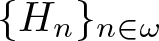 $\{H_n\}_{n \in \omega}$ is a sequence of groups without involutions, with $1 \lt |H_n| \leq 2^{\aleph_0}$, then the topologist’s product modulo the finite words is (up to isomorphism) independent of the choice of sequence. This contrasts with the abelian setting: if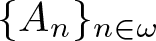 $\{A_n\}_{n \in \omega}$ is a sequence of countably infinite torsion-free abelian groups, then the isomorphism class of the product modulo sum $\prod_{n \in \omega} A_n/\bigoplus_{n \in \omega} A_n$ is dependent on the sequence.
 $ \epsilon $-ISOMORPHISMS FOR RANK ONE $( \varphi , \Gamma )$-MODULES OVER LUBIN-TATE ROBBA RINGS
- Part of
-
- Journal:
- Journal of the Institute of Mathematics of Jussieu / Volume 24 / Issue 5 / September 2025
- Published online by Cambridge University Press:
- 11 April 2025, pp. 1895-1994
- Print publication:
- September 2025
-
- Article
-
- You have access
- Open access
- HTML
- Export citation
-
Inspired by Nakamura’s work [36] on $\epsilon $-isomorphisms for $(\varphi ,\Gamma )$-modules over (relative) Robba rings with respect to the cyclotomic theory, we formulate an analogous conjecture for L-analytic Lubin-Tate $(\varphi _L,\Gamma _L)$-modules over (relative) Robba rings for any finite extension L of $\mathbb {Q}_p.$ In contrast to Kato’s and Nakamura’s setting, our conjecture involves L-analytic cohomology instead of continuous cohomology within the generalized Herr complex. Similarly, we restrict to the identity components of $D_{cris}$ and $D_{dR},$ respectively. For rank one modules of the above type or slightly more generally for trianguline ones, we construct $\epsilon $-isomorphisms for their Lubin-Tate deformations satisfying the desired interpolation property.


Pattern formation with jump discontinuity in a predator–prey model with Holling-II functional response
- Part of
-
- Journal:
- European Journal of Applied Mathematics / Volume 36 / Issue 6 / December 2025
- Published online by Cambridge University Press:
- 11 April 2025, pp. 1160-1182
-
- Article
-
- You have access
- Open access
- HTML
- Export citation
Sobolev regularity of the inverse for minimizers of the neo-Hookean energy satisfying condition INV
- Part of
-
- Journal:
- Proceedings of the Royal Society of Edinburgh. Section A: Mathematics , First View
- Published online by Cambridge University Press:
- 11 April 2025, pp. 1-21
-
- Article
- Export citation
-
We study the existence and regularity of minimizers of the neo-Hookean energy in the closure of classes of deformations without cavitation. The exclusion of cavitation is imposed in the form of the divergence identities, which is equivalent to the well-known condition (INV) with $\operatorname{Det} = \operatorname{det}$. We show that the neo-Hookean energy admits minimizers in classes of maps that are one-to-one a.e. with positive Jacobians, provided that these maps are the weak limits of sequences of maps that satisfy the divergence identities. In particular, these classes include the weak closure of diffeomorphisms and the weak closure of homeomorphisms satisfying Lusin’s condition N. Moreover, if the minimizers satisfy condition (INV), then their inverses have Sobolev regularity. This extends a recent result by Doležalová, Hencl, and Molchanova by showing that the minimizers they obtained enjoy extra regularity properties and that the existence of minimizers can still be obtained even when their coercivity assumption is relaxed.

On mixed local–nonlocal problems with Hardy potential
- Part of
-
- Journal:
- Proceedings of the Royal Society of Edinburgh. Section A: Mathematics , First View
- Published online by Cambridge University Press:
- 11 April 2025, pp. 1-34
-
- Article
- Export citation
-
In this article, we study the effect of the Hardy potential on existence, uniqueness, and optimal summability of solutions of the mixed local–nonlocal elliptic problem
where Ω is a bounded domain in \begin{equation*}-\Delta u + (-\Delta)^s u - \gamma \frac{u}{|x|^2}=f \,\text{in } \Omega, \ u=0 \,\text{in } {\mathbb R}^n \setminus \Omega,\end{equation*} ${\mathbb R}^n$ containing the origin and γ > 0. In particular, we will discuss the existence, non-existence, and uniqueness of solutions in terms of the summability of f and of the value of the parameter γ.

JMJ volume 24 issue 3 Cover and Back matter
-
- Journal:
- Journal of the Institute of Mathematics of Jussieu / Volume 24 / Issue 3 / May 2025
- Published online by Cambridge University Press:
- 11 April 2025, pp. b1-b2
- Print publication:
- May 2025
-
- Article
-
- You have access
- Export citation
JMJ volume 24 issue 3 Cover and Front matter
-
- Journal:
- Journal of the Institute of Mathematics of Jussieu / Volume 24 / Issue 3 / May 2025
- Published online by Cambridge University Press:
- 11 April 2025, pp. f1-f2
- Print publication:
- May 2025
-
- Article
-
- You have access
- Export citation
Maximal operators along flat curves with one variable vector field - Erratum
-
- Journal:
- Proceedings of the Edinburgh Mathematical Society / Volume 68 / Issue 4 / November 2025
- Published online by Cambridge University Press:
- 08 April 2025, p. 1421
-
- Article
-
- You have access
- HTML
- Export citation
Graph morphisms and exhaustion of curve graphs of low-genus surfaces
- Part of
-
- Journal:
- Proceedings of the Edinburgh Mathematical Society / Volume 68 / Issue 4 / November 2025
- Published online by Cambridge University Press:
- 08 April 2025, pp. 1018-1068
-
- Article
- Export citation
-
Let S be an orientable, connected surface of finite topological type, with genus $g \leqslant 2$, empty boundary and complexity at least 2; we prove that any graph endomorphism of the curve graph of S is actually an automorphism. Also, as a complement of the author’s previous results, we prove that under mild conditions on the complexity of the underlying surfaces, any graph morphism between curve graphs is induced by a homeomorphism of the surfaces.
To prove these results, we construct a finite subgraph whose union of iterated rigid expansions is the curve graph $\mathcal{C}(S)$. The sets constructed, and the method of rigid expansion, are closely related to Aramayona and Leininger’s finite rigid sets. We prove as a consequence that Aramayona and Leininger’s rigid set also exhausts $\mathcal{C}(S)$ via rigid expansions. The combinatorial rigidity results follow as an immediate consequence, based on the author’s previous results.


Loop space decompositions of moment-angle complexes associated to two-dimensional simplicial complexes
- Part of
-
- Journal:
- Proceedings of the Edinburgh Mathematical Society / Volume 68 / Issue 4 / November 2025
- Published online by Cambridge University Press:
- 07 April 2025, pp. 995-1017
-
- Article
- Export citation
On Growth Functions of Coxeter Groups
- Part of
-
- Journal:
- Proceedings of the Edinburgh Mathematical Society / Volume 68 / Issue 3 / August 2025
- Published online by Cambridge University Press:
- 07 April 2025, pp. 979-993
-
- Article
-
- You have access
- Open access
- HTML
- Export citation
-
Let (W, S) be a Coxeter system of rank n, and let $p_{(W, S)}(t)$ be its growth function. It is known that $p_{(W, S)}(q^{-1}) \lt \infty$ holds for all $n \leq q \in \mathbb{N}$. In this paper, we will show that this still holds for $q = n-1$, if (W, S) is 2-spherical. Moreover, we will prove that $p_{(W, S)}(q^{-1}) = \infty$ holds for $q = n-2$, if the Coxeter diagram of (W, S) is the complete graph. These two results provide a complete characterization of the finiteness of the growth function in the case of 2-spherical Coxeter systems with a complete Coxeter diagram.


Zero-one law of orbital limit points for weighted shifts
- Part of
-
- Journal:
- Proceedings of the Edinburgh Mathematical Society / Volume 68 / Issue 3 / August 2025
- Published online by Cambridge University Press:
- 07 April 2025, pp. 945-978
-
- Article
- Export citation
-
Chan and Seceleanu have shown that if a weighted shift operator on $\ell^p(\mathbb{Z})$, $1\leq p \lt \infty$, admits an orbit with a non-zero limit point then it is hypercyclic. We present a new proof of this result that allows to extend it to very general sequence spaces. In a similar vein, we show that, in many sequence spaces, a weighted shift with a non-zero weakly sequentially recurrent vector has a dense set of such vectors, but an example on $c_0(\mathbb{Z})$ shows that such an operator is not necessarily hypercyclic. On the other hand, we obtain that weakly sequentially hypercyclic weighted shifts are hypercyclic. Chan and Seceleanu have, moreover, shown that if an adjoint multiplication operator on a Bergman space admits an orbit with a non-zero limit point then it is hypercyclic. We extend this result to very general spaces of analytic functions, including the Hardy spaces.


Rigidity of mapping class groups MOD powers of twists
- Part of
-
- Journal:
- Proceedings of the Royal Society of Edinburgh. Section A: Mathematics , First View
- Published online by Cambridge University Press:
- 07 April 2025, pp. 1-71
-
- Article
-
- You have access
- Open access
- HTML
- Export citation
Adversarial consistency and the uniqueness of the adversarial bayes classifier
- Part of
-
- Journal:
- European Journal of Applied Mathematics / Volume 37 / Issue 1 / February 2026
- Published online by Cambridge University Press:
- 04 April 2025, pp. 24-42
-
- Article
-
- You have access
- Open access
- HTML
- Export citation
A hyperbolic free-by-cyclic group determined by its finite quotients
- Part of
-
- Journal:
- Glasgow Mathematical Journal / Volume 67 / Issue 3 / September 2025
- Published online by Cambridge University Press:
- 04 April 2025, pp. 500-502
-
- Article
-
- You have access
- Open access
- HTML
- Export citation
-
We show that the group $ \langle a,b,c,t \,:\, a^t=b,b^t=c,c^t=ca^{-1} \rangle$ is profinitely rigid amongst free-by-cyclic groups, providing the first example of a hyperbolic free-by-cyclic group with this property.
