Refine search
Actions for selected content:
26063 results in Abstract analysis
Jumps, cusps, and fractals in the solution of the periodic linear Benjamin–Ono equation
-
- Journal:
- Proceedings of the Royal Society of Edinburgh. Section A: Mathematics , First View
- Published online by Cambridge University Press:
- 17 July 2025, pp. 1-16
-
- Article
-
- You have access
- Open access
- HTML
- Export citation
-
We establish two complementary results about the regularity of the solution of the periodic initial value problem for the linear Benjamin–Ono equation. We first give a new simple proof of the statement that, for a dense countable set of the time variable, the solution is a finite linear combination of copies of the initial condition and of its Hilbert transform. In particular, this implies that discontinuities in the initial condition are propagated in the solution as logarithmic cusps. We then show that, if the initial condition is of bounded variation (and even if it is not continuous), for almost every time the graph of the solution in space is continuous but fractal, with upper Minkowski dimension equal to $\frac32$. In order to illustrate this striking dichotomy, in the final section, we include accurate numerical evaluations of the solution profile, as well as estimates of its box-counting dimension for two canonical choices of irrational time.

Boundaries and equivariant maps for ergodic groupoids
- Part of
-
- Journal:
- Glasgow Mathematical Journal / Volume 68 / Issue 1 / January 2026
- Published online by Cambridge University Press:
- 14 July 2025, pp. 164-195
-
- Article
- Export citation
-
We give a notion of boundary pair $(\mathcal{B}_-,\mathcal{B}_+)$ for measured groupoids which generalizes the one introduced by Bader and Furman [BF14] for locally compact groups. In the case of a semidirect groupoid $\mathcal{G}=\Gamma \ltimes X$ obtained by a probability measure preserving action $\Gamma \curvearrowright X$ of a locally compact group, we show that a boundary pair is exactly $(B_- \times X, B_+ \times X)$, where $(B_-,B_+)$ is a boundary pair for $\Gamma$. For any measured groupoid $(\mathcal{G},\nu )$, we prove that the Poisson boundaries associated to the Markov operators generated by a probability measure equivalent to $\nu$ provide other examples of our definition. Following Bader and Furman [BF], we define algebraic representability for an ergodic groupoid $(\mathcal{G},\nu )$. In this way, given any measurable representation $\rho \,:\,\mathcal{G} \rightarrow H$ into the $\kappa$-points of an algebraic $\kappa$-group $\mathbf{H}$, we obtain $\rho$-equivariant maps $\mathcal{B}_\pm \rightarrow H/L_\pm$, where $L_\pm =\mathbf{L}_\pm (\kappa )$ for some $\kappa$-subgroups $\mathbf{L}_\pm \lt \mathbf{H}$. In the particular case when $\kappa =\mathbb{R}$ and $\rho$ is Zariski dense, we show that $L_\pm$ must be minimal parabolic subgroups.


On Arf invariants of colored links
-
- Journal:
- Glasgow Mathematical Journal / Volume 68 / Issue 1 / January 2026
- Published online by Cambridge University Press:
- 14 July 2025, pp. 147-163
-
- Article
-
- You have access
- Open access
- HTML
- Export citation
Hyperpolygonal arrangements
- Part of
-
- Journal:
- Glasgow Mathematical Journal / Volume 68 / Issue 1 / January 2026
- Published online by Cambridge University Press:
- 14 July 2025, pp. 134-146
-
- Article
-
- You have access
- Open access
- HTML
- Export citation
-
In [5], a particular family of real hyperplane arrangements stemming from hyperpolygonal spaces associated with certain quiver varieties was introduced which we thus call hyperpolygonal arrangements ${\mathscr H}_n$. In this note, we study these arrangements and investigate their properties systematically. Remarkably, the arrangements ${\mathscr H}_n$ discriminate between essentially all local properties of arrangements. In addition, we show that hyperpolygonal arrangements are projectively unique and combinatorially formal.
We note that the arrangement ${\mathscr H}_5$ is the famous counterexample of Edelman and Reiner [17] of Orlik’s conjecture that the restriction of a free arrangement is again free.


Local well-posedness and blow-up in the energy space for the 2D NLS with point interaction
- Part of
-
- Journal:
- Proceedings of the Royal Society of Edinburgh. Section A: Mathematics , First View
- Published online by Cambridge University Press:
- 11 July 2025, pp. 1-20
-
- Article
- Export citation
Couplings and Poisson approximation for stabilising functionals of determinantal point processes
- Part of
-
- Journal:
- Combinatorics, Probability and Computing / Volume 34 / Issue 5 / September 2025
- Published online by Cambridge University Press:
- 11 July 2025, pp. 635-648
-
- Article
-
- You have access
- Open access
- HTML
- Export citation
The moving plane method and the uniqueness of high-order elliptic equation with GJMS operator
- Part of
-
- Journal:
- Proceedings of the Royal Society of Edinburgh. Section A: Mathematics , First View
- Published online by Cambridge University Press:
- 10 July 2025, pp. 1-45
-
- Article
- Export citation
-
In this paper, we study the following high-order elliptic equation involving the GJMS operator:
 \begin{align*}\alpha P_{\mathbb{S}^n}v_{\alpha}+2Q_{g_{\mathbb{S}^n}}=2Q_{g_{\mathbb{S}^n}}e^{nv_{\alpha}}.\end{align*}
We establish that if α > 1 and $n\geq3$ or if $\alpha\in (1-\epsilon_0, 1)$ with $n=2m\geq4$, then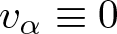 $v_{\alpha}\equiv0$. As an application, we present a new proof of the classical Beckner inequality.

Regular solutions to the dissipative Aw–Rascle system
- Part of
-
- Journal:
- Proceedings of the Royal Society of Edinburgh. Section A: Mathematics , First View
- Published online by Cambridge University Press:
- 10 July 2025, pp. 1-33
-
- Article
-
- You have access
- Open access
- HTML
- Export citation
-
In this article, we prove the local-in-time existence of regular solutions to dissipative Aw–Rascle system with the offset equal to gradient of some increasing and regular function of density. It is a mixed degenerate parabolic-hyperbolic hydrodynamic model, and we extend the techniques previously developed for compressible Navier–Stokes equations to show the well-posedness of the system in the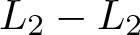 $L_2-L_2$ setting. We also discuss relevant existence results for offset involving singular or non-local functions of density.
Counting independent sets in structured graphs
- Part of
-
- Journal:
- Combinatorics, Probability and Computing / Volume 34 / Issue 5 / September 2025
- Published online by Cambridge University Press:
- 07 July 2025, pp. 625-634
-
- Article
-
- You have access
- Open access
- HTML
- Export citation
-
Counting independent sets in graphs and hypergraphs under a variety of restrictions is a classical question with a long history. It is the subject of the celebrated container method which found numerous spectacular applications over the years. We consider the question of how many independent sets we can have in a graph under structural restrictions. We show that any $n$-vertex graph with independence number $\alpha$ without $bK_a$ as an induced subgraph has at most $n^{O(1)} \cdot \alpha ^{O(\alpha )}$ independent sets. This substantially improves the trivial upper bound of $n^{\alpha },$ whenever $\alpha \le n^{o(1)}$ and gives a characterisation of graphs forbidding which allows for such an improvement. It is also in general tight up to a constant in the exponent since there exist triangle-free graphs with $\alpha ^{\Omega (\alpha )}$ independent sets. We also prove that if one in addition assumes the ground graph is chi-bounded one can improve the bound to $n^{O(1)} \cdot 2^{O(\alpha )}$ which is tight up to a constant factor in the exponent.


Mean topological dimension of a random dynamical system for amenable groups
- Part of
-
- Journal:
- Proceedings of the Edinburgh Mathematical Society / Volume 68 / Issue 4 / November 2025
- Published online by Cambridge University Press:
- 07 July 2025, pp. 1297-1328
-
- Article
- Export citation
Global boundedness and stabilization of solutions for a chemotaxis system with acceleration and logistic source
- Part of
-
- Journal:
- Proceedings of the Royal Society of Edinburgh. Section A: Mathematics , First View
- Published online by Cambridge University Press:
- 04 July 2025, pp. 1-30
-
- Article
- Export citation
-
This article is concerned with the following chemotaxis-growth system
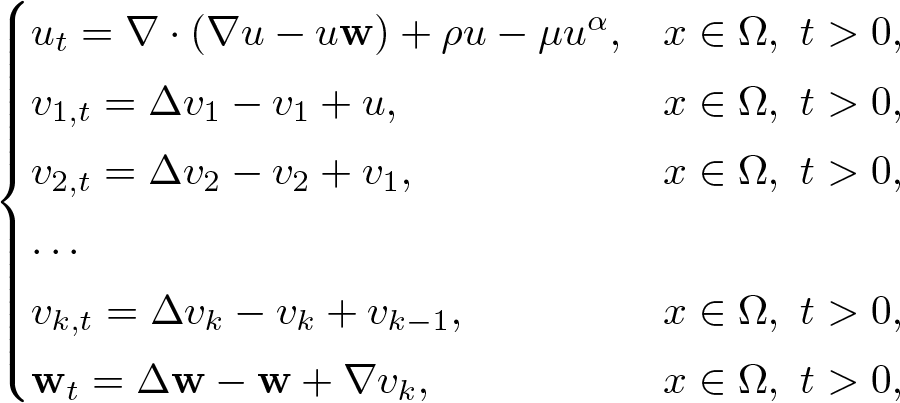 \begin{equation*}\begin{cases}u_t = \nabla\cdot \left(\nabla u - u\bf{w} \right) + \rho u - \mu u^\alpha ,&x \in \Omega ,\ t \gt 0,\\v_{1,t} = \Delta v_1 - v_1 + u,&x \in \Omega ,\ t \gt 0,\\v_{2,t} = \Delta v_2 - v_2 + v_1,&x \in \Omega ,\ t \gt 0,\\\ldots \\v_{k,t} = \Delta v_k - v_k + v_{k - 1},&x \in \Omega ,\ t \gt 0,\\{\bf{w}}_t = \Delta {\bf{w}} - {\bf{w}} + \nabla v_k,&x \in \Omega ,\ t \gt 0,\end{cases}\end{equation*}
under the homogeneous Neumann boundary condition for u, vi and the homogeneous Dirichlet boundary condition for $\bf{w}$ in a smooth bounded domain $\Omega \subset {\mathbb{R}^n}\left( {n \geqslant 1} \right),$ where ρ > 0, µ > 0, α > 1 and $i=1,\ldots,k$. We reveal that when the index α, the spatial variable n, and the number of equations k satisfy certain relationships, the global solution of the system exists and converges to the constant equilibrium state in the form of exponential convergence.

The evolution problem for the 1D nonlocal Fisher-KPP equation with a top hat kernel. Part 2. The initial-boundary value problem on a finite domain
- Part of
-
- Journal:
- European Journal of Applied Mathematics / Volume 37 / Issue 2 / April 2026
- Published online by Cambridge University Press:
- 04 July 2025, pp. 520-550
-
- Article
-
- You have access
- Open access
- HTML
- Export citation
-
In the second part of this series of papers, we address the same evolution problem that was considered in part 1 (see [16]), namely the nonlocal Fisher-KPP equation in one spatial dimension,
where \begin{equation*} u_t = D u_{xx} + u(1-\phi *u), \end{equation*} $\phi *u$ is a spatial convolution with the top hat kernel, $\phi (y) \equiv H\left (\frac {1}{4}-y^2\right )$, except that now we modify this to an associated initial-boundary value problem on the finite spatial interval $[0,a]$ rather than the whole real line. Boundary conditions are required at the end points of the interval, and we address the situations when these are of either Dirichlet or Neumann type. This model is a natural extension of the classical Fisher-KPP model, with the introduction of the simplest possible nonlocal effect into the saturation term. Nonlocal reaction-diffusion models arise naturally in a variety of (frequently biological or ecological) contexts, and as such it is of fundamental interest to examine their properties in detail, and to compare and contrast these with the well known properties of the classical Fisher-KPP model.


A large deviation principle for block models
- Part of
-
- Journal:
- Combinatorics, Probability and Computing / Volume 34 / Issue 5 / September 2025
- Published online by Cambridge University Press:
- 30 June 2025, pp. 680-753
-
- Article
- Export citation
Common pairs of graphs
- Part of
-
- Journal:
- Combinatorics, Probability and Computing / Volume 34 / Issue 5 / September 2025
- Published online by Cambridge University Press:
- 30 June 2025, pp. 649-670
-
- Article
- Export citation
-
A graph $H$ is said to be common if the number of monochromatic labelled copies of $H$ in a red/blue edge colouring of a large complete graph is asymptotically minimised by a random colouring in which each edge is equally likely to be red or blue. We extend this notion to an off-diagonal setting. That is, we define a pair $(H_1,H_2)$ of graphs to be $(p,1-p)$-common if a particular linear combination of the density of $H_1$ in red and $H_2$ in blue is asymptotically minimised by a random colouring in which each edge is coloured red with probability $p$ and blue with probability $1-p$. Our results include off-diagonal extensions of several standard theorems on common graphs and novel results for common pairs of graphs with no natural analogue in the classical setting.


Convex Geometric Analysis
-
- Published online:
- 27 June 2025
- Print publication:
- 28 January 1999
Regularity criteria for the 3D Navier–Stokes and MHD equations
- Part of
-
- Journal:
- Proceedings of the Edinburgh Mathematical Society / Volume 68 / Issue 4 / November 2025
- Published online by Cambridge University Press:
- 26 June 2025, pp. 1262-1296
-
- Article
- Export citation
-
We prove that a solution to the 3D Navier–Stokes or magneto-hydrodynamics equations does not blow up at t = T provided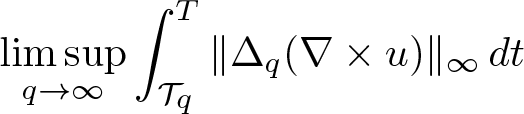 $\displaystyle \limsup_{q \to \infty} \int_{\mathcal{T}_q}^T \|\Delta_q(\nabla \times u)\|_\infty \, dt$ is small enough, where u is the velocity, $\Delta_q$ is the Littlewood–Paley projection and $\mathcal T_q$ is a certain sequence such that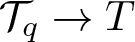 $\mathcal T_q \to T$ as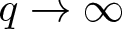 $q \to \infty$. This improves many existing regularity criteria.


On the size of temporal cliques in subcritical random temporal graphs
- Part of
-
- Journal:
- Combinatorics, Probability and Computing / Volume 34 / Issue 5 / September 2025
- Published online by Cambridge University Press:
- 26 June 2025, pp. 671-679
-
- Article
- Export citation
-
A random temporal graph is an Erdős-Rényi random graph $G(n,p)$, together with a random ordering of its edges. A path in the graph is called increasing if the edges on the path appear in increasing order. A set $S$ of vertices forms a temporal clique if for all $u,v \in S$, there is an increasing path from $u$ to $v$. Becker, Casteigts, Crescenzi, Kodric, Renken, Raskin and Zamaraev [(2023) Giant components in random temporal graphs. arXiv,2205.14888] proved that if $p=c\log n/n$ for $c\gt 1$, then, with high probability, there is a temporal clique of size $n-o(n)$. On the other hand, for $c\lt 1$, with high probability, the largest temporal clique is of size $o(n)$. In this note, we improve the latter bound by showing that, for $c\lt 1$, the largest temporal clique is of constant size with high probability.



Several Complex Variables
-
- Published online:
- 25 June 2025
- Print publication:
- 28 January 2000

Holomorphic Spaces
-
- Published online:
- 25 June 2025
- Print publication:
- 28 May 1998
ARITHMETIC SPECIAL CYCLES AND JACOBI FORMS
-
- Journal:
- Journal of the Institute of Mathematics of Jussieu / Volume 24 / Issue 6 / November 2025
- Published online by Cambridge University Press:
- 25 June 2025, pp. 2427-2461
- Print publication:
- November 2025
-
- Article
-
- You have access
- Open access
- HTML
- Export citation
