Refine search
Actions for selected content:
26063 results in Abstract analysis
On global fractional Calderón–Zygmund regularity for the fractional Dirichlet problem on Lipschitz domains
- Part of
-
- Journal:
- Proceedings of the Royal Society of Edinburgh. Section A: Mathematics , First View
- Published online by Cambridge University Press:
- 01 August 2025, pp. 1-31
-
- Article
- Export citation
-
Let $n\ge2$, $s\in(0,1)$, and $\Omega\subset\mathbb{R}^n$ be a bounded Lipschitz domain. In this paper, we investigate the global (higher-order) Sobolev regularity of weak solutions to the fractional Dirichlet problem
 \begin{equation*}\begin{cases}(-\Delta)^su=f \ \ & \text{in}\ \ \Omega,\\u=0 \ \ & \text{in}\ \ \mathbb{R}^n\setminus\Omega.\end{cases}\end{equation*}
Precisely, we prove that there exists a positive constant $\varepsilon\in(0,s]$ depending on n, s, and the Lipschitz constant of Ω such that, for any $t\in[\varepsilon,\min\{1+\varepsilon,2s\})$, when $f\in L^q(\Omega)$ with some $q\in(\frac{n}{2s-t},\infty]$, the weak solution u satisfies
 \begin{equation*}\|u\|_{W^{t,p}(\mathbb{R}^n)}\le C\|f\|_{L^q(\Omega)}\end{equation*}
for all $p\in[1,\frac{1}{t-\varepsilon})$. In particular, when Ω is a bounded C1 domain or a bounded Lipschitz domain satisfying the uniform exterior ball condition, the aforementioned global regularity estimates hold with $\varepsilon=s$ and they are sharp in this case. Moreover, if Ω is a bounded $C^{1,\kappa}$ domain with $\kappa\in(0,s)$ or a bounded Lipschitz domain satisfying the uniform exterior ball condition, we further show the global BMO-Sobolev regularity estimate
 \begin{equation*}\left\|(-\Delta)^{\frac{s}{2}}u\right\|_{\mathrm{BMO}(\mathbb{R}^n)}+\left\|\nabla^{s}u\right\|_{\mathrm{BMO}(\mathbb{R}^n)}\le C\|f\|_{L^q(\Omega)}\end{equation*}
for some $q\in(\frac{n}{s},\infty]$, which is sharp in the sense that the BMO norm can not be improved to the $L^\infty$ norm.


Generalized Airy operators
- Part of
-
- Journal:
- Proceedings of the Royal Society of Edinburgh. Section A: Mathematics , First View
- Published online by Cambridge University Press:
- 01 August 2025, pp. 1-31
-
- Article
- Export citation
-
We study the behaviour of the norm of the resolvent for non-self-adjoint operators of the form $A := -\partial_x + W(x)$, with $W(x) \ge 0$, defined in ${L^2}({\mathbb{R}})$. We provide a sharp estimate for the norm of its resolvent operator, $\| (A - \lambda)^{-1} \|$, as the spectral parameter diverges $(\lambda \to +\infty)$. Furthermore, we describe the C0-semigroup generated by −A and determine its norm. Finally, we discuss the applications of the results to the asymptotic description of pseudospectra of Schrödinger and damped wave operators, and also the optimality of abstract resolvent bounds based on Carleman-type estimates.


Factorization structures, cones, and polytopes
- Part of
-
- Journal:
- Proceedings of the Royal Society of Edinburgh. Section A: Mathematics , First View
- Published online by Cambridge University Press:
- 01 August 2025, pp. 1-57
-
- Article
-
- You have access
- Open access
- HTML
- Export citation
Keller–Segel type approximation for nonlocal Fokker–Planck equations in one-dimensional bounded domain
- Part of
-
- Journal:
- European Journal of Applied Mathematics / Volume 37 / Issue 4 / August 2026
- Published online by Cambridge University Press:
- 01 August 2025, pp. 827-863
-
- Article
-
- You have access
- Open access
- HTML
- Export citation
G-dimensions for DG-modules over commutative DG-rings
- Part of
-
- Journal:
- Proceedings of the Edinburgh Mathematical Society / Volume 68 / Issue 4 / November 2025
- Published online by Cambridge University Press:
- 01 August 2025, pp. 1370-1389
-
- Article
- Export citation
Variational method for fractional Hamiltonian system in bounded domain
- Part of
-
- Journal:
- Proceedings of the Royal Society of Edinburgh. Section A: Mathematics , First View
- Published online by Cambridge University Press:
- 31 July 2025, pp. 1-35
-
- Article
- Export citation
-
Here we consider the following fractional Hamiltonian system
 \begin{equation*}\begin{cases}\begin{aligned}(-\Delta)^{s} u&=H_v(u,v) \;\;&&\text{in}~\Omega,\\(-\Delta)^{s} v&=H_u(u,v) &&\text{in}~\Omega,\\u &= v = 0 &&\text{in} ~ \mathbb{R}^N\setminus\Omega,\end{aligned}\end{cases}\end{equation*}
where $s\in (0,1)$, $N \gt 2s$, $H \in C^1(\mathbb{R}^2, \mathbb{R})$, and $\Omega \subset \mathbb{R}^N$ is a smooth bounded domain. To apply the variational method for this problem, the key question is to find a suitable functional setting. Instead of usual fractional Sobolev spaces, we use the solution space of $(-\Delta)^{s}u=f\in L^r(\Omega)$ for $r\ge 1$, for which we show the (compact) embedding properties. When H has subcritical and superlinear growth, we construct two frameworks, respectively with the interpolation space method and the dual method, to show the existence of nontrivial solution. As byproduct, we revisit the fractional Lane–Emden system, i.e. $H(u, v)=\frac{1}{p+1}|u|^{p+1}+\frac{1}{q+1}|v|^{q+1}$, and consider the existence, uniqueness of (radial) positive solutions under subcritical assumption.


Noise sensitivity on affine Weyl groups
- Part of
-
- Journal:
- Combinatorics, Probability and Computing / Volume 34 / Issue 5 / September 2025
- Published online by Cambridge University Press:
- 31 July 2025, pp. 754-779
-
- Article
- Export citation
Concentration and oscillation analysis of positive solutions to semilinear elliptic equations with exponential growth in a disc. II
- Part of
-
- Journal:
- Proceedings of the Royal Society of Edinburgh. Section A: Mathematics , First View
- Published online by Cambridge University Press:
- 31 July 2025, pp. 1-28
-
- Article
- Export citation
-
This paper is the latter part of a series of our studies on the concentration and oscillation analysis of semilinear elliptic equations with exponential growth $e^{u^p}$. In the first one [17], we completed the concentration analysis of blow-up positive solutions in the supercritical case p > 2 via a scaling approach. As a result, we detected infinite sequences of concentrating parts with precise quantification. In the present paper, we proceed to our second aim, the oscillation analysis. Especially, we deduce an infinite oscillation estimate directly from the previous infinite concentration ones. This allows us to investigate intersection properties between blow-up solutions and singular functions. Consequently, we show that the intersection number between blow-up and singular solutions diverges to infinity. This leads to a proof of infinite oscillations of bifurcation diagrams, which ensures the existence of infinitely many solutions. Finally, we also remark on infinite concentration and oscillation phenomena in the limit cases $p\to2^+$ and $p\to \infty$.


Homogenisation of Wasserstein gradient flows
- Part of
-
- Journal:
- European Journal of Applied Mathematics / Volume 37 / Issue 3 / June 2026
- Published online by Cambridge University Press:
- 29 July 2025, pp. 586-613
-
- Article
-
- You have access
- Open access
- HTML
- Export citation
Equivariant vector bundles on toric schemes over semirings
- Part of
-
- Journal:
- Proceedings of the Royal Society of Edinburgh. Section A: Mathematics , First View
- Published online by Cambridge University Press:
- 28 July 2025, pp. 1-67
-
- Article
-
- You have access
- Open access
- HTML
- Export citation
-
We introduce a notion of equivariant vector bundles on schemes over semirings. We do this by considering the functor of points of a locally free sheaf. We prove that every toric vector bundle on a toric scheme X over an idempotent semifield equivariantly splits as a sum of toric line bundles. We then study the equivariant Picard group $\operatorname{Pic}_G(X)$. Finally, we prove a version of Klyachko’s classification theorem for toric vector bundles over an idempotent semifield.
EISENSTEIN COHOMOLOGY FOR ORTHOGONAL GROUPS AND THE SPECIAL VALUES OF L-FUNCTIONS FOR $\mathrm {GL}_1 \times \mathrm {O}(2n)$
- Part of
-
- Journal:
- Journal of the Institute of Mathematics of Jussieu / Volume 24 / Issue 6 / November 2025
- Published online by Cambridge University Press:
- 28 July 2025, pp. 2463-2522
- Print publication:
- November 2025
-
- Article
- Export citation
-
For an even positive integer n, we study rank-one Eisenstein cohomology of the split orthogonal group $\mathrm {O}(2n+2)$ over a totally real number field $F.$ This is used to prove a rationality result for the ratios of successive critical values of degree- $2n$ Langlands L-functions associated to the group $\mathrm {GL}_1 \times \mathrm {O}(2n)$ over F. The case $n=2$ specializes to classical results of Shimura on the special values of Rankin–Selberg L-functions attached to a pair of Hilbert modular forms.


On the existence of positive solutions to some classes of elliptic problems in Hyperbolic space
- Part of
-
- Journal:
- Proceedings of the Royal Society of Edinburgh. Section A: Mathematics , First View
- Published online by Cambridge University Press:
- 28 July 2025, pp. 1-41
-
- Article
- Export citation
-
We focus on the existence of ground state solutions to the following class of elliptic equations
 \begin{equation*}-\Delta_{\mathbb{B}^N} u+V(x)u=f(u) \quad \hbox{in} \quad \mathbb{B}^N,\end{equation*}
where $\mathbb{B}^N$ is the disc model of the Hyperbolic space and $\Delta_{\mathbb{B}^N}$ denotes the Laplace–Beltrami operator with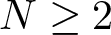 $N \geq 2$, $V:\mathbb{B}^N \to \mathbb{R}$ and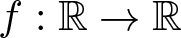 $f:\mathbb{R} \to \mathbb{R}$ are continuous functions that satisfy some technical conditions. With different types of the potential V, by introducing some new tricks handling the hurdle that the Hyperbolic space is not a compact manifold, we are able to obtain at least a positive ground state solution using variational methods.
As some applications for the methods adopted above, we derive the existence of normalized solutions to the elliptic problems
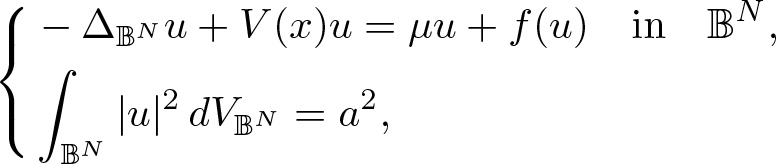 \begin{equation*}\left\{\begin{aligned}&-\Delta_{\mathbb{B}^N} u+V(x)u=\mu u+f(u) \quad \hbox{in} \quad \mathbb{B}^N,\\&\int_{\mathbb{B}^N}|u|^{2}\,dV_{{\mathbb{B}^N}}=a^{2},\end{aligned}\right.\end{equation*}
where a > 0,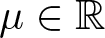 $\mu\in \mathbb{R}$ is an unknown parameter that appears as a Lagrange multiplier and f is a continuous function that fulfils the L2-subcritical or L2-supercritical growth. We do believe that it seems the first results to deal with normalized solutions for the Schrödinger equations in the Hyperbolic space.


Radial and non-radial solutions for a class of (p, q)-Laplace equations involving weights
- Part of
-
- Journal:
- Proceedings of the Royal Society of Edinburgh. Section A: Mathematics , First View
- Published online by Cambridge University Press:
- 25 July 2025, pp. 1-33
-
- Article
- Export citation
Regularity results for minimizers of non-autonomous integral functionals
- Part of
-
- Journal:
- Proceedings of the Royal Society of Edinburgh. Section A: Mathematics , First View
- Published online by Cambridge University Press:
- 25 July 2025, pp. 1-28
-
- Article
- Export citation
-
We establish the higher fractional differentiability for the minimizers of non-autonomous integral functionals of the form
 \begin{align*}\mathcal{F}(u,\Omega):=\int_\Omega \left[ f(x,Du)- g \cdot u \right] dx ,\end{align*}
under (p, q)-growth conditions. Besides a suitable differentiability assumption on the partial map $x \mapsto D_\xi f(x,\xi)$, we do not need to assume any differentiability assumption on the function g.

A study of transcendental entire solutions of several nonlinear partial differential equations
- Part of
-
- Journal:
- Proceedings of the Edinburgh Mathematical Society / Volume 68 / Issue 4 / November 2025
- Published online by Cambridge University Press:
- 22 July 2025, pp. 1329-1369
-
- Article
-
- You have access
- Open access
- HTML
- Export citation
-
The purpose of this article is to explore the solutions of the following nonlinear partial differential equations:
 \begin{equation*}\mathcal{P}_1(u)^2+\mathcal{P}_2(u)^2=e^{g}\end{equation*}
and
 \begin{equation*}\mathcal{P}_1(u)^2+2\alpha \mathcal{P}_1(u)\mathcal{P}_2(u)+\mathcal{P}_2(u)^2=e^{g},\end{equation*}
where $\alpha^2\in \mathbb{C}\setminus\{0,1\}$, g(z) is a polynomial, $a_j,b_j,c_j(j=1,2)$ are constants in $\mathbb{C}$, and
 \begin{equation*}\mathcal{P}_1(u)=a_1 u+b_1 u_{z_1}+c_1u_{z_2}\quad \text{and} \quad \mathcal {P}_2(u)=a_2 u+b_2u_{z_1}+c_2u_{z_2}.\end{equation*}
The description of the existence conditions and the forms of the solutions for the above partial differential equations demonstrate that our results improve and generalise the previous results given by Saleeby, Cao and Xu. Moreover, some of our examples corresponding to every case in our theorems reveal the significant difference in the order of solutions for equations from a single variable to several variables.


TORSION BIRATIONAL MOTIVES OF SURFACES AND UNRAMIFIED COHOMOLOGY
- Part of
-
- Journal:
- Journal of the Institute of Mathematics of Jussieu / Volume 24 / Issue 6 / November 2025
- Published online by Cambridge University Press:
- 21 July 2025, pp. 2283-2315
- Print publication:
- November 2025
-
- Article
-
- You have access
- HTML
- Export citation
-
Let S and T be smooth projective varieties over an algebraically closed field k. Suppose that S is a surface admitting a decomposition of the diagonal. We show that, away from the characteristic of k, if an algebraic correspondence $T \to S$ acts trivially on the unramified cohomology, then it acts trivially on any normalized, birational and motivic functor. This generalizes Kahn’s result on the torsion order of S. We also exhibit an example of S over $\mathbb {C}$ for which $S \times S$ violates the integral Hodge conjecture.


On the structures of the Johnson cokernels of the basis-conjugating automorphism groups of free groups
- Part of
-
- Journal:
- Glasgow Mathematical Journal / Volume 68 / Issue 2 / May 2026
- Published online by Cambridge University Press:
- 21 July 2025, pp. 222-250
-
- Article
- Export citation
Equivariant Fukaya categories at singular values
- Part of
-
- Journal:
- Glasgow Mathematical Journal / Volume 68 / Issue 2 / May 2026
- Published online by Cambridge University Press:
- 21 July 2025, pp. 197-221
-
- Article
-
- You have access
- Open access
- HTML
- Export citation
RIGID INNER FORMS OVER GLOBAL FUNCTION FIELDS
- Part of
-
- Journal:
- Journal of the Institute of Mathematics of Jussieu / Volume 24 / Issue 6 / November 2025
- Published online by Cambridge University Press:
- 21 July 2025, pp. 2181-2256
- Print publication:
- November 2025
-
- Article
-
- You have access
- Open access
- HTML
- Export citation
-
We construct an fpqc gerbe $\mathcal {E}_{\dot {V}}$ over a global function field F such that for a connected reductive group G over F with finite central subgroup Z, the set of $G_{\mathcal {E}_{\dot {V}}}$-torsors contains a subset $H^{1}(\mathcal {E}_{\dot {V}}, Z \to G)$ which allows one to define a global notion of (Z-)rigid inner forms. There is a localization map $H^{1}(\mathcal {E}_{\dot {V}}, Z \to G) \to H^{1}(\mathcal {E}_{v}, Z \to G)$, where the latter parametrizes local rigid inner forms (cf. [8, 6]) which allows us to organize local rigid inner forms across all places v into coherent families. Doing so enables a construction of (conjectural) global L-packets and a conjectural formula for the multiplicity of an automorphic representation $\pi $ in the discrete spectrum of G in terms of these L-packets. We also show that, for a connected reductive group G over a global function field F, the adelic transfer factor $\Delta _{\mathbb {A}}$ for the ring of adeles $\mathbb {A}$ of F serving an endoscopic datum for G decomposes as the product of the normalized local transfer factors from [6].


Ground state solution for weakly coupled time-harmonic Maxwell’s equations with critical exponent
- Part of
-
- Journal:
- Proceedings of the Royal Society of Edinburgh. Section A: Mathematics , First View
- Published online by Cambridge University Press:
- 18 July 2025, pp. 1-31
-
- Article
- Export citation
-
In this paper, we deal with the following nonlinear time-harmonic Maxwell’s equations
where \begin{equation*}\nonumber\begin{cases} \nabla \times(\nabla \times u_1)=\mu_1|u_1|^4u_1+\beta|u_1||u_2|^3u_1 & \text {in } \mathbb{R}^3, \\ \nabla \times(\nabla \times u_2)=\mu_2|u_2|^4u_2+\beta|u_1|^3|u_2|u_2 & \text {in } \mathbb{R}^3, \end{cases}\end{equation*} $\nabla\times$ denotes the usual curl operator in $\mathbb{R}^3$,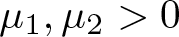 $\mu_1,\mu_2 \gt 0$, and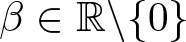 $\beta\in\mathbb{R}\backslash\{0\}$. We show that this critical system admits a non-trivial ground state solution when the parameter β is positive and small. For general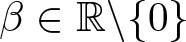 $\beta\in\mathbb{R}\backslash\{0\}$, we prove that this system admits a non-trivial cylindrically symmetric solution with the least positive energy. We also study the existence of the curl-free solution and the synchronized solution due to the special structure of this system. These seem to be the first results on the critically coupled system containing the curl-curl operator.


