Refine search
Actions for selected content:
26063 results in Abstract analysis
Extended signatures and link concordance
-
- Journal:
- Proceedings of the Edinburgh Mathematical Society / Volume 69 / Issue 1 / February 2026
- Published online by Cambridge University Press:
- 02 September 2025, pp. 60-94
-
- Article
-
- You have access
- Open access
- HTML
- Export citation
-
The Levine–Tristram signature admits a µ-variable extension for µ-component links: it was first defined as an integer-valued function on $(S^1\setminus\{1\})^\mu$, and recently extended to the full torus $\mathbb{T}^\mu$. The aim of the present article is to study and use this extended signature. Firstly, we show that it is constant on the connected components of the complement of the zero locus of some renormalized Alexander polynomial. Then, we prove that the extended signature is a concordance invariant on an explicit dense subset of $\mathbb{T}^\mu$. Finally, as an application, we present an infinite family of three-component links with the following property: these links are not concordant to their mirror image, a fact that can be detected neither by the non-extended signatures, nor by the multivariable Alexander polynomial, nor by the Milnor triple linking number.


Twisted Rokhlin property for mapping class groups
- Part of
-
- Journal:
- Proceedings of the Edinburgh Mathematical Society / Volume 69 / Issue 1 / February 2026
- Published online by Cambridge University Press:
- 02 September 2025, pp. 37-59
-
- Article
- Export citation
-
Given an automorphism ϕ of a group G, the map $(g,h) \mapsto gh\phi(g)^{-1}$, defines a left action of G on itself, whose orbits are called the ϕ-twisted conjugacy classes. In this paper, we consider two interesting aspects of this action for mapping class groups, namely, the existence of a dense orbit and the count of orbits. Generalising the idea of the Rokhlin property, a topological group is said to exhibit the twisted Rokhlin property if, for each automorphism ϕ of the group, there exists a ϕ-twisted conjugacy class that is dense in the group. We provide a complete classification of connected orientable infinite-type surfaces without boundaries whose mapping class groups possess the twisted Rokhlin property. Additionally, we prove that the mapping class groups of the remaining surfaces do not admit any dense ϕ-twisted conjugacy class for any automorphism ϕ. This supplements the recent work of Lanier and Vlamis on the Rokhlin property of big mapping class groups. Regarding the count of twisted conjugacy classes, we prove that the number of ϕ-twisted conjugacy classes is infinite for each automorphism ϕ of the mapping class group of a connected orientable infinite-type surface without boundary.

Multiple solutions to relativistic systems with potential boundary conditions
- Part of
-
- Journal:
- Proceedings of the Edinburgh Mathematical Society / Volume 69 / Issue 1 / February 2026
- Published online by Cambridge University Press:
- 01 September 2025, pp. 23-36
-
- Article
- Export citation
-
We consider potential systems of differential equations of the form
under the general boundary condition \begin{equation*}-\left[ \phi(u^{\prime}) \right] ^{\prime} = \nabla_u F(t,u),\quad \mbox{in } [0,T],\end{equation*}where
 \begin{equation*}\left ( \phi \left( u^{\prime }\right)(0), -\phi \left( u^{\prime }\right)(T)\right )\in \partial j(u(0), u(T)),\end{equation*} $\phi(y)={y}/{\sqrt{1- |y|^2}}$ and $j:\mathbb{R}^N \times \mathbb{R}^N \rightarrow (-\infty, +\infty]$ is convex and lower semicontinuous. Making use of the variational approach introduced in the recent paper “Potential systems with singular $\phi$-Laplacian”, we obtain multiplicity of solutions when the action functional is even, as well as existence of multiple geometrically distinct solutions when this functional is invariant with respect to some discrete group.


Higher incoherence of the automorphism groups of a free group
- Part of
-
- Journal:
- Proceedings of the Royal Society of Edinburgh. Section A: Mathematics , First View
- Published online by Cambridge University Press:
- 01 September 2025, pp. 1-28
-
- Article
-
- You have access
- Open access
- HTML
- Export citation
-
Let Fn be the free group on $n \geq 2$ generators. We show that for all $1 \leq m \leq 2n-3$ (respectively, for all $1 \leq m \leq 2n-4$), there exists a subgroup of ${\operatorname{Aut}(F_n)}$ (respectively, ${\operatorname{Out}(F_n)}$), which has finiteness of type Fm but not of type $FP_{m+1}(\mathbb{Q})$; hence, it is not m-coherent. In both cases, the new result is the upper bound $m= 2n-3$ (respectively, $m = 2n-4$), as it cannot be obtained by embedding direct products of free noncyclic groups, and certifies higher incoherence up to the virtual cohomological dimension and is therefore sharp. As a tool of the proof, we discuss the existence and nature of multiple inequivalent extensions of a suitable finite-index subgroup K4 of ${\operatorname{Aut}(F_2)}$ (isomorphic to the quotient of the pure braid group on four strands by its centre): the fibre of four of these extensions arise from the strand-forgetting maps on the braid groups, while a fifth is related with the Cardano–Ferrari epimorphism.


PROPERTY (T) AND STRONG 1-BOUNDEDNESS FOR VON NEUMANN ALGEBRAS
- Part of
-
- Journal:
- Journal of the Institute of Mathematics of Jussieu , First View
- Published online by Cambridge University Press:
- 01 September 2025, pp. 1-34
-
- Article
- Export citation
JMJ volume 24 issue 5 Cover and Back matter
-
- Journal:
- Journal of the Institute of Mathematics of Jussieu / Volume 24 / Issue 5 / September 2025
- Published online by Cambridge University Press:
- 15 September 2025, pp. b1-b2
- Print publication:
- September 2025
-
- Article
-
- You have access
- Export citation
JMJ volume 24 issue 5 Cover and Front matter
-
- Journal:
- Journal of the Institute of Mathematics of Jussieu / Volume 24 / Issue 5 / September 2025
- Published online by Cambridge University Press:
- 15 September 2025, pp. f1-f2
- Print publication:
- September 2025
-
- Article
-
- You have access
- Export citation
Evans function, parity and nonautonomous bifurcations
- Part of
-
- Journal:
- Proceedings of the Royal Society of Edinburgh. Section A: Mathematics , First View
- Published online by Cambridge University Press:
- 29 August 2025, pp. 1-40
-
- Article
-
- You have access
- Open access
- HTML
- Export citation
Diophantine approximations with restrained denominators. Balance condition on decay and growth rates
- Part of
-
- Journal:
- Proceedings of the Royal Society of Edinburgh. Section A: Mathematics , First View
- Published online by Cambridge University Press:
- 29 August 2025, pp. 1-36
-
- Article
- Export citation
Ill-posedness issue on the Oldroyd-B model in the critical Besov spaces
- Part of
-
- Journal:
- Proceedings of the Royal Society of Edinburgh. Section A: Mathematics , First View
- Published online by Cambridge University Press:
- 29 August 2025, pp. 1-20
-
- Article
- Export citation
-
It was proved in [11, J. Funct. Anal., 2020] that the Cauchy problem for some Oldroyd-B model is well-posed in $\dot{B}^{d/p-1}_{p,1}(\mathbb{R}^d) \times \dot{B}^{d/p}_{p,1}(\mathbb{R}^d)$ with $1\leq p \lt 2d$. In this paper, we prove that the Cauchy problem for the same Oldroyd-B model is ill-posed in $\dot{B}^{d/p-1}_{p,r}(\mathbb{R}^d) \times \dot{B}^{d/p}_{p,r}(\mathbb{R}^d)$ with $1\leq p\leq \infty$ and $1 \lt r\leq\infty$ due to the lack of continuous dependence of the solution.


On coefficient modules of arbitrary modules
- Part of
-
- Journal:
- Proceedings of the Edinburgh Mathematical Society / Volume 69 / Issue 1 / February 2026
- Published online by Cambridge University Press:
- 29 August 2025, pp. 1-22
-
- Article
- Export citation
-
Let $(R, \mathfrak{m})$ be a d-dimensional Noetherian local ring that is formally equidimensional, and let M be an arbitrary R-submodule of the free module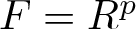 $F = R^p$ with an analytic spread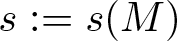 $s:=s(M)$. In this work, inspired by Herzog-Puthenpurakal-Verma in [10], we show the existence of a unique largest R-module Mk with $\ell_R(M_{k}/M) \lt \infty$ and $M\subseteq M_{s}\subseteq\cdots\subseteq M_{1}\subseteq M_{0}\subseteq q(M),$ such that $\deg(P_{M_{k}/M}(n)) \lt s-k,$ where q(M) is the relative integral closure of $M,$ defined by $q(M):=\overline{M}\cap M^{sat},$ where $M^{sat}=\cup_{n\geqslant 1}(M:_F\mathfrak{m}^n)$ is the saturation of M. We also provide a structure theorem for these modules. Furthermore, we establish the existence of coefficient modules between $I(M)M$ and M, where I(M) denotes the 0th Fitting ideal of $F/M$, and discuss their structural properties. Finally, we present some applications and discuss some properties.


On K-stability of blow-ups of weighted projective planes
- Part of
-
- Journal:
- Proceedings of the Royal Society of Edinburgh. Section A: Mathematics / Volume 156 / Issue 3 / June 2026
- Published online by Cambridge University Press:
- 29 August 2025, pp. 1013-1029
- Print publication:
- June 2026
-
- Article
- Export citation
-
We study the K-stability of blow-ups of the weighted projective plane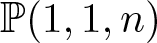 ${\mathbb P}(1,1,n)$, where n is a positive integer.
FROBENIUS-PERRON DIMENSIONS OF CONJUGACY CLASSES AND AN ITO-MICHLER-TYPE RESULT IN MODULAR FUSION CATEGORIES
- Part of
-
- Journal:
- Journal of the Institute of Mathematics of Jussieu / Volume 24 / Issue 6 / November 2025
- Published online by Cambridge University Press:
- 28 August 2025, pp. 2523-2542
- Print publication:
- November 2025
-
- Article
- Export citation
Stratifying systems and Jordan-Hölder extriangulated categories
- Part of
-
- Journal:
- Glasgow Mathematical Journal / Volume 68 / Issue 2 / May 2026
- Published online by Cambridge University Press:
- 27 August 2025, pp. 272-298
-
- Article
- Export citation
-
Stratifying systems, which have been defined for module, triangulated and exact categories previously, were developed to produce examples of standardly stratified algebras. A stratifying system $\Phi$ is a finite set of objects satisfying some orthogonality conditions. One very interesting property is that the subcategory $\mathcal{F}(\Phi )$ of objects admitting a composition series-like filtration with factors in $\Phi$ has the Jordan-Hölder property on these filtrations. This article has two main aims. First, we introduce notions of subobjects, simple objects and composition series for an extriangulated category, in order to define a Jordan-Hölder extriangulated category. Moreover, we characterise Jordan-Hölder, length, weakly idempotent complete extriangulated categories in terms of the associated Grothendieck monoid and Grothendieck group. Second, we develop a theory of stratifying systems in extriangulated categories. We define projective stratifying systems and show that every stratifying system $\Phi$ in an extriangulated category is part of a minimal projective one $(\Phi ,Q)$. We prove that $\mathcal{F}(\Phi )$ is a length, Jordan-Hölder extriangulated category when $(\Phi ,Q)$ satisfies a left exactness condition. We give several examples and answer a recent question of Enomoto–Saito in the negative.


Generalised symmetries of remarkable (1+2)-dimensional Fokker–Planck equation
-
- Journal:
- European Journal of Applied Mathematics / Volume 37 / Issue 4 / August 2026
- Published online by Cambridge University Press:
- 27 August 2025, pp. 897-924
-
- Article
-
- You have access
- Open access
- HTML
- Export citation
Alexandrov sphere theorems for $ W^{2,n} $-hypersurfaces
- Part of
-
- Journal:
- Proceedings of the Royal Society of Edinburgh. Section A: Mathematics , First View
- Published online by Cambridge University Press:
- 26 August 2025, pp. 1-49
-
- Article
-
- You have access
- Open access
- HTML
- Export citation
-
We prove that the proximal unit normal bundle of the subgraph of a $W^{2,n} $-function carries a natural structure of Legendrian cycle. This result is used to obtain an Alexandrov-type sphere theorem for hypersurfaces in $ \mathbf{R}^{n+1} $, which are locally graphs of arbitrary $W^{2,n} $-functions. We also extend the classical umbilicality theorem to $ W^{2,1} $-graphs, under the Lusin (N) condition for the graph map.


A $C^r$-CONNECTING LEMMA FOR LORENZ ATTRACTORS AND ITS APPLICATION ON THE SPACE OF ERGODIC MEASURES
-
- Journal:
- Journal of the Institute of Mathematics of Jussieu / Volume 25 / Issue 1 / January 2026
- Published online by Cambridge University Press:
- 26 August 2025, pp. 1-44
- Print publication:
- January 2026
-
- Article
- Export citation
-
For every
 , we prove a $C^r$-connecting lemma for Lorenz attractors. To be precise, for a Lorenz attractor of a $3$-dimensional $C^r$ ( $r\geq 2$) vector field, a heteroclinic orbit associated to the singularity and a critical element can be created through arbitrarily small $C^r$-perturbations. As an application, we show that for $C^r$-dense geometric Lorenz attractors, the Dirac measure of the singularity is isolated inside the space of ergodic measures, and thus, the ergodic measure space is not connected, while for $C^r$-generic geometric Lorenz attractors, the space of ergodic measures is path connected with dense periodic measures. In particular, the generic part proves a conjecture proposed by C. Bonatti [11, Conjecture 2] in $C^r$-topology for Lorenz attractors.

 , we prove a


Existence and nonexistence of least energy positive solutions to critical Schrödinger systems with Hardy potential
- Part of
-
- Journal:
- Proceedings of the Royal Society of Edinburgh. Section A: Mathematics , First View
- Published online by Cambridge University Press:
- 26 August 2025, pp. 1-50
-
- Article
- Export citation
-
We are concerned with the following coupled Schrödinger system with a Hardy potential in the critical case
where \begin{align*}\begin{cases}-\Delta u_{i}-\frac{\lambda_{i}}{|x|^2}u_{i}=|u_i|^{2^*-2}u_i+\sum_{j\neq i}^{3}\beta_{ij}|u_{j}|^{\frac{2^*}{2}}|u_i|^{\frac{2^*}{2}-2}u_i, ~x\in \mathbb{R}^N,\\u_i\in D^{1,2}(\mathbb{R}^N),\,\, N\geq 3,\,\, i=1,2,3,\end{cases}\end{align*} $2^*=\frac{2N}{N-2}$, $\lambda_i\in (0,\Lambda_N), \Lambda_N:= \frac{(N-2)^2}{4}$, and $\beta_{ij}=\beta_{ji}$ for i ≠ j. By virtue of variational methods, we establish the existence and nonexistence of least energy solutions for the purely cooperative case ( $\beta_{ij} \gt 0$ for any i ≠ j) and the simultaneous cooperation and competition case ( $\beta_{i_{1}j_{1}} \gt 0$ and $\beta_{i_{2}j_{2}} \lt 0$ for some $(i_{1}, j_{1})$ and $(i_{2}, j_{2})$). Moreover, it is shown that fully nontrivial ground state solutions exist when $\beta_{ij}\ge0$ and $N\ge5$, but NOT in the weakly pure cooperative case ( $\beta_{ij} \gt 0$ and small, i ≠ j) when $N=3,4$. We emphasize that this reveals that the existence of ground state solutions differs dramatically between $N=3, 4$ and higher dimensions $N\geq 5$. In particular, the cases of N = 3 and $N\geq 5$ are more complicated than the case of N = 4 and the proofs heavily depend on the dimension. Some novel tricks are introduced for N = 3 and $N\ge5$.


On approximability of satisfiable $\boldsymbol {k}$-CSPs: II
-
- Journal:
- Combinatorics, Probability and Computing / Volume 34 / Issue 6 / November 2025
- Published online by Cambridge University Press:
- 20 August 2025, pp. 857-926
-
- Article
- Export citation
-
Let $\Sigma$ be an alphabet and $\mu$ be a distribution on $\Sigma ^k$ for some $k \geqslant 2$. Let $\alpha \gt 0$ be the minimum probability of a tuple in the support of $\mu$ (denoted $\mathsf{supp}(\mu )$). We treat the parameters $\Sigma , k, \mu , \alpha$ as fixed and constant. We say that the distribution $\mu$ has a linear embedding if there exist an Abelian group $G$ (with the identity element $0_G$) and mappings $\sigma _i : \Sigma \rightarrow G$, $1 \leqslant i \leqslant k$, such that at least one of the mappings is non-constant and for every $(a_1, a_2, \ldots , a_k)\in \mathsf{supp}(\mu )$, $\sum _{i=1}^k \sigma _i(a_i) = 0_G$. In [Bhangale-Khot-Minzer, STOC 2022], the authors asked the following analytical question. Let $f_i: \Sigma ^n\rightarrow [\!-1,1]$ be bounded functions, such that at least one of the functions $f_i$ essentially has degree at least $d$, meaning that the Fourier mass of $f_i$ on terms of degree less than $d$ is at most $\delta$. If $\mu$ has no linear embedding (over any Abelian group), then is it necessarily the case thatwhere the right hand side
 \begin{equation*}\left | \mathop {\mathbb{E}}_{({\textbf {x}}_1, {\textbf {x}}_2, \ldots , {\textbf {x}}_k)\sim \mu ^{\otimes n}}[f_1({\textbf {x}}_1)f_2({\textbf {x}}_2)\cdots f_k({\textbf {x}}_k)] \right | = o_{d, \delta }(1),\end{equation*} $\to 0$ as the degree $d \to \infty$ and $\delta \to 0$?
In this paper, we answer this analytical question fully and in the affirmative for $k=3$. We also show the following two applications of the result.
1. The first application is related to hardness of approximation. Using the reduction from [5], we show that for every $3$-ary predicate $P:\Sigma ^3 \to \{0,1\}$ such that $P$ has no linear embedding, an SDP (semi-definite programming) integrality gap instance of a $P$-Constraint Satisfaction Problem (CSP) instance with gap $(1,s)$ can be translated into a dictatorship test with completeness $1$ and soundness $s+o(1)$, under certain additional conditions on the instance.
2. The second application is related to additive combinatorics. We show that if the distribution $\mu$ on $\Sigma ^3$ has no linear embedding, marginals of $\mu$ are uniform on $\Sigma$, and $(a,a,a)\in \texttt{supp}(\mu )$ for every $a\in \Sigma$, then every large enough subset of $\Sigma ^n$ contains a triple $({\textbf {x}}_1, {\textbf {x}}_2,{\textbf {x}}_3)$ from $\mu ^{\otimes n}$ (and in fact a significant density of such triples).


Semigroups of self-similar actions and higher rank Baumslag–Solitar semigroups
- Part of
-
- Journal:
- Proceedings of the Royal Society of Edinburgh. Section A: Mathematics , First View
- Published online by Cambridge University Press:
- 18 August 2025, pp. 1-30
-
- Article
-
- You have access
- Open access
- HTML
- Export citation
-
In this paper, we initiate the study of higher rank Baumslag–Solitar (BS) semigroups and their related C*-algebras. We focus on two rather interesting classes—one is related to products of odometers and the other is related to Furstenberg’s $\times p, \times q$ conjecture. For the former class, whose C*-algebras are studied in [32], we here characterize the factoriality of the associated von Neumann algebras and further determine their types; for the latter, we obtain their canonical Cartan subalgebras. In the rank 1 case, we study a more general setting that encompasses (single-vertex) generalized BS semigroups. One of our main tools in this paper is from self-similar higher rank graphs and their C*-algebras.

