Refine search
Actions for selected content:
26063 results in Abstract analysis
Symmetric Hom–Leibniz algebras
- Part of
-
- Journal:
- Glasgow Mathematical Journal / Volume 68 / Issue 2 / May 2026
- Published online by Cambridge University Press:
- 29 September 2025, pp. 386-409
-
- Article
- Export citation
-
This paper focuses on quadratic Hom–Leibniz algebras, defined as (left or right) Hom–Leibniz algebras equipped with symmetric, non-degenerate, and invariant bilinear forms. In particular, we demonstrate that every quadratic regular Hom–Leibniz algebra is symmetric, meaning that it is simultaneously a left and a right Hom–Leibniz algebra. We provide characterizations of symmetric (resp. quadratic) Hom–Leibniz algebras. We also investigate the $\mathrm{T}^*$-extensions of Hom–Leibniz algebras, establishing their compatibility with solvability and nilpotency. We study the equivalence of such extensions and provide the necessary and sufficient conditions for a nilpotent quadratic Hom–Leibniz algebra to be isometric to a $\mathrm{T}^*$-extension. Furthermore, through the procedure of double extension, which is a central extension followed by a generalized semi-direct product, we get an inductive description of all quadratic regular Hom–Leibniz algebras, allowing us to reduce their study to that of quadratic regular Hom–Lie algebras. Finally, we construct several non-trivial examples of symmetric (resp. quadratic) Hom–Leibniz algebras.


Schwartz very weak solutions for Schrödinger type equations with distributional coefficients
- Part of
-
- Journal:
- Proceedings of the Royal Society of Edinburgh. Section A: Mathematics , First View
- Published online by Cambridge University Press:
- 29 September 2025, pp. 1-31
-
- Article
-
- You have access
- Open access
- HTML
- Export citation
Explicit spectral gap for Hecke congruence covers of arithmetic Schottky surfaces
- Part of
-
- Journal:
- Glasgow Mathematical Journal / Volume 68 / Issue 2 / May 2026
- Published online by Cambridge University Press:
- 26 September 2025, pp. 345-385
-
- Article
- Export citation
-
Let $\Gamma$ be a Schottky subgroup of $\mathrm{SL}_2(\mathbb{Z})$ and let $X=\Gamma \backslash {\mathbb{H}}^2$ be the associated hyperbolic surface. We consider the family of Hecke congruence coverings of $X$, which we denote as usual by $ X_0(q) = \Gamma _0(q)\backslash {\mathbb{H}}^2$. Conditional on the Lindelöf Hypothesis for quadratic L-functions, we establish a uniform and explicit spectral gap for the Laplacian on $ X_0(q)$ for “almost” all prime levels $q$. Assuming the generalized Riemann hypothesis for quadratic $L$-functions, we obtain an even larger spectral gap.


Equilibrium and non-equilibrium diffusion approximation for the radiative transfer equation
- Part of
-
- Journal:
- European Journal of Applied Mathematics / Volume 37 / Issue 4 / August 2026
- Published online by Cambridge University Press:
- 24 September 2025, pp. 1034-1080
-
- Article
-
- You have access
- Open access
- HTML
- Export citation
-
In this paper, we study the distribution of the temperature within a body where the heat is transported only by radiation. Specifically, we consider the situation where both emission-absorption and scattering processes take place. We study the initial-boundary value problem given by the coupling of the radiative transfer equation with the energy balance equation on a convex domain $ \Omega \subset {\mathbb{R}}^3$ in the diffusion approximation regime, that is, when the mean free path of the photons tends to zero. Using the method of matched asymptotic expansions, we will derive the limit initial-boundary value problems for all different possible scaling limit regimes, and we will classify them as equilibrium or non-equilibrium diffusion approximation. Moreover, we will observe the formation of boundary and initial layers for which suitable equations are obtained. We will consider both stationary and time-dependent problems as well as different situations in which the light is assumed to propagate either instantaneously or with finite speed.

SPHERE-LIKE ISOPARAMETRIC HYPERSURFACES IN DAMEK–RICCI SPACES
- Part of
-
- Journal:
- Journal of the Institute of Mathematics of Jussieu / Volume 25 / Issue 1 / January 2026
- Published online by Cambridge University Press:
- 24 September 2025, pp. 251-283
- Print publication:
- January 2026
-
- Article
-
- You have access
- Open access
- HTML
- Export citation
-
Locally harmonic manifolds are Riemannian manifolds in which small geodesic spheres are isoparametric hypersurfaces, i.e., hypersurfaces whose nearby parallel hypersurfaces are of constant mean curvature. Flat and rank one symmetric spaces are examples of harmonic manifolds. Damek–Ricci spaces are non-compact harmonic manifolds, most of which are non-symmetric. Taking the limit of an ‘inflating’ sphere through a point p in a Damek–Ricci space as the center of the sphere runs out to infinity along a geodesic half-line $\gamma $ starting from p, we get a horosphere. Similarly to spheres, horospheres are also isoparametric hypersurfaces. In this paper, we define the sphere-like hypersurfaces obtained by ‘overinflating the horospheres’ by pushing the center of the sphere beyond the point at infinity of $\gamma $ along a virtual prolongation of $\gamma $. They give a new family of isoparametric hypersurfaces in Damek–Ricci spaces connecting geodesic spheres to some of the isoparametric hypersurfaces constructed by J. C. Díaz-Ramos and M. Domínguez-Vázquez [17] in Damek–Ricci spaces. We study the geometric properties of these isoparametric hypersurfaces, in particular their homogeneity and the totally geodesic condition for their focal varieties.


A note on twisted moments of Dirichlet $\boldsymbol{L}$-functions
- Part of
-
- Journal:
- Glasgow Mathematical Journal / Volume 68 / Issue 2 / May 2026
- Published online by Cambridge University Press:
- 24 September 2025, pp. 337-344
-
- Article
-
- You have access
- Open access
- HTML
- Export citation
-
In this paper, we establish an asymptotic formula for the twisted second moments of Dirichlet $L$-functions with one twist when averaged over all primitive Dirichlet characters of modulus $R$, where $R$ is a monic polynomial in $\mathbb{F}_q[T]$.


AVERAGING FUNCTORS IN FARGUES’ PROGRAM FOR $\mathrm {GL}_n$
- Part of
-
- Journal:
- Journal of the Institute of Mathematics of Jussieu / Volume 25 / Issue 1 / January 2026
- Published online by Cambridge University Press:
- 24 September 2025, pp. 45-84
- Print publication:
- January 2026
-
- Article
- Export citation
-
We study the so-called averaging functors from the geometric Langlands program in the setting of Fargues’ program. This makes explicit certain cases of the spectral action which was recently introduced by Fargues-Scholze in the local Langlands program for $\mathrm {GL}_n$. Using these averaging functors, we verify (without using local Langlands) that the Fargues-Scholze parameters associated to supercuspidal modular representations of $\mathrm {GL}_2$ are irreducible. We also attach to any irreducible $\ell $-adic Weil representation of degree n an Hecke eigensheaf on $\mathrm {Bun}_n$ and show, using the local Langlands correspondence and recent results of Hansen and Hansen-Kaletha-Weinstein, that it satisfies most of the requirements of Fargues’ conjecture for $\mathrm {GL}_n$.


A geometric approach to pinned pulses in a class of non-autonomous reaction–diffusion equations
- Part of
-
- Journal:
- European Journal of Applied Mathematics / Volume 37 / Issue 4 / August 2026
- Published online by Cambridge University Press:
- 23 September 2025, pp. 969-1001
-
- Article
-
- You have access
- Open access
- HTML
- Export citation
Global dynamics of a degenerate reaction-diffusion cholera model with phage-bacteria interaction in a heterogeneous environment
- Part of
-
- Journal:
- European Journal of Applied Mathematics / Volume 37 / Issue 4 / August 2026
- Published online by Cambridge University Press:
- 22 September 2025, pp. 1002-1033
-
- Article
-
- You have access
- Open access
- HTML
- Export citation
-
To investigate multiple effects of the interaction between V. cholerae and phage on cholera transmission, we propose a degenerate reaction-diffusion model with different dispersal rates, which incorporates a short-lived hyperinfectious (HI vibrios) state of V. cholerae and lower-infectious (LI vibrios) state of V. cholerae. Our main purpose is to investigate the existence and stability analysis of multi-class boundary steady states, which is much more complicated and challenging than the case when the boundary steady state is unique. In a spatially heterogeneous case, the basic reproduction number $\mathscr{R}_{0}$ is defined as the spectral radius of the sum of two linear operators associated with HI vibrios infection and LI vibrios infection. If $\mathscr{R}_{0}\leq 1$, the disease-free steady state is globally asymptotically stable. If $\mathscr{R}_{0}\gt 1$, the uniform persistence of phage-free model, as well as the existence of the phage-free steady state, are established. In a spatially homogeneous case, when $\ \;\widetilde{\!\!\!\mathscr{R}}_{0}\gt 1$, the global asymptotic stability of phage-free steady state and the uniform persistence of the phage-present model are discussed under some additional conditions. The mathematical approach here has wide applications in degenerate Partial Differential Equations.


Comparing the sets of volume polynomials and Lorentzian polynomials
- Part of
-
- Journal:
- Combinatorics, Probability and Computing / Volume 35 / Issue 1 / January 2026
- Published online by Cambridge University Press:
- 19 September 2025, pp. 26-39
-
- Article
-
- You have access
- Open access
- HTML
- Export citation
-
Given $n$ convex bodies in the Euclidean space $\mathbb{R}^d$, we can find their volume polynomial which is a homogeneous polynomial of degree $d$ in $n$ variables. We consider the set of homogeneous polynomials of degree $d$ in $n$ variables that can be represented as the volume polynomial of any such given convex bodies. This set is a subset of the set of Lorentzian polynomials. Using our knowledge of operations that preserve the Lorentzian property, we give a complete classification of the cases for $(n,d)$ when the two sets are equal.


Glauber dynamics for the hard-core model on bounded-degree $H$-free graphs
- Part of
-
- Journal:
- Combinatorics, Probability and Computing / Volume 34 / Issue 6 / November 2025
- Published online by Cambridge University Press:
- 19 September 2025, pp. 803-814
-
- Article
-
- You have access
- Open access
- HTML
- Export citation
-
The hard-core model has as its configurations the independent sets of some graph instance $G$. The probability distribution on independent sets is controlled by a ‘fugacity’ $\lambda \gt 0$, with higher $\lambda$ leading to denser configurations. We investigate the mixing time of Glauber (single-site) dynamics for the hard-core model on restricted classes of bounded-degree graphs in which a particular graph $H$ is excluded as an induced subgraph. If $H$ is a subdivided claw then, for all $\lambda$, the mixing time is $O(n\log n)$, where $n$ is the order of $G$. This extends a result of Chen and Gu for claw-free graphs. When $H$ is a path, the set of possible instances is finite. For all other $H$, the mixing time is exponential in $n$ for sufficiently large $\lambda$, depending on $H$ and the maximum degree of $G$.
$G$.


HODGE CYCLES AND QUADRATIC RELATIONS BETWEEN HOLOMORPHIC PERIODS ON CM ABELIAN VARIETIES
- Part of
-
- Journal:
- Journal of the Institute of Mathematics of Jussieu / Volume 25 / Issue 1 / January 2026
- Published online by Cambridge University Press:
- 19 September 2025, pp. 215-249
- Print publication:
- January 2026
-
- Article
-
- You have access
- Open access
- HTML
- Export citation
-
In this paper, we prove the following result advocating the importance of monomial quadratic relations between holomorphic CM periods. For any simple CM abelian variety A, we can construct a CM abelian variety B such that all non-trivial Hodge relations between the holomorphic periods of the product $A\times B$ are generated by monomial quadratic ones which are also explicit. Moreover, B splits over the Galois closure of the CM field associated with A.

Variational principles of metric mean dimension for random dynamical systems
- Part of
-
- Journal:
- Proceedings of the Edinburgh Mathematical Society / Volume 69 / Issue 1 / February 2026
- Published online by Cambridge University Press:
- 18 September 2025, pp. 363-387
-
- Article
-
- You have access
- HTML
- Export citation
The conjugacy ratio of abelian-by-cyclic groups
- Part of
-
- Journal:
- Proceedings of the Edinburgh Mathematical Society / Volume 69 / Issue 1 / February 2026
- Published online by Cambridge University Press:
- 17 September 2025, pp. 339-362
-
- Article
-
- You have access
- Open access
- HTML
- Export citation
-
Let $G = K \rtimes \langle t \rangle $ be a finitely generated group where K is abelian and $\langle t\rangle$ is the infinite cyclic group. Let R be a finite symmetric subset of K such that $S = \{ (r,1),(0,t^{\pm 1}) \mid r \in R \}$ is a generating set of G. We prove that the spherical conjugacy ratio, and hence the conjugacy ratio, of G with respect to S is 0 unless G is virtually abelian, confirming a conjecture of Ciobanu, Cox and Martino in this case. We also show that the Baumslag–Solitar group $\mathrm{BS}(1,k)$, $k\geq 2$, has a one-sided Følner sequence F such that the conjugacy ratio with respect to F is non-zero, even though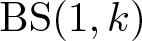 $\mathrm{BS}(1,k)$ is not virtually abelian. This is in contrast to two-sided Følner sequences, where Tointon showed that the conjugacy ratio with respect to a two-sided Følner sequence is positive if and only if the group is virtually abelian.


Optimization of the principal eigenvalue of the Neumann Laplacian with indefinite weight and monotonicity of minimizers in cylinders
- Part of
-
- Journal:
- Proceedings of the Royal Society of Edinburgh. Section A: Mathematics , First View
- Published online by Cambridge University Press:
- 15 September 2025, pp. 1-35
-
- Article
-
- You have access
- Open access
- HTML
- Export citation
-
Let $\Omega\subset\mathbb{R}^N$, $N\geq 1$, be an open bounded connected set. We consider the indefinite weighted eigenvalue problem $-\Delta u =\lambda m u$ in Ω with $\lambda \in \mathbb{R}$, $m\in L^\infty(\Omega)$ and with homogeneous Neumann boundary conditions. We study weak* continuity, convexity and Gâteaux differentiability of the map $m\mapsto1/\lambda_1(m)$, where $\lambda_1(m)$ is the principal eigenvalue. Then, denoting by $\mathcal{G}(m_0)$ the class of rearrangements of a fixed weight m0, under the assumptions that m0 is positive on a set of positive Lebesgue measure and $\int_\Omega m_0\,dx \lt 0$, we prove the existence and a characterization of minimizers of $\lambda_1(m)$ and the non-existence of maximizers. Finally, we show that, if Ω is a cylinder, then every minimizer is monotone with respect to the direction of the generatrix. In the context of the population dynamics, this kind of problems arise from the question of determining the optimal spatial location of favourable and unfavourable habitats for a population to survive.


A new class of α-Farey maps and an application to normal numbers
- Part of
-
- Journal:
- Proceedings of the Royal Society of Edinburgh. Section A: Mathematics , First View
- Published online by Cambridge University Press:
- 15 September 2025, pp. 1-37
-
- Article
-
- You have access
- Open access
- HTML
- Export citation
-
We define two types of the α-Farey maps Fα and $F_{\alpha, \flat}$ for $0 \lt \alpha \lt \tfrac{1}{2}$, which were previously defined only for $\tfrac{1}{2} \le \alpha \le 1$ by Natsui (2004). Then, for each $0 \lt \alpha \lt \tfrac{1}{2}$, we construct the natural extension maps on the plane and show that the natural extension of $F_{\alpha, \flat}$ is metrically isomorphic to the natural extension of the original Farey map. As an application, we show that the set of normal numbers associated with α-continued fractions does not vary by the choice of α, $0 \lt \alpha \lt 1$. This extends the result by Kraaikamp and Nakada (2000).


Can you tell a tree from its branches?
- Part of
-
- Journal:
- Proceedings of the Edinburgh Mathematical Society / Volume 69 / Issue 1 / February 2026
- Published online by Cambridge University Press:
- 15 September 2025, pp. 304-338
-
- Article
- Export citation
-
For each set X, an X-split is a partition of X into two parts. For each X-split S and each subset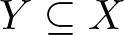 $Y\subseteq X$, the restriction of S on Y is the Y-split whose parts are obtained by intersecting the parts of S with Y. For a graph G with vertex set V, the G-coboundary size of a V-split S is the number of edges in G having non-empty intersections with both parts of S. Let T be a tree without degree-two vertices, and let V and L denote its vertex set and leaf set, respectively. For each positive integer k, a k-split on T is an L-split that is the restriction of a V-split with T-coboundary size k, while a score-k split on T is a k-split on T that is not any k′-split for any integer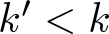 $k' \lt k$. Buneman’s split equivalence theorem states that the tree T is entirely encoded by its system of score-1 splits. We identify the unique exceptional case in which the tree T is not determined by its score-2 split system. To explore how our work can be extended to more general tree isomorphism problems, we propose several conjectures and open problems related to set systems and generalized Buneman graphs.
Equivariant category and topological complexity of wedges
- Part of
-
- Journal:
- Glasgow Mathematical Journal / Volume 68 / Issue 2 / May 2026
- Published online by Cambridge University Press:
- 15 September 2025, pp. 317-336
-
- Article
- Export citation
-
We prove the formula
for the equivariant category of the wedge \begin{equation*} \text{cat}_G(X\vee Y)=\max \{\text{cat}_G(X),\text{cat}_G(Y)\} \end{equation*} $X\vee Y$. As a direct application, we have that the wedge $\bigvee _{i=1}^m X_i$ is $G$-contractible if and only if each $X_i$ is $G$-contractible, for each $i=1,\ldots ,m$. One further application is to compute the equivariant category of the quotient $X/A$, for a $G$-space $X$ and an invariant subset $A$ such that the inclusion $A\hookrightarrow X$ is $G$-homotopic to a constant map $\overline {x_0}\,:\,A\to X$, for some $x_0\in X^G$. Additionally, we discuss the equivariant and invariant topological complexities for wedges. For instance, as applications of our results, we obtain the following equalities:for
 \begin{align*} \text{TC}_G(X\vee Y)&=\max \{\text{TC}_G(X),\text{TC}_G(Y),\text{cat}_G(X\times Y)\},\\ \text{TC}^G(X\vee Y)&=\max \{\text{TC}^G(X),\text{TC}^G(Y),_{X\vee Y}\text{cat}_{G\times G}(X\times Y)\}, \end{align*} $G$-connected $G$-CW-complexes $X$ and $Y$ under certain conditions.


An explicit economical additive basis
- Part of
-
- Journal:
- Combinatorics, Probability and Computing / Volume 34 / Issue 6 / November 2025
- Published online by Cambridge University Press:
- 12 September 2025, pp. 815-820
-
- Article
-
- You have access
- Open access
- HTML
- Export citation
-
We present an explicit subset $A\subseteq \mathbb{N} = \{0,1,\ldots \}$ such that $A + A = \mathbb{N}$ and for all $\varepsilon \gt 0$,
 \begin{equation*}\lim _{N\to \infty }\frac {\big |\big \{(n_1,n_2): n_1 + n_2 = N, (n_1,n_2)\in A^2\big \}\big |}{N^{\varepsilon }} = 0.\end{equation*}
This answers a question of Erdős.


Adversarial flows: A gradient flow characterization of adversarial attacks
- Part of
-
- Journal:
- European Journal of Applied Mathematics / Volume 37 / Issue 1 / February 2026
- Published online by Cambridge University Press:
- 12 September 2025, pp. 123-179
-
- Article
-
- You have access
- Open access
- HTML
- Export citation
-
A popular method to perform adversarial attacks on neural networks is the so-called fast gradient sign method and its iterative variant. In this paper, we interpret this method as an explicit Euler discretization of a differential inclusion, where we also show convergence of the discretization to the associated gradient flow. To do so, we consider the concept of $p$-curves of maximal slope in the case $p=\infty$. We prove existence of $\infty$-curves of maximum slope and derive an alternative characterization via differential inclusions. Furthermore, we also consider Wasserstein gradient flows for potential energies, where we show that curves in the Wasserstein space can be characterized by a representing measure on the space of curves in the underlying Banach space, which fulfil the differential inclusion. The application of our theory to the finite-dimensional setting is twofold: On the one hand, we show that a whole class of normalized gradient descent methods (in particular, signed gradient descent) converge, up to subsequences, to the flow when sending the step size to zero. On the other hand, in the distributional setting, we show that the inner optimization task of adversarial training objective can be characterized via $\infty$-curves of maximum slope on an appropriate optimal transport space.


