Refine search
Actions for selected content:
26063 results in Abstract analysis
Generic properties of minimal surfaces
- Part of
-
- Journal:
- Proceedings of the Royal Society of Edinburgh. Section A: Mathematics , First View
- Published online by Cambridge University Press:
- 03 November 2025, pp. 1-14
-
- Article
-
- You have access
- Open access
- HTML
- Export citation
-
Let M be an open Riemann surface and $n\ge 3$ be an integer. In this paper, we establish some generic properties (in Baire category sense) in the space of all conformal minimal immersions $M\to{\mathbb{R}}^n$ endowed with the compact-open topology, pointing out that a generic such immersion is chaotic in many ways. For instance, we show that a generic conformal minimal immersion $u\colon M\to {\mathbb{R}}^n$ is non-proper, almost proper, and ${\mathfrak{g}}$-complete with respect to any given Riemannian metric ${\mathfrak{g}}$ in ${\mathbb{R}}^n$. Further, its image u(M) is dense in ${\mathbb{R}}^n$ and disjoint from ${\mathbb{Q}}^3\times {\mathbb{R}}^{n-3}$, and has infinite area, infinite total curvature, and unbounded curvature on every open set in ${\mathbb{R}}^n$. In case n = 3, we also prove that a generic conformal minimal immersion $M\to {\mathbb{R}}^3$ has infinite index of stability on every open set in ${\mathbb{R}}^3$.


Inclusions of operator algebras from tensor categories: beyond irreducibility
- Part of
-
- Journal:
- Glasgow Mathematical Journal , First View
- Published online by Cambridge University Press:
- 03 November 2025, pp. 1-35
-
- Article
-
- You have access
- Open access
- HTML
- Export citation
Concentration behavior of normalized ground states for mass critical Kirchhoff equations in bounded domains
- Part of
-
- Journal:
- Proceedings of the Royal Society of Edinburgh. Section A: Mathematics , First View
- Published online by Cambridge University Press:
- 03 November 2025, pp. 1-44
-
- Article
- Export citation
-
In present paper, we study the limit behavior of normalized ground states for the following mass critical Kirchhoff equation
where \begin{align*}\left\{\begin{array}{ll}-(a+b\int_{\Omega}|\nabla u|^2\mathrm{d}x)\Delta u+V(x)u=\mu u+\beta^*|u|^{\frac{8}{3}}u &\text{in}\ {\Omega}, \\[0.1cm]u=0&\text{on}\ {\partial\Omega}, \\[0.1cm]\int_{\Omega}|u|^2\mathrm{d}x=1, \\[0.1cm]\end{array}\right.\end{align*} $a\geq 0$, b > 0, the function V(x) is a trapping potential in a bounded domain $\Omega\subset\mathbb R^3$, $\beta^*:=\frac{b}{2}|Q|_2^{\frac{8}{3}}$ and Q is the unique positive radially symmetric solution of equation $-2\Delta u+\frac{1}{3}u-|u|^{\frac{8}{3}}u=0$ in $\mathbb R^3.$ We consider the existence of constraint minimizers for the associated energy functional involving the parameter a. The minimizer corresponds to the normalized ground state of above problem, and it exists if and only if a > 0. Moreover, when V(x) attains its flattest global minimum at an inner point or only at the boundary of Ω, we analyze the fine limit profiles of the minimizers as $a\searrow 0$, including mass concentration at an inner point or near the boundary of Ω. In particular, we further establish the local uniqueness of the minimizer if it is concentrated at a unique inner point.


FUKAYA CATEGORIES OF BLOWUPS
- Part of
-
- Journal:
- Journal of the Institute of Mathematics of Jussieu / Volume 25 / Issue 1 / January 2026
- Published online by Cambridge University Press:
- 30 October 2025, pp. 85-214
- Print publication:
- January 2026
-
- Article
-
- You have access
- Open access
- HTML
- Export citation
Powers of Hamilton cycles in oriented and directed graphs
- Part of
-
- Journal:
- Combinatorics, Probability and Computing / Volume 35 / Issue 1 / January 2026
- Published online by Cambridge University Press:
- 28 October 2025, pp. 101-133
-
- Article
-
- You have access
- Open access
- HTML
- Export citation
-
The Pósa–Seymour conjecture determines the minimum degree threshold for forcing the $k$th power of a Hamilton cycle in a graph. After numerous partial results, Komlós, Sárközy, and Szemerédi proved the conjecture for sufficiently large graphs. In this paper, we focus on the analogous problem for digraphs and for oriented graphs. We asymptotically determine the minimum total degree threshold for forcing the square of a Hamilton cycle in a digraph. We also give a conjecture on the corresponding threshold for $k$th powers of a Hamilton cycle more generally. For oriented graphs, we provide a minimum semi-degree condition that forces the $k$th power of a Hamilton cycle; although this minimum semi-degree condition is not tight, it does provide the correct order of magnitude of the threshold. Turán-type problems for oriented graphs are also discussed.


The effect of target orientation on the mean first passage time of a Brownian particle to a small elliptical absorber
-
- Journal:
- European Journal of Applied Mathematics , First View
- Published online by Cambridge University Press:
- 27 October 2025, pp. 1-25
-
- Article
-
- You have access
- Open access
- HTML
- Export citation
-
We develop a high-order asymptotic expansion for the mean first passage time (MFPT) of the capture of Brownian particles by a small elliptical trap in a bounded two-dimensional region. This new result describes the effect that trap orientation plays on the capture rate and extends existing results that give information only on the role of trap position on the capture rate. Our results are validated against numerical simulations that confirm the accuracy of the asymptotic approximation. In the case of the unit disk domain, we identify a bifurcation such that the high-order correction to the global MFPT (GMFPT) is minimized when the trap is orientated in the radial direction for traps centred at $0\lt r\lt r_c :=\sqrt {2-\sqrt {2}}$. When centred at position $r_c\lt r\lt 1$, the GMFPT correction is minimized by orientating the trap in the angular direction. In the scenario of a general two-dimensional geometry, we identify the orientation that minimizes the GMFPT in terms of the regular part of the Neumann Green’s function. This theory is demonstrated on several regular domains such as disks, ellipses and rectangles.


Banach lattices of positively homogeneous functions induced by a Banach space
- Part of
-
- Journal:
- Proceedings of the Edinburgh Mathematical Society / Volume 69 / Issue 2 / May 2026
- Published online by Cambridge University Press:
- 27 October 2025, pp. 544-580
-
- Article
-
- You have access
- Open access
- HTML
- Export citation
Disperse hypergraphs
- Part of
-
- Journal:
- Combinatorics, Probability and Computing / Volume 35 / Issue 1 / January 2026
- Published online by Cambridge University Press:
- 27 October 2025, pp. 89-100
-
- Article
-
- You have access
- Open access
- HTML
- Export citation
-
For $\ell \geq 3$, an $\ell$-uniform hypergraph is disperse if the number of edges induced by any set of $\ell +1$ vertices is 0, 1, $\ell$, or $\ell +1$. We show that every disperse $\ell$-uniform hypergraph on $n$ vertices contains a clique or independent set of size $n^{\Omega _{\ell }(1)}$, answering a question of the first author and Tomon. To this end, we prove several structural properties of disperse hypergraphs.


JMJ volume 24 issue 6 Cover and Front matter
-
- Journal:
- Journal of the Institute of Mathematics of Jussieu / Volume 24 / Issue 6 / November 2025
- Published online by Cambridge University Press:
- 24 October 2025, pp. f1-f2
- Print publication:
- November 2025
-
- Article
-
- You have access
- Export citation
JMJ volume 24 issue 6 Cover and Back matter
-
- Journal:
- Journal of the Institute of Mathematics of Jussieu / Volume 24 / Issue 6 / November 2025
- Published online by Cambridge University Press:
- 24 October 2025, pp. b1-b2
- Print publication:
- November 2025
-
- Article
-
- You have access
- Export citation
Complex hyperbolic 2-orbifolds with isolated singularities
- Part of
-
- Journal:
- Glasgow Mathematical Journal , First View
- Published online by Cambridge University Press:
- 24 October 2025, pp. 1-10
-
- Article
-
- You have access
- Open access
- HTML
- Export citation
-
For each prime $p$, this paper constructs compact complex hyperbolic $2$-manifolds with an isometric action of $\mathbb{Z} / p \mathbb{Z}$ that is not free and has only isolated fixed points. The case $p = 2$ is special, and finding general examples for $p=2$ is related to whether or not complex hyperbolic lattices are conjugacy separable on torsion.


NON-SEMI-STABLE LOCI IN HECKE STACKS AND FARGUES’ CONJECTURE
- Part of
-
- Journal:
- Journal of the Institute of Mathematics of Jussieu / Volume 25 / Issue 1 / January 2026
- Published online by Cambridge University Press:
- 23 October 2025, pp. 445-475
- Print publication:
- January 2026
-
- Article
-
- You have access
- Open access
- HTML
- Export citation
-
We show the Harris–Viehmann conjecture under some Hodge–Newton reducibility condition for a generalisation of the diamond of a non-basic Rapoport–Zink space at infinite level, which appears as a cover of the non-semi-stable locus in the Hecke stack. We show also that the cohomology of the non-semi-stable locus with coefficients coming from a cuspidal Langlands parameter vanishes. As an application, we show the Hecke eigensheaf property in Fargues’ conjecture for cuspidal Langlands parameters in the $ {\mathrm {GL}}_2$-case.

Inequality arising from the iterated Laguerre operator for various partitions
- Part of
-
- Journal:
- Proceedings of the Edinburgh Mathematical Society / Volume 69 / Issue 2 / May 2026
- Published online by Cambridge University Press:
- 23 October 2025, pp. 522-543
-
- Article
- Export citation
-
In this paper, we will investigate the following inequality
 \begin{equation*}(a_{n+1}a_{n+2} - a_{n}a_{n+3})^2 -(a_{n+1}^2 -a_{n}a_{n+2})(a_{n+2}^2 - a_{n}a_{n+4}) \gt 0,\end{equation*}
which arises from the iterated Laguerre operator on functions. We will prove the sequence $\{a_n\}$ of a unified form given by Griffin, Ono, Rolen and Zagier asymptotically satisfies this inequality while the Maclaurin coefficients of the functions in Laguerre-Pólya class have not to possess this inequality. We also prove the companion version of this inequality. As a consequence, we show the Maclaurin coefficients of the Riemann Ξ-function asymptotically satisfy this property. Moreover, we make this approach effective and give the exact thresholds for the positivity of this inequalityfor the partition function, the overpartition function and the smallest part function.


Some algebraic properties of ASM varieties
- Part of
-
- Journal:
- Glasgow Mathematical Journal , First View
- Published online by Cambridge University Press:
- 22 October 2025, pp. 1-20
-
- Article
-
- You have access
- Open access
- HTML
- Export citation
Higher power sums of Fourier coefficients of symmetric square L-functions
- Part of
-
- Journal:
- Proceedings of the Edinburgh Mathematical Society / Volume 69 / Issue 2 / May 2026
- Published online by Cambridge University Press:
- 21 October 2025, pp. 500-521
-
- Article
- Export citation
-
Let f(z) be the normalized primitive holomorphic Hecke eigenforms of even integral weight k for the full modular group $SL(2,\mathbb{Z})$ and denote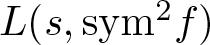 $L(s,\mathrm{sym}^{2}f)$ be the symmetric square L-function attached to f(z). Suppose that $\lambda_{\mathrm{sym}^{2}f}(n)$ be the $\mathrm{Fourier}$ coefficient of $L(s,\mathrm{sym}^{2}f)$. In this paper, we investigate the sum $\sum\limits_{n\leqslant x}\lambda^{j}_{\mathrm{sym}^{2}f }(n) $ for $j\geqslant 3$ and obtain some new results which improve on previous error estimates. We also consider the sum $\sum\limits_{n\leqslant x}\lambda^{j}_{f }(n^{2})$ and get some similar results.


Normalized multi-bump solutions of nonlinear Hartree equation with steep potential well
- Part of
-
- Journal:
- Proceedings of the Royal Society of Edinburgh. Section A: Mathematics , First View
- Published online by Cambridge University Press:
- 20 October 2025, pp. 1-37
-
- Article
- Export citation
-
In this paper, we study the existence of solutions to the following Hartree equation
 \begin{align*}\begin{cases}-\Delta u+\lambda V(x) u+\mu u=\left(\int_{\mathbb{R}^N}\frac{|u|^p}{|x-y|^{N-\alpha}}\right)|u|^{p-2}u,\ \text{in}\ \mathbb{R}^N,\\\int_{\mathbb{R}^N}|u|^2=\omega,\end{cases}\end{align*}
Where $N\geq 3$, $\omega,\lambda \gt 0$, $p\in \left(\frac{N+\alpha}{N}, \frac{N+\alpha}{N-2}\right)\setminus\left\{\frac{N+\alpha+2}{N}\right\}$ and µ will appear as a Lagrange multiplier. We assume that $0\leq V\in L^{\infty}_{loc}(\mathbb{R}^N)$ has a bottom $int V^{-1}(0)$ composed of $\ell_0$ $(\ell_{0}\geq1)$ connected components $\{\Omega_i\}_{i=1}^{\ell_0}$, where $int V^{-1}(0)$ is the interior of the zero set $V^{-1}(0)=\{x\in\mathbb{R}^N| V(x)=0\}$ of V. It is worth pointing out that the penalization technique is no longer applicable to the local sublinear case $p\in \left(\frac{N+\alpha}{N},2\right)$. Therefore, we develop a new variational method in which the two deformation flows are established that reflect the properties of the potential. Moreover, we find a critical point without introducing a penalization term and give the existence result for $p\in \left(\frac{N+\alpha}{N}, \frac{N+\alpha}{N-2}\right)\setminus\left\{\frac{N+\alpha+2}{N}\right\}$. When ω is fixed and satisfies $\omega^{\frac{-(p-1)}{-Np+N+\alpha+2}}$ sufficiently small, we construct a $\ell$-bump $(1\leq\ell\leq \ell_{0})$ positive normalization solution, which concentrates at $\ell$ prescribed components $\{\Omega_i\}^{\ell}_{i=1}$ for large λ. We also consider the asymptotic profile of the solutions as $\lambda\rightarrow\infty$ and $\omega^{\frac{-(p-1)}{-Np+N+\alpha+2}}\rightarrow 0$.


A k-Hessian equation with a power nonlinearity source and self-similarity
- Part of
-
- Journal:
- Proceedings of the Royal Society of Edinburgh. Section A: Mathematics , First View
- Published online by Cambridge University Press:
- 17 October 2025, pp. 1-25
-
- Article
- Export citation
-
We study existence and uniqueness of spherically symmetric solutions of
 \begin{equation*}S_k(D^2v)+\beta \xi\cdot\nabla v+\alpha v+\left\vert v\right\vert^{q-1}v=0\;\; \mbox{in}\;\; \mathbb{R}^n,\end{equation*}
where $\alpha,\beta$ are real parameters, $n \gt 2,\, q \gt k\geqslant 1$ and $S_k(D^2v)$ stands for the k-Hessian operator of v. Our results are based mainly on the analysis of an associated dynamical system and energy methods. We derive some properties of the solutions of the above equation for different ranges of the parameters α and β. In particular, we describe with precision its asymptotic behaviour at infinity. Further, according to the position of q with respect to the first critical exponent $\frac{(n+2)k}{n}$ and the Tso critical exponent $\frac{(n+2)k}{n-2k}$ we study the existence of three classes of solutions: crossing, slow decay or fast decay solutions. In particular, if k > 1 all the fast decay solutions have a compact support in $\mathbb{R}^n$. The results also apply to construct self-similar solutions of type I to a related nonlinear evolution equation. These are self-similar functions of the form $u(t,x)=t^{-\alpha}v(xt^{-\beta})$ with suitable α and β.


PEM series 2 volume 68 issue 4 Cover and Front matter
-
- Journal:
- Proceedings of the Edinburgh Mathematical Society / Volume 68 / Issue 4 / November 2025
- Published online by Cambridge University Press:
- 17 October 2025, pp. f1-f2
-
- Article
-
- You have access
- Export citation
PEM series 2 volume 68 issue 4 Cover and Back matter
-
- Journal:
- Proceedings of the Edinburgh Mathematical Society / Volume 68 / Issue 4 / November 2025
- Published online by Cambridge University Press:
- 17 October 2025, pp. b1-b2
-
- Article
-
- You have access
- Export citation
Semi-discrete unbalanced optimal transport and quantization
- Part of
-
- Journal:
- European Journal of Applied Mathematics / Volume 37 / Issue 4 / August 2026
- Published online by Cambridge University Press:
- 17 October 2025, pp. 925-967
-
- Article
-
- You have access
- Open access
- HTML
- Export citation
