Refine search
Actions for selected content:
26063 results in Abstract analysis
Intersection Theorem for DG-modules over non-positive DG-rings
- Part of
-
- Journal:
- Proceedings of the Royal Society of Edinburgh. Section A: Mathematics , First View
- Published online by Cambridge University Press:
- 12 December 2025, pp. 1-18
-
- Article
- Export citation
Intrinsic stochastic differential equations and the extended Itô formula on manifolds
- Part of
-
- Journal:
- Proceedings of the Royal Society of Edinburgh. Section A: Mathematics , First View
- Published online by Cambridge University Press:
- 12 December 2025, pp. 1-33
-
- Article
-
- You have access
- Open access
- HTML
- Export citation
-
A general way to represent stochastic differential equations (SDEs) on smooth manifolds is based on the Schwartz morphism. In this manuscript, we are interested in SDEs on a smooth manifold $M$ that are driven by p-dimensional Wiener process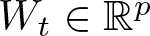 $W_t \in \mathbb{R}^p$ and time $t$. In terms of the Schwartz morphism, such an SDE is represented by a Schwartz morphism that morphs the semimartingale $(t,W_t)\in\mathbb{R}^{p+1}$ into a semimartingale on the manifold $M$. We show that it is possible to construct such Schwartz morphisms using special maps that we call diffusion generators. We show that one of the ways to construct a diffusion generator is by considering the flow of differential equations. One particular case is the construction of diffusion generators using Lagrangian vector fields. Using the diffusion generator approach, we also give the extended Itô formula (also known as generalized Itô formula or Itô–Wentzell formula) for SDEs on manifolds.


Normalized solutions of L2-supercritical NLS equations on non-compact metric graphs
- Part of
-
- Journal:
- Proceedings of the Royal Society of Edinburgh. Section A: Mathematics , First View
- Published online by Cambridge University Press:
- 11 December 2025, pp. 1-34
-
- Article
- Export citation
Double points and image of reflection maps
- Part of
-
- Journal:
- Proceedings of the Royal Society of Edinburgh. Section A: Mathematics , First View
- Published online by Cambridge University Press:
- 11 December 2025, pp. 1-45
-
- Article
- Export citation
-
A reflection mapping is a singular holomorphic mapping obtained by restricting the quotient mapping of a complex reflection group. We study the analytic structure of double point spaces of reflection mappings. In the case where the image is a hypersurface, we obtain explicit equations for the double point space and for the image as well. In the case of surfaces in ${\mathbb C}^3$, this gives a very efficient method to compute the Milnor number and delta invariant of the double point curve.

Hypergraphs without complete partite subgraphs
- Part of
-
- Journal:
- Combinatorics, Probability and Computing / Volume 35 / Issue 3 / May 2026
- Published online by Cambridge University Press:
- 11 December 2025, pp. 290-293
-
- Article
-
- You have access
- Open access
- HTML
- Export citation
-
Fix integers $r \ge 2$ and $1\le s_1\le \cdots \le s_{r-1}\le t$ and set $s=\prod _{i=1}^{r-1}s_i$. Let $K=K(s_1, \ldots , s_{r-1}, t)$ denote the complete $r$-partite $r$-uniform hypergraph with parts of size $s_1, \ldots , s_{r-1}, t$. We prove that the Zarankiewicz number $z(n, K)= n^{r-1/s-o(1)}$ provided $t\gt 3^{s+o(s)}$. Previously this was known only for $t \gt ((r-1)(s-1))!$ due to Pohoata and Zakharov. Our novel approach, which uses Behrend’s construction of sets with no 3-term arithmetic progression, also applies for small values of $s_i$, for example, it gives $z(n, K(2,2,7))=n^{11/4-o(1)}$ where the exponent 11/4 is optimal, whereas previously this was only known with 7 replaced by 721.


Dual p-adic Diophantine approximation on manifolds
- Part of
-
- Journal:
- Proceedings of the Edinburgh Mathematical Society / Volume 69 / Issue 2 / May 2026
- Published online by Cambridge University Press:
- 10 December 2025, pp. 748-773
-
- Article
-
- You have access
- Open access
- HTML
- Export citation
-
The Generalised Baker–Schmidt Problem (1970) concerns the Hausdorff measure of the set of $\psi$-approximable points on a non-degenerate manifold. Beresnevich-Dickinson-Velani (in 2006, for the homogeneous setting) and Badziahin-Beresnevich-Velani (in 2013, for the inhomogeneous setting) proved the divergence part of this problem for dual approximation on arbitrary non-degenerate manifolds. The divergence part has also been resolved for the $p$-adic setting by Datta-Ghosh in 2022, for the inhomogeneous setting. The corresponding convergence counterpart represents a challenging open question. In this paper, we prove the homogeneous $p$-adic convergence result for hypersurfaces of dimension at least three with some mild regularity condition, as well as for some other classes of manifolds satisfying certain conditions. We provide similar, slightly weaker results for the inhomogeneous setting. We do not restrict to monotonic approximation functions.


Sidorenko’s conjecture for subdivisions and theta substitutions
- Part of
-
- Journal:
- Combinatorics, Probability and Computing / Volume 35 / Issue 2 / March 2026
- Published online by Cambridge University Press:
- 10 December 2025, pp. 269-279
-
- Article
-
- You have access
- Open access
- HTML
- Export citation
-
The famous Sidorenko’s conjecture asserts that for every bipartite graph $H$, the number of homomorphisms from $H$ to a graph $G$ with given edge density is minimised when $G$ is pseudorandom. We prove that for any graph $H$, a graph obtained from replacing edges of $H$ by generalised theta graphs consisting of even paths satisfies Sidorenko’s conjecture, provided a certain divisibility condition on the number of paths. To achieve this, we prove unconditionally that bipartite graphs obtained from replacing each edge of a complete graph with a generalised theta graph satisfy Sidorenko’s conjecture, which extends a result of Conlon, Kim, Lee and Lee [J. Lond. Math. Soc., 2018].


Orbital stability of solitary wave solutions of the generalized Benjamin equation
- Part of
-
- Journal:
- Proceedings of the Royal Society of Edinburgh. Section A: Mathematics , First View
- Published online by Cambridge University Press:
- 10 December 2025, pp. 1-29
-
- Article
-
- You have access
- Open access
- HTML
- Export citation
-
In this paper, we study the existence and stability of solitary wave solutions for the generalized Benjamin equation in both the $L^2$-critical and $L^2$-supercritical cases by applying the variational methods and the non-homogeneous Gagliardo–Nirenberg inequality. Our main results generalize and complement the existing results in the literature.


Monotonicity of positive solutions to equations involving fractional p-Laplacian in coercive epigraph
- Part of
-
- Journal:
- Proceedings of the Edinburgh Mathematical Society / Volume 69 / Issue 2 / May 2026
- Published online by Cambridge University Press:
- 10 December 2025, pp. 735-747
-
- Article
-
- You have access
- HTML
- Export citation
-
In this paper, we are concerned with the following Dirichlet problems for nonlinear equations involving the fractional $p$-Laplacian:
 \begin{equation*}\begin{cases}(-\Delta)_p^\alpha u=f(x,u,\nabla u),\ \ u \gt 0,\ \ \text{in}\ \ E,\\\ \ \ \ \ \ u\equiv0, \ \ \ \ \ \ \ \ \ \ \ \ \ \ \ \ \ \ \ \text{in}\ \ \mathbb{R}^{n}\setminus E,\end{cases}\end{equation*}
where $E \subseteq \mathbb{R}^{n}$ is a coercive epigraph, i.e., there exists a continuous function $\phi: \, \mathbb{R}^{n-1} \rightarrow \mathbb{R}$ satisfying
 \begin{equation*}\lim_{|x'|\rightarrow+\infty}\phi(x')=+\infty,\end{equation*}
such that $E:=\{x=(x',x_{n}) \in \mathbb{R}^{n}|\,x_{n} \gt \phi(x')\}$, where $x':= (x_{1},...,x_{n-1}) \in \mathbb{R}^{n-1}$. Under some mild assumptions on the nonlinearity $f(x,u,\nabla u)$, we prove strict monotonicity of positive solutions to the above Dirichlet problems involving fractional $p$-Laplacian in coercive epigraph $E$.
$E$.


On stability of rainbow matchings
- Part of
-
- Journal:
- Combinatorics, Probability and Computing / Volume 35 / Issue 2 / March 2026
- Published online by Cambridge University Press:
- 09 December 2025, pp. 255-268
-
- Article
-
- You have access
- HTML
- Export citation
-
We show that for any integer $k\ge 1$ there exists an integer $t_0(k)$ such that, for integers $t, k_1, \ldots , k_{t+1}, n$ with $t\gt t_0(k)$, $\max \{k_1, \ldots , k_{t+1}\}\le k$, and $n \gt 2k(t+1)$, the following holds: If $F_i$ is a $k_i$-uniform hypergraph with vertex set $[n]$ and more than $ \binom{n}{k_i}-\binom{n-t}{k_i} - \binom{n-t-k}{k_i-1} + 1$ edges for all $i \in [t+1]$, then either $\{F_1,\ldots , F_{t+1}\}$ admits a rainbow matching of size $t+1$ or there exists $W\in \binom{[n]}{t}$ such that $W$ intersects $F_i$ for all $i\in [t+1]$. This may be viewed as a rainbow non-uniform extension of the classical Hilton-Milner theorem. We also show that the same holds for every $t$ and $n \gt 2k^3t$, generalizing a recent stability result of Frankl and Kupavskii on matchings to rainbow matchings.


Quantitative bounds in a popular polynomial Szemerédi theorem
- Part of
-
- Journal:
- Proceedings of the Royal Society of Edinburgh. Section A: Mathematics , First View
- Published online by Cambridge University Press:
- 05 December 2025, pp. 1-27
-
- Article
-
- You have access
- Open access
- HTML
- Export citation
-
We obtain polylogarithmic bounds in the polynomial Szemerédi theorem when the polynomials have distinct degrees and zero constant terms. Specifically, let $P_1, \dots, P_m \in \mathbb Z[y]$ be polynomials with distinct degrees, each having zero constant term. Then there exists a constant $c = c(P_1,\dots,P_m) \gt 0$ such that any subset $A \subset \{1,2,\dots,N\}$ of density at least $(\log N)^{-c}$ contains a nontrivial polynomial progression of the form $x, x+P_1(y), \dots, x+P_m(y)$. In addition, we prove an effective “popular” version, showing that every dense subset $A$ has some non-zero $y$ such that the number of polynomial progressions in $A$ with this difference $y$ is asymptotically at least as large as in a random set of the same density as $A$.
$A$.


J-INVARIANT OF LINEAR ALGEBRAIC GROUPS OF OUTER TYPE
- Part of
-
- Journal:
- Journal of the Institute of Mathematics of Jussieu / Volume 25 / Issue 2 / March 2026
- Published online by Cambridge University Press:
- 04 December 2025, pp. 635-662
- Print publication:
- March 2026
-
- Article
- Export citation
Uniform bounds for polynomial Carleson operators and oscillatory integrals of Radon type
- Part of
-
- Journal:
- Proceedings of the Royal Society of Edinburgh. Section A: Mathematics , First View
- Published online by Cambridge University Press:
- 04 December 2025, pp. 1-23
-
- Article
-
- You have access
- HTML
- Export citation
-
In this paper, we establish the $L^p$ bounds for partial polynomial Carleson operators along polynomial curves for $p \gt 1$, which depend only on $p$ and the number of monomials in the defining polynomial. Additionally, we study two classes of oscillatory integral operators of Radon type and derive uniform $L^2$ bounds.


Opinion dynamics with continuous age structure
- Part of
-
- Journal:
- European Journal of Applied Mathematics , First View
- Published online by Cambridge University Press:
- 04 December 2025, pp. 1-36
-
- Article
-
- You have access
- Open access
- HTML
- Export citation
Conflict-free hypergraph matchings and coverings
- Part of
-
- Journal:
- Combinatorics, Probability and Computing / Volume 35 / Issue 2 / March 2026
- Published online by Cambridge University Press:
- 04 December 2025, pp. 230-254
-
- Article
-
- You have access
- Open access
- HTML
- Export citation
-
Recent work showing the existence of conflict-free almost-perfect hypergraph matchings has found many applications. We show that, assuming certain simple degree and codegree conditions on the hypergraph $ \mathcal{H}$ and the conflicts to be avoided, a conflict-free almost-perfect matching can be extended to one covering all vertices in a particular subset of $ V(\mathcal{H})$, by using an additional set of edges; in particular, we ensure that our matching avoids all additional conflicts, which may consist of both old and new edges. This setup is useful for various applications in design theory and Ramsey theory. For example, our main result provides a crucial tool in the recent proof of the high-girth existence conjecture due to Delcourt and Postle. It also provides a black box which encapsulates many long and tedious calculations, greatly simplifying the proofs of results in generalised Ramsey theory.


COHOMOLOGICAL INTEGRALITY FOR WEAKLY SYMMETRIC REPRESENTATIONS OF REDUCTIVE GROUPS
- Part of
-
- Journal:
- Journal of the Institute of Mathematics of Jussieu / Volume 25 / Issue 1 / January 2026
- Published online by Cambridge University Press:
- 03 December 2025, pp. 477-513
- Print publication:
- January 2026
-
- Article
-
- You have access
- HTML
- Export citation
2-CARTESIAN FIBRATIONS II: A GROTHENDIECK CONSTRUCTION FOR $\infty $-BICATEGORIES
-
- Journal:
- Journal of the Institute of Mathematics of Jussieu / Volume 25 / Issue 2 / March 2026
- Published online by Cambridge University Press:
- 02 December 2025, pp. 663-747
- Print publication:
- March 2026
-
- Article
-
- You have access
- Open access
- HTML
- Export citation
-
In this work, we conclude our study of fibred $\infty $-bicategories by providing a Grothendieck construction in this setting. Given a scaled simplicial set S (which need not be fibrant) we construct a 2-categorical version of Lurie’s straightening-unstraightening adjunction, thereby furnishing an equivalence between the $\infty $-bicategory of 2-Cartesian fibrations over S and the $\infty $-bicategory of contravariant functors
  with values in the $\infty $-bicategory of $\infty $-bicategories. We provide a relative nerve construction in the case where the base is a 2-category, and use this to prove a comparison to existing bicategorical Grothendieck constructions.


 with values in the

Genus g Cantor sets and germane Julia sets
- Part of
-
- Journal:
- Proceedings of the Royal Society of Edinburgh. Section A: Mathematics , First View
- Published online by Cambridge University Press:
- 02 December 2025, pp. 1-37
-
- Article
-
- You have access
- Open access
- HTML
- Export citation
-
The primary aim of this paper is to give topological obstructions to Cantor sets in $\mathbb{R}^3$ being Julia sets of uniformly quasiregular mappings. Our main tool is the genus of a Cantor set. We give a new construction of a genus g Cantor set, the first for which the local genus is g at every point, and then show that this Cantor set can be realized as the Julia set of a uniformly quasiregular mapping. These are the first such Cantor Julia sets constructed for $g\geq 3$. We then turn to our dynamical applications and show that every Cantor Julia set of a hyperbolic uniformly quasiregular map has a finite genus g; that a given local genus in a Cantor Julia set must occur on a dense subset of the Julia set; and that there do exist Cantor Julia sets where the local genus is non-constant.


On the Γ-limit of weighted fractional energies
- Part of
-
- Journal:
- Proceedings of the Royal Society of Edinburgh. Section A: Mathematics , First View
- Published online by Cambridge University Press:
- 01 December 2025, pp. 1-22
-
- Article
-
- You have access
- Open access
- HTML
- Export citation
-
Given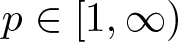 $p\in[1,\infty)$ and a bounded open set $\Omega\subset\mathbb{R}^d$ with Lipschitz boundary, we study the $\Gamma$-convergence of the weighted fractional seminorm
 \begin{equation*}[u]_{s,p,f}^p=\int_{\mathbb{R}^d} \int_{\mathbb{R}^d} \frac{|\tilde u(x)- \tilde u(y)|^p}{\|x-y\|^{d+sp}}\,f(x)\,f(y)\,\mathrm{d} x\,\mathrm{d} y,\end{equation*}
as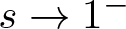 $s\to1^-$ for $u\in L^p(\Omega)$, where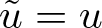 $\tilde u=u$ on $\Omega$ and $\tilde u=0$ on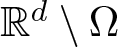 $\mathbb{R}^d\setminus\Omega$. Assuming that $(f_s)_{s\in(0,1)}\subset L^\infty(\mathbb{R}^d;[0,\infty))$ and $f\in\mathrm{Lip}_b(\mathbb{R}^d;(0,\infty))$ are such that $f_s\to f$ in $L^\infty(\mathbb{R}^d)$ as $s\to1^-$, we show that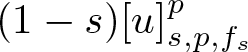 $(1-s)[u]_{s,p,f_s}^p$ $\Gamma$-converges to the Dirichlet $p$-energy weighted by $f^2$. In the case $p=2$, we also prove the convergence of the corresponding gradient flows.


On the string topology of symmetric spaces of higher rank
- Part of
-
- Journal:
- Proceedings of the Royal Society of Edinburgh. Section A: Mathematics , First View
- Published online by Cambridge University Press:
- 30 November 2025, pp. 1-43
-
- Article
-
- You have access
- Open access
- HTML
- Export citation
