Refine search
Actions for selected content:
26063 results in Abstract analysis
SELF-DUAL AND EVEN POINCARÉ-EINSTEIN METRICS IN DIMENSION FOUR
-
- Journal:
- Journal of the Institute of Mathematics of Jussieu / Volume 25 / Issue 2 / March 2026
- Published online by Cambridge University Press:
- 05 January 2026, pp. 749-779
- Print publication:
- March 2026
-
- Article
-
- You have access
- Open access
- HTML
- Export citation
Modelling crime response to deterrence: Existence of solutions, optimal policies, and fairness
- Part of
-
- Journal:
- European Journal of Applied Mathematics , First View
- Published online by Cambridge University Press:
- 05 January 2026, pp. 1-22
-
- Article
-
- You have access
- Open access
- HTML
- Export citation
Decay estimate for subcritical semilinear damped wave equations with slowly decreasing data
- Part of
-
- Journal:
- Proceedings of the Royal Society of Edinburgh. Section A: Mathematics , First View
- Published online by Cambridge University Press:
- 02 January 2026, pp. 1-21
-
- Article
-
- You have access
- HTML
- Export citation
On the stochastic selection of integral curves of a rough vector field
- Part of
-
- Journal:
- Proceedings of the Edinburgh Mathematical Society , First View
- Published online by Cambridge University Press:
- 02 January 2026, pp. 1-19
-
- Article
-
- You have access
- Open access
- HTML
- Export citation
-
We prove that for bounded, divergence-free vector fields $\boldsymbol{b}$ in $L^1_{loc}((0,1];BV(\mathbb{T}^d;\mathbb{R}^d))$, there exists a unique incompressible measure on integral curves of $\boldsymbol{b}$. We recall the vector field constructed by Depauw in [8], which lies in the above class, and prove that for this vector field, the unique incompressible measure on integral curves exhibits stochasticity.


The finite forms of MacMahon’s q-series
- Part of
-
- Journal:
- Proceedings of the Edinburgh Mathematical Society , First View
- Published online by Cambridge University Press:
- 02 January 2026, pp. 1-28
-
- Article
- Export citation
-
In his seminal work on partitions and divisor functions, MacMahon introduced the following two q-series:
 \begin{align*}A_k(q):= \sum_{0 \lt s_1 \lt s_2 \lt \cdots \lt s_k} \frac{q^{s_1+s_2+\cdots+s_k}}{(1-q^{s_1})^2(1-q^{s_2})^2\cdots(1-q^{s_k})^2},\qquad\quad\quad\quad\\[6pt]C_k(q):= \sum_{0 \lt s_1 \lt s_2 \lt \cdots \lt s_k}\frac{q^{2(s_1+s_2+\cdots+s_k)-k}}{(1-q^{2s_1-1})^2(1-q^{2s_2-1})^2\cdots(1-q^{2s_k-1})^2}.\end{align*}
In 2013, Andrews and Rose proved that $A_k(q)$ and $C_k(q)$ are quasimodular forms of weight $\leq 2k$. Recently, Ono and Singh proved two interesting identities involving $A_k(q)$ and $C_k(q)$ and showed that the generating functions for the three-coloured partition function $p_3(n)$ and the overpartition function $\overline{p}(n)$ have infinitely many closed formulas in terms of MacMahon’s quasimodular forms $A_k(q)$ and $C_k(q)$. In this paper, we introduce the finite forms $A_{k,n}(q)$ and $C_{k,n}(q)$ of MacMahon’s q-series $A_k(q)$ and $C_k(q)$ and prove two identities which generalize Ono–Singh’s identities. We also prove some new identities involving $A_{k,n}(q)$, $C_{k,n}(q)$ and certain infinite products based on two Bailey pairs. Those identities are analogous to Ono–Singh’s identities.


Spectral inclusions of perturbed normal operators and applications
- Part of
-
- Journal:
- Proceedings of the Edinburgh Mathematical Society , First View
- Published online by Cambridge University Press:
- 02 January 2026, pp. 1-55
-
- Article
-
- You have access
- Open access
- HTML
- Export citation
-
We consider a normal operator $T$ on a Hilbert space $H$. Under various assumptions on the spectrum of $T$, we give bounds for the spectrum of $T+A$ where $A$ is $T$-bounded with relative bound less than 1 but we do not assume that $A$ is symmetric or normal. If the imaginary part of the spectrum of $T$ is bounded, then the spectrum of $T+A$ is contained in the region between two hyperbolas whose asymptotic slope depends on the $T$-bound of $A$. If the spectrum of $T$ is contained in a bisector, then the spectrum of $T+A$ is contained in the area between certain rotated hyperbolas. The case of infinitely many gaps in the spectrum of $T$ is studied. Moreover, we prove a stability result for the essential spectrum of $T+A$. If $A$ is even $p$-subordinate to $T$, then we obtain stronger results for the localisation of the spectrum of $T+A$.


JMJ volume 25 issue 1 Cover and Back matter
-
- Journal:
- Journal of the Institute of Mathematics of Jussieu / Volume 25 / Issue 1 / January 2026
- Published online by Cambridge University Press:
- 20 January 2026, pp. b1-b2
- Print publication:
- January 2026
-
- Article
-
- You have access
- Export citation
JMJ volume 25 issue 1 Cover and Front matter
-
- Journal:
- Journal of the Institute of Mathematics of Jussieu / Volume 25 / Issue 1 / January 2026
- Published online by Cambridge University Press:
- 20 January 2026, pp. f1-f2
- Print publication:
- January 2026
-
- Article
-
- You have access
- Export citation
Existence and concentration of normalized solutions for logarithmic Schrödinger–Bopp–Podolsky type system
- Part of
-
- Journal:
- Proceedings of the Royal Society of Edinburgh. Section A: Mathematics , First View
- Published online by Cambridge University Press:
- 29 December 2025, pp. 1-39
-
- Article
- Export citation
-
In this paper, we are interested in the existence and concentration of normalized solutions for the following logarithmic Schrödinger–Bopp–Podolsky type system involving the $p$-Laplacian in $\mathbb{R}^3$:
 \begin{equation*}\left\{\begin{array}{ll}\displaystyle -\varepsilon^p\Delta_p u+Z(x)|u|^{p-2}u-\kappa\phi u=\lambda |u|^{p-2}u+|u|^{p-2}u\log|u|^p& \text{in} \ \mathbb{R}^3, \\\displaystyle -\varepsilon^2\Delta\phi+a^2\varepsilon^4\Delta^2\phi=4\pi u^2& \text{in} \ \mathbb{R}^3, \\\displaystyle \int_{\mathbb{R}^3}|u|^pdx=d^p\varepsilon^3,\end{array}\right.\end{equation*}
where $\Delta_p\cdot =\text{div} (|\nabla \cdot|^{p-2}\nabla \cdot)$ denotes the usual $p$-Laplacian operator, $Z$ is a given external potential, $\kappa \gt 0$ a constant, $a \gt 0$ is the Bopp–Podolsky constant and $\varepsilon \gt 0$ is a small parameter. The unknowns are $u,\phi:\mathbb{R}^{3}\to \mathbb{R}$ and the Lagrange multiplier $\lambda\in\mathbb{R}$. If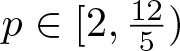 $p\in[2,\frac{12}{5})$, we obtain, via the variational method, that the number of positive solutions depends on the profile of $Z$ and the solutions concentrate around the global minimum points of $Z$ in the semiclassical limit as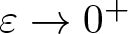 $\varepsilon\to 0^{+}$.


Hybrid subconvexity for Maass form symmetric-square L-functions
- Part of
-
- Journal:
- Proceedings of the Royal Society of Edinburgh. Section A: Mathematics , First View
- Published online by Cambridge University Press:
- 29 December 2025, pp. 1-51
-
- Article
- Export citation
-
Recently R. Khan and M. Young proved a mean Lindelöf estimate for the second moment of Maass form symmetric-square $L$-functions $L(\operatorname{sym}^2 u_{j},1/2+it)$ on the short interval of length $G\gg |t_j|^{1+\epsilon}/t^{2/3}$, where $t_j$ is a spectral parameter of the corresponding Maass form. Their estimate yields a subconvexity estimate for $L(\operatorname{sym}^2 u_{j},1/2+it)$ as long as $|t_j|^{6/7+\delta}\ll t \lt (2-\delta)|t_j|$. We obtain a mean Lindelöf estimate for the same moment in shorter intervals, namely for $G\gg |t_j|^{1+\epsilon}/t$. As a corollary, we prove a subconvexity estimate for $L(\operatorname{sym}^2 u_{j},1/2+it)$ on the interval $|t_j|^{2/3+\delta}\ll t\ll |t_j|^{6/7-\delta}$.


Towards Riemannian diffeology
- Part of
-
- Journal:
- Proceedings of the Royal Society of Edinburgh. Section A: Mathematics , First View
- Published online by Cambridge University Press:
- 19 December 2025, pp. 1-30
-
- Article
- Export citation
Propagation dynamics of time-dependent reaction-diffusion equations under climate change in an infinite cylinder
- Part of
-
- Journal:
- European Journal of Applied Mathematics , First View
- Published online by Cambridge University Press:
- 19 December 2025, pp. 1-22
-
- Article
-
- You have access
- Open access
- HTML
- Export citation
-
In this paper, we consider a reaction-diffusion equation that models the time-almost periodic response to climate change within a straight, infinite cylindrical domain. The shifting edge of the habitat is characterised by a time-almost periodic function, reflecting the varying pace of environmental changes. Note that the principal spectral theory is an important role to study the dynamics of reaction-diffusion equations in time heterogeneous environment. Initially, for time-almost periodic parabolic equations in finite cylindrical domains, we develop the principal spectral theory of such equations with mixed Dirichlet–Neumann boundary conditions. Subsequently, we demonstrate that the approximate principal Lyapunov exponent serves as a definitive threshold for species persistence versus extinction. Then, the existence, exponential decay and stability of the forced wave solutions $U(t,x_{1},y)=V\left (t,x_{1}-\int ^{t}_{0}c(s)ds,y\right )$ are established. Additionally, we analyse how fluctuations in the shifting speed affect the approximate top Lyapunov exponent.

On averages of completely multiplicative functions over co-prime integer pairs
- Part of
-
- Journal:
- Proceedings of the Royal Society of Edinburgh. Section A: Mathematics , First View
- Published online by Cambridge University Press:
- 19 December 2025, pp. 1-14
-
- Article
- Export citation
Multipeak solutions for fractional elliptic equations on conformal infinities
- Part of
-
- Journal:
- Proceedings of the Royal Society of Edinburgh. Section A: Mathematics , First View
- Published online by Cambridge University Press:
- 19 December 2025, pp. 1-55
-
- Article
- Export citation
-
We consider the following problem
on an asymptotically hyperbolic manifold \begin{equation*}\varepsilon^{2 s} P_{\hat{h}}^s u+u=u^p, \quad u \gt 0 \quad \text {on } \,(M, \hat{h}),\end{equation*} $(X, g^{+})$ with conformal infinity $(M,[\hat{h}])$, where $s\in (0,1)$, $P_{\hat{h}}^s$ is the fractional conformally invariant operators, $1 \lt p \lt \frac{n+2s}{n-2s}$. By Lyapunov–Schmidt reduction method, we prove the existence of solutions whose peaks collapse, as $\varepsilon$ goes to zero, to a $C^1$-stable critical point of the mean curvature $H$ for $0 \lt s \lt {1}/{2}$ or a $C^1$-stable critical point of a function involving the scalar curvature and the second fundamental form for ${1}/{2}\le s \lt 1$.


Toric arc schemes and q-enumeration of lattice points
- Part of
-
- Journal:
- Proceedings of the Edinburgh Mathematical Society , First View
- Published online by Cambridge University Press:
- 18 December 2025, pp. 1-23
-
- Article
-
- You have access
- Open access
- HTML
- Export citation
-
We introduce a natural weighted enumeration of lattice points in a polytope, and give a Brion-type formula for the corresponding generating function. The weighting has combinatorial significance, and its generating function may be viewed as a generalization of the Rogers–Szegő polynomials. It also arises from the geometry of the toric arc scheme associated to the normal fan of the polytope. We show that the asymptotic behaviour of thecoefficients at $q=1$ is Gaussian.

COHOMOLOGY OF THE BASIC UNRAMIFIED PEL UNITARY RAPOPORT-ZINK SPACE OF SIGNATURE $(1,n-1)$
- Part of
-
- Journal:
- Journal of the Institute of Mathematics of Jussieu / Volume 25 / Issue 2 / March 2026
- Published online by Cambridge University Press:
- 18 December 2025, pp. 781-839
- Print publication:
- March 2026
-
- Article
-
- You have access
- Open access
- HTML
- Export citation
-
In this paper, we study the cohomology of the unitary unramified PEL Rapoport-Zink space of signature $(1,n-1)$ at hyperspecial level. Our method revolves around the spectral sequence associated to the open cover by the analytical tubes of the closed Bruhat-Tits strata in the special fiber, which were constructed by Vollaard and Wedhorn. The cohomology of these strata, which are isomorphic to generalized Deligne-Lusztig varieties, has been computed in an earlier work. This spectral sequence allows us to prove the semisimplicity of the Frobenius action and the non-admissibility of the cohomology in general. Via p-adic uniformization, we relate the cohomology of the Rapoport-Zink space to the cohomology of the supersingular locus of a Shimura variety with no level at p. In the case $n=3$ or $4$, we give a complete description of the cohomology of the supersingular locus in terms of automorphic representations.


Hypergraphs with uniform Turán density equal to 8/27
- Part of
-
- Journal:
- Combinatorics, Probability and Computing / Volume 35 / Issue 2 / March 2026
- Published online by Cambridge University Press:
- 17 December 2025, pp. 280-289
-
- Article
- Export citation
-
In the 1980s, Erdős and Sós initiated the study of Turán problems with a uniformity condition on the distribution of edges: the uniform Turán density of a hypergraph $H$ is the infimum over all $d$ for which any sufficiently large hypergraph with the property that all its linear-size subhypergraphs have density at least $d$ contains $H$. In particular, they asked to determine the uniform Turán densities of $K_4^{(3)-}$ and $K_4^{(3)}$. After more than 30 years, the former was solved in [Israel J. Math. 211 (2016), 349 – 366] and [J. Eur. Math. Soc. 20 (2018), 1139 – 1159], while the latter still remains open. Till today, there are known constructions of $3$-uniform hypergraphs with uniform Turán density equal to $0$,
$0$,  $1/27$, $4/27$, and $1/4$ only. We extend this list by a fifth value: we prove an easy to verify sufficient condition for the uniform Turán density to be equal to $8/27$ and identify hypergraphs satisfying this condition.


DETECTING IDEALS IN REDUCED CROSSED PRODUCT C*-ALGEBRAS OF TOPOLOGICAL DYNAMICAL SYSTEMS
- Part of
-
- Journal:
- Journal of the Institute of Mathematics of Jussieu / Volume 25 / Issue 2 / March 2026
- Published online by Cambridge University Press:
- 16 December 2025, pp. 841-865
- Print publication:
- March 2026
-
- Article
-
- You have access
- Open access
- HTML
- Export citation
-
We introduce the $\ell ^1$-ideal intersection property for crossed product ${\mathrm {C}}^*$-algebras. It is implied by ${\mathrm {C}}^*$-simplicity as well as ${\mathrm {C}}^*$-uniqueness. We show that topological dynamical systems of arbitrary lattices in connected Lie groups, arbitrary linear groups over the integers in a number field and arbitrary virtually polycyclic groups have the $\ell ^1$-ideal intersection property. On the way, we extend previous results on ${\mathrm {C}}^*$-uniqueness of
  -groupoid algebras to the general twisted setting.


 -groupoid algebras to the general twisted setting.
k-11-representations of graphs, revisited
- Part of
-
- Journal:
- Proceedings of the Edinburgh Mathematical Society / Volume 69 / Issue 2 / May 2026
- Published online by Cambridge University Press:
- 15 December 2025, pp. 774-788
-
- Article
-
- You have access
- Open access
- HTML
- Export citation
-
In this paper, we study the existence of $k$-
$k$- $11$-representations of graphs. Inspired by work on permutation patterns, these representations are ways of representing graphs by words where adjacencies between vertices are captured by patterns in the corresponding letters. Our main result is that all graphs are $1$-
$1$- $11$-representable, answering a question originally raised by Cheon et al. in 2018 and repeated in several follow-up papers – including a very recent paper, where it was shown that all graphs on at most $8$ vertices are $1$-
$1$- $11$-representable. Moreover, we prove that all graphs are permutationally $1$-
$1$- $11$-representable – that is representable as the concatenation of permutations of the vertices – answering the existence question in extremely strong fashion. Our construction leads to nearly optimal bounds on the length of the words, as well. It can, moreover, be adapted to represent all acyclic orientations of graphs; this generalizes the fact that word-representations capture semi-transitive orientations of graphs. Our construction also adapts easily to other $k \geq 2$ as well, giving representations using a linear number of permutations when the best known previous bounds used a quadratic number. Finally, we also consider the (non-)existence of ‘even–odd’-representations of graphs. This answers a question raised by Wanless after a conference talk in 2018.


TWISTED BLANCHFIELD PAIRINGS AND TWISTED SIGNATURES II: RELATION TO CASSON-GORDON INVARIANTS – ERRATUM
-
- Journal:
- Journal of the Institute of Mathematics of Jussieu / Volume 25 / Issue 3 / May 2026
- Published online by Cambridge University Press:
- 15 December 2025, p. 1759
- Print publication:
- May 2026
-
- Article
-
- You have access
- Open access
- HTML
- Export citation
