Refine search
Actions for selected content:
26063 results in Abstract analysis
Beyond the classification theorem of Cameron, Goethals, Seidel, and Shult
- Part of
-
- Journal:
- Combinatorics, Probability and Computing / Volume 35 / Issue 2 / March 2026
- Published online by Cambridge University Press:
- 28 November 2025, pp. 207-229
-
- Article
-
- You have access
- Open access
- HTML
- Export citation
-
In 1976, Cameron, Goethals, Seidel, and Shult classified all the graphs whose smallest eigenvalue is at least $-2$ by relating such graphs to root systems that appear in the classification of semisimple Lie algebras. In this paper, extending their beautiful theorem, we give a complete classification of all connected graphs whose smallest eigenvalue lies in $(\! -\lambda ^*, -2)$, where $\lambda ^* = ho ^{1/2} + ho ^{-1/2} \approx 2.01980$, and $ho$ is the unique real root of $x^3 = x + 1$. Our result is the first classification of infinitely many connected graphs with their smallest eigenvalue in $(\! -\lambda , -2)$ for any constant $\lambda \gt 2$.


Ageing and mortality of persons with HIV: a novel data-driven approach
- Part of
-
- Journal:
- European Journal of Applied Mathematics , First View
- Published online by Cambridge University Press:
- 28 November 2025, pp. 1-27
-
- Article
-
- You have access
- Open access
- HTML
- Export citation
Canonization of a random circulant graph by counting walks
- Part of
-
- Journal:
- Combinatorics, Probability and Computing / Volume 35 / Issue 2 / March 2026
- Published online by Cambridge University Press:
- 26 November 2025, pp. 178-206
-
- Article
- Export citation
-
It is well known that almost all graphs are canonizable by a simple combinatorial routine known as colour refinement, also referred to as the 1-dimensional Weisfeiler–Leman algorithm. With high probability, this method assigns a unique label to each vertex of a random input graph and, hence, it is applicable only to asymmetric graphs. The strength of combinatorial refinement techniques becomes a subtle issue if the input graphs are highly symmetric. We prove that the combination of colour refinement and vertex individualization yields a canonical labelling for almost all circulant digraphs (i.e., Cayley digraphs of a cyclic group). This result provides first evidence of good average-case performance of combinatorial refinement within the class of vertex-transitive graphs. Remarkably, we do not even need the full power of the colour refinement algorithm. We show that the canonical label of a vertex $v$ can be obtained just by counting walks of each length from $v$ to an individualized vertex. Our analysis also implies that almost all circulant graphs are compact in the sense of Tinhofer, that is, their polytops of fractional automorphisms are integral. Finally, we show that a canonical Cayley representation can be constructed for almost all circulant graphs by the more powerful 2-dimensional Weisfeiler–Leman algorithm.


Liouville-type theorems for the quasilinear elliptic equation and inequality with logarithmic nonlinearity
- Part of
-
- Journal:
- Proceedings of the Royal Society of Edinburgh. Section A: Mathematics , First View
- Published online by Cambridge University Press:
- 26 November 2025, pp. 1-15
-
- Article
- Export citation
-
This paper is concerned with Liouville-type theorems of positive weak solutions to elliptic $m$-Laplace equation and inequality with the logarithmic nonlinearity $u^q(\log u)^p (q,p\geqslant0)$. Using a direct Bernstein method we obtain a first range of values of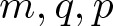 $m,q,p$ in which all positive weak solutions of equation are constants, this holds in the following cases: (i) $1 \lt m \lt 2$, $m-1 \lt q \lt 1$, $0 \lt p \lt q$; (ii)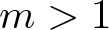 $m \gt 1$, $q\geqslant1$,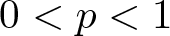 $0 \lt p \lt 1$. When $q=1$, the positive weak solutions are required to be bounded. Based on transformation of inequality and the utilization of suitable cut-off functions, we establish a Liouville-type theorem for positive weak solutions of inequality; this result also remains valid on complete noncompact Riemannian manifold.


Partial Hopf actions on generalized matrix algebras
- Part of
-
- Journal:
- Glasgow Mathematical Journal , First View
- Published online by Cambridge University Press:
- 26 November 2025, pp. 1-22
-
- Article
- Export citation
-
Let $\Bbbk$ be a field, $H$ a Hopf algebra over $\Bbbk$, and $R = (_iM_j)_{1 \leq i,j \leq n}$ a generalized matrix algebra. In this work, we establish necessary and sufficient conditions for $H$ to act partially on $R$. To achieve this, we introduce the concept of an opposite covariant pair and demonstrate that it satisfies a universal property. In the special case where $H = \Bbbk G$ is the group algebra of a group $G$, we recover the conditions given in [7] for the existence of a unital partial action of $G$ on $R$.
$R$.


Wreath products and the non-coprime k(GV) problem
- Part of
-
- Journal:
- Proceedings of the Royal Society of Edinburgh. Section A: Mathematics , First View
- Published online by Cambridge University Press:
- 26 November 2025, pp. 1-17
-
- Article
-
- You have access
- Open access
- HTML
- Export citation
-
Let $G = X \wr H$ be the wreath product of a nontrivial finite group X with k conjugacy classes and a transitive permutation group H of degree n acting on the set of n direct factors of Xn. If H is semiprimitive, then $k(G) \leq k^n$ for every sufficiently large n or k. This result solves a case of the non-coprime k(GV) problem and provides an affirmative answer to a question of Garzoni and Gill for semiprimitive permutation groups. The proof does not require the classification of finite simple groups.


Uniqueness of solution for logarithm Choquard equation
- Part of
-
- Journal:
- Proceedings of the Royal Society of Edinburgh. Section A: Mathematics , First View
- Published online by Cambridge University Press:
- 25 November 2025, pp. 1-29
-
- Article
- Export citation
-
In this paper, we prove the uniqueness of positive solutions for the following Choquard equation involving logarithm convolution
 \begin{equation*}-\Delta u(x)=e^{[\int_{\mathbb R^N} \ln{\frac {|y|}{|x-y|}}u(y)^{\frac{2N}{N-2}}\,dy]}u(x)^{\frac{N}{N-2}}\quad {\rm in}\ \mathbb{R}^N\end{equation*}
where $N\geq 3$. Under the assumptions that
 \begin{equation*}{\int_{\mathbb R^N}} e^{\frac{N+2}2[\int_{\mathbb R^N} \ln{\frac {|y|}{|x-y|}}u(y)^{\frac{2N}{N-2}}\,dy]}\,dx \lt \infty,\ {\int_{\mathbb R^N}} u^{\frac{N+2}{N-2}}\,dx \lt \infty \quad{\rm and }\quad {\int_{\mathbb R^N}} u^{\frac{2N}{N-2}}\,dx \lt \infty,\end{equation*}
we show that any positive solution of the above equation must have the following form
 \begin{equation*}u(x)=(\frac{C\varepsilon}{\varepsilon^2+|x-x_0|^2})^{\frac{N-2}2},\end{equation*}
where $C$ is a positive constant, $\varepsilon \gt 0$ and $x_0\in \mathbb R^N$ are two parameters.


Uniform convergence of adversarially robust classifiers
- Part of
-
- Journal:
- European Journal of Applied Mathematics / Volume 37 / Issue 1 / February 2026
- Published online by Cambridge University Press:
- 24 November 2025, pp. 43-72
-
- Article
-
- You have access
- Open access
- HTML
- Export citation
-
In recent years, there has been significant interest in the effect of different types of adversarial perturbations in data classification problems. Many of these models incorporate the adversarial power, which is an important parameter with an associated trade-off between accuracy and robustness. This work considers a general framework for adversarially perturbed classification problems, in a large data or population-level limit. In such a regime, we demonstrate that as adversarial strength goes to zero that optimal classifiers converge to the Bayes classifier in the Hausdorff distance. This significantly strengthens previous results, which generally focus on $L^1$-type convergence. The main argument relies upon direct geometric comparisons and is inspired by techniques from geometric measure theory.

VORONOI COMPLEXES IN HIGHER DIMENSIONS, COHOMOLOGY OF $GL_N(\mathbb{Z} )$ FOR $N\geqslant 8$ AND THE TRIVIALITY OF $K_8(\mathbb{Z} )$
- Part of
-
- Journal:
- Journal of the Institute of Mathematics of Jussieu / Volume 25 / Issue 1 / January 2026
- Published online by Cambridge University Press:
- 24 November 2025, pp. 565-590
- Print publication:
- January 2026
-
- Article
- Export citation
-
We enumerate the low-dimensional cells in the Voronoi cell complexes attached to the modular groups $\mathit {SL}_N(\mathbb{Z} )$ and $\mathit {GL}_N(\mathbb{Z} )$ for $N=8,9,10,11$, using quotient sublattice techniques for $N=8,9$ and linear programming methods for higher dimensions. These enumerations allow us to compute some cohomology of these groups and prove that $K_8(\mathbb{Z} ) = 0$. We deduce from it new knowledge on the Kummer-Vandiver conjecture.


DYNAMIQUE ANALYTIQUE SUR Z. I: MESURES D’ÉQUILIBRE SUR UNE DROITE PROJECTIVE RELATIVE
- Part of
-
- Journal:
- Journal of the Institute of Mathematics of Jussieu / Volume 25 / Issue 2 / March 2026
- Published online by Cambridge University Press:
- 24 November 2025, pp. 591-633
- Print publication:
- March 2026
-
- Article
- Export citation
Quantitative stability in fractional Hardy–Sobolev inequalities: the role of Euler–Lagrange equations
- Part of
-
- Journal:
- Proceedings of the Royal Society of Edinburgh. Section A: Mathematics , First View
- Published online by Cambridge University Press:
- 24 November 2025, pp. 1-39
-
- Article
- Export citation
-
This paper investigates sharp stability estimates for the fractional Hardy–Sobolev inequality:
 \begin{align*}\ \ \ \ \ \ \ \ \ \mu_{s,t}\left(\mathbb{R}^N\right) \left(\int_{\mathbb{R}^N} \frac{|u|^{2^*_s(t)}}{|x|^t} \,\mathrm{d}x \right)^{\frac{2}{2^*_s(t)}} \leq \int_{\mathbb{R}^N} \left|(-\Delta)^{\frac{s}{2}} u \right|^2 \,\mathrm{d}x, \quad \text{for all } u \in \dot{H}^s\left(\mathbb{R}^N\right)\end{align*}
where $s \in (0,1)$, $0 \lt t \lt 2s$, $N \gt 2s$ is an integer, and $2^*_s(t) = \frac{2(N-t)}{N-2s}$. Here, $\mu_{s,t}\left(\mathbb{R}^N\right)$ represents the best constant in the inequality. The primary focus is on the quantitative stability results of the above inequality and the corresponding Euler–Lagrange equation near a positive ground-state solution. Additionally, a qualitative stability result is established for the Euler–Lagrange equation, offering a thorough characterization of the Palais–Smale sequences for the associated energy functional. These results generalize the sharp quantitative stability results for the classical Sobolev inequality in $\mathbb{R}^N$, originally obtained by Bianchi and Egnell [J. Funct. Anal. 1991] as well as the corresponding critical exponent problem in $\mathbb{R}^N$, explored by Ciraolo, Figalli, and Maggi [Int. Math. Res. Not. 2017] in the framework of fractional calculus.


Totally positive elements with m partitions exist in almost all real quadratic fields
- Part of
-
- Journal:
- Proceedings of the Edinburgh Mathematical Society / Volume 69 / Issue 2 / May 2026
- Published online by Cambridge University Press:
- 21 November 2025, pp. 701-734
-
- Article
-
- You have access
- Open access
- HTML
- Export citation
-
In this paper, we study partitions of totally positive integral elements $ \alpha $ in a real quadratic field $ K $. We prove that for a fixed integer $ m \geq 1 $, an element with $ m $ partition exists in almost all $ K $. We also obtain an upper bound for the norm of $\alpha$ that can be represented as a sum of indecomposables in at most $m$ ways, completely characterize the $\alpha$’s represented in exactly $2$ ways, and subsequently apply this result to complete the search for fields containing an element with $ m $ partitions for $ 1 \leq m \leq 7 $.


Large Salem sets avoiding nonlinear configurations
- Part of
-
- Journal:
- Proceedings of the Royal Society of Edinburgh. Section A: Mathematics , First View
- Published online by Cambridge University Press:
- 21 November 2025, pp. 1-46
-
- Article
-
- You have access
- Open access
- HTML
- Export citation
-
We construct large Salem sets avoiding patterns, complementing previous constructions of pattern avoiding sets with large Hausdorff dimension. For a (possibly uncountable) family of uniformly Lipschitz functions $\{f_i:(\mathbb{T}^d)^{n-2} \to \mathbb{T}^d \}$, we obtain a Salem subset of $\mathbb{T}^d$ with dimension $d/(n-1)$ avoiding nontrivial solutions to the equation $x_n-x_{n-1} = f_i(x_1,...,x_{n-2})$. For a countable family of smooth functions $\{f_i: (\mathbb{T}^d)^{n-1} \to \mathbb{T}^d \}$ satisfying a modest geometric condition, we obtain a Salem subset of $\mathbb{T}^d$ with dimension $d/(n-3/4)$ avoiding nontrivial solutions to the equation $x_n= f(x_1,...,x_{n-1})$. For a set $Z \subset \mathbb{T}^{dn}$ which is the countable union of a family of sets, each with lower Minkowski dimension $s$, we obtain a Salem subset of $\mathbb{T}^d$ of dimension $(dn-s)/(n-1/2)$ whose Cartesian product does not intersect $Z$ except at points with non-distinct coordinates.


Loop spaces of polyhedral products associated with the polyhedral join product
- Part of
-
- Journal:
- Proceedings of the Edinburgh Mathematical Society / Volume 69 / Issue 2 / May 2026
- Published online by Cambridge University Press:
- 20 November 2025, pp. 674-700
-
- Article
-
- You have access
- Open access
- HTML
- Export citation
Do stable neural networks exist for classification problems? – A new view on stability in AI
- Part of
-
- Journal:
- European Journal of Applied Mathematics / Volume 37 / Issue 1 / February 2026
- Published online by Cambridge University Press:
- 20 November 2025, pp. 238-258
-
- Article
-
- You have access
- Open access
- HTML
- Export citation
-
In deep learning (DL), the instability phenomenon is widespread and well documented, and the most commonly used measure of stability is the Lipschitz constant. While a small Lipchitz constant is traditionally viewed as guarantying stability, it does not capture the instability phenomenon in DL for classification well. The reason is that a classification function – which is the target function to be approximated – is necessarily discontinuous, thus having an ‘infinite’ Lipchitz constant. As a result, the classical approach will deem every classification function unstable, yet basic classification functions a la ‘is there a cat in the image?’ will typically be locally very ‘flat’ – and thus locally stable – except at the decision boundary. The lack of an appropriate measure of stability hinders a rigorous theory for stability in DL, and consequently, there are no proper approximation theoretic results that can guarantee the existence of stable networks for classification functions. In this paper, we introduce a novel stability measure $\mathcal{S}(f)$, for any classification function $f$, appropriate to study the stability of classification functions and their approximations. We further prove two approximation theorems: First, for any $\epsilon \gt 0$ and any classification function $f$ on a compact set, there is a neural network (NN) $\psi$, such that $\psi - f \neq 0$ only on a set of measure $\lt \epsilon$; moreover, $\mathcal{S}(\psi ) \geq \mathcal{S}(f) - \epsilon$ (as accurate and stable as $f$ up to $\epsilon$). Second, for any classification function $f$ and $\epsilon \gt 0$, there exists a NN $\psi$ such that $\psi = f$ on the set of points that are at least $\epsilon$ away from the decision boundary.


The boundary value problem for triholomorphic maps
- Part of
-
- Journal:
- Proceedings of the Royal Society of Edinburgh. Section A: Mathematics , First View
- Published online by Cambridge University Press:
- 20 November 2025, pp. 1-29
-
- Article
- Export citation
-
We introduce a natural boundary value problem for a triholomorphic map $u$ from a compact almost hyper-Hermitian manifold $M$ with smooth boundary $\partial M$ into a closed hyperKähler manifold $N$ with free boundary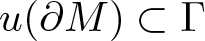 $u(\partial M)\subset \Gamma$ lying on some geometrically natural closed supporting submanifold $\Gamma\subset N$, called tri-isotropic submanifold. We establish partial regularity theory and energy quantization result in this boundary setting under some additional assumption on the $W^{2,1}$ norm of the weakly converging sequences.


Instability in deep learning – when algorithms cannot compute uncertainty quantifications for neural networks
- Part of
-
- Journal:
- European Journal of Applied Mathematics / Volume 37 / Issue 1 / February 2026
- Published online by Cambridge University Press:
- 20 November 2025, pp. 290-312
-
- Article
-
- You have access
- Open access
- HTML
- Export citation
-
In deep learning, interval neural networks are used to quantify the uncertainty of a pre-trained neural network. Suppose we are given a computational problem $P$ and a pre-trained neural network $\Phi _P$ that aims to solve $P$. An interval neural network is then a pair of neural networks $(\underline {\phi }, \overline {\phi })$, with the property that $\underline {\phi }(y) \leq \Phi _P(y) \leq \overline {\phi }(y)$ for all inputs $y$, where the inequalities are meant componentwise. $(\underline {\phi }, \overline {\phi })$ are specifically trained to quantify the uncertainty of $\Phi _P$, in the sense that the size of the interval $[\underline {\phi }(y),\overline {\phi }(y)]$ quantifies the uncertainty of the prediction $\Phi _P(y)$. In this paper, we investigate the phenomenon when algorithms cannot compute interval neural networks in the setting of inverse problems. We show that in the typical setting of a linear inverse problem, the problem of constructing an optimal pair of interval neural networks is non-computable, even with the assumption that the pre-trained neural network $\Phi _P$ is an optimal solution. In other words, there exist classes of training sets $\Omega$, such that there is no algorithm, even randomised (with probability $p \geq 1/2$), that computes an optimal pair of interval neural networks for each training set ${\mathcal{T}} \in \Omega$. This phenomenon happens even when we are given a pre-trained neural network $\Phi _{{\mathcal{T}}}$ that is optimal for $\mathcal{T}$. This phenomenon is intimately linked to instability in deep learning.


On approximation of convex functionals with a convexity constraint and general Lagrangians
- Part of
-
- Journal:
- Proceedings of the Royal Society of Edinburgh. Section A: Mathematics , First View
- Published online by Cambridge University Press:
- 19 November 2025, pp. 1-17
-
- Article
-
- You have access
- Open access
- HTML
- Export citation
ON THE DESCENT CONJECTURE FOR RATIONAL POINTS AND ZERO-CYCLES
- Part of
-
- Journal:
- Journal of the Institute of Mathematics of Jussieu / Volume 25 / Issue 1 / January 2026
- Published online by Cambridge University Press:
- 19 November 2025, pp. 515-563
- Print publication:
- January 2026
-
- Article
- Export citation
Thin Gordian unlinks
- Part of
-
- Journal:
- Proceedings of the Royal Society of Edinburgh. Section A: Mathematics , First View
- Published online by Cambridge University Press:
- 19 November 2025, pp. 1-15
-
- Article
- Export citation
-
A Gordian unlink is a finite number of unknots that are not topologically linked, each with prescribed length and thickness, and that cannot be disentangled into the trivial link by an isotopy preserving length and thickness throughout. In this note, we provide the first examples of Gordian unlinks. As a consequence, we identify the existence of isotopy classes of unknots that differ from those in classical knot theory. More generally, we present a one-parameter family of Gordian unlinks with thickness ranging in $[1,2)$ and absolute curvature bounded by 1, concluding that thinner normal tubes lead to different rope geometries than those previously considered. Knots or links in the one-parameter model introduced here are called thin knots or links. When the thickness is equal to 2, we obtain the standard model for geometric knots, also called thick knots.

