Refine search
Actions for selected content:
26063 results in Abstract analysis
A note on the computational complexity of weak saturation
- Part of
-
- Journal:
- Combinatorics, Probability and Computing / Volume 35 / Issue 1 / January 2026
- Published online by Cambridge University Press:
- 16 October 2025, pp. 83-88
-
- Article
-
- You have access
- Open access
- HTML
- Export citation
-
We prove that determining the weak saturation number of a host graph $F$ with respect to a pattern graph $H$ is computationally hard, even when $H$ is the triangle. Our main tool establishes a connection between weak saturation and the shellability of simplicial complexes.


Moduli space theory for complete, constant Q-curvature metrics on finitely punctured spheres
- Part of
-
- Journal:
- Proceedings of the Royal Society of Edinburgh. Section A: Mathematics , First View
- Published online by Cambridge University Press:
- 15 October 2025, pp. 1-23
-
- Article
-
- You have access
- Open access
- HTML
- Export citation
The super Alternative Daugavet property for Banach spaces
- Part of
-
- Journal:
- Proceedings of the Edinburgh Mathematical Society / Volume 69 / Issue 2 / May 2026
- Published online by Cambridge University Press:
- 15 October 2025, pp. 471-499
-
- Article
-
- You have access
- Open access
- HTML
- Export citation
-
We introduce the super Alternative Daugavet property (super ADP), which lies strictly between the Daugavet property (DP) and the ADP. A Banach space X has the super ADP if for every element x in the unit sphere and every relatively weakly open subset W of the unit ball intersecting the unit sphere, there are an element $y\in W$ and a modulus one scalar θ such that $\|x+\theta y\|$ is almost two. Spaces with the DP satisfy this condition, and it implies the ADP. We first provide examples of super ADP spaces that fail the DP. We show that the norm of a super ADP space is rough, hence the space cannot be Asplund, and we also prove that the space fails the point of continuity property (particularly, the Radon–Nikodým property). In particular, we get examples of spaces with the ADP that fail the super ADP. For a better understanding of the differences between the super ADP, the DP and the ADP, we consider the localizations of these properties and prove that they behave rather differently. As a consequence, we provide characterizations of the super ADP for spaces of vector-valued continuous functions and of vector-valued integrable functions.


On compact uniformly recurrent subgroups
-
- Journal:
- Proceedings of the Edinburgh Mathematical Society / Volume 69 / Issue 2 / May 2026
- Published online by Cambridge University Press:
- 14 October 2025, pp. 442-452
-
- Article
-
- You have access
- Open access
- HTML
- Export citation
-
Let a group Γ act on a paracompact, locally compact, Hausdorff space M by homeomorphisms and let 2M denote the set of closed subsets of M. We endow 2M with the Chabauty topology, which is compact and admits a natural Γ-action by homeomorphisms. We show that for every minimal Γ-invariant closed subset $\mathcal{Y}$ of 2M consisting of compact sets, the union $\bigcup \mathcal{Y}\subset M$ has compact closure.
As an application, we deduce that every compact uniformly recurrent subgroup of a locally compact group is contained in a compact normal subgroup. This generalizes a result of Ušakov on compact subgroups whose normalizer is compact.


Bounds of non-real eigenvalues for eigenparameter-dependent Sturm–Liouville problems with indefinite weight
- Part of
-
- Journal:
- Proceedings of the Edinburgh Mathematical Society / Volume 69 / Issue 2 / May 2026
- Published online by Cambridge University Press:
- 14 October 2025, pp. 453-470
-
- Article
- Export citation
ON INTEGRAL LOCAL SHIMURA VARIETIES
- Part of
-
- Journal:
- Journal of the Institute of Mathematics of Jussieu / Volume 25 / Issue 1 / January 2026
- Published online by Cambridge University Press:
- 14 October 2025, pp. 375-443
- Print publication:
- January 2026
-
- Article
-
- You have access
- Open access
- HTML
- Export citation
-
We give a construction of integral local Shimura varieties which are formal schemes that generalise the well-known integral models of the Drinfeld p-adic upper half spaces. The construction applies to all classical groups, at least for odd p. These formal schemes also generalise the formal schemes defined by Rapoport-Zink via moduli of p-divisible groups, and are characterised purely in group-theoretic terms.
More precisely, for a local p-adic Shimura datum $(G, b, \mu)$ and a quasi-parahoric group scheme ${\mathcal {G}} $ for G, Scholze has defined a functor on perfectoid spaces which parametrises p-adic shtukas. He conjectured that this functor is representable by a normal formal scheme which is locally formally of finite type and flat over $O_{\breve E}$. Scholze-Weinstein proved this conjecture when $(G, b, \mu)$ is of (P)EL type by using Rapoport-Zink formal schemes. We prove this conjecture for any $(G, \mu)$ of abelian type when $p\neq 2$, and when $p=2$ and G is of type A or C. We also relate the generic fibre of this formal scheme to the local Shimura variety, a rigid-analytic space attached by Scholze to $(G, b, \mu , {\mathcal {G}})$.


Log geometric models for little disks operads in even dimensions
- Part of
-
- Journal:
- Proceedings of the Royal Society of Edinburgh. Section A: Mathematics , First View
- Published online by Cambridge University Press:
- 13 October 2025, pp. 1-32
-
- Article
-
- You have access
- Open access
- HTML
- Export citation
Random embeddings of bounded-degree trees with optimal spread
- Part of
-
- Journal:
- Combinatorics, Probability and Computing / Volume 35 / Issue 1 / January 2026
- Published online by Cambridge University Press:
- 13 October 2025, pp. 71-82
-
- Article
-
- You have access
- Open access
- HTML
- Export citation
-
A seminal result of Komlós, Sárközy, and Szemerédi states that any $n$-vertex graph $G$ with minimum degree at least $(1/2+\alpha )n$ contains every $n$-vertex tree $T$ of bounded degree. Recently, Pham, Sah, Sawhney, and Simkin extended this result to show that such graphs $G$ in fact support an optimally spread distribution on copies of a given $T$, which implies, using the recent breakthroughs on the Kahn-Kalai conjecture, the robustness result that $T$ is a subgraph of sparse random subgraphs of $G$ as well. Pham, Sah, Sawhney, and Simkin construct their optimally spread distribution by following closely the original proof of the Komlós-Sárközy-Szemerédi theorem which uses the blow-up lemma and the Szemerédi regularity lemma. We give an alternative, regularity-free construction that instead uses the Komlós-Sárközy-Szemerédi theorem (which has a regularity-free proof due to Kathapurkar and Montgomery) as a black box. Our proof is based on the simple and general insight that, if $G$ has linear minimum degree, almost all constant-sized subgraphs of $G$ inherit the same minimum degree condition that $G$ has.


Beyond the broken tetrahedron
- Part of
-
- Journal:
- Combinatorics, Probability and Computing / Volume 35 / Issue 1 / January 2026
- Published online by Cambridge University Press:
- 10 October 2025, pp. 59-70
-
- Article
- Export citation
-
Here we consider the hypergraph Turán problem in uniformly dense hypergraphs as was suggested by Erdős and Sós. Given a $3$-graph $F$, the uniform Turán density $\pi _{\boldsymbol{\therefore }}(F)$ of $F$ is defined as the supremum over all $d\in [0,1]$ for which there is an $F$-free uniformly $d$-dense $3$-graph, where uniformly $d$-dense means that every linearly sized subhypergraph has density at least $d$. Recently, Glebov, Král’, and Volec and, independently, Reiher, Rödl, and Schacht proved that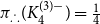 $\pi _{\boldsymbol{\therefore }}(K_4^{(3)-})=\frac {1}{4}$, solving a conjecture by Erdős and Sós. Despite substantial attention, the uniform Turán density is still only known for very few hypergraphs. In particular, the problem due to Erdős and Sós to determine $\pi _{\boldsymbol{\therefore }}(K_4^{(3)})$ remains wide open.
In this work, we determine the uniform Turán density of the $3$-graph on five vertices that is obtained from $K_4^{(3)-}$ by adding an additional vertex whose link forms a matching on the vertices of $K_4^{(3)-}$. Further, we point to two natural intermediate problems on the way to determining $\pi _{\boldsymbol{\therefore }}(K_4^{(3)})$, and solve the first of these.


EXCEPTIONAL PAIRS ON DEL PEZZO SURFACES AND SPACES OF COMPATIBLE FEIGIN-ODESSKII BRACKETS
- Part of
-
- Journal:
- Journal of the Institute of Mathematics of Jussieu / Volume 25 / Issue 1 / January 2026
- Published online by Cambridge University Press:
- 08 October 2025, pp. 339-373
- Print publication:
- January 2026
-
- Article
- Export citation
-
We prove that for every relatively prime pair of integers $(d,r)$ with $r>0$, there exists an exceptional pair $({\mathcal {O}},V)$ on any del Pezzo surface of degree $4$, such that V is a bundle of rank r and degree d. As an application, we prove that every Feigin-Odesskii Poisson bracket on a projective space can be included into a $5$-dimensional linear space of compatible Poisson brackets. We also construct new examples of linear spaces of compatible Feigin-Odesskii Poisson brackets of dimension $>5$, coming from del Pezzo surfaces of degree $>4$.
$>4$.


Quantitative quasi-invariance of Gaussian measures below the energy level for the 1D generalized nonlinear Schrödinger equation and application to global well-posedness
- Part of
-
- Journal:
- Proceedings of the Royal Society of Edinburgh. Section A: Mathematics , First View
- Published online by Cambridge University Press:
- 08 October 2025, pp. 1-33
-
- Article
-
- You have access
- Open access
- HTML
- Export citation
-
We consider the Schrödinger equation on the one dimensional torus with a general odd-power nonlinearity $p \geq 5$, which is known to be globally well-posed in the Sobolev space $H^\sigma(\mathbb{T})$, for every $\sigma \geq 1$, thanks to the conservation and finiteness of the energy. For regularities σ < 1, where this energy is infinite, we explore a globalization argument adapted to random initial data distributed according to the Gaussian measures µs, with covariance operator $(1-\Delta)^s$, for s in a range $(s_p,\frac{3}{2}]$. We combine a deterministic local Cauchy theory with the quasi-invariance of Gaussian measures µs, with additional Lq-bounds on the Radon-Nikodym derivatives, to prove that the Gaussian initial data generate almost surely global solutions. These Lq-bounds are obtained with respect to Gaussian measures accompanied by a cutoff on a renormalization of the energy; the main tools to prove them are the Boué-Dupuis variational formula and a Poincaré-Dulac normal form reduction. This approach is similar in spirit to Bourgain’s invariant argument [7] and to arecent work by Forlano-Tolomeo in [18].


DENOMINATORS IN LUSZTIG’S ASYMPTOTIC HECKE ALGEBRA VIA THE PLANCHEREL FORMULA
- Part of
-
- Journal:
- Journal of the Institute of Mathematics of Jussieu / Volume 25 / Issue 1 / January 2026
- Published online by Cambridge University Press:
- 08 October 2025, pp. 285-337
- Print publication:
- January 2026
-
- Article
-
- You have access
- Open access
- HTML
- Export citation
-
Let $W_{\mathrm {aff}}$ be an extended affine Weyl group, $\mathbf {H}$ be the corresponding affine Hecke algebra over the ring $\mathbb {C}[\mathbf {q}^{\frac {1}{2}}, \mathbf {q}^{-\frac {1}{2}}]$, and J be Lusztig’s asymptotic Hecke algebra, viewed as a based ring with basis $\{t_w\}$. Viewing J as a subalgebra of the $(\mathbf {q}^{-\frac {1}{2}})$-adic completion of $\mathbf {H}$ via Lusztig’s map $\phi $, we use Harish-Chandra’s Plancherel formula for p-adic groups to show that the coefficient of $T_x$ in $t_w$ is a rational function of $\mathbf {q}$, with denominator depending only on the two-sided cell containing w, and dividing a power of the Poincaré polynomial of the finite Weyl group. As an application, we conjecture that these denominators encode more detailed information about the failure of the Kazhdan-Lusztig classification at roots of the Poincaré polynomial than is currently known.
Along the way, we show that upon specializing $\mathbf {q}=q>1$, the map from J to the Harish-Chandra Schwartz algebra is injective. As an application of injectivity, we give a novel criterion for an Iwahori-spherical representation to have fixed vectors under a larger parahoric subgroup in terms of its Kazhdan-Lusztig parameter.


Saturation in random hypergraphs
- Part of
-
- Journal:
- Combinatorics, Probability and Computing / Volume 35 / Issue 1 / January 2026
- Published online by Cambridge University Press:
- 07 October 2025, pp. 40-58
-
- Article
-
- You have access
- Open access
- HTML
- Export citation
-
Let $K^r_n$ be the complete $r$-uniform hypergraph on $n$ vertices, that is, the hypergraph whose vertex set is $[n] \, :\! = \{1,2,\ldots ,n\}$ and whose edge set is $\binom {[n]}{r}$. We form $G^r(n,p)$ by retaining each edge of $K^r_n$ independently with probability $p$. An $r$-uniform hypergraph $H\subseteq G$ is $F$-saturated if $H$ does not contain any copy of $F$, but any missing edge of $H$ in $G$ creates a copy of $F$. Furthermore, we say that $H$ is weakly $F$-saturated in $G$ if $H$ does not contain any copy of $F$, but the missing edges of $H$ in $G$ can be added back one-by-one, in some order, such that every edge creates a new copy of $F$. The smallest number of edges in an $F$-saturated hypergraph in $G$ is denoted by ${\textit {sat}}(G,F)$, and in a weakly $F$-saturated hypergraph in $G$ by $\mathop {\mbox{$w$-${sat}$}}\! (G,F)$. In 2017, Korándi and Sudakov initiated the study of saturation in random graphs, showing that for constant $p$, with high probability ${\textit {sat}}(G(n,p),K_s)=(1+o(1))n\log _{\frac {1}{1-p}}n$, and $\mathop {\mbox{$w$-${sat}$}}\! (G(n,p),K_s)=\mathop {\mbox{$w$-${sat}$}}\! (K_n,K_s)$. Generalising their results, in this paper, we solve the saturation problem for random hypergraphs $G^r(n,p)$ for cliques $K_s^r$, for every $2\le r \lt s$ and constant $p$.
$p$.


The complexity of intersecting subproducts with subgroups in Cartesian powers
- Part of
-
- Journal:
- Glasgow Mathematical Journal , First View
- Published online by Cambridge University Press:
- 07 October 2025, pp. 1-7
-
- Article
-
- You have access
- Open access
- HTML
- Export citation
-
Given a finite abelian group $G$ and $t\in \mathbb{N}$, there are two natural types of subsets of the Cartesian power $G^t$; namely, Cartesian powers $S^t$ where $S$ is a subset of $G$ and (cosets of) subgroups $H$ of $G^t$. A basic question is whether two such sets intersect. In this paper, we show that this decision problem is NP-complete. Furthermore, for fixed $G$ and $S$, we give a complete classification: we determine conditions for when the problem is NP-complete and show that in all other cases the problem is solvable in polynomial time. These theorems play a key role in the classification of algebraic decision problems in finitely generated rings developed in later work of the author.


Characterization of some convex curves on the 3-sphere
- Part of
-
- Journal:
- Proceedings of the Edinburgh Mathematical Society / Volume 69 / Issue 2 / May 2026
- Published online by Cambridge University Press:
- 06 October 2025, pp. 421-441
-
- Article
- Export citation
-
In this paper, we provide a characterization for a class of convex curves on the 3-sphere. More precisely, using a theorem that represents a locally convex curve on the 3-sphere as a pair of curves in $\mathbb S^2$, one of which is locally convexand the other is an immersion, we are able of completely characterizing a class of convex curves on the 3-sphere.

The Procesi bundle over the Γ-fixed points of the Hilbert scheme of points in ℂ2
- Part of
-
- Journal:
- Proceedings of the Edinburgh Mathematical Society / Volume 69 / Issue 1 / February 2026
- Published online by Cambridge University Press:
- 06 October 2025, pp. 388-420
-
- Article
-
- You have access
- Open access
- HTML
- Export citation
-
For Γ a finite subgroup of $\mathrm{SL}_2(\mathbb{C})$ and $n \geq 1$, we study the fibres of the Procesi bundle over the Γ-fixed points of the Hilbert scheme of n points in the plane. For each irreducible component of this fixed point locus, our approach reduces the study of the fibres of the Procesi bundle, as an $(\mathfrak{S}_n \times \Gamma)$-module, to the study of the fibres of the Procesi bundle over an irreducible component of dimension zero in a smaller Hilbert scheme. When Γ is of type A, our main result shows, as a corollary, that the fibre of the Procesi bundle over the monomial ideal associated with a partition λ is induced, as an $(\mathfrak{S}_n \times \Gamma)$-module, from the fibre of the Procesi bundle over the monomial ideal associated with the core of λ. We give different proofs of this corollary in two edge cases using only representation theory and symmetric functions.


Cohomologies, deformations and abelian extensions of Lie super triple systems with superderivations
- Part of
-
- Journal:
- Glasgow Mathematical Journal , First View
- Published online by Cambridge University Press:
- 01 October 2025, pp. 1-22
-
- Article
- Export citation
Weighted Lipschitz shadowing and generalized weighted limit shadowing for infinite-dimensional systems
- Part of
-
- Journal:
- Proceedings of the Royal Society of Edinburgh. Section A: Mathematics , First View
- Published online by Cambridge University Press:
- 30 September 2025, pp. 1-39
-
- Article
- Export citation
-
In this paper, we show that for any nonautonomous discrete time dynamical system in a Banach space if its linear part has a dichotomy and the composition of a generalized Green function and the nonlinear term of the system has a weighted integrable Lipschitz constant then the system has the weighted Lipschitz shadowing property for a type of weighted pseudo orbits in the whole phase space. Additionally, if the generalized Green function is the Green function for the dichotomy and the evolution operator restricted to the stable subspace (resp. unstable subspace) tends to 0 in weight as time tends to $+\infty$ (resp. $-\infty$) then the system has the weighted generalized forward (resp. backward) limit shadowing property. By the same approach we prove that a C1 map with a compact hyperbolic invariant set has the weighted Lipschitz shadowing property and the generalized weighted limit shadowing property for weighted pseudo orbits in the hyperbolic set. We also give the parallel results for differential equations.


On the non-properness set of a local homeomorphism
- Part of
-
- Journal:
- Proceedings of the Royal Society of Edinburgh. Section A: Mathematics , First View
- Published online by Cambridge University Press:
- 30 September 2025, pp. 1-15
-
- Article
- Export citation
-
We prove that the non-properness set of a local homeomorphism $\mathbb R^n \to \mathbb R^n$ cannot be ambient homeomorphic to an affine subspace of dimension n − 2. This particularly provides a partial positive answer to a conjecture of Jelonek, that claims the global invertibility of polynomial local diffeomorphisms having non-properness set with codimension greater than 1. Our reasons to obtain this result lead us to some properties of the non-properness set when it has codimension 2, the heart of Jelonek’s conjecture. We also provide a global injectivity theorem related to this conjecture that turns out to generalize previous results of the literature.

Shrinking vs. expanding: the evolution of spatial support in degenerate Keller–Segel systems
- Part of
-
- Journal:
- Proceedings of the Royal Society of Edinburgh. Section A: Mathematics , First View
- Published online by Cambridge University Press:
- 30 September 2025, pp. 1-25
-
- Article
-
- You have access
- Open access
- HTML
- Export citation
-
We consider radially symmetric solutions of the degenerate Keller–Segel system
 \begin{align*}\begin{cases}\partial_t u=\nabla\cdot (u^{m-1}\nabla u - u\nabla v),\\0=\Delta v -\mu +u,\quad\mu =\frac{1}{|\Omega|}\int_\Omega u,\end{cases}\end{align*}
in balls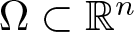 $\Omega\subset\mathbb R^n$, $n\ge 1$, where m > 1 is arbitrary. Our main result states that the initial evolution of the positivity set of u is essentially determined by the shape of the (nonnegative, radially symmetric, Hölder continuous) initial data u0 near the boundary of its support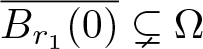 $\overline{B_{r_1}(0)}\subsetneq\Omega$: It shrinks for sufficiently flat and expands for sufficiently steep u0. More precisely, there exists an explicit constant $A_{\mathrm{crit}} \in (0, \infty)$ (depending only on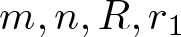 $m, n, R, r_1$ and $\int_\Omega u_0$) such that if $u_0(x)\le A(r_1-|x|)^\frac{1}{m-1}$ for all $|x|\in(r_0, r_1)$ and some $r_0\in(0,r_1)$ and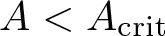 $A \lt A_{\mathrm{crit}}$ then there are T > 0 and ζ > 0 such that $\sup\{\, |x| \mid x \in \operatorname{supp} u(\cdot, t)\,\}\le r_1 -\zeta t$ for all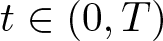 $t\in(0, T)$, while if $u_0(x)\ge A(r_1-|x|)^\frac{1}{m-1}$ for all $|x|\in(r_0, r_1)$ and some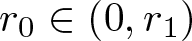 $r_0 \in (0, r_1)$ and $A \gt A_{\mathrm{crit}}$ then we can find T > 0 and ζ > 0 such that $\sup\{\, |x| \mid x \in \operatorname{supp} u(\cdot, t)\,\}\ge r_1 +\zeta t$ for all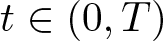 $t\in(0, T)$.


