Refine listing
Actions for selected content:
203 results in 14Mxx
Splicing braid varieties
- Part of
-
- Journal:
- Canadian Mathematical Communications / Volume 1 / 2026
- Published online by Cambridge University Press:
- 06 April 2026, e4
-
- Article
-
- You have access
- Open access
- HTML
- Export citation
-
For a positive braid $\beta \in \mathrm {Br}^{+}_{k}$, we consider the braid variety $X(\beta )$. We define a family of open sets $\mathcal {U}_{r, w}$ in $X(\beta )$, where $w \in S_k$ is a permutation and r is a positive integer no greater than the length of $\beta $. For fixed r, the sets $\mathcal {U}_{r, w}$ form an open cover of $X(\beta )$. We conjecture that $\mathcal {U}_{r,w}$ is given by the nonvanishing of some cluster variables in a single cluster for the cluster structure on $\mathbb {C}[X(\beta )]$ constructed in Casals et al. (2025, J. Amer. Math. Soc. 38, 369–479), Galashin et al. (2026, Invent. Math. 243, 1079–1127), and Galashin et al. (2022, Braid variety cluster structures, I: 3D plabic graphs) and that $\mathcal {U}_{r,w}$ admits a cluster structure given by freezing these variables. Moreover, we show that $\mathcal {U}_{r, w}$ is always isomorphic to the product of two braid varieties, and we conjecture that this isomorphism is quasi-cluster. In some important special cases, we are able to prove our conjectures.


Equivariant sheaves for classical groups acting on Grassmannians
- Part of
-
- Journal:
- Canadian Journal of Mathematics , First View
- Published online by Cambridge University Press:
- 24 March 2026, pp. 1-37
-
- Article
- Export citation
-
Let V be a finite-dimensional complex vector space. Assume that V is a direct sum of subspaces each of which is equipped with a nondegenerate symmetric or skew-symmetric bilinear form. In this article, we introduce a stratification of the Grassmannian $\text {Gr}_k(V)$ related to the action of the appropriate product of orthogonal and symplectic groups, and we study the topology of this stratification. The main results involve sheaves with coefficients in a field of characteristic other than $2$. We prove that there are “enough” parity sheaves, and that the hypercohomology of each parity sheaf also satisfies a parity-vanishing property. This situation arises in the following context: let x be a nilpotent element in the Lie algebra of either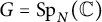 $G = \text {Sp}_N(\mathbb {C})$ or $G = \text {SO}_N(\mathbb {C})$, and let $V = \ker x \subset \mathbb {C}^N$. Our stratification of $\text {Gr}_k(V)$ is preserved by the centralizer $G^x$, and we expect our results to have applications in Springer theory for classical groups.


q-bic threefolds and their surface of lines
- Part of
-
- Journal:
- Nagoya Mathematical Journal / Volume 261 / 2026
- Published online by Cambridge University Press:
- 03 March 2026, e21
-
- Article
-
- You have access
- Open access
- HTML
- Export citation
-
For any power q of the positive ground field characteristic, a smooth q-bic threefold—the Fermat threefold of degree $q+1$, for example—has a smooth surface S of lines which behaves like the Fano surface of a smooth cubic threefold. I develop projective, moduli-theoretic, and degeneration techniques to study the geometry of S. Using, in addition, the modular representation theory of the finite unitary group and the geometric theory of filtrations, I compute the cohomology of the structure sheaf of S when q is prime.

Connections and symplectic forms on the cotangent bundle of flag manifolds
- Part of
-
- Journal:
- Canadian Journal of Mathematics , First View
- Published online by Cambridge University Press:
- 16 February 2026, pp. 1-21
-
- Article
-
- You have access
- HTML
- Export citation
Degeneracy locus formulas for amenable Weyl group elements
- Part of
-
- Journal:
- Nagoya Mathematical Journal / Volume 261 / 2026
- Published online by Cambridge University Press:
- 22 January 2026, e13
-
- Article
-
- You have access
- Open access
- HTML
- Export citation
NORMAL SPLIT DIVISORS IN RATIONAL HOMOGENEOUS SPACES
- Part of
-
- Journal:
- Nagoya Mathematical Journal / Volume 261 / 2026
- Published online by Cambridge University Press:
- 12 January 2026, e11
-
- Article
-
- You have access
- Open access
- HTML
- Export citation
Čech cohomology of infinite projective spaces, flag manifolds, and related spaces
- Part of
-
- Journal:
- Canadian Mathematical Bulletin , First View
- Published online by Cambridge University Press:
- 23 December 2025, pp. 1-10
-
- Article
-
- You have access
- Open access
- HTML
- Export citation
On the rationality problem for low degree hypersurfaces
- Part of
-
- Journal:
- Forum of Mathematics, Pi / Volume 13 / 2025
- Published online by Cambridge University Press:
- 22 December 2025, e25
-
- Article
-
- You have access
- Open access
- HTML
- Export citation
-
We show that a very general hypersurface of degree $d \geq 4$ and dimension $N \leq (d+1)2^{d-4}$ over a field of characteristic $\neq 2$ does not admit a decomposition of the diagonal; hence, it is neither stably nor retract rational, nor $\mathbb {A}^1$-connected. Similar results hold in characteristic $2$ under a slightly weaker degree bound. This improves earlier results in [44] and [33].


Toric arc schemes and q-enumeration of lattice points
- Part of
-
- Journal:
- Proceedings of the Edinburgh Mathematical Society , First View
- Published online by Cambridge University Press:
- 18 December 2025, pp. 1-23
-
- Article
-
- You have access
- Open access
- HTML
- Export citation
-
We introduce a natural weighted enumeration of lattice points in a polytope, and give a Brion-type formula for the corresponding generating function. The weighting has combinatorial significance, and its generating function may be viewed as a generalization of the Rogers–Szegő polynomials. It also arises from the geometry of the toric arc scheme associated to the normal fan of the polytope. We show that the asymptotic behaviour of thecoefficients at $q=1$ is Gaussian.

Borel-type presentation of the torus-equivariant quantum K-ring of flag manifolds of type C
- Part of
-
- Journal:
- Forum of Mathematics, Sigma / Volume 13 / 2025
- Published online by Cambridge University Press:
- 10 December 2025, e198
-
- Article
-
- You have access
- Open access
- HTML
- Export citation
Free fermionic probability theory and k-theoretic schubert calculus
- Part of
-
- Journal:
- Forum of Mathematics, Sigma / Volume 13 / 2025
- Published online by Cambridge University Press:
- 09 December 2025, e197
-
- Article
-
- You have access
- Open access
- HTML
- Export citation
Root, flow and order polytopes with connections to toric geometry
- Part of
-
- Journal:
- Forum of Mathematics, Sigma / Volume 13 / 2025
- Published online by Cambridge University Press:
- 26 November 2025, e194
-
- Article
-
- You have access
- Open access
- HTML
- Export citation
-
In this paper, we study the class of polytopes which can be obtained by taking the convex hull of some subset of the points $\{e_i-e_j \ \vert \ i \neq j\} \cup \{\pm e_i\}$ in $\mathbb {R}^n$, where $e_1,\dots ,e_n$ is the standard basis of $\mathbb {R}^n$. Such a polytope can be encoded by a quiver Q with vertices $V \subseteq \{{\upsilon }_1,\dots ,{\upsilon }_n\} \cup \{\star \}$, where each edge ${\upsilon }_j\to {\upsilon }_i$ or $\star \to {\upsilon }_i$ or ${\upsilon }_i\to \star $ gives rise to the point $e_i-e_j$ or $e_i$ or $-e_i$, respectively; we denote the corresponding polytope as $\operatorname {Root}(Q)$. These polytopes have been studied extensively under names such as edge polytope and root polytope. We show that if the quiver Q is strongly-connected, then the root polytope $\operatorname {Root}(Q)$ is reflexive and terminal; we moreover give a combinatorial description of the facets of $\operatorname {Root}(Q)$. We also show that if Q is planar, then $\operatorname {Root}(Q)$ is (integrally equivalent to) the polar dual of the flow polytope of the planar dual quiver $Q^{\vee }$. Finally, we consider the case that Q comes from the Hasse diagram of a finite ranked poset P and show in this case that $\operatorname {Root}(Q)$ is polar dual to (a translation of) a marked order polytope. We then go on to study the toric variety $Y(\mathcal {F}_Q)$ associated to the face fan $\mathcal {F}_Q$ of $\operatorname {Root}(Q)$. If Q comes from a ranked poset P, we give a combinatorial description of the Picard group of $Y(\mathcal {F}_Q)$, in terms of a new canonical ranked extension of P, and we show that $Y(\mathcal {F}_Q)$ is a small partial desingularisation of the Hibi projective toric variety $Y_{\mathcal {O}(P)}$ of the order polytope $\mathcal {O}(P)$. We show that $Y(\mathcal {F}_Q)$ has a small crepant toric resolution of singularities $Y(\widehat {\mathcal {F}}_Q)$ and, as a consequence that the Hibi toric variety $Y_{\mathcal {O}(P)}$ has a small resolution of singularities for any ranked poset P. These results have applications to mirror symmetry [61].


Initial degenerations of flag varieties
- Part of
-
- Journal:
- Mathematical Proceedings of the Cambridge Philosophical Society / Volume 180 / Issue 2 / March 2026
- Published online by Cambridge University Press:
- 10 November 2025, pp. 403-431
- Print publication:
- March 2026
-
- Article
- Export citation
-
We prove that the initial degenerations of the flag variety admit closed immersions into finite inverse limits of flag matroid strata, where the diagrams are derived from matroidal subdivisions of a suitable flag matroid polytope. As an application, we prove that the initial degenerations of $\mathrm{F}\ell^{\circ}(n)$–the open subvariety of the complete flag variety $\mathrm{F}\ell(n)$ consisting of flags in general position—are smooth and irreducible when $n\leq 4$. We also study the Chow quotient of $\mathrm{F}\ell(n)$ by the diagonal torus of $\textrm{PGL}(n)$ and show that, for $n=4$, this is a log crepant resolution of its log canonical model.


The geometric Satake equivalence for integral motives
- Part of
-
- Journal:
- Compositio Mathematica / Volume 161 / Issue 11 / November 2025
- Published online by Cambridge University Press:
- 17 December 2025, pp. 2755-2851
- Print publication:
- November 2025
-
- Article
-
- You have access
- Open access
- HTML
- Export citation
Some algebraic properties of ASM varieties
- Part of
-
- Journal:
- Glasgow Mathematical Journal , First View
- Published online by Cambridge University Press:
- 22 October 2025, pp. 1-20
-
- Article
-
- You have access
- Open access
- HTML
- Export citation
Vanishing of Schubert coefficients via the effective Hilbert nullstellensatz
- Part of
-
- Journal:
- Forum of Mathematics, Sigma / Volume 13 / 2025
- Published online by Cambridge University Press:
- 01 October 2025, e162
-
- Article
-
- You have access
- Open access
- HTML
- Export citation
-
Schubert Vanishing is a problem of deciding whether Schubert coefficients are zero. Until this work it was open whether this problem is in the polynomial hierarchy ${{\mathsf {PH}}}$. We prove this problem is in ${{\mathsf {AM}}} \cap {{\mathsf {coAM}}}$ assuming the Generalized Riemann Hypothesis ( $\mathrm{GRH}$), that is, relatively low in ${{\mathsf {PH}}}$. Our approach uses Purbhoo’s criterion [57] to construct explicit polynomial systems for the problem. The result follows from a reduction to Parametric Hilbert’s Nullstellensatz, recently analyzed in [2]. We extend our results to all classical types.


Foldable fans, cscK surfaces and local K-moduli
- Part of
-
- Article
-
- You have access
- Open access
- HTML
- Export citation
EFFECTIVE BOUND FOR SINGULARITIES ON TORIC FIBRATIONS
- Part of
-
- Journal:
- Nagoya Mathematical Journal / Volume 260 / December 2025
- Published online by Cambridge University Press:
- 17 September 2025, pp. 779-795
-
- Article
-
- You have access
- HTML
- Export citation
-
It was conjectured by McKernan and Shokurov that for any Fano contraction $f:X \to Z$ of relative dimension r with X being $\epsilon $-lc, there is a positive $\delta $ depending only on $r,\epsilon $ such that Z is $\delta $-lc and the multiplicity of the fiber of f over a codimension one point of Z is bounded from above by $1/\delta $. Recently, this conjecture was confirmed by Birkar [9]. In this article, we give an explicit value for $\delta $ in terms of $\epsilon ,r$ in the toric case, which belongs to $O(\epsilon ^{2^r})$ as $\epsilon \rightarrow 0$. The order $O(\epsilon ^{2^r})$ is optimal in some sense.


Quantum K theory of Grassmannians, Wilson line operators and Schur bundles
- Part of
-
- Journal:
- Forum of Mathematics, Sigma / Volume 13 / 2025
- Published online by Cambridge University Press:
- 04 September 2025, e140
-
- Article
-
- You have access
- Open access
- HTML
- Export citation
-
We prove a ‘Whitney’ presentation, and a ‘Coulomb branch’ presentation, for the torus equivariant quantum K theory of the Grassmann manifold $\mathrm {Gr}(k;n)$, inspired from physics, and stated in an earlier paper. The first presentation is obtained by quantum deforming the product of the Hirzebruch $\lambda _y$ classes of the tautological bundles. In physics, the $\lambda _y$ classes arise as certain Wilson line operators. The second presentation is obtained from the Coulomb branch equations involving the partial derivatives of a twisted superpotential from supersymmetric gauge theory. This is closest to a presentation obtained by Gorbounov and Korff, utilizing integrable systems techniques. Algebraically, we relate the Coulomb and Whitney presentations utilizing transition matrices from the (equivariant) Grothendieck polynomials to the (equivariant) complete homogeneous symmetric polynomials. Along the way, we calculate K-theoretic Gromov-Witten invariants of wedge powers of the tautological bundles on $\mathrm {Gr}(k;n)$, using the ‘quantum=classical’ statement.


Cycles relations in the affine Grassmannian and applications to the Breuil–Mézard conjecture for G-crystalline representations
- Part of
-
- Journal:
- Compositio Mathematica / Volume 161 / Issue 9 / September 2025
- Published online by Cambridge University Press:
- 03 November 2025, pp. 2320-2372
- Print publication:
- September 2025
-
- Article
-
- You have access
- Open access
- HTML
- Export citation
-
For a split reductive group G we realise identities in the Grothendieck group of $\widehat{G}$-representations in terms of cycle relations between certain closed subschemes inside the affine Grassmannian. These closed subschemes are obtained as a degeneration of e-fold products of flag varieties and, under a bound on the Hodge type, we relate the geometry of these degenerations to that of moduli spaces of G-valued crystalline representations of $\operatorname{Gal}(\overline{K}/K)$ for $K/\mathbb{Q}_p$ a finite extension with ramification degree e. By transferring the aforementioned cycle relations to these moduli spaces we deduce one direction of the Breuil–Mézard conjecture for G-valued crystalline representations with small Hodge type.


