Refine search
Actions for selected content:
26063 results in Abstract analysis
Homological full-and-faithfulness of comodule inclusion and contramodule forgetful functors
- Part of
-
- Journal:
- Glasgow Mathematical Journal / Volume 68 / Issue 1 / January 2026
- Published online by Cambridge University Press:
- 21 May 2025, pp. 86-119
-
- Article
-
- You have access
- Open access
- HTML
- Export citation
-
In this paper, we consider a conilpotent coalgebra $C$ over a field $k$. Let $\Upsilon :\ C{{-\mathsf{Comod}}}\longrightarrow C^*{{-\mathsf{Mod}}}$ be the natural functor of inclusion of the category of $C$-comodules into the category of $C^*$-modules, and let $\Theta :\ C{{-\mathsf{Contra}}}\longrightarrow C^*{{-\mathsf{Mod}}}$ be the natural forgetful functor. We prove that the functor $\Upsilon$ induces a fully faithful triangulated functor on bounded (below) derived categories if and only if the functor $\Theta$ induces a fully faithful triangulated functor on bounded (above) derived categories, and if and only if the $k$-vector space $\textrm {Ext}_C^n(k,k)$ is finite-dimensional for all $n\ge 0$. We call such coalgebras “weakly finitely Koszul”.


POSITIVE DENSITY FOR CONSECUTIVE RUNS OF SUMS OF TWO SQUARES
- Part of
-
- Journal:
- Journal of the Institute of Mathematics of Jussieu / Volume 24 / Issue 5 / September 2025
- Published online by Cambridge University Press:
- 21 May 2025, pp. 1995-2046
- Print publication:
- September 2025
-
- Article
-
- You have access
- Open access
- HTML
- Export citation
-
We study the distribution of consecutive sums of two squares in arithmetic progressions. We show that for any odd squarefree modulus q, any two reduced congruence classes $a_1$ and $a_2$ mod q, and any $r_1,r_2 \ge 1$, a positive density of sums of two squares begin a chain of $r_1$ consecutive sums of two squares, all of which are $a_1$ mod q, followed immediately by a chain of $r_2$ consecutive sums of two squares, all of which are $a_2$ mod q. This is an analog of the result of Maynard for the sequence of primes, showing that for any reduced congruence class a mod q and for any $r \ge 1$, a positive density of primes begin a sequence of r consecutive primes, all of which are a mod q.


Short proof of the hypergraph container theorem
- Part of
-
- Journal:
- Combinatorics, Probability and Computing / Volume 34 / Issue 5 / September 2025
- Published online by Cambridge University Press:
- 16 May 2025, pp. 621-624
-
- Article
- Export citation
Cartesian closed varieties II: links to algebra and self-similarity
- Part of
-
- Journal:
- Proceedings of the Royal Society of Edinburgh. Section A: Mathematics , First View
- Published online by Cambridge University Press:
- 14 May 2025, pp. 1-45
-
- Article
- Export citation
-
This article is the second in a series investigating cartesian closed varieties. In first of these, we showed that every non-degenerate finitary cartesian variety is a variety of sets equipped with an action by a Boolean algebra B and a monoid M which interact to form what we call a matched pair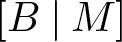 ${\left[\smash{{B} \mathbin{\mid}{M} }\right]}$. In this article, we show that such pairs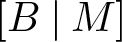 ${\left[\smash{{B} \mathbin{\mid}{M} }\right]}$ are equivalent to Boolean restriction monoids and also to ample source-étale topological categories; these are generalizations of the Boolean inverse monoids and ample étale topological groupoids used to encode self-similar structures such as Cuntz and Cuntz–Krieger $C^\ast$-algebras, Leavitt path algebras, and the $C^\ast$-algebras associated with self-similar group actions. We explain and illustrate these links and begin the programme of understanding how topological and algebraic properties of such groupoids can be understood from the logical perspective of the associated varieties.


Automorphism groups and signatures of smooth septic curves
- Part of
-
- Journal:
- Glasgow Mathematical Journal / Volume 68 / Issue 1 / January 2026
- Published online by Cambridge University Press:
- 13 May 2025, pp. 64-85
-
- Article
- Export citation
-
We determine the list of automorphism groups for smooth plane septic curves over an algebraically closed field $K$ of characteristic $0$, as well as their signatures. For each group, we also provide a geometrically complete family over $K$, which consists of a generic defining polynomial equation describing each locus up to $K$-projective equivalence. Notably, we present two distinct examples of what we refer to as final strata of smooth plane curves.


The Formanek-Procesi group with base a right-angled Artin group: Lie algebra and residual nilpotence
- Part of
-
- Journal:
- Glasgow Mathematical Journal / Volume 68 / Issue 1 / January 2026
- Published online by Cambridge University Press:
- 13 May 2025, pp. 42-63
-
- Article
-
- You have access
- Open access
- HTML
- Export citation
-
In the present work, we investigate the Lie algebra of the Formanek-Procesi group $\textrm {FP}(A_{\Gamma })$ with base group $A_{\Gamma }$ a right-angled Artin group. We show that the Lie algebra $\textrm {gr}(\textrm {FP}(A_{\Gamma }))$ has a presentation that is dictated by the group presentation. Moreover, we show that if the base group $G$ is a finitely generated residually finite $p$-group, then $\textrm { FP}(G)$ is residually nilpotent. We also show that $\textrm {FP}(A_{\Gamma })$ is a residually torsion-free nilpotent group.


CONTRACTING ENDOMORPHISMS OF VALUED FIELDS
- Part of
-
- Journal:
- Journal of the Institute of Mathematics of Jussieu / Volume 24 / Issue 5 / September 2025
- Published online by Cambridge University Press:
- 08 May 2025, pp. 2047-2106
- Print publication:
- September 2025
-
- Article
-
- You have access
- Open access
- HTML
- Export citation
-
We prove that the class of separably algebraically closed valued fields equipped with a distinguished Frobenius endomorphism $x \mapsto x^q$ is decidable, uniformly in q. The result is a simultaneous generalization of the work of Chatzidakis and Hrushovski (in the case of the trivial valuation) and the work of the first author and Hrushovski (in the case where the fields are algebraically closed).
The logical setting for the proof is a model completeness result for valued fields equipped with an endomorphism $\sigma $ which is locally infinitely contracting and fails to be onto. Namely, we prove the existence of a model complete theory $\widetilde {\mathrm {VFE}}$ amalgamating the theories $\mathrm {SCFE}$ and $\widetilde {\mathrm {VFA}}$ introduced in [5] and [11], respectively. In characteristic zero, we also prove that $\widetilde {\mathrm {VFE}}$ is NTP $_2$ and classify the stationary types: they are precisely those orthogonal to the fixed field and the value group.


FONCTIONS ADDITIVES EN BASE DE CANTOR LE LONG DES NOMBRES PREMIERS
- Part of
-
- Journal:
- Journal of the Institute of Mathematics of Jussieu / Volume 24 / Issue 5 / September 2025
- Published online by Cambridge University Press:
- 06 May 2025, pp. 1807-1865
- Print publication:
- September 2025
-
- Article
- Export citation
-
Étant donnée une suite $A = (a_n)_{n\geqslant 0}$ d’entiers naturels tous au moins égaux à 2, on pose $q_0 = 1$ et, pour tout entier naturel n, $q_{n+1} = a_n q_n$. Tout nombre entier naturel $n\geqslant 1$ admet une unique représentation dans la base A, dite de Cantor, de la forme Dans cet article, nous évaluons la somme
 $$ \begin{align*} m = \sum_{j\geqslant 0}\varepsilon_j(m)q_j\quad \text{avec} \quad 0\leqslant \varepsilon_j(m) < a_j = \frac{q_{j+1}}{q_j}. \end{align*} $$où
 $$ \begin{align*} S = \sum_{n \leqslant x}\Lambda(n) f(n) \end{align*} $$ $\Lambda $ est la fonction de von Mangoldt et f une fonction fortement multiplicative en base A. L’estimation des sommes de type I et II associées repose sur le bon contrôle de transformées de Fourier discrètes de fonctions construites à partir de f par décalage dans la numération en base A. Cette approche pouvant échouer si la suite $(a_n)_{n\geqslant 0}$ est trop irrégulière, nous introduisons la notion de base de Cantor tempérée et obtenons dans ce cadre une majoration générale de la somme S.
Nous étudions plusieurs exemples dans la base $A = (j+2)_{j\geqslant 0}$, dite factorielle. En particulier, si $s_A$ désigne la fonction somme de chiffres dans cette base et p parcourt la suite des nombres premiers, nous montrons que la suite $(s_A(p))_{p\in \mathcal {P}}$ est bien répartie dans les progressions arithmétiques, et que la suite $(\alpha s_A(p))_{p\in \mathcal {P}}$ est équirépartie modulo $1$ pour tout nombre irrationnel $\alpha $.


On hypersurfaces of $\mathbb{S}^2\times \mathbb{S}^2$ and $\mathbb{H}^2\times \mathbb{H}^2$ with recurrent Ricci tensor
- Part of
-
- Journal:
- Glasgow Mathematical Journal / Volume 68 / Issue 1 / January 2026
- Published online by Cambridge University Press:
- 30 April 2025, pp. 21-41
-
- Article
- Export citation
-
In this paper, we investigate hypersurfaces of $\mathbb{S}^2\times \mathbb{S}^2$ and $\mathbb{H}^2\times \mathbb{H}^2$ with recurrent Ricci tensor. As the main result, we prove that a hypersurface in $\mathbb{S}^2\times \mathbb{S}^2$ (resp. $\mathbb{H}^2\times \mathbb{H}^2$) with recurrent Ricci tensor is either an open part of $\Gamma \times \mathbb{S}^2$ (resp. $\Gamma \times \mathbb{H}^2$) for a curve $\Gamma$ in $\mathbb{S}^2$ (resp. $\mathbb{H}^2$), or a hypersurface with constant sectional curvature. The latter has been classified by H. Li, L. Vrancken, X. Wang, and Z. Yao very recently.


Strongly reversible classes in SL(n, ℂ)
- Part of
-
- Journal:
- Proceedings of the Edinburgh Mathematical Society / Volume 68 / Issue 4 / November 2025
- Published online by Cambridge University Press:
- 30 April 2025, pp. 1137-1168
-
- Article
- Export citation
-
An element of a group is called strongly reversible or strongly real if it can be expressed as a product of two involutions. We provide necessary and sufficient conditions for an element of $\mathrm{SL}(n,\mathbb{C})$ to be a product of two involutions. In particular, we classify the strongly reversible conjugacy classes in $\mathrm{SL}(n,\mathbb{C})$.
Colouring random subgraphs
- Part of
-
- Journal:
- Combinatorics, Probability and Computing / Volume 34 / Issue 4 / July 2025
- Published online by Cambridge University Press:
- 28 April 2025, pp. 585-595
-
- Article
- Export citation
-
We study several basic problems about colouring the $p$-random subgraph $G_p$ of an arbitrary graph $G$, focusing primarily on the chromatic number and colouring number of $G_p$. In particular, we show that there exist infinitely many $k$-regular graphs $G$ for which the colouring number (i.e., degeneracy) of $G_{1/2}$ is at most $k/3 + o(k)$ with high probability, thus disproving the natural prediction that such random graphs must have colouring number at least $k/2 - o(k)$.


Non-existence theorems for quasilinear elliptic equations with weights
- Part of
-
- Journal:
- Proceedings of the Royal Society of Edinburgh. Section A: Mathematics , First View
- Published online by Cambridge University Press:
- 28 April 2025, pp. 1-33
-
- Article
- Export citation
-
In this article, we deal with non-existence results, i.e., Liouville type results, for positive radial solutions of quasilinear elliptic equations with weights both in the entire $\mathbb R^N$ and in a ball, in the latter case under Dirichlet boundary conditions. The presence of weights, possibly singular or degenerate, makes the study fairly delicate. The proofs use a Pohozaev type identity combined with an accurate qualitative analysis of solutions. In the last part of the article, a non-existence theorem is proved for a Dirichlet problem with a convection term.

On Fock covariance for product systems and the reduced Hao–Ng isomorphism problem by discrete actions
- Part of
-
- Journal:
- Proceedings of the Royal Society of Edinburgh. Section A: Mathematics , First View
- Published online by Cambridge University Press:
- 28 April 2025, pp. 1-53
-
- Article
-
- You have access
- Open access
- HTML
- Export citation
Integral constraints in multiple scales problems with a slowly varying microstructure
- Part of
-
- Journal:
- European Journal of Applied Mathematics / Volume 37 / Issue 2 / April 2026
- Published online by Cambridge University Press:
- 25 April 2025, pp. 449-469
-
- Article
-
- You have access
- Open access
- HTML
- Export citation
MOCK PLECTIC POINTS
-
- Journal:
- Journal of the Institute of Mathematics of Jussieu / Volume 24 / Issue 5 / September 2025
- Published online by Cambridge University Press:
- 24 April 2025, pp. 2107-2131
- Print publication:
- September 2025
-
- Article
-
- You have access
- Open access
- HTML
- Export citation
-
A p-arithmetic subgroup of $\mathbf {SL}_2(\mathbb {Q})$ like the Ihara group $\Gamma := \mathbf {SL}_2(\mathbb {Z}[1/p])$ acts by Möbius transformations on the Poincaré upper half plane $\mathcal H$ and on Drinfeld’s p-adic upper half plane ${\mathcal H_p := \mathbb {P}_1(\mathbb {C}_p)-\mathbb {P}_1(\mathbb {Q}_p)}$. The diagonal action of $\Gamma $ on the product is discrete, and the quotient $\Gamma \backslash (\mathcal H_p\times \mathcal H)$ can be envisaged as a ‘mock Hilbert modular surface’. According to a striking prediction of Neková $\check {\text {r}}$ and Scholl, the CM points on genuine Hilbert modular surfaces should give rise to ‘plectic Heegner points’ that encode nontrivial regulators attached, notably, to elliptic curves of rank two over real quadratic fields. This article develops the analogy between Hilbert modular surfaces and their mock counterparts, with the aim of transposing the plectic philosophy to the mock Hilbert setting, where the analogous plectic invariants are expected to lie in the alternating square of the Mordell–Weil group of certain elliptic curves of rank two over $\mathbb {Q}$.


On the long-time asymptotics of the modified Camassa–Holm equation with step-like initial data
- Part of
-
- Journal:
- European Journal of Applied Mathematics / Volume 37 / Issue 2 / April 2026
- Published online by Cambridge University Press:
- 23 April 2025, pp. 405-448
-
- Article
-
- You have access
- Open access
- HTML
- Export citation
-
We study the long-time asymptotics for the solution of the modified Camassa–Holm (mCH) equation with step-like initial data.
where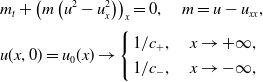 \begin{align*} &m_{t}+\left (m\left (u^{2}-u_{x}^{2}\right )\right )_{x}=0, \quad m=u-u_{xx}, \\[3pt] & {u(x,0)=u_0(x)\to \left \{ \begin{array}{l@{\quad}l} 1/c_+, &\ x\to +\infty, \\[3pt] 1/c_-, &\ x\to -\infty, \end{array}\right .} \end{align*} $c_+$ and $c_-$ are two positive constants. It is shown that the solution of the step-like initial problem can be characterised via the solution of a matrix Riemann–Hilbert (RH) problem in the new scale $(y,t)$. A double coordinate $(\xi, c)$ with $c=c_+/c_-$ is adopted to divide the half-plane $\{ (\xi, c)\,:\, \xi \in \mathbb{R}, \ c\gt 0, \ \xi =y/t\}$ into four asymptotic regions. Further applying the Deift–Zhou steepest descent method, we derive the long-time asymptotic expansions of the solution $u(y,t)$ in different space-time regions with appropriate g-functions. The corresponding leading asymptotic approximations are given with the slow/fast decay step-like background wave in genus-0 regions and elliptic waves in genus-2 regions. The second term of the asymptotics is characterised by the Airy function or parabolic cylinder model. Their residual error order is $\mathcal{O}(t^{-2})$ or $\mathcal{O}(t^{-1})$, respectively.


Global dynamics for the generalised chemotaxis-Navier–Stokes system in $\mathbb{R}^3$
- Part of
-
- Journal:
- European Journal of Applied Mathematics / Volume 37 / Issue 2 / April 2026
- Published online by Cambridge University Press:
- 22 April 2025, pp. 367-404
-
- Article
-
- You have access
- Open access
- HTML
- Export citation
-
We consider the chemotaxis-Navier–Stokes system with generalised fluid dissipation in $\mathbb{R}^3$:which models the motion of swimming bacteria in water flows. First, we prove blow-up criteria of strong solutions to the Cauchy problem, including the Prodi-Serrin-type criterion for
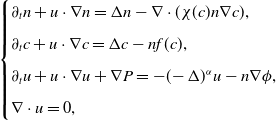 \begin{eqnarray*} \begin{cases} \partial _t n+u\cdot \nabla n=\Delta n- \nabla \cdot (\chi (c)n \nabla c),\\[5pt] \partial _t c+u \cdot \nabla c=\Delta c-nf(c),\\[5pt] \partial _t u +u \cdot \nabla u+\nabla P=-(\!-\Delta )^\alpha u-n\nabla \phi, \\[5pt] \nabla \cdot u=0, \end{cases} \end{eqnarray*} $\alpha \gt \frac {3}{4}$ and the Beir $\tilde {\textrm {a}}$o da Veiga-type criterion for $\alpha \gt \frac {1}{2}$. Then, we verify the global existence and uniqueness of strong solutions for arbitrarily large initial fluid velocity and bacteria density for $\alpha \geq \frac {5}{4}$. Furthermore, in the scenario of $\frac {3}{4}\lt \alpha \lt \frac {5}{4}$, we establish uniform regularity estimates and optimal time-decay rates of global solutions if only the $L^2$-norm of initial data is small. To our knowledge, this work provides the first result concerning the global existence and large-time behaviour of strong solutions for the chemotaxis-Navier–Stokes equations with possibly large oscillations.


Diagrammatics for the smallest quantum coideal and Jones–Wenzl projectors
- Part of
-
- Journal:
- Glasgow Mathematical Journal / Volume 68 / Issue 1 / January 2026
- Published online by Cambridge University Press:
- 22 April 2025, pp. 1-20
-
- Article
- Export citation
-
We describe algebraically, diagrammatically, and in terms of weight vectors, the restriction of tensor powers of the standard representation of quantum $\mathfrak {sl}_2$ to a coideal subalgebra. We realize the category as a module category over the monoidal category of type $\pm 1$ representations in terms of string diagrams and via generators and relations. The idempotents projecting onto the quantized eigenspaces are described as type $B/D$ analogues of Jones–Wenzl projectors. As an application, we introduce and give recursive formulas for analogues of $\Theta$-networks.


Homogenised models of nutrient transport in a fibrous bioreactor scaffold
- Part of
-
- Journal:
- European Journal of Applied Mathematics / Volume 37 / Issue 2 / April 2026
- Published online by Cambridge University Press:
- 21 April 2025, pp. 339-366
-
- Article
-
- You have access
- Open access
- HTML
- Export citation
On an open problem of value sharing and differential equations
- Part of
-
- Journal:
- Proceedings of the Edinburgh Mathematical Society / Volume 68 / Issue 4 / November 2025
- Published online by Cambridge University Press:
- 16 April 2025, pp. 1110-1136
-
- Article
- Export citation
-
Let f be a non-constant meromorphic function. We define its linear differential polynomial $ L_k[f] $ byIn this paper, we solve an open problem posed by Li [J. Math. Anal. Appl. 310 (2005) 412-423] in connection with the problem of sharing a set by entire functions f and their linear differential polynomials
 \begin{equation*}L_k[f]=\displaystyle b_{-1}+\sum_{j=0}^{k}b_jf^{(j)}, \text{where}\; b_j (j=0, 1, 2, \ldots, k) \; \text{are constants with}\; b_k\neq 0.\end{equation*} $ L_k[f] $. Furthermore, we study the Fermat-type functional equations of the form $ f^n+g^n=1 $ to find the meromorphic solutions (f, g) which enable us to answer the question of Li completely. This settles the long-standing open problem of Li.


