Refine search
Actions for selected content:
26063 results in Abstract analysis
Hardy spaces and Riesz transforms on a Lie group of exponential growth
- Part of
-
- Journal:
- Proceedings of the Edinburgh Mathematical Society / Volume 68 / Issue 3 / August 2025
- Published online by Cambridge University Press:
- 17 February 2025, pp. 731-762
-
- Article
- Export citation
-
Let G be the Lie group ${\mathbb{R}}^2\rtimes {\mathbb{R}}^+$ endowed with the Riemannian symmetric space structure. Take a distinguished basis $X_0,\, X_1,\,X_2$ of left-invariant vector fields of the Lie algebra of G, and consider the Laplacian $\Delta=-\sum_{i=0}^2X_i^2$ and the first-order Riesz transforms $\mathcal R_i=X_i\Delta^{-1/2}$, $i=0,1,2$. We first show that the atomic Hardy space H1 in G introduced by the authors in a previous paper does not admit a characterization in terms of the Riesz transforms $\mathcal R_i$. It is also proved that two of these Riesz transforms are bounded from H1 to H1.


Absolute dilations of UCP self-adjoint Fourier multipliers: the nonunimodular case
- Part of
-
- Journal:
- Glasgow Mathematical Journal / Volume 67 / Issue 3 / September 2025
- Published online by Cambridge University Press:
- 14 February 2025, pp. 307-324
-
- Article
- Export citation
-
Let $\varphi$ be a normal semifinite faithful weight on a von Neumann algebra $A$, let $(\sigma ^\varphi _r)_{r\in {\mathbb R}}$ denote the modular automorphism group of $\varphi$, and let $T\colon A\to A$ be a linear map. We say that $T$ admits an absolute dilation if there exists another von Neumann algebra $M$ equipped with a normal semifinite faithful weight $\psi$, a $w^*$-continuous, unital and weight-preserving $*$-homomorphism $J\colon A\to M$ such that $\sigma ^\psi \circ J=J\circ \sigma ^\varphi$, as well as a weight-preserving $*$-automorphism $U\colon M\to M$ such that $T^k={\mathbb {E}}_JU^kJ$ for all integer $k\geq 0$, where $ {\mathbb {E}}_J\colon M\to A$ is the conditional expectation associated with $J$. Given any locally compact group $G$ and any real valued function $u\in C_b(G)$, we prove that if $u$ induces a unital completely positive Fourier multiplier $M_u\colon VN(G) \to VN(G)$, then $M_u$ admits an absolute dilation. Here, $VN(G)$ is equipped with its Plancherel weight $\varphi _G$. This result had been settled by the first named author in the case when $G$ is unimodular so the salient point in this paper is that $G$ may be nonunimodular, and hence, $\varphi _G$ may not be a trace. The absolute dilation of $M_u$ implies that for any $1\lt p\lt \infty$, the $L^p$-realization of $M_u$ can be dilated into an isometry acting on a noncommutative $L^p$-space. We further prove that if $u$ is valued in $[0,1]$, then the $L^p$-realization of $M_u$ is a Ritt operator with a bounded $H^\infty$-functional calculus.


A NOTE ON CHARACTER SUMS OVER SHORT MOVING INTERVALS
- Part of
-
- Journal:
- Journal of the Institute of Mathematics of Jussieu / Volume 24 / Issue 4 / July 2025
- Published online by Cambridge University Press:
- 13 February 2025, pp. 1395-1427
- Print publication:
- July 2025
-
- Article
-
- You have access
- Open access
- HTML
- Export citation
-
We investigate the sums $(1/\sqrt {H}) \sum _{X < n \leq X+H} \chi (n)$, where $\chi $ is a fixed non-principal Dirichlet character modulo a prime q, and $0 \leq X \leq q-1$ is uniformly random. Davenport and Erdős, and more recently Lamzouri, proved central limit theorems for these sums provided $H \rightarrow \infty $ and $(\log H)/\log q \rightarrow 0$ as $q \rightarrow \infty $, and Lamzouri conjectured these should hold subject to the much weaker upper bound $H=o(q/\log q)$. We prove this is false for some $\chi $, even when $H = q/\log ^{A}q$ for any fixed $A> 0$. However, we show it is true for ‘almost all’ characters on the range $q^{1-o(1)} \leq H = o(q)$.
Using Pólya’s Fourier expansion, these results may be reformulated as statements about the distribution of certain Fourier series with number theoretic coefficients. Tools used in the proofs include the existence of characters with large partial sums on short initial segments, and moment estimates for trigonometric polynomials with random multiplicative coefficients.


Isotypical components of the homology of ICIS and images of deformations of map germs
- Part of
-
- Journal:
- Proceedings of the Royal Society of Edinburgh. Section A: Mathematics , First View
- Published online by Cambridge University Press:
- 11 February 2025, pp. 1-39
-
- Article
-
- You have access
- Open access
- HTML
- Export citation
-
We give a simple way to study the isotypical components of the homology of simplicial complexes with actions of finite groups and use it for Milnor fibres of isolated complete intersection singularity (icis). We study the homology of images of mappings ft that arise as deformations of complex map germs $f:(\mathbb{C}^n,S)\to(\mathbb{C}^p,0)$, with n < p, and the behaviour of singularities (instabilities) in this context. We study two generalizations of the notion of image Milnor number µI given by Mond and give a workable way of compute them, in corank one, with Milnor numbers of icis. We also study two unexpected traits when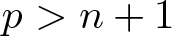 $p \gt n+1$: stable perturbations with contractible image and homology of $\text{im} f_t$ in unexpected dimensions. We show that Houston’s conjecture, µI constant in a family implies excellency in Gaffney’s sense, is false, but we give a correct modification of the statement of the conjecture which we also prove.

THE COHOMOLOGY OF p-ADIC DELIGNE-LUSZTIG SCHEMES OF COXETER TYPE
- Part of
-
- Journal:
- Journal of the Institute of Mathematics of Jussieu / Volume 24 / Issue 4 / July 2025
- Published online by Cambridge University Press:
- 10 February 2025, pp. 1429-1462
- Print publication:
- July 2025
-
- Article
-
- You have access
- Open access
- HTML
- Export citation
Mean values of multiplicative functions and applications to residue-class distribution
- Part of
-
- Journal:
- Proceedings of the Edinburgh Mathematical Society / Volume 68 / Issue 3 / August 2025
- Published online by Cambridge University Press:
- 10 February 2025, pp. 712-730
-
- Article
- Export citation
-
We provide a uniform bound on the partial sums of multiplicative functions under very general hypotheses. As an application, we give a nearly optimal estimate for the count of $n \le x$ for which the Alladi–Erdős function $A(n) = \sum_{p^k \parallel n} k p$ takes values in a given residue class modulo q, where q varies uniformly up to a fixed power of $\log x$. We establish a similar result for the equidistribution of the Euler totient function $\phi(n)$ among the coprime residues to the ‘correct’ moduli q that vary uniformly in a similar range and also quantify the failure of equidistribution of the values of $\phi(n)$ among the coprime residue classes to the ‘incorrect’ moduli.


JMJ volume 24 issue 2 Cover and Front matter
-
- Journal:
- Journal of the Institute of Mathematics of Jussieu / Volume 24 / Issue 2 / March 2025
- Published online by Cambridge University Press:
- 10 February 2025, pp. f1-f2
- Print publication:
- March 2025
-
- Article
-
- You have access
- Export citation
Anisotropic weighted isoperimetric inequalities for star-shaped and F-mean convex hypersurface
- Part of
-
- Journal:
- Proceedings of the Royal Society of Edinburgh. Section A: Mathematics , First View
- Published online by Cambridge University Press:
- 10 February 2025, pp. 1-17
-
- Article
- Export citation
-
We prove two sharp anisotropic weighted geometric inequalities that hold for star-shaped and F-mean convex hypersurfaces in $\mathbb{R}^{n+1}$, which involve the anisotropic p-momentum, the anisotropic perimeter, and the volume of the region enclosed by the hypersurface. We also consider their quantitative versions characterized by asymmetry index and the Hausdorff distance between the hypersurface and a rescaled Wulff shape. As a corollary, we obtain the stability of the Weinstock inequality for the first non-zero Steklov eigenvalue for star-shaped and strictly mean convex domains.

RANK 2 $\ell $-ADIC LOCAL SYSTEMS AND HIGGS BUNDLES OVER A CURVE
- Part of
-
- Journal:
- Journal of the Institute of Mathematics of Jussieu / Volume 24 / Issue 3 / May 2025
- Published online by Cambridge University Press:
- 10 February 2025, pp. 891-960
- Print publication:
- May 2025
-
- Article
-
- You have access
- Open access
- HTML
- Export citation
-
Let X be a smooth, projective and geometrically connected curve defined over a finite field ${\mathbb {F}}_q$ of characteristic p different from $2$ and $S\subseteq X$ a subset of closed points. Let $\overline {X}$ and $\overline {S}$ be their base changes to an algebraic closure of ${\mathbb {F}}_q$. We study the number of $\ell $-adic local systems $(\ell \neq p)$ in rank $2$ over $\overline {X}-\overline {S}$ with all possible prescribed tame local monodromies fixed by k-fold iterated action of Frobenius endomorphism for every $k\geq 1$. In all cases, we confirm conjectures of Deligne predicting that these numbers behave as if they were obtained from a Lefschetz fixed point formula. In fact, our counting results are expressed in terms of the numbers of some Higgs bundles.


JMJ volume 24 issue 2 Cover and Back matter
-
- Journal:
- Journal of the Institute of Mathematics of Jussieu / Volume 24 / Issue 2 / March 2025
- Published online by Cambridge University Press:
- 10 February 2025, pp. b1-b2
- Print publication:
- March 2025
-
- Article
-
- You have access
- Export citation
Face enumeration for split matroid polytopes
- Part of
-
- Journal:
- Combinatorics, Probability and Computing / Volume 34 / Issue 4 / July 2025
- Published online by Cambridge University Press:
- 07 February 2025, pp. 528-544
-
- Article
-
- You have access
- Open access
- HTML
- Export citation
-
This paper initiates the explicit study of face numbers of matroid polytopes and their computation. We prove that, for the large class of split matroid polytopes, their face numbers depend solely on the number of cyclic flats of each rank and size, together with information on the modular pairs of cyclic flats. We provide a formula which allows us to calculate $f$-vectors without the need of taking convex hulls or computing face lattices. We discuss the particular cases of sparse paving matroids and rank two matroids, which are of independent interest due to their appearances in other combinatorial and geometric settings.

The rigidity of filtered colimits of n-cluster tilting subcategories
- Part of
-
- Journal:
- Proceedings of the Royal Society of Edinburgh. Section A: Mathematics , First View
- Published online by Cambridge University Press:
- 06 February 2025, pp. 1-14
-
- Article
- Export citation
-
Let Λ be an artin algebra and $\mathcal{M}$ be an n-cluster tilting subcategory of Λ-mod with $n \geq 2$. From the viewpoint of higher homological algebra, a question that naturally arose in Ebrahimi and Nasr-Isfahani (The completion of d-abelian categories. J. Algebra 645 (2024), 143–163) is when $\mathcal{M}$ induces an n-cluster tilting subcategory of Λ-Mod. In this article, we answer this question and explore its connection to Iyama’s question on the finiteness of n-cluster tilting subcategories of Λ-mod. In fact, our theorem reformulates Iyama’s question in terms of the vanishing of Ext and highlights its relation with the rigidity of filtered colimits of $\mathcal{M}$. Also, we show that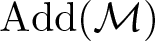 ${\rm Add}(\mathcal{M})$ is an n-cluster tilting subcategory of Λ-Mod if and only if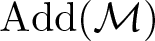 ${\rm Add}(\mathcal{M})$ is a maximal n-rigid subcategory of Λ-Mod if and only if $\lbrace X\in \Lambda-{\rm Mod}~|~ {\rm Ext}^i_{\Lambda}(\mathcal{M},X)=0 ~~~ {\rm for ~all}~ 0 \lt i \lt n \rbrace \subseteq {\rm Add}(\mathcal{M})$ if and only if $\mathcal{M}$ is of finite type if and only if ${\rm Ext}_{\Lambda}^1({\underrightarrow{\lim}}\mathcal{M}, {\underrightarrow{\lim}}\mathcal{M})=0$. Moreover, we present several equivalent conditions for Iyama’s question which shows the relation of Iyama’s question with different subjects in representation theory such as purity and covering theory.


Extending Wormald’s differential equation method to one-sided bounds
- Part of
-
- Journal:
- Combinatorics, Probability and Computing / Volume 34 / Issue 4 / July 2025
- Published online by Cambridge University Press:
- 06 February 2025, pp. 545-558
-
- Article
-
- You have access
- Open access
- HTML
- Export citation
On the L-polynomials of curves over finite fields
- Part of
-
- Journal:
- Proceedings of the Royal Society of Edinburgh. Section A: Mathematics , First View
- Published online by Cambridge University Press:
- 06 February 2025, pp. 1-49
-
- Article
-
- You have access
- Open access
- HTML
- Export citation
-
We discuss, in a non-Archimedean setting, the distribution of the coefficients of L-polynomials of curves of genus g over $\mathbb{F}_q$. Among other results, this allows us to prove that the $\mathbb{Q}$-vector space spanned by such characteristic polynomials has dimension g + 1. We also state a conjecture about the Archimedean distribution of the number of rational points of curves over finite fields.


Satisfiability thresholds for regular occupation problems
- Part of
-
- Journal:
- Combinatorics, Probability and Computing / Volume 34 / Issue 4 / July 2025
- Published online by Cambridge University Press:
- 04 February 2025, pp. 491-527
-
- Article
-
- You have access
- Open access
- HTML
- Export citation
-
In the last two decades the study of random instances of constraint satisfaction problems (CSPs) has flourished across several disciplines, including computer science, mathematics and physics. The diversity of the developed methods, on the rigorous and non-rigorous side, has led to major advances regarding both the theoretical as well as the applied viewpoints. Based on a ceteris paribus approach in terms of the density evolution equations known from statistical physics, we focus on a specific prominent class of regular CSPs, the so-called occupation problems, and in particular on $r$-in- $k$ occupation problems. By now, out of these CSPs only the satisfiability threshold – the largest degree for which the problem admits asymptotically a solution – for the $1$-in- $k$ occupation problem has been rigorously established. Here we determine the satisfiability threshold of the $2$-in- $k$ occupation problem for all $k$. In the proof we exploit the connection of an associated optimization problem regarding the overlap of satisfying assignments to a fixed point problem inspired by belief propagation, a message passing algorithm developed for solving such CSPs.


Critical configurations of the hard-core model on square grid graphs
- Part of
-
- Journal:
- Combinatorics, Probability and Computing / Volume 34 / Issue 3 / May 2025
- Published online by Cambridge University Press:
- 04 February 2025, pp. 445-485
-
- Article
-
- You have access
- Open access
- HTML
- Export citation
-
We consider the hard-core model on a finite square grid graph with stochastic Glauber dynamics parametrized by the inverse temperature $\beta$. We investigate how the transition between its two maximum-occupancy configurations takes place in the low-temperature regime $\beta \to \infty$ in the case of periodic boundary conditions. The hard-core constraints and the grid symmetry make the structure of the critical configurations for this transition, also known as essential saddles, very rich and complex. We provide a comprehensive geometrical characterization of these configurations that together constitute a bottleneck for the Glauber dynamics in the low-temperature limit. In particular, we develop a novel isoperimetric inequality for hard-core configurations with a fixed number of particles and show how the essential saddles are characterized not only by the number of particles but also their geometry.


A note on separability in outer automorphism groups
-
- Journal:
- Proceedings of the Edinburgh Mathematical Society / Volume 68 / Issue 3 / August 2025
- Published online by Cambridge University Press:
- 04 February 2025, pp. 705-711
-
- Article
-
- You have access
- Open access
- HTML
- Export citation
On the structure of non-negative integer sets which have identical representation functions
- Part of
-
- Journal:
- Proceedings of the Edinburgh Mathematical Society / Volume 68 / Issue 2 / May 2025
- Published online by Cambridge University Press:
- 03 February 2025, pp. 655-674
-
- Article
- Export citation
-
Let $\mathbb{N}$ be the set of all non-negative integers. For any integer r and m, let $r+m\mathbb{N}=\{r+mk: k\in\mathbb{N}\}$. For $S\subseteq \mathbb{N}$ and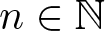 $n\in \mathbb{N}$, let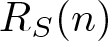 $R_{S}(n)$ denote the number of solutions of the equation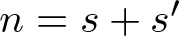 $n=s+s'$ with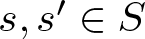 $s, s'\in S$ and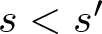 $s \lt s'$. Let $r_{1}, r_{2}, m$ be integers with $0 \lt r_{1} \lt r_{2} \lt m$ and $2\mid r_{1}$. In this paper, we prove that there exist two sets C and D with $C\cup D=\mathbb{N}$ and $C\cap D=(r_{1}+m\mathbb{N})\cup (r_{2}+m\mathbb{N})$ such that $R_{C}(n)=R_{D}(n)$ for all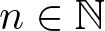 $n\in\mathbb{N}$ if and only if there exists a positive integer l such that $r_{1}=2^{2l+1}-2, r_{2}=2^{2l+1}-1, m=2^{2l+2}-2$.


Right-angled Artin groups and the cohomology basis graph
- Part of
-
- Journal:
- Proceedings of the Edinburgh Mathematical Society / Volume 68 / Issue 2 / May 2025
- Published online by Cambridge University Press:
- 03 February 2025, pp. 634-654
-
- Article
- Export citation
-
Let Γ be a finite graph and let $A(\Gamma)$ be the corresponding right-angled Artin group. From an arbitrary basis $\mathcal B$ of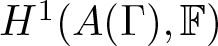 $H^1(A(\Gamma),\mathbb F)$ over an arbitrary field, we construct a natural graph $\Gamma_{\mathcal B}$ from the cup product, called the cohomology basis graph. We show that $\Gamma_{\mathcal B}$ always contains Γ as a subgraph. This provides an effective way to reconstruct the defining graph Γ from the cohomology of $A(\Gamma)$, to characterize the planarity of the defining graph from the algebra of $A(\Gamma)$ and to recover many other natural graph-theoretic invariants. We also investigate the behaviour of the cohomology basis graph under passage to elementary subminors and show that it is not well-behaved under edge contraction.


Schwarz lemma for harmonic functions in the unit ball
- Part of
-
- Journal:
- Proceedings of the Edinburgh Mathematical Society / Volume 68 / Issue 2 / May 2025
- Published online by Cambridge University Press:
- 03 February 2025, pp. 616-633
-
- Article
- Export citation
-
Recently, it is proven that positive harmonic functions defined in the unit disc or the upper half-plane in $\mathbb{C}$ are contractions in hyperbolic metrics [14]. Furthermore, the same result does not hold in higher dimensions as shown by given counterexamples [16]. In this paper, we shall show that positive (or bounded) harmonic functions defined in the unit ball in $\mathbb{R}^{n}$ are Lipschitz in hyperbolic metrics. The involved method in main results allows to establish essential improvements of Schwarz type inequalities for monogenic functions in Clifford analysis [24, 25] and octonionic analysis [21] in a unified approach.


