
Contents
Research Article
Pushforward of structure sheaf and virtual global generation
- Part of:
-
- Published online by Cambridge University Press:
- 18 April 2024, pp. 663-673
-
- Article
- Export citation
-
Let $f\,:\,X\,\longrightarrow \,Y$ be a generically smooth morphism between irreducible smooth projective curves over an algebraically closed field of arbitrary characteristic. We prove that the vector bundle $((f_*{\mathcal O}_X)/{\mathcal O}_Y)^*$ is virtually globally generated. Moreover, $((f_*{\mathcal O}_X)/{\mathcal O}_Y)^*$ is ample if and only if f is genuinely ramified.
Propagation of anisotropic Gabor wave front sets
- Part of:
- Miscellaneous topics - Partial differential equations
- Partial differential equations
- Distributions, generalized functions, distribution spaces
- Groups and semigroups of linear operators, their generalizations and applications
- Partial differential equations on manifolds; differential operators
- General quantum mechanics and problems of quantization
- Integral, integro-differential, and pseudodifferential operators
-
- Published online by Cambridge University Press:
- 22 April 2024, pp. 674-698
-
- Article
- Export citation
Annihilators and decompositions of singularity categories
- Part of:
-
- Published online by Cambridge University Press:
- 23 April 2024, pp. 699-713
-
- Article
-
- You have access
- Open access
- HTML
- Export citation
-
Given any commutative Noetherian ring R and an element x in R, we consider the full subcategory $\mathsf{C}(x)$ of its singularity category consisting of objects for which the morphism that is given by the multiplication by x is zero. Our main observation is that we can establish a relation between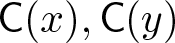 $\mathsf{C}(x), \mathsf{C}(y)$ and $\mathsf{C}(xy)$ for any two ring elements x and y. Utilizing this observation, we obtain a decomposition of the singularity category and consequently an upper bound on the dimension of the singularity category.


Projectively and affinely invariant PDEs on hypersurfaces
- Part of:
-
- Published online by Cambridge University Press:
- 25 April 2024, pp. 714-739
-
- Article
- Export citation
-
In Communications in Contemporary Mathematics 24 3, (2022),the authors have developed a method for constructing G-invariant partial differential equations (PDEs) imposed on hypersurfaces of an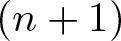 $(n+1)$-dimensional homogeneous space $G/H$, under mild assumptions on the Lie group G. In the present paper, the method is applied to the case when $G=\mathsf{PGL}(n+1)$ (respectively, $G=\mathsf{Aff}(n+1)$) and the homogeneous space $G/H$ is the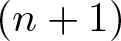 $(n+1)$-dimensional projective $\mathbb{P}^{n+1}$ (respectively, affine $\mathbb{A}^{n+1}$) space, respectively. The main result of the paper is that projectively or affinely invariant PDEs with n independent and one unknown variables are in one-to-one correspondence with invariant hypersurfaces of the space of trace-free cubic forms in n variables with respect to the group $\mathsf{CO}(d,n-d)$ of conformal transformations of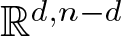 $\mathbb{R}^{d,n-d}$.


Weak amenability for dual Banach algebras
- Part of:
-
- Published online by Cambridge University Press:
- 29 April 2024, pp. 740-748
-
- Article
- Export citation
-
A suitable notion of weak amenability for dual Banach algebras, which we call weak Connes amenability, is defined and studied. Among other things, it is proved that the measure algebra M(G) of a locally compact group G is always weakly Connes amenable. It can be a complement to Johnson’s theorem that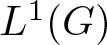 $L^1(G)$ is always weakly amenable [10].
Inhomogeneous Poisson processes in the disk and interpolation
- Part of:
-
- Published online by Cambridge University Press:
- 30 April 2024, pp. 749-777
-
- Article
-
- You have access
- Open access
- HTML
- Export citation
Some congruences for 12-coloured generalized Frobenius partitions
- Part of:
-
- Published online by Cambridge University Press:
- 02 May 2024, pp. 778-793
-
- Article
- Export citation
-
In his 1984 AMS Memoir, Andrews introduced the family of functions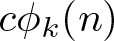 $c\phi_k(n)$, the number of k-coloured generalized Frobenius partitions of n. In 2019, Chan, Wang and Yang systematically studied the arithmetic properties of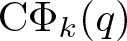 $\textrm{C}\Phi_k(q)$ for $2\leq k\leq17$ by utilizing the theory of modular forms, where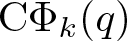 $\textrm{C}\Phi_k(q)$ denotes the generating function of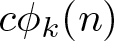 $c\phi_k(n)$. In this paper, we first establish another expression of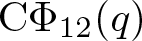 $\textrm{C}\Phi_{12}(q)$ with integer coefficients, then prove some congruences modulo small powers of 3 for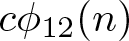 $c\phi_{12}(n)$ by using some parameterized identities of theta functions due to A. Alaca, S. Alaca and Williams. Finally, we conjecture three families of congruences modulo powers of 3 satisfied by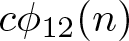 $c\phi_{12}(n)$.
Growth of hypercyclic functions: a continuous path between $\mathcal{U}$-frequent hypercyclicity and hypercyclicity
- Part of:
-
- Published online by Cambridge University Press:
- 08 May 2024, pp. 794-829
-
- Article
- Export citation
-
We are interested in the optimal growth in terms of Lp-averages of hypercyclic and $\mathcal{U}$-frequently hypercyclic functions for some weighted Taylor shift operators acting on the space of analytic functions on the unit disc. We unify the results obtained by considering intermediate notions of upper frequent hypercyclicity between $\mathcal{U}$-frequent hypercyclicity and hypercyclicity.


Powers of commutators in linear algebraic groups
- Part of:
-
- Published online by Cambridge University Press:
- 14 May 2024, pp. 830-837
-
- Article
-
- You have access
- Open access
- HTML
- Export citation
-
Let ${\mathcal G}$ be a linear algebraic group over k, where k is an algebraically closed field, a pseudo-finite field or the valuation ring of a non-archimedean local field. Let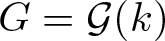 $G= {\mathcal G}(k)$. We prove that if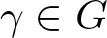 $\gamma\in G$ such that γ is a commutator and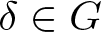 $\delta\in G$ such that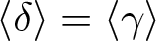 $\langle \delta\rangle= \langle \gamma\rangle$ then δ is a commutator. This generalises a result of Honda for finite groups. Our proof uses the Lefschetz principle from first-order model theory.

On the convexity of the quaternionic essential numerical range
- Part of:
-
- Published online by Cambridge University Press:
- 15 May 2024, pp. 838-851
-
- Article
- Export citation
A variational principle of amenable random metric mean dimensions
- Part of:
-
- Published online by Cambridge University Press:
- 16 May 2024, pp. 852-875
-
- Article
- Export citation
On the smoothness of slowly varying functions
- Part of:
-
- Published online by Cambridge University Press:
- 16 May 2024, pp. 876-891
-
- Article
-
- You have access
- Open access
- HTML
- Export citation
Characterization of continuous homomorphisms on entire slice monogenic functions
- Part of:
-
- Published online by Cambridge University Press:
- 17 May 2024, pp. 892-920
-
- Article
- Export citation
Coactions and skew products for topological quivers
- Part of:
-
- Published online by Cambridge University Press:
- 22 May 2024, pp. 921-946
-
- Article
- Export citation
-
Given a cocycle on a topological quiver by a locally compact group, the author constructs a skew product topological quiver and determines conditions under which a topological quiver can be identified as a skew product. We investigate the relationship between the ${C^*}$-algebra of the skew product and a certain native coaction on the ${C^*}$-algebra of the original quiver, finding that the crossed product by the coaction is isomorphic to the skew product. As an application, we show that the reduced crossed product by the dual action is Morita equivalent to the ${C^*}$-algebra of the original quiver.


A classification of automorphic Lie algebras on complex tori
- Part of:
-
- Published online by Cambridge University Press:
- 28 May 2024, pp. 947-989
-
- Article
-
- You have access
- Open access
- HTML
- Export citation
-
We classify the automorphic Lie algebras of equivariant maps from a complex torus to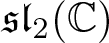 $\mathfrak{sl}_2(\mathbb{C})$. For each case, we compute a basis in a normal form. The automorphic Lie algebras correspond precisely to two disjoint families of Lie algebras parametrised by the modular curve of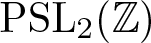 $\mathrm{PSL}_2({\mathbb{Z}})$, apart from four cases, which are all isomorphic to Onsager’s algebra.
Equisingularity in pencils of curves on germs of reduced complex surfaces
- Part of:
-
- Published online by Cambridge University Press:
- 04 June 2024, pp. 990-1012
-
- Article
- Export citation
-
We study pencils of curves on a germ of complex reduced surface $(S,0)$. These are families of curves parametrized by $ \mathbb{P}^1 $ having 0 as the unique common point. We prove that for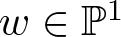 $w\in \mathbb{P}^1$, the corresponding curve of the pencil does not have the generic topology if and only if either the corresponding curve of the pulled-back pencil to the normalized surface has a non generic topology or w is a limit value for the function $ f/g $ along the singular locus of $(S,0)$, where f and g are generators of the pencil.


Front Cover (OFC, IFC) and matter
PEM series 2 volume 67 issue 3 Cover and Front matter
-
- Published online by Cambridge University Press:
- 15 October 2024, pp. f1-f2
-
- Article
-
- You have access
- Export citation
Back Cover (IBC, OBC) and matter
PEM series 2 volume 67 issue 3 Cover and Back matter
-
- Published online by Cambridge University Press:
- 15 October 2024, pp. b1-b2
-
- Article
-
- You have access
- Export citation