Refine search
Actions for selected content:
26063 results in Abstract analysis
Tree universality in positional games
- Part of
-
- Journal:
- Combinatorics, Probability and Computing / Volume 34 / Issue 3 / May 2025
- Published online by Cambridge University Press:
- 13 December 2024, pp. 338-358
-
- Article
- Export citation
-
In this paper we consider positional games where the winning sets are edge sets of tree-universal graphs. Specifically, we show that in the unbiased Maker-Breaker game on the edges of the complete graph $K_n$, Maker has a strategy to claim a graph which contains copies of all spanning trees with maximum degree at most $cn/\log (n)$, for a suitable constant $c$ and $n$ being large enough. We also prove an analogous result for Waiter-Client games. Both of our results show that the building player can play at least as good as suggested by the random graph intuition. Moreover, they improve on a special case of earlier results by Johannsen, Krivelevich, and Samotij as well as Han and Yang for Maker-Breaker games.


FINITE-DIMENSIONAL DIFFERENTIAL-ALGEBRAIC PERMUTATION GROUPS
- Part of
-
- Journal:
- Journal of the Institute of Mathematics of Jussieu / Volume 24 / Issue 2 / March 2025
- Published online by Cambridge University Press:
- 12 December 2024, pp. 603-626
- Print publication:
- March 2025
-
- Article
-
- You have access
- Open access
- HTML
- Export citation
-
Several structural results about permutation groups of finite rank definable in differentially closed fields of characteristic zero (and other similar theories) are obtained. In particular, it is shown that every finite rank definably primitive permutation group is definably isomorphic to an algebraic permutation group living in the constants. Applications include the verification, in differentially closed fields, of the finite Morley rank permutation group conjectures of Borovik-Deloro and Borovik-Cherlin. Applying the results to binding groups for internality to the constants, it is deduced that if complete types p and q are of rank m and n, respectively, and are nonorthogonal, then the $(m+3)$rd Morley power of p is not weakly orthogonal to the $(n+3)$rd Morley power of q. An application to transcendence of generic solutions of pairs of algebraic differential equations is given.


The Daugavet and Delta-constants of points in Banach spaces
- Part of
-
- Journal:
- Proceedings of the Royal Society of Edinburgh. Section A: Mathematics , First View
- Published online by Cambridge University Press:
- 12 December 2024, pp. 1-35
-
- Article
- Export citation
Fractional time differential equations as a singular limit of the Kobayashi–Warren–Carter system
- Part of
-
- Journal:
- Proceedings of the Royal Society of Edinburgh. Section A: Mathematics , First View
- Published online by Cambridge University Press:
- 11 December 2024, pp. 1-37
-
- Article
- Export citation
Twin-width of sparse random graphs
- Part of
-
- Journal:
- Combinatorics, Probability and Computing / Volume 34 / Issue 3 / May 2025
- Published online by Cambridge University Press:
- 11 December 2024, pp. 401-420
-
- Article
- Export citation
-
We show that the twin-width of every $n$-vertex $d$-regular graph is at most $n^{\frac{d-2}{2d-2}+o(1)}$ for any fixed integer $d \geq 2$ and that almost all $d$-regular graphs attain this bound. More generally, we obtain bounds on the twin-width of sparse Erdős–Renyi and regular random graphs, complementing the bounds in the denser regime due to Ahn, Chakraborti, Hendrey, Kim, and Oum.


Tight bound for the Erdős–Pósa property of tree minors
- Part of
-
- Journal:
- Combinatorics, Probability and Computing / Volume 34 / Issue 2 / March 2025
- Published online by Cambridge University Press:
- 11 December 2024, pp. 321-325
-
- Article
- Export citation
-
Let $T$ be a tree on $t$ vertices. We prove that for every positive integer $k$ and every graph $G$, either $G$ contains $k$ pairwise vertex-disjoint subgraphs each having a $T$ minor, or there exists a set $X$ of at most $t(k-1)$ vertices of $G$ such that $G-X$ has no $T$ minor. The bound on the size of $X$ is best possible and improves on an earlier $f(t)k$ bound proved by Fiorini, Joret, and Wood (2013) with some fast-growing function $f(t)$. Moreover, our proof is short and simple.


Birkhoff spectrum for diagonally self-affine sets and digit frequencies for GLS systems with redundancy
- Part of
-
- Journal:
- Proceedings of the Royal Society of Edinburgh. Section A: Mathematics , First View
- Published online by Cambridge University Press:
- 09 December 2024, pp. 1-26
-
- Article
-
- You have access
- Open access
- HTML
- Export citation
-
In this article, we calculate the Birkhoff spectrum in terms of the Hausdorff dimension of level sets for Birkhoff averages of continuous potentials for a certain family of diagonally affine iterated function systems. Also, we study Besicovitch–Eggleston sets for finite generalized Lüroth series number systems with redundancy. The redundancy refers to the fact that each number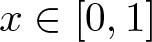 $x \in [0,1]$ has uncountably many expansions in the system. We determine the Hausdorff dimension of digit frequency sets for such expansions along fibres.
Sampling from the random cluster model on random regular graphs at all temperatures via Glauber dynamics
- Part of
-
- Journal:
- Combinatorics, Probability and Computing / Volume 34 / Issue 3 / May 2025
- Published online by Cambridge University Press:
- 09 December 2024, pp. 359-391
-
- Article
- Export citation
-
We consider the performance of Glauber dynamics for the random cluster model with real parameter $q\gt 1$ and temperature $\beta \gt 0$. Recent work by Helmuth, Jenssen, and Perkins detailed the ordered/disordered transition of the model on random $\Delta$-regular graphs for all sufficiently large $q$ and obtained an efficient sampling algorithm for all temperatures $\beta$ using cluster expansion methods. Despite this major progress, the performance of natural Markov chains, including Glauber dynamics, is not yet well understood on the random regular graph, partly because of the non-local nature of the model (especially at low temperatures) and partly because of severe bottleneck phenomena that emerge in a window around the ordered/disordered transition. Nevertheless, it is widely conjectured that the bottleneck phenomena that impede mixing from worst-case starting configurations can be avoided by initialising the chain more judiciously. Our main result establishes this conjecture for all sufficiently large $q$ (with respect to $\Delta$). Specifically, we consider the mixing time of Glauber dynamics initialised from the two extreme configurations, the all-in and all-out, and obtain a pair of fast mixing bounds which cover all temperatures $\beta$, including in particular the bottleneck window. Our result is inspired by the recent approach of Gheissari and Sinclair for the Ising model who obtained a similar flavoured mixing-time bound on the random regular graph for sufficiently low temperatures. To cover all temperatures in the RC model, we refine appropriately the structural results of Helmuth, Jenssen and Perkins about the ordered/disordered transition and show spatial mixing properties ‘within the phase’, which are then related to the evolution of the chain.


Normalized ground state solutions for critical growth Schrödinger equations with Hardy potential
-
- Journal:
- Proceedings of the Royal Society of Edinburgh. Section A: Mathematics , First View
- Published online by Cambridge University Press:
- 09 December 2024, pp. 1-30
-
- Article
- Export citation
-
In this article, we study the following Schrödinger equation
 \begin{align*}\begin{cases}-\Delta u -\frac{\mu}{|x|^2} u+\lambda u =f(u), &\text{in}~ \mathbb{R}^N\backslash\{0\},\\\int_{\mathbb{R}^{N}}|u|^{2}\mathrm{d} x=a, & u\in H^1(\mathbb{R}^{N}),\end{cases}\end{align*}
where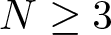 $N\geq 3$, a > 0, and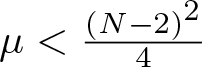 $\mu \lt \frac{(N-2)^2}{4}$. Here $\frac{1}{|x|^2} $ represents the Hardy potential (or ‘inverse-square potential’), λ is a Lagrange multiplier, and the nonlinearity function f satisfies the general Sobolev critical growth condition. Our main goal is to demonstrate the existence of normalized ground state solutions for this equation when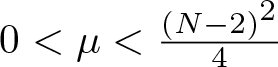 $0 \lt \mu \lt \frac{(N-2)^2}{4}$. We also analyse the behaviour of solutions as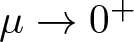 $\mu\to0^+$ and derive the existence of normalized ground state solutions for the limiting case where µ = 0. Finally, we investigate the existence of normalized solutions when µ < 0 and analyse the asymptotic behaviour of solutions as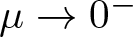 $\mu\to 0^-$.

Shadowing and hyperbolicity for linear delay difference equations
- Part of
-
- Journal:
- Proceedings of the Royal Society of Edinburgh. Section A: Mathematics , First View
- Published online by Cambridge University Press:
- 09 December 2024, pp. 1-30
-
- Article
- Export citation
Continuum limit for interacting systems on adaptive networks
- Part of
-
- Journal:
- European Journal of Applied Mathematics / Volume 37 / Issue 3 / June 2026
- Published online by Cambridge University Press:
- 06 December 2024, pp. 706-720
-
- Article
-
- You have access
- Open access
- HTML
- Export citation
A power structure over the Grothendieck ring of geometric dg categories
- Part of
-
- Journal:
- Proceedings of the Edinburgh Mathematical Society / Volume 68 / Issue 1 / February 2025
- Published online by Cambridge University Press:
- 05 December 2024, pp. 300-318
-
- Article
- Export citation
Well-posedness for nonlinear SPDEs with strongly continuous perturbation - ERRATUM
-
- Journal:
- Proceedings of the Royal Society of Edinburgh. Section A: Mathematics , First View
- Published online by Cambridge University Press:
- 04 December 2024, pp. 1-5
-
- Article
-
- You have access
- Open access
- HTML
- Export citation
On the existence of solutions to adversarial training in multiclass classification
- Part of
-
- Journal:
- European Journal of Applied Mathematics / Volume 37 / Issue 1 / February 2026
- Published online by Cambridge University Press:
- 03 December 2024, pp. 3-23
-
- Article
-
- You have access
- Open access
- HTML
- Export citation
Ramsey simplicity of random graphs
- Part of
-
- Journal:
- Combinatorics, Probability and Computing / Volume 34 / Issue 2 / March 2025
- Published online by Cambridge University Press:
- 03 December 2024, pp. 298-320
-
- Article
-
- You have access
- Open access
- HTML
- Export citation
-
A graph $G$ is $q$-Ramsey for another graph $H$ if in any $q$-edge-colouring of $G$ there is a monochromatic copy of $H$, and the classic Ramsey problem asks for the minimum number of vertices in such a graph. This was broadened in the seminal work of Burr, Erdős, and Lovász to the investigation of other extremal parameters of Ramsey graphs, including the minimum degree.
It is not hard to see that if $G$ is minimally $q$-Ramsey for $H$ we must have $\delta (G) \ge q(\delta (H) - 1) + 1$, and we say that a graph $H$ is $q$-Ramsey simple if this bound can be attained. Grinshpun showed that this is typical of rather sparse graphs, proving that the random graph $G(n,p)$ is almost surely $2$-Ramsey simple when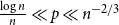 $\frac{\log n}{n} \ll p \ll n^{-2/3}$. In this paper, we explore this question further, asking for which pairs $p = p(n)$ and $q = q(n,p)$ we can expect $G(n,p)$ to be $q$-Ramsey simple.
We first extend Grinshpun’s result by showing that $G(n,p)$ is not just $2$-Ramsey simple, but is in fact $q$-Ramsey simple for any $q = q(n)$, provided $p \ll n^{-1}$ or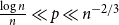 $\frac{\log n}{n} \ll p \ll n^{-2/3}$. Next, when $p \gg \left ( \frac{\log n}{n} \right )^{1/2}$, we find that $G(n,p)$ is not $q$-Ramsey simple for any $q \ge 2$. Finally, we uncover some interesting behaviour for intermediate edge probabilities. When $n^{-2/3} \ll p \ll n^{-1/2}$, we find that there is some finite threshold $\tilde{q} = \tilde{q}(H)$, depending on the structure of the instance $H \sim G(n,p)$ of the random graph, such that $H$ is $q$-Ramsey simple if and only if $q \le \tilde{q}$. Aside from a couple of logarithmic factors, this resolves the qualitative nature of the Ramsey simplicity of the random graph over the full spectrum of edge probabilities.


Strongly outer actions of certain torsion-free amenable groups on the Razak–Jacelon algebra
- Part of
-
- Journal:
- Proceedings of the Royal Society of Edinburgh. Section A: Mathematics , First View
- Published online by Cambridge University Press:
- 03 December 2024, pp. 1-9
-
- Article
-
- You have access
- Open access
- HTML
- Export citation
-
Let $\mathfrak{C}$ be the smallest class of countable discrete groups with the following properties: (i) $\mathfrak{C}$ contains the trivial group, (ii) $\mathfrak{C}$ is closed under isomorphisms, countable increasing unions and extensions by $\mathbb{Z}$. Note that $\mathfrak{C}$ contains all countable discrete torsion-free abelian groups and poly- $\mathbb{Z}$ groups. Also, $\mathfrak{C}$ is a subclass of the class of countable discrete torsion-free elementary amenable groups. In this article, we show that if $\Gamma\in \mathfrak{C}$, then all strongly outer actions of Γ on the Razak–Jacelon algebra $\mathcal{W}$ are cocycle conjugate to each other. This can be regarded as an analogous result of Szabó’s result for strongly self-absorbing C $^*$-algebras.


Transference of multilinear Fourier and Schur multipliers acting on noncommutative $L_p$-spaces for non-unimodular groups
- Part of
-
- Journal:
- Glasgow Mathematical Journal / Volume 67 / Issue 2 / May 2025
- Published online by Cambridge University Press:
- 02 December 2024, pp. 197-223
-
- Article
-
- You have access
- Open access
- HTML
- Export citation
-
In Caspers et al. (Can. J. Math. 75[6] [2022], 1–18), transference results between multilinear Fourier and Schur multipliers on noncommutative $L_p$-spaces were shown for unimodular groups. We propose a suitable extension of the definition of multilinear Fourier multipliers for non-unimodular groups and show that the aforementioned transference results also hold in this more general setting.


Persistent properties from the Gromov–Hausdorff viewpoint
- Part of
-
- Journal:
- Proceedings of the Edinburgh Mathematical Society / Volume 67 / Issue 4 / November 2024
- Published online by Cambridge University Press:
- 02 December 2024, pp. 1229-1240
-
- Article
- Export citation
Integrability of special quadratic systems with invariant hyperbolas
- Part of
-
- Journal:
- Proceedings of the Royal Society of Edinburgh. Section A: Mathematics , First View
- Published online by Cambridge University Press:
- 02 December 2024, pp. 1-27
-
- Article
- Export citation
PEM series 2 volume 67 issue 4 Cover and Back matter
-
- Journal:
- Proceedings of the Edinburgh Mathematical Society / Volume 67 / Issue 4 / November 2024
- Published online by Cambridge University Press:
- 02 December 2024, pp. b1-b2
-
- Article
-
- You have access
- Export citation
