Refine search
Actions for selected content:
26063 results in Abstract analysis
An MBO method for modularity optimisation based on total variation and signless total variation
- Part of
-
- Journal:
- European Journal of Applied Mathematics / Volume 37 / Issue 3 / June 2026
- Published online by Cambridge University Press:
- 25 November 2024, pp. 743-825
-
- Article
-
- You have access
- Open access
- HTML
- Export citation
Enlargements and Morita contexts for rings with involution
- Part of
-
- Journal:
- Glasgow Mathematical Journal / Volume 67 / Issue 2 / May 2025
- Published online by Cambridge University Press:
- 25 November 2024, pp. 131-162
-
- Article
-
- You have access
- Open access
- HTML
- Export citation
-
We study Morita equivalence for idempotent rings with involution. Following the ideas of Rieffel, we define Rieffel contexts, and we also introduce Morita $*$-contexts and enlargements for rings with involution. We prove that two idempotent rings with involution have a joint enlargement if and only if they are connected by a unitary and full Rieffel context. These conditions are also equivalent to having a unitary and surjective Morita $*$-context between those rings. We also examine how the mentioned conditions are connected to the existence of certain equivalence functors between the categories of firm modules over the given rings with involution.


On Riemann–Hilbert problem and multiple high-order pole solutions to the cubic Camassa–Holm equation
- Part of
-
- Journal:
- Proceedings of the Royal Society of Edinburgh. Section A: Mathematics , First View
- Published online by Cambridge University Press:
- 25 November 2024, pp. 1-51
-
- Article
- Export citation
Dynamics of projectable functions: towards an atlas of wandering domains for a family of Newton maps
- Part of
-
- Journal:
- Proceedings of the Royal Society of Edinburgh. Section A: Mathematics , First View
- Published online by Cambridge University Press:
- 25 November 2024, pp. 1-50
-
- Article
-
- You have access
- Open access
- HTML
- Export citation
-
We present a one-parameter family Fλ of transcendental entire functions with zeros, whose Newton’s method yields wandering domains, coexisting with the basins of the roots of Fλ. Wandering domains for Newton maps of zero-free functions have been built before by, e.g. Buff and Rückert [23] based on the lifting method. This procedure is suited to our Newton maps as members of the class of projectable functions (or maps of the cylinder), i.e. transcendental meromorphic functions f(z) in the complex plane that are semiconjugate, via the exponential, to some map g(w), which may have at most a countable number of essential singularities. In this paper, we make a systematic study of the general relation (dynamical and otherwise) between f and g, and inspect the extension of the logarithmic lifting method of periodic Fatou components to our context, especially for those g of finite-type. We apply these results to characterize the entire functions with zeros whose Newton’s method projects to some map g which is defined at both 0 and $\infty$. The family Fλ is the simplest in this class, and its parameter space shows open sets of λ-values in which the Newton map exhibits wandering or Baker domains, in both cases regions of initial conditions where Newton’s root-findingmethod fails.

Radial solutions of initial boundary value problems of nonlinear Schrödinger equations in ℝn
- Part of
-
- Journal:
- Proceedings of the Royal Society of Edinburgh. Section A: Mathematics , First View
- Published online by Cambridge University Press:
- 25 November 2024, pp. 1-55
-
- Article
-
- You have access
- Open access
- HTML
- Export citation
-
The article studies an initial boundary valueproblem (ibvp) for the radial solutions of the nonlinear Schrödinger (NLS) equation in a radially symmetric region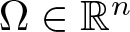 $\Omega\in \mathbb R^n$ with boundaries. All such regions can be classified into three types: a ball Ω0 centred at origin, a region Ω1 outside a ball, and an n-dimensional annulus Ω2. To study the well-posedness of those ibvps, the function spaces for the boundary data must be specified in terms of the solutions in appropriate Sobolev spaces. It is shown that when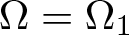 $\Omega = \Omega_1$, the ibvp for the NLS equation is locally well-posed in $ C( [0, T^*]; H^s(\Omega_1))$ if the initial data is in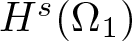 $H^s(\Omega_1)$ and boundary data is in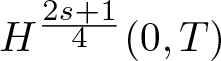 $ H^{\frac{2s+1}{4}}(0, T)$ with $s \geq 0$. This is the optimal regularity for the boundary data and cannot be improved. When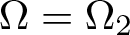 $\Omega = \Omega_2$, the ibvp is locally well-posed in $ C( [0, T^*]; H^s(\Omega_2))$ if the initial data is in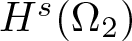 $ H^s(\Omega_2)$ and boundary data is in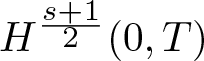 $ H^{\frac{s+1}{2}}(0, T)$ with $s \geq 0$. In this case, the boundary data requires $1/4$ more derivative compared to the case when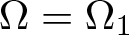 $\Omega = \Omega_1$. When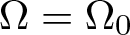 $\Omega = \Omega_0$ with n = 2 (the case with n > 2 can be discussed similarly), the ibvp is locally well-posed in $ C( [0, T^*]; H^s(\Omega_0))$ if the initial data is in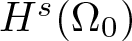 $ H^s(\Omega_0)$ and boundary data is in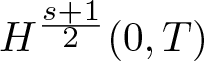 $ H^{\frac{s+1}{2}}(0, T)$ with s > 1 (or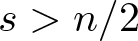 $s \gt n/2$). Due to the lack of Strichartz estimates for the corresponding boundary integral operator with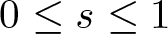 $ 0 \leq s \leq 1$, the local well-posedness can only be achieved for s > 1. It is noted that the well-posedness results on Ω0 and Ω2 are the first ones for the ibvp of NLS equations in bounded regions of higher dimension.


The planar 3-colorable subgroup ε of Thompson’s group F and its even part
- Part of
-
- Journal:
- Proceedings of the Edinburgh Mathematical Society / Volume 68 / Issue 1 / February 2025
- Published online by Cambridge University Press:
- 25 November 2024, pp. 173-197
-
- Article
- Export citation
-
We study the planar 3-colorablesubgroup $\mathcal{E}$ of Thompson’s group F and its even part ${\mathcal{E}_{\rm EVEN}}$. The latter is obtained by cutting $\mathcal{E}$ with a finite index subgroup of F isomorphic to F, namely the rectangular subgroup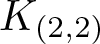 $K_{(2,2)}$. We show that the even part ${\mathcal{E}_{\rm EVEN}}$ of the planar 3-colorable subgroup admits a description in terms of stabilisers of suitable subsets of dyadic rationals. As a consequence ${\mathcal{E}_{\rm EVEN}}$ is closed in the sense of Golan and Sapir. We then study three quasi-regular representations associated with ${\mathcal{E}_{\rm EVEN}}$: two are shown to be irreducible and one to be reducible.


Commutativity properties of Quinn spectra
-
- Journal:
- Proceedings of the Royal Society of Edinburgh. Section A: Mathematics / Volume 154 / Issue 6 / December 2024
- Published online by Cambridge University Press:
- 25 November 2024, pp. 1848-1936
- Print publication:
- December 2024
-
- Article
-
- You have access
- Open access
- HTML
- Export citation
Global dynamics for the stochastic nonlinear beam equations on the four-dimensional torus
- Part of
-
- Journal:
- Proceedings of the Royal Society of Edinburgh. Section A: Mathematics , First View
- Published online by Cambridge University Press:
- 25 November 2024, pp. 1-39
-
- Article
-
- You have access
- Open access
- HTML
- Export citation
Concentration and multiplicity of solutions for fractional double phase problems
- Part of
-
- Journal:
- Proceedings of the Royal Society of Edinburgh. Section A: Mathematics , First View
- Published online by Cambridge University Press:
- 25 November 2024, pp. 1-54
-
- Article
- Export citation
-
In the present paper, we consider the following fractional double phase problem with nonlocal reaction:
 \begin{align*}\qquad \quad \left\{\begin{array}{lll}(- \Delta)_p^s u + (- \Delta)_q ^s u + V(\varepsilon x) (|u|^{p - 2} u + |u|^{q - 2} u) = \left(\frac{1}{|x|^\mu} * F(u)\right) f(u) & \ \text{in}\ \mathbb{R}^N, \\u \in W^{s,p}(\mathbb{R}^N) \cap W^{s,q}(\mathbb{R}^N) ,\ u \gt 0 & \ \text{in}\ \mathbb{R}^N,\end{array}\right\}\end{align*}
where ɛ is apositive parameter, $0 \lt s \lt 1$, $2 \leqslant p \lt q \lt \min\{2p, N / s\}$, $0 \lt \mu \lt sp$,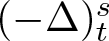 $(- \Delta)_t^s$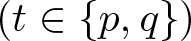 $(t \in \left\{p,q\right\})$ is the fractional t-Laplace operator, the reaction term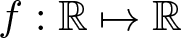 $f : \mathbb{R} \mapsto \mathbb{R}$ is continuous, and the potential $V \in C (\mathbb{R}^N , \mathbb{R})$ satisfying a local condition. Using a variational approach and topological tools (the non-standard C1-Nehari manifold analysis and the abstract category theory), multiplicity of positive solutions and concentration properties for the above problem are established. Our results extend and complement some previous contributions related to double phase variational integrals.
Improvement of some discrete Hardy inequalities with variants
- Part of
-
- Journal:
- Glasgow Mathematical Journal / Volume 67 / Issue 1 / January 2025
- Published online by Cambridge University Press:
- 25 November 2024, pp. 114-130
-
- Article
- Export citation
-
In this paper, we establish a new version of one-dimensional discrete improved Hardy’s inequality with shifts by introducing a shifting discrete Dirichlet’s Laplacian. We prove that the general discrete Hardy’s inequality as well as its variants in some special cases admit improvements. Further, it is proved that two-variable discrete $p$-Hardy inequality can also be improved via improved discrete $p$-Hardy inequality in one dimension. The result is also extended to the multivariable cases.


The effect of a perturbation on Brezis-Nirenberg’s problem
- Part of
-
- Journal:
- Proceedings of the Royal Society of Edinburgh. Section A: Mathematics , First View
- Published online by Cambridge University Press:
- 25 November 2024, pp. 1-16
-
- Article
- Export citation
-
In this article, we consider some critical Brézis-Nirenberg problems in dimension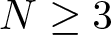 $N \geq 3$ that do not have a solution. We prove that a supercritical perturbation can lead to the existence of a positive solution. More precisely, we consider the equation:where
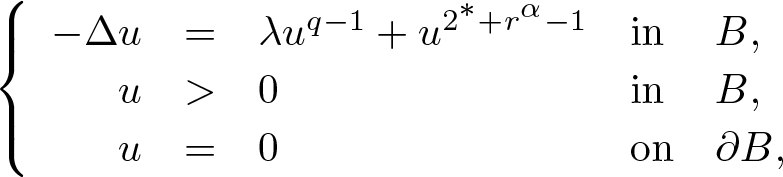 \begin{equation*}\left\{\begin{array}{rllll}-\Delta u & = & \lambda u^{q-1} + u^{2^*+ r^\alpha -1} & \mbox{in} & B, \\u & \gt & 0 & \mbox{in} & B, \\u&=&0 & \mbox{on} & \partial B,\\\end{array}\right.\end{equation*}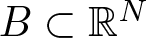 $B \subset \mathbb{R}^N$ is a unit ball centred at the origin,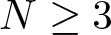 $N\geq 3$,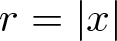 $r=\vert x \vert$, $\alpha \in (0,\min\{N/2,N-2\})$, λ is a fixed real parameter and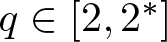 $q\in [2,2^*]$. This class of problems can be interpreted as a perturbation of the classical Brézis–Nirenberg problem by the term rα at the exponent, making the problem supercritical when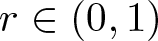 $r \in (0,1)$. More specifically, we study the effect of this supercritical perturbation on the existence of solutions. In particular, when N = 3, an interesting and unexpected phenomenon occurs. We obtain the existence of solutions for λ in a range where the Brézis–Nirenberg problem has no solution.
Equivalence between the functional equation and Voronoï-type summation identities for a class of L-functions
- Part of
-
- Journal:
- Proceedings of the Royal Society of Edinburgh. Section A: Mathematics , First View
- Published online by Cambridge University Press:
- 25 November 2024, pp. 1-41
-
- Article
- Export citation
-
To date, the bestmethodsfor estimating the growth of mean values of arithmetic functions rely on the Voronoï summation formula. By noticing a general pattern in the proof of his summation formula, Voronoï postulated that analogous summation formulas for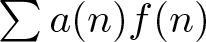 $\sum a(n)f(n)$ can be obtained with ‘nice’ test functions f(n), provided a(n) is an ‘arithmetic function’. These arithmetic functions a(n) are called so because they are expected to appear as coefficients of some L-functions satisfying certain properties. It has been well-known that the functional equation for a general L-function can be used to derive a Voronoï-type summation identity for that L-function. In this article, we show that such a Voronoï-typesummation identity in fact endows the L-function with some structural properties, yielding in particular the functional equation. We do this by considering Dirichlet series satisfying functional equations involving multiple Gamma factors and show that a given arithmetic function appears as a coefficient of such a Dirichlet series if and only if it satisfies the aforementioned summation formulas.
Pullback measure attractors for non-autonomous stochastic lattice systems
- Part of
-
- Journal:
- Proceedings of the Royal Society of Edinburgh. Section A: Mathematics , First View
- Published online by Cambridge University Press:
- 22 November 2024, pp. 1-20
-
- Article
- Export citation
Fence of saddle solutions of the Allen–Cahn equation in the plane
- Part of
-
- Journal:
- Proceedings of the Royal Society of Edinburgh. Section A: Mathematics , First View
- Published online by Cambridge University Press:
- 22 November 2024, pp. 1-42
-
- Article
- Export citation
A criterion to detect a non-trivial homology of an invariant set of a flow in $\mathbb{R}^3$
- Part of
-
- Journal:
- Proceedings of the Royal Society of Edinburgh. Section A: Mathematics , First View
- Published online by Cambridge University Press:
- 22 November 2024, pp. 1-31
-
- Article
-
- You have access
- Open access
- HTML
- Export citation
-
Consider a flow in $\mathbb{R}^3$ and let K be the biggest invariant subset of some compact region of interest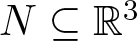 $N \subseteq \mathbb{R}^3$. The set K is often not computable, but the way the flow crosses the boundary of N can provide indirect information about it. For example, classical tools such as Ważewski’s principle or the Poincaré–Hopf theorem can be used to detect whether K is non-empty or contains rest points, respectively. We present a criterion that can establish whether K has a non-trivial homology by looking at the subset of the boundary of N along which the flow is tangent to N. We prove that the criterion is as sharp as possible with the information it uses as an input. We also show that it is algorithmically checkable.


Existence and non-existence results for a class of systems under concave-convex nonlinearities
- Part of
-
- Journal:
- Proceedings of the Edinburgh Mathematical Society / Volume 68 / Issue 1 / February 2025
- Published online by Cambridge University Press:
- 22 November 2024, pp. 128-156
-
- Article
- Export citation
-
In this work, we are interested in studying the following class of problems:(𝒫λμ)
where Ω is a bounded domain in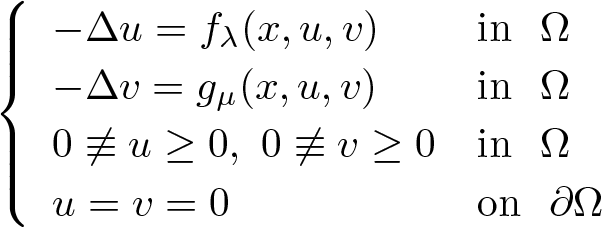 \begin{align}\left\{\begin{array}{ll}-\Delta u=f_\lambda(x,u,v)& \text{in}~~\Omega\\-\Delta v=g_\mu(x,u,v) & \text{in}~~\Omega\\0\not\equiv u\geq 0,\,\,0\not\equiv v\geq 0& \text{in}~~\Omega\\u=v=0&\text{on}~~\partial\Omega\end{array}\right.\end{align} $\mathbb{R}^N$, λ > 0, µ > 0, $t\mapsto f_\lambda(x,t,t)$ and $t\mapsto g_\mu(x,t,t)$ have concave-convex type nonlinearities. We present results related to the existence and non-existence of solutions for problem $(\mathcal{P}_{\lambda\mu})$.


Defect relation for holomorphic maps from complex discs into projective varieties and hypersurfaces
- Part of
-
- Journal:
- Proceedings of the Edinburgh Mathematical Society / Volume 68 / Issue 1 / February 2025
- Published online by Cambridge University Press:
- 22 November 2024, pp. 157-172
-
- Article
- Export citation
-
In this paper, we establish a second main theorem for holomorphic maps with finite growth index on complex discs intersecting arbitrary families of hypersurfaces (fixed and moving) in projective varieties, which gives an above bound of the sum of truncated defects. Our result also generalizes and improves many previous second main theorems for holomorphic maps from ${\mathbb{C}}$ intersecting hypersurfaces (moving and fixed) in projective varieties.

A remark on the well-posedness of the modified KdV equation in L2
- Part of
-
- Journal:
- Proceedings of the Royal Society of Edinburgh. Section A: Mathematics , First View
- Published online by Cambridge University Press:
- 22 November 2024, pp. 1-26
-
- Article
- Export citation
-
We study the real-valued modified KdV equation on the real line and the circle in both the focusing and the defocusing cases. By employing the method of commuting flows introduced by Killip and Vişan (2019), we prove global well-posedness in Hs for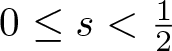 $0\leq s \lt \tfrac{1}{2}$. On the line, we show how the arguments in the recent article by Harrop-Griffiths, Killip, and Vişan (2020) may be simplified in the higher regularity regime $s\geq 0$. On the circle, we provide an alternative proof of the sharp global well-posedness in L2 due to Kappeler and Topalov (2005) and also extend this to the large-data focusing case.

Model structures, n-Gorenstein flat modules and PGF dimensions
- Part of
-
- Journal:
- Proceedings of the Edinburgh Mathematical Society / Volume 67 / Issue 4 / November 2024
- Published online by Cambridge University Press:
- 22 November 2024, pp. 1241-1264
-
- Article
- Export citation
-
Given a non-negative integer n and a ring R with identity, we construct a hereditary abelian model structure on the category of left R-modules where the class of cofibrant objects coincides with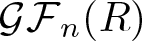 $\mathcal{GF}_n(R)$ the class of left R-modules with Gorenstein flat dimension at most n, the class of fibrant objects coincides with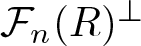 $\mathcal{F}_n(R)^\perp$ the right ${\rm Ext}$-orthogonal class of left R-modules with flat dimension at most n, and the class of trivial objects coincides with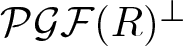 $\mathcal{PGF}(R)^\perp$ the right ${\rm Ext}$-orthogonal class of PGF left R-modules recently introduced by Šaroch and
  . The homotopy category of this model structure is triangulated equivalent to the stable category $\underline{\mathcal{GF}(R)\cap\mathcal{C}(R)}$ modulo flat-cotorsion modules and it is compactly generated when R has finite global Gorenstein projective dimension.
The second part of this paper deals with the PGF dimension of modules and rings. Our results suggest that this dimension could serve as an alternative definition of the Gorenstein projective dimension. We show, among other things, that (n-)perfect rings can be characterized in terms of Gorenstein homological dimensions, similar to the classical ones, and the global Gorenstein projective dimension coincides with the global PGF dimension.


 . The homotopy category of this model structure is triangulated equivalent to the stable category
Equivariant covering type and the number of vertices in equivariant triangulations
- Part of
-
- Journal:
- Proceedings of the Royal Society of Edinburgh. Section A: Mathematics , First View
- Published online by Cambridge University Press:
- 22 November 2024, pp. 1-32
-
- Article
- Export citation
