Refine search
Actions for selected content:
26063 results in Abstract analysis
7 - Hyperfiniteness
-
- Book:
- The Theory of Countable Borel Equivalence Relations
- Published online:
- 07 November 2024
- Print publication:
- 21 November 2024, pp 59-80
-
- Chapter
- Export citation
Subject Index
-
- Book:
- The Theory of Countable Borel Equivalence Relations
- Published online:
- 07 November 2024
- Print publication:
- 21 November 2024, pp 158-162
-
- Chapter
- Export citation
References
-
- Book:
- Probability Theory, An Analytic View
- Published online:
- 07 November 2024
- Print publication:
- 21 November 2024, pp 437-439
-
- Chapter
- Export citation
16 - Open Problems
-
- Book:
- The Theory of Countable Borel Equivalence Relations
- Published online:
- 07 November 2024
- Print publication:
- 21 November 2024, pp 137-141
-
- Chapter
- Export citation
11 - Universality
-
- Book:
- The Theory of Countable Borel Equivalence Relations
- Published online:
- 07 November 2024
- Print publication:
- 21 November 2024, pp 110-122
-
- Chapter
- Export citation
10 - Wiener Measure and Partial Differential Equations
-
- Book:
- Probability Theory, An Analytic View
- Published online:
- 07 November 2024
- Print publication:
- 21 November 2024, pp 334-383
-
- Chapter
- Export citation
Global well-posedness and uniform boundedness of 2D urban crime models with nonlinear advection enhancement
- Part of
-
- Journal:
- European Journal of Applied Mathematics / Volume 36 / Issue 5 / October 2025
- Published online by Cambridge University Press:
- 20 November 2024, pp. 897-909
-
- Article
-
- You have access
- Open access
- HTML
- Export citation
Existence and analyticity of solutions of the Kuramoto–Sivashinsky equation with singular data
- Part of
-
- Journal:
- Proceedings of the Royal Society of Edinburgh. Section A: Mathematics , First View
- Published online by Cambridge University Press:
- 20 November 2024, pp. 1-26
-
- Article
- Export citation
Arithmetic Ramsey theory over the primes
- Part of
-
- Journal:
- Proceedings of the Royal Society of Edinburgh. Section A: Mathematics / Volume 156 / Issue 3 / June 2026
- Published online by Cambridge University Press:
- 20 November 2024, pp. 966-1012
- Print publication:
- June 2026
-
- Article
-
- You have access
- Open access
- HTML
- Export citation
-
We study density and partition properties of polynomial equations in prime variables. We consider equations of the form $a_1h(x_1) + \cdots + a_sh(x_s)=b$, where the ai and b are fixed coefficients and h is an arbitrary integer polynomial of degree d. We establish that the natural necessary conditions for this equation to have a monochromatic non-constant solution with respect to any finite colouring of the prime numbers are also sufficient when the equation has at least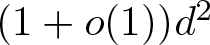 $(1+o(1))d^2$ variables. We similarly characterize when such equations admit solutions over any set of primes with positive relative upper density. In both cases, we obtain lower bounds for the number of monochromatic or dense solutions in primes that are of the correct order of magnitude. Our main new ingredient is a uniform lower bound on the cardinality of a prime polynomial Bohr set.
Differential embeddings into algebras of topological stable rank 1
- Part of
-
- Journal:
- Proceedings of the Royal Society of Edinburgh. Section A: Mathematics , First View
- Published online by Cambridge University Press:
- 20 November 2024, pp. 1-25
-
- Article
-
- You have access
- Open access
- HTML
- Export citation
Fractional order for the transmission dynamics of coffee berry diseases (CBD)
- Part of
-
- Journal:
- European Journal of Applied Mathematics / Volume 36 / Issue 4 / August 2025
- Published online by Cambridge University Press:
- 20 November 2024, pp. 879-896
-
- Article
-
- You have access
- Open access
- HTML
- Export citation
Long induced paths in expanders
- Part of
-
- Journal:
- Combinatorics, Probability and Computing / Volume 34 / Issue 2 / March 2025
- Published online by Cambridge University Press:
- 19 November 2024, pp. 276-282
-
- Article
-
- You have access
- Open access
- HTML
- Export citation
Noisy group testing via spatial coupling
- Part of
-
- Journal:
- Combinatorics, Probability and Computing / Volume 34 / Issue 2 / March 2025
- Published online by Cambridge University Press:
- 19 November 2024, pp. 210-258
-
- Article
-
- You have access
- Open access
- HTML
- Export citation
-
We study the problem of identifying a small number $k\sim n^\theta$, $0\lt \theta \lt 1$, of infected individuals within a large population of size $n$ by testing groups of individuals simultaneously. All tests are conducted concurrently. The goal is to minimise the total number of tests required. In this paper, we make the (realistic) assumption that tests are noisy, that is, that a group that contains an infected individual may return a negative test result or one that does not contain an infected individual may return a positive test result with a certain probability. The noise need not be symmetric. We develop an algorithm called SPARC that correctly identifies the set of infected individuals up to $o(k)$ errors with high probability with the asymptotically minimum number of tests. Additionally, we develop an algorithm called SPEX that exactly identifies the set of infected individuals w.h.p. with a number of tests that match the information-theoretic lower bound for the constant column design, a powerful and well-studied test design.


Maximal noncompactness of limiting Sobolev embeddings
- Part of
-
- Journal:
- Proceedings of the Royal Society of Edinburgh. Section A: Mathematics / Volume 156 / Issue 3 / June 2026
- Published online by Cambridge University Press:
- 18 November 2024, pp. 812-830
- Print publication:
- June 2026
-
- Article
- Export citation
CYT and SKT manifolds with parallel Bismut torsion
- Part of
-
- Journal:
- Proceedings of the Royal Society of Edinburgh. Section A: Mathematics / Volume 156 / Issue 3 / June 2026
- Published online by Cambridge University Press:
- 18 November 2024, pp. 901-926
- Print publication:
- June 2026
-
- Article
-
- You have access
- Open access
- HTML
- Export citation
Product of polynomial values being large power
- Part of
-
- Journal:
- Proceedings of the Edinburgh Mathematical Society / Volume 68 / Issue 1 / February 2025
- Published online by Cambridge University Press:
- 18 November 2024, pp. 51-62
-
- Article
-
- You have access
- Open access
- HTML
- Export citation
The socle of subshift algebras, with applications to subshift conjugacy
- Part of
-
- Journal:
- Proceedings of the Royal Society of Edinburgh. Section A: Mathematics / Volume 156 / Issue 3 / June 2026
- Published online by Cambridge University Press:
- 18 November 2024, pp. 844-869
- Print publication:
- June 2026
-
- Article
- Export citation
Additive energies of subsets of discrete cubes
-
- Journal:
- Proceedings of the Royal Society of Edinburgh. Section A: Mathematics / Volume 156 / Issue 3 / June 2026
- Published online by Cambridge University Press:
- 18 November 2024, pp. 944-965
- Print publication:
- June 2026
-
- Article
-
- You have access
- Open access
- HTML
- Export citation
-
For a positive integer $n \geq 2$, define tn to be the smallest number such that the additive energy E(A) of any subset $A \subset \{0,1,\cdots,n-1\}^d$ and any d is at most $|A|^{t_n}$. Trivially, we have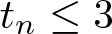 $t_n \leq 3$ and
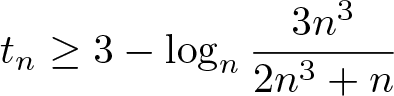 \begin{equation*} t_n \geq 3 - \log_n\frac{3n^3}{2n^3+n} \end{equation*}
by considering $A = \{0,1,\cdots,n-1\}^d$. In this note, we investigate the behaviour of tn for large n and obtain the following non-trivial bounds:
 \begin{equation*} 3 - (1+o_{n\rightarrow\infty}(1)) \log_n \frac{3\sqrt{3}}{4} \leq t_n \leq 3 - \log_n(1+c), \end{equation*}
where c > 0 is an absolute constant.


Principal bundle structure of the space of metric measure spaces
- Part of
-
- Journal:
- Proceedings of the Royal Society of Edinburgh. Section A: Mathematics / Volume 156 / Issue 3 / June 2026
- Published online by Cambridge University Press:
- 18 November 2024, pp. 870-900
- Print publication:
- June 2026
-
- Article
- Export citation
-
We study the topological structure of the space $\mathcal{X}$ of isomorphism classes of metric measure spaces equipped with the box or concentration topologies. We consider the scale-change action of the multiplicative group ${\mathbb{R}}_+$ of positive real numbers on $\mathcal{X}$, which has a one-point metric measure space, say $*$, as only one fixed-point. We prove that the ${\mathbb{R}}_+$-action on $\mathcal{X}_* := \mathcal{X} \setminus \{*\}$ admits the structure of non-trivial and locally trivial principal ${\mathbb{R}}_+$-bundle over the quotient space. Our bundle ${\mathbb{R}}_+ \to \mathcal{X}_* \to \mathcal{X}_*/{\mathbb{R}}_+$ is a curious example of a non-trivial principal fibre bundle with contractible fibre. A similar statement is obtained for the pyramidal compactification of $\mathcal{X}$, where we completely determine the structure of the fixed-point set of the ${\mathbb{R}}_+$-action on the compactification.


General study on limit cycle bifurcation near a double eight figure loop
- Part of
-
- Journal:
- Proceedings of the Royal Society of Edinburgh. Section A: Mathematics / Volume 156 / Issue 3 / June 2026
- Published online by Cambridge University Press:
- 18 November 2024, pp. 927-943
- Print publication:
- June 2026
-
- Article
- Export citation
-
In this article, we explore the bifurcation problem of limit cycles near the double eight figure loop (compound cycle with a 2-polycycle connecting two homoclinic loops). A general theory is established to find the lower bound of the maximal number of limit cycles (isolated periodic orbits) near the double eight figure loop. The Liénard system, a well-known nonlinear dynamical model, appears in a natural way in physics, chemistry, engineering, and so on, where periodic phenomena play a relevant role. As an application, we investigate an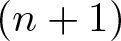 $(n+1)$th-order generalized Liénard system and prove the system has at least $7[\frac{n}{6}]+2[\frac{r}{2}]-[\frac{r}{4}]$ limit cycles near the double eight figure loop for any $n\geq5$ and $r=\rm mod(n,6)$, and their distribution is also gained.

