Refine search
Actions for selected content:
26063 results in Abstract analysis
Vertex-critical graphs far from edge-criticality
- Part of
-
- Journal:
- Combinatorics, Probability and Computing / Volume 34 / Issue 1 / January 2025
- Published online by Cambridge University Press:
- 11 October 2024, pp. 151-157
-
- Article
-
- You have access
- Open access
- HTML
- Export citation
-
Let $r$ be any positive integer. We prove that for every sufficiently large $k$ there exists a $k$-chromatic vertex-critical graph $G$ such that $\chi (G-R)=k$ for every set $R \subseteq E(G)$ with $|R|\le r$. This partially solves a problem posed by Erdős in 1985, who asked whether the above statement holds for $k \ge 4$.


Approximation of subgraph counts in the uniform attachment model
- Part of
-
- Journal:
- Combinatorics, Probability and Computing / Volume 34 / Issue 1 / January 2025
- Published online by Cambridge University Press:
- 10 October 2024, pp. 90-114
-
- Article
-
- You have access
- Open access
- HTML
- Export citation
-
We use Stein’s method to obtain distributional approximations of subgraph counts in the uniform attachment model or random directed acyclic graph; we provide also estimates of rates of convergence. In particular, we give uni- and multi-variate Poisson approximations to the counts of cycles and normal approximations to the counts of unicyclic subgraphs; we also give a partial result for the counts of trees. We further find a class of multicyclic graphs whose subgraph counts are a.s. bounded as $n\to \infty$.

ZETA INVARIANTS OF MORSE FORMS
- Part of
-
- Journal:
- Journal of the Institute of Mathematics of Jussieu / Volume 24 / Issue 2 / March 2025
- Published online by Cambridge University Press:
- 10 October 2024, pp. 411-480
- Print publication:
- March 2025
-
- Article
-
- You have access
- Open access
- HTML
- Export citation
-
Let $\eta $ be [-11pc] [-7pc]a closed real 1-form on a closed Riemannian n-manifold $(M,g)$. Let $d_z$, $\delta _z$ and $\Delta _z$ be the induced Witten’s type perturbations of the de Rham derivative and coderivative and the Laplacian, parametrized by $z=\mu +i\nu \in \mathbb C$ ( $\mu ,\nu \in \mathbb {R}$, $i=\sqrt {-1}$). Let $\zeta (s,z)$ be the zeta function of $s\in \mathbb {C}$, defined as the meromorphic extension of the function $\zeta (s,z)=\operatorname {Str}({\eta \wedge }\,\delta _z\Delta _z^{-s})$ for $\Re s\gg 0$. We prove that $\zeta (s,z)$ is smooth at $s=1$ and establish a formula for $\zeta (1,z)$ in terms of the associated heat semigroup. For a class of Morse forms, $\zeta (1,z)$ converges to some $\mathbf {z}\in \mathbb {R}$ as $\mu \to +\infty $, uniformly on $\nu $. We describe $\mathbf {z}$ in terms of the instantons of an auxiliary Smale gradient-like vector field X and the Mathai–Quillen current on $TM$ defined by g. Any real 1-cohomology class has a representative $\eta $ satisfying the hypothesis. If n is even, we can prescribe any real value for $\mathbf {z}$ by perturbing g, $\eta $ and X and achieve the same limit as $\mu \to -\infty $. This is used to define and describe certain tempered distributions induced by g and $\eta $. These distributions appear in another publication as contributions from the preserved leaves in a trace formula for simple foliated flows, giving a solution to a problem stated by C. Deninger.


Gassmann triples with special cycle types and applications
- Part of
-
- Journal:
- Proceedings of the Edinburgh Mathematical Society / Volume 67 / Issue 4 / November 2024
- Published online by Cambridge University Press:
- 10 October 2024, pp. 1115-1124
-
- Article
-
- You have access
- Open access
- HTML
- Export citation
A note on extremal constructions for the Erdős–Rademacher problem
- Part of
-
- Journal:
- Combinatorics, Probability and Computing / Volume 34 / Issue 1 / January 2025
- Published online by Cambridge University Press:
- 10 October 2024, pp. 52-62
-
- Article
-
- You have access
- Open access
- HTML
- Export citation
-
For given positive integers $r\ge 3$, $n$ and $e\le \binom{n}{2}$, the famous Erdős–Rademacher problem asks for the minimum number of $r$-cliques in a graph with $n$ vertices and $e$ edges. A conjecture of Lovász and Simonovits from the 1970s states that, for every $r\ge 3$, if $n$ is sufficiently large then, for every $e\le \binom{n}{2}$, at least one extremal graph can be obtained from a complete partite graph by adding a triangle-free graph into one part.
In this note, we explicitly write the minimum number of $r$-cliques predicted by the above conjecture. Also, we describe what we believe to be the set of extremal graphs for any $r\ge 4$ and all large $n$, amending the previous conjecture of Pikhurko and Razborov.


Perturbations of norm-additive maps between continuous function spaces
- Part of
-
- Journal:
- Proceedings of the Edinburgh Mathematical Society / Volume 67 / Issue 4 / November 2024
- Published online by Cambridge University Press:
- 10 October 2024, pp. 1099-1114
-
- Article
- Export citation
-
Let $X, Y$ be two locally compact Hausdorff spaces and $T:C_0(X)\rightarrow C_0(Y)$ be a standard surjective ɛ-norm-additive map, i.e.
 \begin{equation*}\big|\|T(f)+T(g)\|-\|f+g\|\big|\leq \varepsilon,\;{\rm for\;all}\; f, g\in C_0(X).\end{equation*}
Then there exist a homeomorphism $\varphi:Y\rightarrow X$ and a continuous function $\lambda:Y\rightarrow\lbrace\pm1\rbrace$ such that
 \begin{equation*}|T(f)(y)-\lambda(y)f(\varphi(y))|\leq\frac{3}{2}\varepsilon,\;{\rm for\;all}\;y\in Y,\;f\in C_0(X).\end{equation*}
The estimate ‘ $\frac{3}{2}\varepsilon$’ is optimal. And this result can be regarded as a new nonlinear extension of the Banach–Stone theorem.


Travelling wavefronts for the Belousov–Zhabotinsky system with non-local delayed interaction
- Part of
-
- Journal:
- European Journal of Applied Mathematics / Volume 36 / Issue 4 / August 2025
- Published online by Cambridge University Press:
- 10 October 2024, pp. 738-774
-
- Article
-
- You have access
- Open access
- HTML
- Export citation
Partial recovery and weak consistency in the non-uniform hypergraph stochastic block model
- Part of
-
- Journal:
- Combinatorics, Probability and Computing / Volume 34 / Issue 1 / January 2025
- Published online by Cambridge University Press:
- 09 October 2024, pp. 1-51
-
- Article
- Export citation
-
We consider the community detection problem in sparse random hypergraphs under the non-uniform hypergraph stochastic block model (HSBM), a general model of random networks with community structure and higher-order interactions. When the random hypergraph has bounded expected degrees, we provide a spectral algorithm that outputs a partition with at least a $\gamma$ fraction of the vertices classified correctly, where $\gamma \in (0.5,1)$ depends on the signal-to-noise ratio (SNR) of the model. When the SNR grows slowly as the number of vertices goes to infinity, our algorithm achieves weak consistency, which improves the previous results in Ghoshdastidar and Dukkipati ((2017) Ann. Stat. 45(1) 289–315.) for non-uniform HSBMs.
Our spectral algorithm consists of three major steps: (1) Hyperedge selection: select hyperedges of certain sizes to provide the maximal signal-to-noise ratio for the induced sub-hypergraph; (2) Spectral partition: construct a regularised adjacency matrix and obtain an approximate partition based on singular vectors; (3) Correction and merging: incorporate the hyperedge information from adjacency tensors to upgrade the error rate guarantee. The theoretical analysis of our algorithm relies on the concentration and regularisation of the adjacency matrix for sparse non-uniform random hypergraphs, which can be of independent interest.


Early warning signs for SPDEs with continuous spectrum
- Part of
-
- Journal:
- European Journal of Applied Mathematics / Volume 36 / Issue 4 / August 2025
- Published online by Cambridge University Press:
- 04 October 2024, pp. 665-704
-
- Article
-
- You have access
- Open access
- HTML
- Export citation
The combinatorics of $N_\infty$ operads for $C_{qp^n}$ and $D_{p^n}$
-
- Journal:
- Glasgow Mathematical Journal / Volume 67 / Issue 1 / January 2025
- Published online by Cambridge University Press:
- 03 October 2024, pp. 50-66
-
- Article
-
- You have access
- Open access
- HTML
- Export citation
-
We provide a general recursive method for constructing transfer systems on finite lattices. Using this, we calculate the number of homotopically distinct $N_{\infty} $ operads for dihedral groups $D_{p^n}$, $p \gt 2$ prime, and cyclic groups $C_{qp^n}$, $p \neq q$ prime. We then further display some of the beautiful combinatorics obtained by restricting to certain homotopically meaningful $N_\infty$ operads for these groups.


Blowup of cylindrically symmetric solutions for biharmonic NLS
- Part of
-
- Journal:
- Proceedings of the Edinburgh Mathematical Society / Volume 67 / Issue 4 / November 2024
- Published online by Cambridge University Press:
- 03 October 2024, pp. 1085-1098
-
- Article
- Export citation
-
In this paper, we consider blowup of solutions to the Cauchy problem for the following biharmonic nonlinear Schrödinger equation (NLS),
 \begin{equation*}\text{i } \partial_t u=\Delta^2 u-\mu \Delta u-|u|^{2 \sigma} u \quad \text{in} \,\, \mathbb{R} \times \mathbb{R}^d,\end{equation*}
where $d \geq 1$,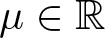 $\mu \in \mathbb{R}$ and $0 \lt \sigma \lt \infty$ if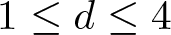 $1 \leq d \leq 4$ and $0 \lt \sigma \lt 4/(d-4)$ if $d \geq 5$. In the mass critical and supercritical cases, we establish the existence of blowup solutions to the problem for cylindrically symmetric data. The result extends the known ones with respect to blowup of solutions to the problem for radially symmetric data.


Supercongruences involving Motzkin numbers and central trinomial coefficients
- Part of
-
- Journal:
- Proceedings of the Edinburgh Mathematical Society / Volume 67 / Issue 4 / November 2024
- Published online by Cambridge University Press:
- 03 October 2024, pp. 1060-1084
-
- Article
- Export citation
-
Let Mn and Tn denote the nth Motzkin number and the nth central trinomial coefficient respectively. We prove that for any prime $p\ge 5$,
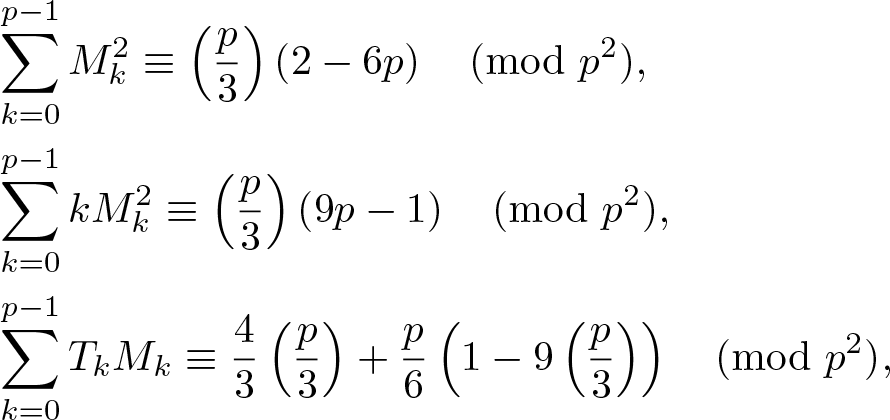 \begin{equation*}\begin{aligned}\\[-22pt]&\sum_{k=0}^{p-1}M_k^2\equiv \left(\frac{p}{3}\right)\left(2-6p\right)\pmod{p^2},\\&\sum_{k=0}^{p-1}kM_k^2\equiv \left(\frac{p}{3}\right)\left(9p-1\right)\pmod{p^2},\\&\sum_{k=0}^{p-1}T_kM_k\equiv \frac{4}{3}\left(\frac{p}{3}\right)+\frac{p}{6}\left(1-9\left(\frac{p}{3}\right)\right)\pmod{p^2},\\[-6pt]\end{aligned}\end{equation*}
where $\left(-\right)$ is the Legendre symbol. These results confirm three supercongruences conjectured by Z.-W. Sun in 2010.


Classification of multiplication modules over multiplication rings with finitely many minimal primes
- Part of
-
- Journal:
- Glasgow Mathematical Journal / Volume 67 / Issue 1 / January 2025
- Published online by Cambridge University Press:
- 03 October 2024, pp. 67-71
-
- Article
- Export citation
Volume and Euler classes in bounded cohomology of transformation groups
- Part of
-
- Journal:
- Glasgow Mathematical Journal / Volume 67 / Issue 1 / January 2025
- Published online by Cambridge University Press:
- 02 October 2024, pp. 34-49
-
- Article
-
- You have access
- Open access
- HTML
- Export citation
-
Let $M$ be an oriented smooth manifold and $\operatorname{Homeo}\!(M,\omega )$ the group of measure preserving homeomorphisms of $M$, where $\omega$ is a finite measure induced by a volume form. In this paper, we define volume and Euler classes in bounded cohomology of an infinite dimensional transformation group $\operatorname{Homeo}_0\!(M,\omega )$ and $\operatorname{Homeo}_+\!(M,\omega )$, respectively, and in several cases prove their non-triviality. More precisely, we define:
• Volume classes in $\operatorname{H}_b^n(\operatorname{Homeo}_0\!(M,\omega ))$, where $M$ is a hyperbolic manifold of dimension $n$.
$n$.• Euler classes in $\operatorname{H}_b^2(\operatorname{Homeo}_+(S,\omega ))$, where $S$ is an oriented closed hyperbolic surface.
We show that Euler classes have positive norms for any closed hyperbolic surface and volume classes have positive norms for all hyperbolic surfaces and certain hyperbolic $3$-manifolds; hence, they are non-trivial.


PRM volume 154 issue 5 Cover and Back matter
-
- Journal:
- Proceedings of the Royal Society of Edinburgh. Section A: Mathematics / Volume 154 / Issue 5 / October 2024
- Published online by Cambridge University Press:
- 09 October 2024, pp. b1-b2
- Print publication:
- October 2024
-
- Article
-
- You have access
- Export citation
PRM volume 154 issue 5 Cover and Front matter
-
- Journal:
- Proceedings of the Royal Society of Edinburgh. Section A: Mathematics / Volume 154 / Issue 5 / October 2024
- Published online by Cambridge University Press:
- 09 October 2024, pp. f1-f2
- Print publication:
- October 2024
-
- Article
-
- You have access
- Export citation
Weyl chamber length compactification of the $\textrm{PSL}(2,{\mathbb{R}})\times \textrm{PSL}(2,{\mathbb{R}})$ maximal character variety
- Part of
-
- Journal:
- Glasgow Mathematical Journal / Volume 67 / Issue 1 / January 2025
- Published online by Cambridge University Press:
- 27 September 2024, pp. 11-33
-
- Article
- Export citation
-
We study the vectorial length compactification of the space of conjugacy classes of maximal representations of the fundamental group $\Gamma$ of a closed hyperbolic surface $\Sigma$ in $\textrm{PSL}(2,{\mathbb{R}})^n$. We identify the boundary with the sphere ${\mathbb{P}}(({\mathcal{ML}})^n)$, where $\mathcal{ML}$ is the space of measured geodesic laminations on $\Sigma$. In the case $n=2$, we give a geometric interpretation of the boundary as the space of homothety classes of ${\mathbb{R}}^2$-mixed structures on $\Sigma$. We associate to such a structure a dual tree-graded space endowed with an ${\mathbb{R}}_+^2$-valued metric, which we show to be universal with respect to actions on products of two $\mathbb{R}$-trees with the given length spectrum.


The multilinear spherical maximal function in one dimension
- Part of
-
- Journal:
- Proceedings of the Edinburgh Mathematical Society / Volume 67 / Issue 4 / November 2024
- Published online by Cambridge University Press:
- 25 September 2024, pp. 1045-1059
-
- Article
-
- You have access
- Open access
- HTML
- Export citation
-
In dimension n = 1, we obtain $L^{p_1}(\mathbb R) \times\dots\times L^{p_m}(\mathbb R)$ to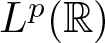 $L^p(\mathbb R)$ boundedness for the multilinear spherical maximal function in the largest possible open set of indices and we provide counterexamples that indicate the optimality of our results.
SUFFICIENT CONDITIONS FOR A GROUP OF HOMEOMORPHISMS OF THE CANTOR SET TO BE TWO-GENERATED
- Part of
-
- Journal:
- Journal of the Institute of Mathematics of Jussieu / Volume 23 / Issue 6 / November 2024
- Published online by Cambridge University Press:
- 20 September 2024, pp. 2825-2858
- Print publication:
- November 2024
-
- Article
-
- You have access
- Open access
- HTML
- Export citation
-
We introduce and study two conditions on groups of homeomorphisms of Cantor space, namely the conditions of being vigorous and of being flawless. These concepts are dynamical in nature, and allow us to study a certain interplay between the dynamics of an action and the algebraic properties of the acting group. A group $G\leq \operatorname {Homeo}(\mathfrak {C})$ is vigorous if for any clopen set A and proper clopen subsets B and C of A, there is $\gamma \in G$ in the pointwise stabiliser of $\mathfrak {C}\backslash A$ with $B\gamma \subseteq C$. A nontrivial group $G\leq \operatorname {Homeo}(\mathfrak {C})$ is flawless if for all k and w a nontrivial freely reduced product expression on k variables (including inverse symbols), a particular subgroup $w(G)_\circ $ of the verbal subgroup $w(G)$ is the whole group. We show: 1) simple vigorous groups are either two-generated by torsion elements, or not finitely generated, 2) flawless groups are both perfect and lawless, 3) vigorous groups are simple if and only if they are flawless, and, 4) the class of vigorous simple subgroups of $\operatorname {Homeo}(\mathfrak {C})$ is fairly broad (the class is closed under various natural constructions and contains many well known groups, such as the commutator subgroups of the Higman–Thompson groups $G_{n,r}$, the Brin-Thompson groups $nV$, Röver’s group $V(\Gamma )$, and others of Nekrashevych’s ‘simple groups of dynamical origin’).


The full rank condition for sparse random matrices
- Part of
-
- Journal:
- Combinatorics, Probability and Computing / Volume 33 / Issue 5 / September 2024
- Published online by Cambridge University Press:
- 20 September 2024, pp. 643-707
-
- Article
-
- You have access
- Open access
- HTML
- Export citation
-
We derive a sufficient condition for a sparse random matrix with given numbers of non-zero entries in the rows and columns having full row rank. The result covers both matrices over finite fields with independent non-zero entries and $\{0,1\}$-matrices over the rationals. The sufficient condition is generally necessary as well.

