Refine search
Actions for selected content:
26063 results in Abstract analysis
Dual formulation of constrained solutions of the multi-state Choquard equation
- Part of
-
- Journal:
- Proceedings of the Royal Society of Edinburgh. Section A: Mathematics / Volume 156 / Issue 2 / April 2026
- Published online by Cambridge University Press:
- 13 September 2024, pp. 634-654
- Print publication:
- April 2026
-
- Article
- Export citation
Solid bases and functorial constructions for (p-)Banach spaces of analytic functions
- Part of
-
- Journal:
- Proceedings of the Edinburgh Mathematical Society / Volume 67 / Issue 4 / November 2024
- Published online by Cambridge University Press:
- 09 September 2024, pp. 1013-1044
-
- Article
- Export citation
-
Motivated by new examples of functional Banach spaces over the unit disk, arising as the symbol spaces in the study of random analytic functions, for which the monomials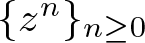 $\{z^n\}_{n\geq 0}$ exhibit features of an unconditional basis yet they often don’t even form a Schauder basis, we introduce a notion called solid basis for Banach spaces and p-Banach spaces and study its properties. Besides justifying the rich existence of solid bases, we study their relationship with unconditional bases, the weak-star convergence of Taylor polynomials, the problem of a solid span and the curious roles played by c0. The two features of this work are as follows: (1) during the process, we are led to revisit the axioms satisfied by a typical Banach space of analytic functions over the unit disk, leading to a notion of $\mathcal{X}^\mathrm{max}$ (and $\mathcal{X}^\mathrm{min}$), as well as a number of related functorial constructions, which are of independent interests; (2) the main interests of solid basis lie in the case of non-separable (p-)Banach spaces, such as BMOA and the Bloch space instead of VMOA and the little Bloch space.


JMJ volume 23 issue 5 Cover and Back matter
-
- Journal:
- Journal of the Institute of Mathematics of Jussieu / Volume 23 / Issue 5 / September 2024
- Published online by Cambridge University Press:
- 08 November 2024, pp. b1-b2
- Print publication:
- September 2024
-
- Article
-
- You have access
- Export citation
JMJ volume 23 issue 5 Cover and Front matter
-
- Journal:
- Journal of the Institute of Mathematics of Jussieu / Volume 23 / Issue 5 / September 2024
- Published online by Cambridge University Press:
- 08 November 2024, pp. f1-f2
- Print publication:
- September 2024
-
- Article
-
- You have access
- Export citation
Note on almost isometric ideals and local retracts in Banach and metric spaces
- Part of
-
- Journal:
- Proceedings of the Royal Society of Edinburgh. Section A: Mathematics / Volume 156 / Issue 2 / April 2026
- Published online by Cambridge University Press:
- 27 August 2024, pp. 609-633
- Print publication:
- April 2026
-
- Article
- Export citation
Maximizing weighted sums of binomial coefficients using generalized continued fractions
- Part of
-
- Journal:
- Proceedings of the Royal Society of Edinburgh. Section A: Mathematics / Volume 156 / Issue 2 / April 2026
- Published online by Cambridge University Press:
- 27 August 2024, pp. 593-608
- Print publication:
- April 2026
-
- Article
- Export citation
-
Let $m,\,r\in {\mathbb {Z}}$
 and $\omega \in {\mathbb {R}}$
 satisfy $0\leqslant r\leqslant m$
 and $\omega \geqslant 1$
 . Our main result is a generalized continued fraction for an expression involving the partial binomial sum $s_m(r) = \sum _{i=0}^r\binom{m}{i}$
 . We apply this to create new upper and lower bounds for $s_m(r)$
 and thus for $g_{\omega,m}(r)=\omega ^{-r}s_m(r)$
 . We also bound an integer $r_0 \in \{0,\,1,\,\ldots,\,m\}$
 such that $g_{\omega,m}(0)<\cdots < g_{\omega,m}(r_0-1)\leqslant g_{\omega,m}(r_0)$
 and $g_{\omega,m}(r_0)>\cdots >g_{\omega,m}(m)$
 . For real $\omega \geqslant \sqrt 3$
 we prove that $r_0\in \{\lfloor \frac {m+2}{\omega +1}\rfloor,\,\lfloor \frac {m+2}{\omega +1}\rfloor +1\}$
 , and also $r_0 =\lfloor \frac {m+2}{\omega +1}\rfloor$
 for $\omega \in \{3,\,4,\,\ldots \}$
 or $\omega =2$
 and $3\nmid m$
 .
.


PRM volume 154 issue 4 Cover and Back matter
-
- Journal:
- Proceedings of the Royal Society of Edinburgh. Section A: Mathematics / Volume 154 / Issue 4 / August 2024
- Published online by Cambridge University Press:
- 03 October 2024, pp. b1-b2
- Print publication:
- August 2024
-
- Article
-
- You have access
- Export citation
PRM volume 154 issue 4 Cover and Front matter
-
- Journal:
- Proceedings of the Royal Society of Edinburgh. Section A: Mathematics / Volume 154 / Issue 4 / August 2024
- Published online by Cambridge University Press:
- 03 October 2024, pp. f1-f2
- Print publication:
- August 2024
-
- Article
-
- You have access
- Export citation
5 - Renewal Equation in the McKendrick–von Foerster Model
-
- Book:
- Functional Analysis Revisited
- Published online:
- 31 October 2024
- Print publication:
- 04 July 2024, pp 55-64
-
- Chapter
- Export citation
12 - Completeness of the Space of Operators
-
- Book:
- Functional Analysis Revisited
- Published online:
- 31 October 2024
- Print publication:
- 04 July 2024, pp 127-143
-
- Chapter
- Export citation
3 - Picard’s Theorem
-
- Book:
- Functional Analysis Revisited
- Published online:
- 31 October 2024
- Print publication:
- 04 July 2024, pp 20-36
-
- Chapter
- Export citation
10 - Complete Orthonormal Sequences
-
- Book:
- Functional Analysis Revisited
- Published online:
- 31 October 2024
- Print publication:
- 04 July 2024, pp 103-112
-
- Chapter
- Export citation
Introduction
-
- Book:
- Functional Analysis Revisited
- Published online:
- 31 October 2024
- Print publication:
- 04 July 2024, pp ix-xii
-
- Chapter
- Export citation
7 - The Stone–Weierstrass Theorem
-
- Book:
- Functional Analysis Revisited
- Published online:
- 31 October 2024
- Print publication:
- 04 July 2024, pp 70-77
-
- Chapter
- Export citation
13 - Working in ℒ(𝕏)
-
- Book:
- Functional Analysis Revisited
- Published online:
- 31 October 2024
- Print publication:
- 04 July 2024, pp 144-162
-
- Chapter
- Export citation
4 - Banach Spaces
-
- Book:
- Functional Analysis Revisited
- Published online:
- 31 October 2024
- Print publication:
- 04 July 2024, pp 37-54
-
- Chapter
- Export citation
Appendix - Two Consequences of the Hahn–Banach Theorem
-
- Book:
- Functional Analysis Revisited
- Published online:
- 31 October 2024
- Print publication:
- 04 July 2024, pp 238-239
-
- Chapter
- Export citation
Index
-
- Book:
- Functional Analysis Revisited
- Published online:
- 31 October 2024
- Print publication:
- 04 July 2024, pp 243-246
-
- Chapter
- Export citation
16 - Semigroups of Operators
-
- Book:
- Functional Analysis Revisited
- Published online:
- 31 October 2024
- Print publication:
- 04 July 2024, pp 210-237
-
- Chapter
- Export citation
11 - Heat Equation
-
- Book:
- Functional Analysis Revisited
- Published online:
- 31 October 2024
- Print publication:
- 04 July 2024, pp 113-126
-
- Chapter
- Export citation
