Refine search
Actions for selected content:
26063 results in Abstract analysis
1 - Complete Metric Spaces
-
- Book:
- Functional Analysis Revisited
- Published online:
- 31 October 2024
- Print publication:
- 04 July 2024, pp 1-14
-
- Chapter
- Export citation
14 - The Banach–Steinhaus Theorem and Strong Convergence
-
- Book:
- Functional Analysis Revisited
- Published online:
- 31 October 2024
- Print publication:
- 04 July 2024, pp 163-184
-
- Chapter
- Export citation
6 - Riemann Integral for Vector-Valued Functions
-
- Book:
- Functional Analysis Revisited
- Published online:
- 31 October 2024
- Print publication:
- 04 July 2024, pp 65-69
-
- Chapter
- Export citation
9 - Hilbert Spaces
-
- Book:
- Functional Analysis Revisited
- Published online:
- 31 October 2024
- Print publication:
- 04 July 2024, pp 88-102
-
- Chapter
- Export citation
2 - Banach’s Principle
-
- Book:
- Functional Analysis Revisited
- Published online:
- 31 October 2024
- Print publication:
- 04 July 2024, pp 15-19
-
- Chapter
- Export citation
References
-
- Book:
- Functional Analysis Revisited
- Published online:
- 31 October 2024
- Print publication:
- 04 July 2024, pp 240-242
-
- Chapter
- Export citation
Frontmatter
-
- Book:
- Functional Analysis Revisited
- Published online:
- 31 October 2024
- Print publication:
- 04 July 2024, pp i-iv
-
- Chapter
- Export citation
Contents
-
- Book:
- Functional Analysis Revisited
- Published online:
- 31 October 2024
- Print publication:
- 04 July 2024, pp v-viii
-
- Chapter
- Export citation
15 - We Go Deeper, DeeperWe Go (into the Structure of Complete Spaces)
-
- Book:
- Functional Analysis Revisited
- Published online:
- 31 October 2024
- Print publication:
- 04 July 2024, pp 185-209
-
- Chapter
- Export citation
8 - Norms Do Differ
-
- Book:
- Functional Analysis Revisited
- Published online:
- 31 October 2024
- Print publication:
- 04 July 2024, pp 78-87
-
- Chapter
- Export citation
EXCEPTIONAL SIMPLE REAL LIE ALGEBRAS $\mathfrak {f}_4$ AND $\mathfrak {e}_6$ VIA CONTACTIFICATIONS
- Part of
-
- Journal:
- Journal of the Institute of Mathematics of Jussieu / Volume 24 / Issue 1 / January 2025
- Published online by Cambridge University Press:
- 03 July 2024, pp. 157-201
- Print publication:
- January 2025
-
- Article
- Export citation
-
In Cartan’s PhD thesis, there is a formula defining a certain rank 8 vector distribution in dimension 15, whose algebra of authomorphism is the split real form of the simple exceptional complex Lie algebra $\mathfrak {f}_4$. Cartan’s formula is written in the standard Cartesian coordinates in $\mathbb {R}^{15}$. In the present paper, we explain how to find analogous formulae for the flat models of any bracket generating distribution $\mathcal D$ whose symbol algebra $\mathfrak {n}({\mathcal D})$ is constant and 2-step graded, $\mathfrak {n}({\mathcal D})=\mathfrak {n}_{-2}\oplus \mathfrak {n}_{-1}$.
The formula is given in terms of a solution to a certain system of linear algebraic equations determined by two representations $(\rho ,\mathfrak {n}_{-1})$ and $(\tau ,\mathfrak {n}_{-2})$ of a Lie algebra $\mathfrak {n}_{00}$ contained in the $0$th order Tanaka prolongation $\mathfrak {n}_0$ of $\mathfrak {n}({\mathcal D})$.
Numerous examples are provided, with particular emphasis put on the distributions with symmetries being real forms of simple exceptional Lie algebras $\mathfrak {f}_4$ and $\mathfrak {e}_6$.


JMJ volume 23 issue 4 Cover and Front matter
-
- Journal:
- Journal of the Institute of Mathematics of Jussieu / Volume 23 / Issue 4 / July 2024
- Published online by Cambridge University Press:
- 03 October 2024, pp. f1-f2
- Print publication:
- July 2024
-
- Article
-
- You have access
- Export citation
JMJ volume 23 issue 4 Cover and Back matter
-
- Journal:
- Journal of the Institute of Mathematics of Jussieu / Volume 23 / Issue 4 / July 2024
- Published online by Cambridge University Press:
- 03 October 2024, pp. b1-b2
- Print publication:
- July 2024
-
- Article
-
- You have access
- Export citation
Equisingularity in pencils of curves on germs of reduced complex surfaces
- Part of
-
- Journal:
- Proceedings of the Edinburgh Mathematical Society / Volume 67 / Issue 3 / August 2024
- Published online by Cambridge University Press:
- 04 June 2024, pp. 990-1012
-
- Article
- Export citation
-
We study pencils of curves on a germ of complex reduced surface $(S,0)$. These are families of curves parametrized by $ \mathbb{P}^1 $ having 0 as the unique common point. We prove that for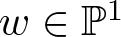 $w\in \mathbb{P}^1$, the corresponding curve of the pencil does not have the generic topology if and only if either the corresponding curve of the pulled-back pencil to the normalized surface has a non generic topology or w is a limit value for the function $ f/g $ along the singular locus of $(S,0)$, where f and g are generators of the pencil.


Rigidity for the perimeter inequality under Schwarz symmetrization
- Part of
-
- Journal:
- Proceedings of the Royal Society of Edinburgh. Section A: Mathematics / Volume 156 / Issue 2 / April 2026
- Published online by Cambridge University Press:
- 03 June 2024, pp. 566-592
- Print publication:
- April 2026
-
- Article
-
- You have access
- Open access
- HTML
- Export citation
Counting spanning subgraphs in dense hypergraphs
- Part of
-
- Journal:
- Combinatorics, Probability and Computing / Volume 33 / Issue 6 / November 2024
- Published online by Cambridge University Press:
- 30 May 2024, pp. 729-741
-
- Article
- Export citation
-
We give a simple method to estimate the number of distinct copies of some classes of spanning subgraphs in hypergraphs with a high minimum degree. In particular, for each $k\geq 2$ and $1\leq \ell \leq k-1$, we show that every $k$-graph on $n$ vertices with minimum codegree at leastcontains
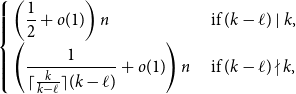 \begin{equation*} \left \{\begin {array}{l@{\quad}l} \left (\dfrac {1}{2}+o(1)\right )n & \text { if }(k-\ell )\mid k,\\[5pt] \left (\dfrac {1}{\lceil \frac {k}{k-\ell }\rceil (k-\ell )}+o(1)\right )n & \text { if }(k-\ell )\nmid k, \end {array} \right . \end{equation*} $\exp\!(n\log n-\Theta (n))$ Hamilton $\ell$-cycles as long as $(k-\ell )\mid n$. When $(k-\ell )\mid k$, this gives a simple proof of a result of Glock, Gould, Joos, Kühn, and Osthus, while when $(k-\ell )\nmid k$, this gives a weaker count than that given by Ferber, Hardiman, and Mond, or when $\ell \lt k/2$, by Ferber, Krivelevich, and Sudakov, but one that holds for an asymptotically optimal minimum codegree bound.


The homotopy decomposition of the suspension of a non-simply-connected five-manifold – ADDENDUM
-
- Journal:
- Proceedings of the Royal Society of Edinburgh. Section A: Mathematics / Volume 156 / Issue 2 / April 2026
- Published online by Cambridge University Press:
- 30 May 2024, p. 565
- Print publication:
- April 2026
-
- Article
- Export citation
On a class of self-similar sets which contain finitely many common points
- Part of
-
- Journal:
- Proceedings of the Royal Society of Edinburgh. Section A: Mathematics / Volume 156 / Issue 2 / April 2026
- Published online by Cambridge University Press:
- 30 May 2024, pp. 543-564
- Print publication:
- April 2026
-
- Article
- Export citation
-
For $\lambda \in (0,\,1/2]$
 let $K_\lambda \subset \mathbb {R}$
 be a self-similar set generated by the iterated function system $\{\lambda x,\, \lambda x+1-\lambda \}$
 . Given $x\in (0,\,1/2)$
 , let $\Lambda (x)$
 be the set of $\lambda \in (0,\,1/2]$
 such that $x\in K_\lambda$
 . In this paper we show that $\Lambda (x)$
 is a topological Cantor set having zero Lebesgue measure and full Hausdorff dimension. Furthermore, we show that for any $y_1,\,\ldots,\, y_p\in (0,\,1/2)$
 there exists a full Hausdorff dimensional set of $\lambda \in (0,\,1/2]$
 such that $y_1,\,\ldots,\, y_p \in K_\lambda$
 .
.


Maintenance of steady-state mRNA levels by a microRNA-based feed forward loop in the presence of stochastic gene expression noise
- Part of
-
- Journal:
- European Journal of Applied Mathematics / Volume 36 / Issue 1 / February 2025
- Published online by Cambridge University Press:
- 29 May 2024, pp. 143-160
-
- Article
-
- You have access
- Open access
- HTML
- Export citation
A generalisation of Varnavides’s theorem
- Part of
-
- Journal:
- Combinatorics, Probability and Computing / Volume 33 / Issue 6 / November 2024
- Published online by Cambridge University Press:
- 29 May 2024, pp. 724-728
-
- Article
- Export citation
-
A linear equation $E$ is said to be sparse if there is $c\gt 0$ so that every subset of $[n]$ of size $n^{1-c}$ contains a solution of $E$ in distinct integers. The problem of characterising the sparse equations, first raised by Ruzsa in the 90s, is one of the most important open problems in additive combinatorics. We say that $E$ in $k$ variables is abundant if every subset of $[n]$ of size $\varepsilon n$ contains at least $\text{poly}(\varepsilon )\cdot n^{k-1}$ solutions of $E$. It is clear that every abundant $E$ is sparse, and Girão, Hurley, Illingworth, and Michel asked if the converse implication also holds. In this note, we show that this is the case for every $E$ in four variables. We further discuss a generalisation of this problem which applies to all linear equations.


