Refine search
Actions for selected content:
26063 results in Abstract analysis
Binary pattern retrieval with Kuramoto-type oscillators via a least orthogonal lift of three patterns
- Part of
-
- Journal:
- European Journal of Applied Mathematics / Volume 36 / Issue 2 / April 2025
- Published online by Cambridge University Press:
- 16 May 2024, pp. 448-463
-
- Article
-
- You have access
- Open access
- HTML
- Export citation
On the smoothness of slowly varying functions
- Part of
-
- Journal:
- Proceedings of the Edinburgh Mathematical Society / Volume 67 / Issue 3 / August 2024
- Published online by Cambridge University Press:
- 16 May 2024, pp. 876-891
-
- Article
-
- You have access
- Open access
- HTML
- Export citation
PRM volume 154 issue 3 Cover and Back matter
-
- Journal:
- Proceedings of the Royal Society of Edinburgh. Section A: Mathematics / Volume 154 / Issue 3 / June 2024
- Published online by Cambridge University Press:
- 16 May 2024, pp. b1-b2
- Print publication:
- June 2024
-
- Article
-
- You have access
- Export citation
PRM volume 154 issue 3 Cover and Front matter
-
- Journal:
- Proceedings of the Royal Society of Edinburgh. Section A: Mathematics / Volume 154 / Issue 3 / June 2024
- Published online by Cambridge University Press:
- 16 May 2024, pp. f1-f2
- Print publication:
- June 2024
-
- Article
-
- You have access
- Export citation
PEM series 2 volume 67 issue 2 Cover and Front matter
-
- Journal:
- Proceedings of the Edinburgh Mathematical Society / Volume 67 / Issue 2 / May 2024
- Published online by Cambridge University Press:
- 16 May 2024, pp. f1-f2
-
- Article
-
- You have access
- Export citation
PEM series 2 volume 67 issue 2 Cover and Back matter
-
- Journal:
- Proceedings of the Edinburgh Mathematical Society / Volume 67 / Issue 2 / May 2024
- Published online by Cambridge University Press:
- 16 May 2024, pp. b1-b2
-
- Article
-
- You have access
- Export citation
On the convexity of the quaternionic essential numerical range
- Part of
-
- Journal:
- Proceedings of the Edinburgh Mathematical Society / Volume 67 / Issue 3 / August 2024
- Published online by Cambridge University Press:
- 15 May 2024, pp. 838-851
-
- Article
- Export citation
Powers of commutators in linear algebraic groups
- Part of
-
- Journal:
- Proceedings of the Edinburgh Mathematical Society / Volume 67 / Issue 3 / August 2024
- Published online by Cambridge University Press:
- 14 May 2024, pp. 830-837
-
- Article
-
- You have access
- Open access
- HTML
- Export citation
-
Let ${\mathcal G}$ be a linear algebraic group over k, where k is an algebraically closed field, a pseudo-finite field or the valuation ring of a non-archimedean local field. Let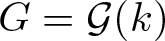 $G= {\mathcal G}(k)$. We prove that if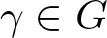 $\gamma\in G$ such that γ is a commutator and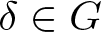 $\delta\in G$ such that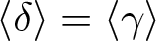 $\langle \delta\rangle= \langle \gamma\rangle$ then δ is a commutator. This generalises a result of Honda for finite groups. Our proof uses the Lefschetz principle from first-order model theory.

Asymptotic profiles of a nonlocal dispersal SIS epidemic model with saturated incidence
- Part of
-
- Journal:
- Proceedings of the Royal Society of Edinburgh. Section A: Mathematics / Volume 156 / Issue 2 / April 2026
- Published online by Cambridge University Press:
- 14 May 2024, pp. 364-396
- Print publication:
- April 2026
-
- Article
- Export citation
Flat model structures and Gorenstein objects in functor categories
- Part of
-
- Journal:
- Proceedings of the Royal Society of Edinburgh. Section A: Mathematics / Volume 156 / Issue 2 / April 2026
- Published online by Cambridge University Press:
- 14 May 2024, pp. 343-363
- Print publication:
- April 2026
-
- Article
- Export citation
-
We construct a flat model structure on the category ${_{\mathcal {Q},\,R}\mathsf {Mod}}$
 of additive functors from a small preadditive category $\mathcal {Q}$
 satisfying certain conditions to the module category ${_{R}\mathsf {Mod}}$
 over an associative ring $R$
 , whose homotopy category is the $\mathcal {Q}$
 -shaped derived category introduced by Holm and Jørgensen. Moreover, we prove that for an arbitrary associative ring $R$
 , an object in ${_{\mathcal {Q},\,R}\mathsf {Mod}}$
 is Gorenstein projective (resp., Gorenstein injective, Gorenstein flat, projective coresolving Gorenstein flat) if and only if so is its value on each object of $\mathcal {Q}$
 , and hence improve a result by Dell'Ambrogio, Stevenson and Šťovíček.


Sufficiency of $\boldsymbol{c}$-cyclical monotonicity in a class of multi-marginal optimal transport problems
- Part of
-
- Journal:
- European Journal of Applied Mathematics / Volume 36 / Issue 1 / February 2025
- Published online by Cambridge University Press:
- 14 May 2024, pp. 68-81
-
- Article
-
- You have access
- Open access
- HTML
- Export citation
- $c$-cyclical monotonicity is the most important optimality condition for an optimal transport plan. While the proof of necessity is relatively easy, the proof of sufficiency is often more difficult or even elusive. We present here a new approach, and we show how known results are derived in this new framework and how this approach allows to prove sufficiency in situations previously not treatable.


Optimal decay for solutions of nonlocal semilinear equations with critical exponent in homogeneous groups
- Part of
-
- Journal:
- Proceedings of the Royal Society of Edinburgh. Section A: Mathematics / Volume 156 / Issue 1 / February 2026
- Published online by Cambridge University Press:
- 14 May 2024, pp. 314-342
- Print publication:
- February 2026
-
- Article
-
- You have access
- Open access
- HTML
- Export citation
-
In this paper, we establish the sharp asymptotic decay of positive solutions of the Yamabe type equation $\mathcal {L}_s u=u^{\frac {Q+2s}{Q-2s}}$
 in a homogeneous Lie group, where $\mathcal {L}_s$
 represents a suitable pseudodifferential operator modelled on a class of nonlocal operators arising in conformal CR geometry.


Rainbow Hamiltonicity in uniformly coloured perturbed digraphs
- Part of
-
- Journal:
- Combinatorics, Probability and Computing / Volume 33 / Issue 5 / September 2024
- Published online by Cambridge University Press:
- 13 May 2024, pp. 624-642
-
- Article
-
- You have access
- Open access
- HTML
- Export citation
-
We investigate the existence of a rainbow Hamilton cycle in a uniformly edge-coloured randomly perturbed digraph. We show that for every $\delta \in (0,1)$ there exists $C = C(\delta ) \gt 0$ such that the following holds. Let $D_0$ be an $n$-vertex digraph with minimum semidegree at least $\delta n$ and suppose that each edge of the union of $D_0$ with a copy of the random digraph $\mathbf{D}(n,C/n)$ on the same vertex set gets a colour in $[n]$ independently and uniformly at random. Then, with high probability, $D_0 \cup \mathbf{D}(n,C/n)$ has a rainbow directed Hamilton cycle.
This improves a result of Aigner-Horev and Hefetz ((2021) SIAM J. Discrete Math. 35(3) 1569–1577), who proved the same in the undirected setting when the edges are coloured uniformly in a set of $(1 + \varepsilon )n$ colours.


On conformally flat minimal Legendrian submanifolds in the unit sphere
- Part of
-
- Journal:
- Proceedings of the Royal Society of Edinburgh. Section A: Mathematics / Volume 156 / Issue 1 / February 2026
- Published online by Cambridge University Press:
- 10 May 2024, pp. 284-313
- Print publication:
- February 2026
-
- Article
- Export citation
-
This paper is concerned with the study on an open problem of classifying conformally flat minimal Legendrian submanifolds in the $(2n+1)$
 -dimensional unit sphere $\mathbb {S}^{2n+1}$
 admitting a Sasakian structure $(\varphi,\,\xi,\,\eta,\,g)$
 for $n\ge 3$
 , motivated by the classification of minimal Legendrian submanifolds with constant sectional curvature. First of all, we completely classify such Legendrian submanifolds by assuming that the tensor $K:=-\varphi h$
 is semi-parallel, which is introduced as a natural extension of $C$
 -parallel second fundamental form $h$
 . Secondly, such submanifolds have also been determined under the condition that the Ricci tensor is semi-parallel, generalizing the Einstein condition. Finally, as direct consequences, new characterizations of the Calabi torus are presented.


Catenaries and minimal surfaces of revolution in hyperbolic space
- Part of
-
- Journal:
- Proceedings of the Royal Society of Edinburgh. Section A: Mathematics / Volume 156 / Issue 1 / February 2026
- Published online by Cambridge University Press:
- 10 May 2024, pp. 263-283
- Print publication:
- February 2026
-
- Article
-
- You have access
- Open access
- HTML
- Export citation
Unified framework for the separation property in binary phase-segregation processes with singular entropy densities
- Part of
-
- Journal:
- European Journal of Applied Mathematics / Volume 36 / Issue 1 / February 2025
- Published online by Cambridge University Press:
- 09 May 2024, pp. 40-67
-
- Article
-
- You have access
- Open access
- HTML
- Export citation
-
This paper investigates the separation property in binary phase-segregation processes modelled by Cahn-Hilliard type equations with constant mobility, singular entropy densities and different particle interactions. Under general assumptions on the entropy potential, we prove the strict separation property in both two and three-space dimensions. Namely, in 2D, we notably extend the minimal assumptions on the potential adopted so far in the literature, by only requiring a mild growth condition of its first derivative near the singular points $\pm 1$, without any pointwise additional assumption on its second derivative. For all cases, we provide a compact proof using De Giorgi’s iterations. In 3D, we also extend the validity of the asymptotic strict separation property to the case of fractional Cahn-Hilliard equation, as well as show the validity of the separation when the initial datum is close to an ‘energy minimizer’. Our framework offers insights into statistical factors like particle interactions, entropy choices and correlations governing separation, with broad applicability.

Girth Alternative for subgroups of $PL_o(I)$
- Part of
-
- Journal:
- Glasgow Mathematical Journal / Volume 67 / Issue 1 / January 2025
- Published online by Cambridge University Press:
- 09 May 2024, pp. 1-10
-
- Article
- Export citation
-
We prove the Girth Alternative for finitely generated subgroups of $PL_o(I)$. We also prove that a finitely generated subgroup of Homeo $_{+}(I)$ which is sufficiently rich with hyperbolic-like elements has infinite girth.


Growth of hypercyclic functions: a continuous path between $\mathcal{U}$-frequent hypercyclicity and hypercyclicity
- Part of
-
- Journal:
- Proceedings of the Edinburgh Mathematical Society / Volume 67 / Issue 3 / August 2024
- Published online by Cambridge University Press:
- 08 May 2024, pp. 794-829
-
- Article
- Export citation
-
We are interested in the optimal growth in terms of Lp-averages of hypercyclic and $\mathcal{U}$-frequently hypercyclic functions for some weighted Taylor shift operators acting on the space of analytic functions on the unit disc. We unify the results obtained by considering intermediate notions of upper frequent hypercyclicity between $\mathcal{U}$-frequent hypercyclicity and hypercyclicity.


Maximum chordal subgraphs of random graphs
- Part of
-
- Journal:
- Combinatorics, Probability and Computing / Volume 33 / Issue 5 / September 2024
- Published online by Cambridge University Press:
- 03 May 2024, pp. 611-623
-
- Article
- Export citation
-
We find asymptotics of the maximum size of a chordal subgraph in a binomial random graph $G(n,p)$, for $p=\mathrm{const}$ and $p=n^{-\alpha +o(1)}$.


Thinness of some hypergeometric groups in $\mathrm{Sp}(6)$
- Part of
-
- Journal:
- Glasgow Mathematical Journal / Volume 66 / Issue 3 / September 2024
- Published online by Cambridge University Press:
- 02 May 2024, pp. 571-581
-
- Article
- Export citation
-
We show the thinness of $7$ of the $40$ hypergeometric groups having a maximally unipotent monodromy in $\mathrm{Sp}(6)$.


