Refine search
Actions for selected content:
26063 results in Abstract analysis
Normalized solutions to the quasilinear Schrödinger equations with combined nonlinearities
- Part of
-
- Journal:
- Proceedings of the Edinburgh Mathematical Society / Volume 67 / Issue 2 / May 2024
- Published online by Cambridge University Press:
- 12 April 2024, pp. 349-387
-
- Article
- Export citation
-
We consider the radially symmetric positive solutions to quasilinear problem
 \begin{equation*}-\triangle u-u\triangle u^{2}+\lambda u=f(u),\quad{\rm in} \ \mathbb{R}^{N},\end{equation*}
having prescribed mass $\int_{\mathbb{R}^{N}}|u|^2 =a^2,$ where a > 0 is a constant, λ appears as a Lagrange multiplier. We focus on the pure L2-supercritical case and combination case of L2-subcritical and L2-supercritical nonlinearities
 \begin{equation*}f(u)=\tau |u|^{q-2}u+|u|^{p-2}u,\quad \tau \gt 0,\qquad{\rm where}\ \ 2 \lt q \lt 2+\frac{4}{N} \ {\rm and} \quad \ p \gt \bar{p},\end{equation*}
where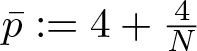 $\bar{p}:=4+\frac{4}{N}$ is the L2-critical exponent. Our work extends and develops some recent results in the literature.

A note on quantum K-theory of root constructions
- Part of
-
- Journal:
- Glasgow Mathematical Journal / Volume 66 / Issue 3 / September 2024
- Published online by Cambridge University Press:
- 12 April 2024, pp. 494-500
-
- Article
-
- You have access
- Open access
- HTML
- Export citation
-
We consider K-theoretic Gromov-Witten theory of root constructions. We calculate some genus $0$ K-theoretic Gromov-Witten invariants of a root gerbe. We also obtain a K-theoretic relative/orbifold correspondence in genus $0$.
$0$.


The distribution of the maximum protection number in simply generated trees
- Part of
-
- Journal:
- Combinatorics, Probability and Computing / Volume 33 / Issue 4 / July 2024
- Published online by Cambridge University Press:
- 12 April 2024, pp. 518-553
-
- Article
-
- You have access
- Open access
- HTML
- Export citation
-
The protection number of a vertex $v$ in a tree is the length of the shortest path from $v$ to any leaf contained in the maximal subtree where $v$ is the root. In this paper, we determine the distribution of the maximum protection number of a vertex in simply generated trees, thereby refining a recent result of Devroye, Goh, and Zhao. Two different cases can be observed: if the given family of trees allows vertices of outdegree $1$, then the maximum protection number is on average logarithmic in the tree size, with a discrete double-exponential limiting distribution. If no such vertices are allowed, the maximum protection number is doubly logarithmic in the tree size and concentrated on at most two values. These results are obtained by studying the singular behaviour of the generating functions of trees with bounded protection number. While a general distributional result by Prodinger and Wagner can be used in the first case, we prove a variant of that result in the second case.


Global centres in a class of quintic polynomial differential systems
- Part of
-
- Journal:
- Proceedings of the Royal Society of Edinburgh. Section A: Mathematics / Volume 156 / Issue 1 / February 2026
- Published online by Cambridge University Press:
- 11 April 2024, pp. 39-54
- Print publication:
- February 2026
-
- Article
- Export citation
-
A centre of a differential system in the plane $ {\mathbb {R}}^2$
 is an equilibrium point $p$
 having a neighbourhood $U$
 such that $U\setminus \{p\}$
 is filled with periodic orbits. A centre $p$
 is global when $ {\mathbb {R}}^2\setminus \{p\}$
 is filled with periodic orbits. In general, it is a difficult problem to distinguish the centres from the foci for a given class of differential systems, and also it is difficult to distinguish the global centres inside the centres. The goal of this paper is to classify the centres and the global centres of the following class of quintic polynomial differential systems\begin{align*} \dot{x}= y,\quad \dot{y}={-}x+a_{05}\,y^5+a_{14}\,x\,y^4+a_{23}\,x^2\,y^3+a_{32}\,x^3\,y^2+a_{41}\,x^4\,y+a_{50}\,x^5, \end{align*}in the plane $ {\mathbb {R}}^2$
 .
.


Uniqueness of ground states to fractional nonlinear elliptic equations with harmonic potential
- Part of
-
- Journal:
- Proceedings of the Royal Society of Edinburgh. Section A: Mathematics / Volume 156 / Issue 1 / February 2026
- Published online by Cambridge University Press:
- 11 April 2024, pp. 55-68
- Print publication:
- February 2026
-
- Article
- Export citation
-
In this paper, we prove the uniqueness of ground states to the following fractional nonlinear elliptic equation with harmonic potential,
\[ (-\Delta)^s u+ \left(\omega+|x|^2\right) u=|u|^{p-2}u \quad \mbox{in}\ \mathbb{R}^n, \]where $n \geq 1$
 , $0< s<1$
 , $\omega >-\lambda _{1,s}$
 , $2< p< {2n}/{(n-2s)^+}$
 , $\lambda _{1,s}>0$
 is the lowest eigenvalue of $(-\Delta )^s + |x|^2$
 . The fractional Laplacian $(-\Delta )^s$
 is characterized as $\mathcal {F}((-\Delta )^{s}u)(\xi )=|\xi |^{2s} \mathcal {F}(u)(\xi )$
 for $\xi \in \mathbb {R}^n$
 , where $\mathcal {F}$
 denotes the Fourier transform. This solves an open question in [M. Stanislavova and A. G. Stefanov. J. Evol. Equ. 21 (2021), 671–697.] concerning the uniqueness of ground states.


GENERALISED QUADRATIC FORMS OVER TOTALLY REAL NUMBER FIELDS
- Part of
-
- Journal:
- Journal of the Institute of Mathematics of Jussieu / Volume 23 / Issue 6 / November 2024
- Published online by Cambridge University Press:
- 11 April 2024, pp. 2859-2912
- Print publication:
- November 2024
-
- Article
-
- You have access
- Open access
- HTML
- Export citation
Quasi-hereditary covers of Temperley–Lieb algebras and relative dominant dimension
- Part of
-
- Journal:
- Proceedings of the Royal Society of Edinburgh. Section A: Mathematics / Volume 156 / Issue 1 / February 2026
- Published online by Cambridge University Press:
- 11 April 2024, pp. 1-38
- Print publication:
- February 2026
-
- Article
-
- You have access
- Open access
- HTML
- Export citation
-
Many connections and dualities in representation theory and Lie theory can be explained using quasi-hereditary covers in the sense of Rouquier. Recent work by the first-named author shows that relative dominant (and codominant) dimensions are natural tools to classify and distinguish distinct quasi-hereditary covers of a finite-dimensional algebra. In this paper, we prove that the relative dominant dimension of a quasi-hereditary algebra, possessing a simple preserving duality, with respect to a direct summand of the characteristic tilting module is always an even number or infinite and that this homological invariant controls the quality of quasi-hereditary covers that possess a simple preserving duality. To resolve the Temperley–Lieb algebras, we apply this result to the class of Schur algebras $S(2, d)$
 and their $q$
 -analogues. Our second main result completely determines the relative dominant dimension of $S(2, d)$
 with respect to $Q=V^{\otimes d}$
 , the $d$
 -th tensor power of the natural two-dimensional module. As a byproduct, we deduce that Ringel duals of $q$
 -Schur algebras $S(2,d)$
 give rise to quasi-hereditary covers of Temperley–Lieb algebras. Further, we obtain precisely when the Temperley–Lieb algebra is Morita equivalent to the Ringel dual of the $q$
 -Schur algebra $S(2, d)$
 and precisely how far these two algebras are from being Morita equivalent, when they are not. These results are compatible with the integral setup, and we use them to deduce that the Ringel dual of a $q$
 -Schur algebra over the ring of Laurent polynomials over the integers together with some projective module is the best quasi-hereditary cover of the integral Temperley–Lieb algebra.


On almost quotient Yamabe solitons
- Part of
-
- Journal:
- Glasgow Mathematical Journal / Volume 66 / Issue 3 / September 2024
- Published online by Cambridge University Press:
- 11 April 2024, pp. 479-493
-
- Article
- Export citation
Galois points and Cremona transformations
- Part of
-
- Journal:
- Glasgow Mathematical Journal / Volume 66 / Issue 3 / September 2024
- Published online by Cambridge University Press:
- 11 April 2024, pp. 471-478
-
- Article
-
- You have access
- Open access
- HTML
- Export citation
-
In this article, we study Galois points of plane curves and the extension of the corresponding Galois group to $\mathrm{Bir}(\mathbb{P}^2)$. We prove that if the Galois group has order at most $3$, it always extends to a subgroup of the Jonquières group associated with the point $P$. Conversely, with a degree of at least $4$, we prove that it is false. We provide an example of a Galois extension whose Galois group is extendable to Cremona transformations but not to a group of de Jonquières maps with respect to $P$. In addition, we also give an example of a Galois extension whose Galois group cannot be extended to Cremona transformations.


Discriminant and integral basis of number fields defined by exponential Taylor polynomials
- Part of
-
- Journal:
- Proceedings of the Edinburgh Mathematical Society / Volume 67 / Issue 2 / May 2024
- Published online by Cambridge University Press:
- 08 April 2024, pp. 528-541
-
- Article
- Export citation
-
Let $K_n=\mathbb{Q}(\alpha_n)$ be a family of algebraic number fields where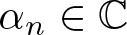 $\alpha_n\in \mathbb{C}$ is a root of the nth exponential Taylor polynomial $\frac{x^n}{n!}+ \frac{x^{n-1}}{(n-1)!}+ \cdots +\frac{x^2}{2!}+\frac{x}{1!}+1$,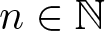 $n\in \mathbb{N}$. In this paper, we give a formula for the exact power of any prime p dividing the discriminant of Kn in terms of the p-adic expansion of n. An explicit p-integral basis of Kn is also given for each prime p. These p-integral bases quickly lead to the construction of an integral basis of Kn.

Algorithms for the ferromagnetic Potts model on expanders
- Part of
-
- Journal:
- Combinatorics, Probability and Computing / Volume 33 / Issue 4 / July 2024
- Published online by Cambridge University Press:
- 05 April 2024, pp. 487-517
-
- Article
-
- You have access
- Open access
- HTML
- Export citation
-
We give algorithms for approximating the partition function of the ferromagnetic $q$-color Potts model on graphs of maximum degree $d$. Our primary contribution is a fully polynomial-time approximation scheme for $d$-regular graphs with an expansion condition at low temperatures (that is, bounded away from the order-disorder threshold). The expansion condition is much weaker than in previous works; for example, the expansion exhibited by the hypercube suffices. The main improvements come from a significantly sharper analysis of standard polymer models; we use extremal graph theory and applications of Karger’s algorithm to count cuts that may be of independent interest. It is #BIS-hard to approximate the partition function at low temperatures on bounded-degree graphs, so our algorithm can be seen as evidence that hard instances of #BIS are rare. We also obtain efficient algorithms in the Gibbs uniqueness region for bounded-degree graphs. While our high-temperature proof follows more standard polymer model analysis, our result holds in the largest-known range of parameters $d$ and $q$.
$q$.


Consensus-based optimisation with truncated noise
- Part of
-
- Journal:
- European Journal of Applied Mathematics / Volume 36 / Issue 2 / April 2025
- Published online by Cambridge University Press:
- 05 April 2024, pp. 292-315
-
- Article
-
- You have access
- Open access
- HTML
- Export citation
-
Consensus-based optimisation (CBO) is a versatile multi-particle metaheuristic optimisation method suitable for performing non-convex and non-smooth global optimisations in high dimensions. It has proven effective in various applications while at the same time being amenable to a theoretical convergence analysis. In this paper, we explore a variant of CBO, which incorporates truncated noise in order to enhance the well-behavedness of the statistics of the law of the dynamics. By introducing this additional truncation in the noise term of the CBO dynamics, we achieve that, in contrast to the original version, higher moments of the law of the particle system can be effectively bounded. As a result, our proposed variant exhibits enhanced convergence performance, allowing in particular for wider flexibility in choosing the noise parameter of the method as we confirm experimentally. By analysing the time evolution of the Wasserstein- $2$ distance between the empirical measure of the interacting particle system and the global minimiser of the objective function, we rigorously prove convergence in expectation of the proposed CBO variant requiring only minimal assumptions on the objective function and on the initialisation. Numerical evidences demonstrate the benefit of truncating the noise in CBO.

Unconditional convergence of eigenfunction expansions for abstract and elliptic operators
- Part of
-
- Journal:
- Proceedings of the Royal Society of Edinburgh. Section A: Mathematics / Volume 155 / Issue 6 / December 2025
- Published online by Cambridge University Press:
- 05 April 2024, pp. 2345-2363
- Print publication:
- December 2025
-
- Article
-
- You have access
- Open access
- HTML
- Export citation
-
We study the most general class of eigenfunction expansions for abstract normal operators with pure point spectrum in a complex Hilbert space. We find sufficient conditions for such expansions to be unconditionally convergent in spaces with two norms and also estimate the degree of this convergence. Our result essentially generalizes and complements the known theorems of Krein and of Krasnosel'skiĭ and Pustyl'nik. We apply it to normal elliptic pseudodifferential operators on compact boundaryless $C^{\infty }$
 -manifolds. We find generic conditions for eigenfunction expansions induced by such operators to converge unconditionally in the Sobolev spaces $W^{\ell }_{p}$
 with $p>2$
 or in the spaces $C^{\ell }$
 (specifically, for the $p$
 -th mean or uniform convergence on the manifold). These conditions are sufficient and necessary for the indicated convergence on Sobolev or Hörmander function classes and are given in terms of parameters characterizing these classes. We also find estimates for the degree of the convergence on such function classes. These results are new even for differential operators on the circle and for multiple Fourier series.


An alternative approach to solenoidal Lipschitz truncation
- Part of
-
- Journal:
- Proceedings of the Royal Society of Edinburgh. Section A: Mathematics / Volume 155 / Issue 6 / December 2025
- Published online by Cambridge University Press:
- 05 April 2024, pp. 2296-2320
- Print publication:
- December 2025
-
- Article
-
- You have access
- Open access
- HTML
- Export citation
-
In this work, we present an alternative approach to obtain a solenoidal Lipschitz truncation result in the spirit of D. Breit, L. Diening and M. Fuchs [Solenoidal Lipschitz truncation and applications in fluid mechanics. J. Differ. Equ. 253 (2012), 1910–1942.]. More precisely, the goal of the truncation is to modify a function $u \in W^{1,p}(\mathbb {R}^N;\mathbb {R}^N)$
 that satisfies the additional constraint $\operatorname {div} u=0$
 , such that its modification $\tilde {u}$
 is Lipschitz continuous and divergence-free. This approach is different to the approaches outlined in the aforementioned work and D. Breit, L. Diening and S. Schwarzacher [Solenoidal Lipschitz truncation for parabolic PDEs. Math. Models Methods Appl. Sci. 23 (2013), 2671–2700, Section 4] and is able to obtain the rather strong bound on the difference between $u$
 and $\tilde {u}$
 from the former article. Finally, we outline how the approach pursued in this work may be generalized to closed differential forms.


Structural stability of transonic shock flows with an external force
- Part of
-
- Journal:
- Proceedings of the Royal Society of Edinburgh. Section A: Mathematics / Volume 155 / Issue 6 / December 2025
- Published online by Cambridge University Press:
- 05 April 2024, pp. 2321-2344
- Print publication:
- December 2025
-
- Article
- Export citation
A data-driven kinetic model for opinion dynamics with social network contacts – ADDENDUM
- Part of
-
- Journal:
- European Journal of Applied Mathematics / Volume 36 / Issue 2 / April 2025
- Published online by Cambridge University Press:
- 02 April 2024, p. 291
-
- Article
-
- You have access
- Open access
- HTML
- Export citation
THE p-ADIC GROSS–ZAGIER FORMULA ON SHIMURA CURVES, II: NONSPLIT PRIMES – CORRIGENDUM
-
- Journal:
- Journal of the Institute of Mathematics of Jussieu / Volume 23 / Issue 6 / November 2024
- Published online by Cambridge University Press:
- 02 April 2024, pp. 2543-2548
- Print publication:
- November 2024
-
- Article
-
- You have access
- Open access
- HTML
- Export citation
Unit fractions with shifted prime denominators
- Part of
-
- Journal:
- Proceedings of the Royal Society of Edinburgh. Section A: Mathematics / Volume 155 / Issue 6 / December 2025
- Published online by Cambridge University Press:
- 02 April 2024, pp. 2285-2295
- Print publication:
- December 2025
-
- Article
-
- You have access
- Open access
- HTML
- Export citation
-
We prove that any positive rational number is the sum of distinct unit fractions with denominators in $\{p-1 : p\textrm { prime}\}$
 . The same conclusion holds for the set $\{p-h : p\textrm { prime}\}$
 for any $h\in \mathbb {Z}\backslash \{0\}$
 , provided a necessary congruence condition is satisfied. We also prove that this is true for any subset of the primes of relative positive density, provided a necessary congruence condition is satisfied.


DYNAMICAL MCDUFF-TYPE PROPERTIES FOR GROUP ACTIONS ON VON NEUMANN ALGEBRAS
- Part of
-
- Journal:
- Journal of the Institute of Mathematics of Jussieu / Volume 23 / Issue 6 / November 2024
- Published online by Cambridge University Press:
- 02 April 2024, pp. 2593-2629
- Print publication:
- November 2024
-
- Article
-
- You have access
- Open access
- HTML
- Export citation
-
We consider the notion of strong self-absorption for continuous actions of locally compact groups on the hyperfinite II $_1$ factor and characterize when such an action is tensorially absorbed by another given action on any separably acting von Neumann algebra. This extends the well-known McDuff property for von Neumann algebras and is analogous to the core theorems around strongly self-absorbing C $^*$-dynamics. Given a countable discrete group G and an amenable action $G\curvearrowright M$ on any separably acting semifinite von Neumann algebra, we establish a type of measurable local-to-global principle: If a given strongly self-absorbing G-action is suitably absorbed at the level of each fibre in the direct integral decomposition of M, then it is tensorially absorbed by the action on M. As a direct application of Ocneanu’s theorem, we deduce that if M has the McDuff property, then every amenable G-action on M has the equivariant McDuff property, regardless whether M is assumed to be injective or not. By employing Tomita–Takesaki theory, we can extend the latter result to the general case, where M is not assumed to be semifinite.


A NONCOMMUTATIVE ANALOGUE OF CLAUSEN’S VIEW ON THE IDÈLE CLASS GROUP
- Part of
-
- Journal:
- Journal of the Institute of Mathematics of Jussieu / Volume 23 / Issue 6 / November 2024
- Published online by Cambridge University Press:
- 02 April 2024, pp. 2777-2824
- Print publication:
- November 2024
-
- Article
- Export citation
-
Clausen a prédit que le groupe des classes d’idèles de Chevalley d’un corps de nombres F apparaît comme le premier K-groupe de la catégorie des F-espaces vectoriels localement compacts. Cela s’est avéré vrai, et se généralise même aux groupes K supérieurs dans un sens approprié. Nous remplaçons F par une $\mathbb {Q}$-algèbre semi-simple, et obtenons le groupe des classes d’idèles noncommutatif de Fröhlich de manière analogue, modulo les éléments de norme réduite une. Même dans le cas du corps de nombres, notre preuve est plus simple que celle existante, et repose sur le théorème de localisation pour des sous-catégories percolées. Enfin, en utilisant la théorie des corps de classes, nous interprétons la loi de réciprocité d’Hilbert (ainsi qu’une variante noncommutative) en termes de nos résultats.
Clausen predicted that Chevalley’s idèle class group of a number field F appears as the first K-group of the category of locally compact F-vector spaces. This has turned out to be true and even generalizes to the higher K-groups in a suitable sense. We replace F by a semisimple $\mathbb {Q}$-algebra and obtain Fröhlich’s noncommutative idèle class group in an analogous fashion, modulo the reduced norm one elements. Even in the number field case, our proof is simpler than the existing one and based on the localization theorem for percolating subcategories. Finally, using class field theory as input, we interpret Hilbert’s reciprocity law (as well as a noncommutative variant) in terms of our results.


