Refine search
Actions for selected content:
26063 results in Abstract analysis
On a critical time-harmonic Maxwell equation in nonlocal media
- Part of
-
- Journal:
- Proceedings of the Royal Society of Edinburgh. Section A: Mathematics / Volume 155 / Issue 5 / October 2025
- Published online by Cambridge University Press:
- 29 February 2024, pp. 1747-1791
- Print publication:
- October 2025
-
- Article
- Export citation
-
In this paper, we study the existence of solutions for a critical time–harmonic Maxwell equation in nonlocal media
\[ \begin{cases} \nabla\times(\nabla\times u)+\lambda u=\left(I_{\alpha}\ast|u|^{2^{{\ast}}_{\alpha}}\right)|u|^{2^{{\ast}}_{\alpha}-2}u & \mathrm{in}\ \Omega,\\ \nu\times u=0 & \mathrm{on}\ \partial\Omega, \end{cases} \]where $\Omega \subset \mathbb {R}^{3}$
 is a bounded domain, either convex or with $\mathcal {C}^{1,1}$
 boundary, $\nu$
 is the exterior normal, $\lambda <0$
 is a real parameter, $2^{\ast }_{\alpha }=3+\alpha$
 with $0<\alpha <3$
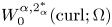
 is the upper critical exponent due to the Hardy–Littlewood–Sobolev inequality. By introducing some suitable Coulomb spaces involving curl operator $W^{\alpha,2^{\ast }_{\alpha }}_{0}(\mathrm {curl};\Omega )$
 , we are able to obtain the ground state solutions of the curl–curl equation via the method of constraining Nehari–Pankov manifold. Correspondingly, some sharp constants of the Sobolev-like inequalities with curl operator are obtained by a nonlocal version of the concentration–compactness principle.


PEM series 2 volume 67 issue 1 Cover and Front matter
-
- Journal:
- Proceedings of the Edinburgh Mathematical Society / Volume 67 / Issue 1 / February 2024
- Published online by Cambridge University Press:
- 29 February 2024, pp. f1-f2
-
- Article
-
- You have access
- Export citation
PEM series 2 volume 67 issue 1 Cover and Back matter
-
- Journal:
- Proceedings of the Edinburgh Mathematical Society / Volume 67 / Issue 1 / February 2024
- Published online by Cambridge University Press:
- 29 February 2024, pp. b1-b2
-
- Article
-
- You have access
- Export citation
Invariant set generated by a nonreal number is everywhere dense
- Part of
-
- Journal:
- Proceedings of the Royal Society of Edinburgh. Section A: Mathematics / Volume 155 / Issue 5 / October 2025
- Published online by Cambridge University Press:
- 29 February 2024, pp. 1792-1812
- Print publication:
- October 2025
-
- Article
-
- You have access
- Open access
- HTML
- Export citation
-
A set of complex numbers $S$
 is called invariant if it is closed under addition and multiplication, namely, for any $x, y \in S$
 we have $x+y \in S$
 and $xy \in S$
 . For each $s \in {\mathbb {C}}$
 the smallest invariant set ${\mathbb {N}}[s]$
 containing $s$
 consists of all possible sums $\sum _{i \in I} a_i s^i$
 , where $I$
 runs over all finite nonempty subsets of the set of positive integers ${\mathbb {N}}$
 and $a_i \in {\mathbb {N}}$
 for each $i \in I$
 . In this paper, we prove that for $s \in {\mathbb {C}}$
 the set ${\mathbb {N}}[s]$
 is everywhere dense in ${\mathbb {C}}$
 if and only if $s \notin {\mathbb {R}}$
 and $s$
 is not a quadratic algebraic integer. More precisely, we show that if $s \in {\mathbb {C}} \setminus {\mathbb {R}}$
 is a transcendental number, then there is a positive integer $n$
 such that the sumset ${\mathbb {N}} t^n+{\mathbb {N}} t^{2n} +{\mathbb {N}} t^{3n}$
 is everywhere dense in ${\mathbb {C}}$
 for either $t=s$
 or $t=s+s^2$
 . Similarly, if $s \in {\mathbb {C}} \setminus {\mathbb {R}}$
 is an algebraic number of degree $d \ne 2, 4$
 , then there are positive integers $n, m$
 such that the sumset ${\mathbb {N}} t^n+{\mathbb {N}} t^{2n} +{\mathbb {N}} t^{3n}$
 is everywhere dense in ${\mathbb {C}}$
 for $t=ms+s^2$
 . For quadratic and some special quartic algebraic numbers $s$
 it is shown that a similar sumset of three sets cannot be dense. In each of these two cases the density of ${\mathbb {N}}[s]$
 in ${\mathbb {C}}$
 is established by a different method: for those special quartic numbers, it is possible to take a sumset of four sets.


Derivation and travelling wave analysis of phenotype-structured haptotaxis models of cancer invasion
- Part of
-
- Journal:
- European Journal of Applied Mathematics / Volume 36 / Issue 2 / April 2025
- Published online by Cambridge University Press:
- 27 February 2024, pp. 231-263
-
- Article
-
- You have access
- Open access
- HTML
- Export citation
Multiplicity of positive solutions for a class of nonhomogeneous elliptic equations in the hyperbolic space
- Part of
-
- Journal:
- Proceedings of the Royal Society of Edinburgh. Section A: Mathematics / Volume 155 / Issue 5 / October 2025
- Published online by Cambridge University Press:
- 27 February 2024, pp. 1708-1746
- Print publication:
- October 2025
-
- Article
-
- You have access
- Open access
- HTML
- Export citation
-
The paper is concerned with positive solutions to problems of the type
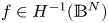
\[ -\Delta_{\mathbb{B}^{N}} u - \lambda u = a(x) |u|^{p-1}\;u + f \text{ in }\mathbb{B}^{N}, \quad u \in H^{1}{(\mathbb{B}^{N})}, \]where $\mathbb {B}^N$
 denotes the hyperbolic space, $1< p<2^*-1:=\frac {N+2}{N-2}$
 , $\;\lambda < \frac {(N-1)^2}{4}$
 , and $f \in H^{-1}(\mathbb {B}^{N})$
 ($f \not \equiv 0$
 ) is a non-negative functional. The potential $a\in L^\infty (\mathbb {B}^N)$
 is assumed to be strictly positive, such that $\lim _{d(x, 0) \rightarrow \infty } a(x) \rightarrow 1,$
 where $d(x,\, 0)$
 denotes the geodesic distance. First, the existence of three positive solutions is proved under the assumption that $a(x) \leq 1$
 . Then the case $a(x) \geq 1$
 is considered, and the existence of two positive solutions is proved. In both cases, it is assumed that $\mu ( \{ x : a(x) \neq 1\}) > 0.$
 Subsequently, we establish the existence of two positive solutions for $a(x) \equiv 1$
 and prove asymptotic estimates for positive solutions using barrier-type arguments. The proofs for existence combine variational arguments, key energy estimates involving hyperbolic bubbles.


GMJ volume 66 issue 1 Cover and Front matter
-
- Journal:
- Glasgow Mathematical Journal / Volume 66 / Issue 1 / January 2024
- Published online by Cambridge University Press:
- 26 February 2024, pp. f1-f2
-
- Article
-
- You have access
- Export citation
A collision result for both non-Newtonian and heat conducting Newtonian compressible fluids
- Part of
-
- Journal:
- Proceedings of the Royal Society of Edinburgh. Section A: Mathematics / Volume 155 / Issue 5 / October 2025
- Published online by Cambridge University Press:
- 26 February 2024, pp. 1631-1645
- Print publication:
- October 2025
-
- Article
-
- You have access
- Open access
- HTML
- Export citation
Qualitative properties of solutions for system involving the fractional Laplacian
- Part of
-
- Journal:
- Proceedings of the Royal Society of Edinburgh. Section A: Mathematics / Volume 155 / Issue 5 / October 2025
- Published online by Cambridge University Press:
- 26 February 2024, pp. 1661-1676
- Print publication:
- October 2025
-
- Article
- Export citation
-
In this paper, we consider the following non-linear system involving the fractional Laplacian0.1
\begin{equation} \left\{\begin{array}{@{}ll} (-\Delta)^{s} u (x)= f(u,\,v), \\ (-\Delta)^{s} v (x)= g(u,\,v), \end{array} \right. \end{equation}in two different types of domains, one is bounded, and the other is an infinite cylinder, where $0< s<1$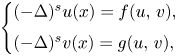
 . We employ the direct sliding method for fractional Laplacian, different from the conventional extension and moving planes methods, to derive the monotonicity of solutions for (0.1) in $x_n$
 variable. Meanwhile, we develop a new iteration method for systems in the proofs. Hopefully, the iteration method can also be applied to solve other problems.


Common valuations of division polynomials
- Part of
-
- Journal:
- Proceedings of the Royal Society of Edinburgh. Section A: Mathematics / Volume 155 / Issue 5 / October 2025
- Published online by Cambridge University Press:
- 26 February 2024, pp. 1646-1660
- Print publication:
- October 2025
-
- Article
-
- You have access
- Open access
- HTML
- Export citation
-
In this note, we prove a formula for the cancellation exponent $k_{v,n}$
 between division polynomials $\psi _n$
 and $\phi _n$
 associated with a sequence $\{nP\}_{n\in \mathbb {N}}$
 of points on an elliptic curve $E$
 defined over a discrete valuation field $K$
 . The formula greatly generalizes the previously known special cases and treats also the case of non-standard Kodaira types for non-perfect residue fields.


Nonlocal anisotropic interactions of Coulomb type
- Part of
-
- Journal:
- Proceedings of the Royal Society of Edinburgh. Section A: Mathematics / Volume 155 / Issue 5 / October 2025
- Published online by Cambridge University Press:
- 26 February 2024, pp. 1677-1707
- Print publication:
- October 2025
-
- Article
-
- You have access
- Open access
- HTML
- Export citation
GMJ volume 66 issue 1 Cover and Back matter
-
- Journal:
- Glasgow Mathematical Journal / Volume 66 / Issue 1 / January 2024
- Published online by Cambridge University Press:
- 26 February 2024, pp. b1-b2
-
- Article
-
- You have access
- Export citation
Small subsets with large sumset: Beyond the Cauchy–Davenport bound
- Part of
-
- Journal:
- Combinatorics, Probability and Computing / Volume 33 / Issue 4 / July 2024
- Published online by Cambridge University Press:
- 21 February 2024, pp. 411-431
-
- Article
- Export citation
-
For a subset $A$ of an abelian group $G$, given its size $|A|$, its doubling $\kappa =|A+A|/|A|$, and a parameter $s$ which is small compared to $|A|$, we study the size of the largest sumset $A+A'$ that can be guaranteed for a subset $A'$ of $A$ of size at most $s$. We show that a subset $A'\subseteq A$ of size at most $s$ can be found so that $|A+A'| = \Omega (\!\min\! (\kappa ^{1/3},s)|A|)$. Thus, a sumset significantly larger than the Cauchy–Davenport bound can be guaranteed by a bounded size subset assuming that the doubling $\kappa$ is large. Building up on the same ideas, we resolve a conjecture of Bollobás, Leader and Tiba that for subsets $A,B$ of $\mathbb{F}_p$ of size at most $\alpha p$ for an appropriate constant $\alpha \gt 0$, one only needs three elements $b_1,b_2,b_3\in B$ to guarantee $|A+\{b_1,b_2,b_3\}|\ge |A|+|B|-1$. Allowing the use of larger subsets $A'$, we show that for sets $A$ of bounded doubling, one only needs a subset $A'$ with $o(|A|)$ elements to guarantee that $A+A'=A+A$. We also address another conjecture and a question raised by Bollobás, Leader and Tiba on high-dimensional analogues and sets whose sumset cannot be saturated by a bounded size subset.


A data-driven kinetic model for opinion dynamics with social network contacts
- Part of
-
- Journal:
- European Journal of Applied Mathematics / Volume 36 / Issue 2 / April 2025
- Published online by Cambridge University Press:
- 20 February 2024, pp. 264-290
-
- Article
-
- You have access
- Open access
- HTML
- Export citation
PERFECTING GROUP SCHEMES
- Part of
-
- Journal:
- Journal of the Institute of Mathematics of Jussieu / Volume 23 / Issue 6 / November 2024
- Published online by Cambridge University Press:
- 16 February 2024, pp. 2549-2591
- Print publication:
- November 2024
-
- Article
-
- You have access
- Open access
- HTML
- Export citation
On a conjecture of Conlon, Fox, and Wigderson
- Part of
-
- Journal:
- Combinatorics, Probability and Computing / Volume 33 / Issue 4 / July 2024
- Published online by Cambridge University Press:
- 16 February 2024, pp. 432-445
-
- Article
- Export citation
-
For graphs $G$ and $H$, the Ramsey number $r(G,H)$ is the smallest positive integer $N$ such that any red/blue edge colouring of the complete graph $K_N$ contains either a red $G$ or a blue $H$. A book $B_n$ is a graph consisting of $n$ triangles all sharing a common edge.
Recently, Conlon, Fox, and Wigderson conjectured that for any $0\lt \alpha \lt 1$, the random lower bound $r(B_{\lceil \alpha n\rceil },B_n)\ge (\sqrt{\alpha }+1)^2n+o(n)$ is not tight. In other words, there exists some constant $\beta \gt (\sqrt{\alpha }+1)^2$ such that $r(B_{\lceil \alpha n\rceil },B_n)\ge \beta n$ for all sufficiently large $n$. This conjecture holds for every $\alpha \lt 1/6$ by a result of Nikiforov and Rousseau from 2005, which says that in this range $r(B_{\lceil \alpha n\rceil },B_n)=2n+3$ for all sufficiently large $n$.
$n$.We disprove the conjecture of Conlon, Fox, and Wigderson. Indeed, we show that the random lower bound is asymptotically tight for every $1/4\leq \alpha \leq 1$. Moreover, we show that for any $1/6\leq \alpha \le 1/4$ and large $n$,
$n$,  $r(B_{\lceil \alpha n\rceil }, B_n)\le \left (\frac 32+3\alpha \right ) n+o(n)$, where the inequality is asymptotically tight when $\alpha =1/6$ or $1/4$. We also give a lower bound of $r(B_{\lceil \alpha n\rceil }, B_n)$ for $1/6\le \alpha \lt \frac{52-16\sqrt{3}}{121}\approx 0.2007$, showing that the random lower bound is not tight, i.e., the conjecture of Conlon, Fox, and Wigderson holds in this interval.


On twisted group ring isomorphism problem for p-groups
- Part of
-
- Journal:
- Glasgow Mathematical Journal / Volume 66 / Issue 2 / May 2024
- Published online by Cambridge University Press:
- 16 February 2024, pp. 368-381
-
- Article
- Export citation
-
In this article, we explore the problem of determining isomorphisms between the twisted complex group algebras of finite $p$-groups. This problem bears similarity to the classical group algebra isomorphism problem and has been recently examined by Margolis-Schnabel. Our focus lies on a specific invariant, referred to as the generalized corank, which relates to the twisted complex group algebra isomorphism problem. We provide a solution for non-abelian $p$-groups with generalized corank at most three.


LIMIT SETS OF UNFOLDING PATHS IN OUTER SPACE
- Part of
-
- Journal:
- Journal of the Institute of Mathematics of Jussieu / Volume 23 / Issue 5 / September 2024
- Published online by Cambridge University Press:
- 15 February 2024, pp. 2365-2403
- Print publication:
- September 2024
-
- Article
-
- You have access
- Open access
- HTML
- Export citation
-
We construct an unfolding path in Outer space which does not converge in the boundary, and instead it accumulates on the entire 1-simplex of projectivized length measures on a nongeometric arational ${\mathbb R}$-tree T. We also show that T admits exactly two dual ergodic projective currents. This is the first nongeometric example of an arational tree that is neither uniquely ergodic nor uniquely ergometric.

TRILINEAR FOURIER MULTIPLIERS ON HARDY SPACES
- Part of
-
- Journal:
- Journal of the Institute of Mathematics of Jussieu / Volume 23 / Issue 5 / September 2024
- Published online by Cambridge University Press:
- 15 February 2024, pp. 2217-2278
- Print publication:
- September 2024
-
- Article
- Export citation
-
In this paper, we obtain the $H^{p_1}\times H^{p_2}\times H^{p_3}\to H^p$ boundedness for trilinear Fourier multiplier operators, which is a trilinear analogue of the multiplier theorem of Calderón and Torchinsky [4]. Our result improves the trilinear estimate in [22] by additionally assuming an appropriate vanishing moment condition, which is natural in the boundedness into the Hardy space $H^p$ for $0<p\le 1$.


The turnpike property for mean-field optimal control problems
- Part of
-
- Journal:
- European Journal of Applied Mathematics / Volume 35 / Issue 6 / December 2024
- Published online by Cambridge University Press:
- 12 February 2024, pp. 733-747
-
- Article
-
- You have access
- Open access
- HTML
- Export citation
-
We study the turnpike phenomenon for optimal control problems with mean-field dynamics that are obtained as the limit $N\rightarrow \infty$ of systems governed by a large number $N$ of ordinary differential equations. We show that the optimal control problems with large time horizons give rise to a turnpike structure of the optimal state and the optimal control. For the proof, we use the fact that the turnpike structure for the problems on the level of ordinary differential equations is preserved under the corresponding mean-field limit.


