Refine search
Actions for selected content:
26063 results in Abstract analysis
On the Sobolev stability threshold for shear flows near Couette in 2D MHD equations
- Part of
-
- Journal:
- Proceedings of the Royal Society of Edinburgh. Section A: Mathematics / Volume 155 / Issue 5 / October 2025
- Published online by Cambridge University Press:
- 12 February 2024, pp. 1580-1630
- Print publication:
- October 2025
-
- Article
- Export citation
-
In this work, we study the Sobolev stability of shear flows near Couette in the 2D incompressible magnetohydrodynamics (MHD) equations with background magnetic field $(\alpha,0 )^\top$
 on $\mathbb {T}\times \mathbb {R}$
 . More precisely, for sufficiently large $\alpha$
 , we show that when the initial datum of the shear flow satisfies $\left \| U(y)-y\right \|_{H^{N+6}}\ll 1$
 , with $N>1$
 , and the initial perturbations ${u}_{\mathrm {in}}$
 and ${b}_{\mathrm {in}}$
 satisfy $\left \| ( {u}_{\mathrm {in}},{b}_{\mathrm {in}}) \right \| _{H^{N+1}}=\epsilon \ll \nu ^{\frac 56+\tilde \delta }$
 for any fixed $\tilde \delta >0$
 , then the solution of the 2D MHD equations remains $\nu ^{-(\frac {1}{3}+\frac {\tilde \delta }{2})}\epsilon$
 -close to $( e^{\nu t \partial _{yy}}U(y),0)^\top$
 for all $t>0$
 .
.


The Schwarzian norm estimates for Janowski convex functions
- Part of
-
- Journal:
- Proceedings of the Edinburgh Mathematical Society / Volume 67 / Issue 2 / May 2024
- Published online by Cambridge University Press:
- 12 February 2024, pp. 299-315
-
- Article
- Export citation
-
For $-1\leq B \lt A\leq 1$, let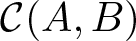 $\mathcal{C}(A,B)$ denote the class of normalized Janowski convex functions defined in the unit disk $\mathbb{D}:=\{z\in\mathbb{C}:|z| \lt 1\}$ that satisfy the subordination relation $1+zf''(z)/f'(z)\prec (1+Az)/(1+Bz)$. In the present article, we determine the sharp estimate of the Schwarzian norm for functions in the class $\mathcal{C}(A,B)$. The Dieudonné’s lemma which gives the exact region of variability for derivatives at a point of bounded functions, plays the key role in this study, and we also use this lemma to construct the extremal functions for the sharpness by a new method.


On the Γ-convergence of the Allen–Cahn functional with boundary conditions
- Part of
-
- Journal:
- Proceedings of the Royal Society of Edinburgh. Section A: Mathematics / Volume 155 / Issue 5 / October 2025
- Published online by Cambridge University Press:
- 12 February 2024, pp. 1557-1579
- Print publication:
- October 2025
-
- Article
-
- You have access
- Open access
- HTML
- Export citation
-
We study minimizers of the Allen–Cahn system. We consider the $\varepsilon$
 -energy functional with Dirichlet values and we establish the $\Gamma$
 -limit. The minimizers of the limiting functional are closely related to minimizing partitions of the domain. Finally, utilizing that the triod and the straight line are the only minimal cones in the plane together with regularity results for minimal curves, we determine the precise structure of the minimizers of the limiting functional, and thus the limit of minimizers of the $\varepsilon$
 -energy functional as $\varepsilon \rightarrow 0$
 .
.


From NeurODEs to AutoencODEs: A mean-field control framework for width-varying neural networks
- Part of
-
- Journal:
- European Journal of Applied Mathematics / Volume 36 / Issue 2 / April 2025
- Published online by Cambridge University Press:
- 08 February 2024, pp. 188-230
-
- Article
-
- You have access
- Open access
- HTML
- Export citation
On generalized eigenvalue problems of fractional (p, q)-Laplace operator with two parameters – CORRIGENDUM
-
- Journal:
- Proceedings of the Royal Society of Edinburgh. Section A: Mathematics / Volume 155 / Issue 4 / August 2025
- Published online by Cambridge University Press:
- 06 February 2024, p. 1555
- Print publication:
- August 2025
-
- Article
-
- You have access
- HTML
- Export citation
Remarks on a formula of Ramanujan
- Part of
-
- Journal:
- Proceedings of the Royal Society of Edinburgh. Section A: Mathematics / Volume 155 / Issue 4 / August 2025
- Published online by Cambridge University Press:
- 06 February 2024, pp. 1543-1554
- Print publication:
- August 2025
-
- Article
- Export citation
Network-based kinetic models: Emergence of a statistical description of the graph topology
- Part of
-
- Journal:
- European Journal of Applied Mathematics / Volume 37 / Issue 3 / June 2026
- Published online by Cambridge University Press:
- 02 February 2024, pp. 721-742
-
- Article
-
- You have access
- Open access
- HTML
- Export citation
Abelian absolute Galois groups: In Erinnerung an Wulf-Dieter Geyer (1939–2019)
- Part of
-
- Journal:
- Glasgow Mathematical Journal / Volume 66 / Issue 2 / May 2024
- Published online by Cambridge University Press:
- 02 February 2024, pp. 359-367
-
- Article
-
- You have access
- Open access
- HTML
- Export citation
-
Generalizing a result of Wulf-Dieter Geyer in his thesis, we prove that if $K$ is a finitely generated extension of transcendence degree $r$ of a global field and $A$ is a closed abelian subgroup of $\textrm{Gal}(K)$, then ${\mathrm{rank}}(A)\le r+1$. Moreover, if $\mathrm{char}(K)=0$, then ${\hat{\mathbb{Z}}}^{r+1}$ is isomorphic to a closed subgroup of $\textrm{Gal}(K)$.


CHARACTERIZATION OF THE REDUCED PERIPHERAL SYSTEM OF LINKS
-
- Journal:
- Journal of the Institute of Mathematics of Jussieu / Volume 23 / Issue 6 / November 2024
- Published online by Cambridge University Press:
- 01 February 2024, pp. 2441-2459
- Print publication:
- November 2024
-
- Article
- Export citation
Regular matrices of unbounded linear operators
- Part of
-
- Journal:
- Proceedings of the Royal Society of Edinburgh. Section A: Mathematics / Volume 155 / Issue 4 / August 2025
- Published online by Cambridge University Press:
- 31 January 2024, pp. 1514-1542
- Print publication:
- August 2025
-
- Article
-
- You have access
- Open access
- HTML
- Export citation
-
Let $X,\,Y$
 be Banach spaces and fix a linear operator $T \in \mathcal {L}(X,\,Y)$
 and ideals $\mathcal {I},\, \mathcal {J}$
 on the nonnegative integers. We obtain Silverman–Toeplitz type theorems on matrices $A=(A_{n,k}: n,\,k \in \omega )$
 of linear operators in $\mathcal {L}(X,\,Y)$
 , so that\[ \mathcal{J}\text{-}\lim A\boldsymbol{x}=T(\mathcal{I}\text{-}\lim \boldsymbol{x}) \]for every $X$
 -valued sequence $\boldsymbol {x}=(x_0,\,x_1,\,\ldots )$
 which is $\mathcal {I}$
 -convergent (and bounded). This allows us to establish the relationship between the classical Silverman–Toeplitz characterization of regular matrices and its multidimensional analogue for double sequences, its variant for matrices of linear operators, and the recent version (for the scalar case) in the context of ideal convergence. As byproducts, we obtain characterizations of several matrix classes and a generalization of the classical Hahn–Schur theorem. In the proofs we use an ideal version of the Banach–Steinhaus theorem which has been recently obtained by De Bondt and Vernaeve [J. Math. Anal. Appl. 495 (2021)].


On the existence of a nodal solution for p-Laplacian equations depending on the gradient
- Part of
-
- Journal:
- Proceedings of the Royal Society of Edinburgh. Section A: Mathematics / Volume 155 / Issue 4 / August 2025
- Published online by Cambridge University Press:
- 31 January 2024, pp. 1492-1513
- Print publication:
- August 2025
-
- Article
- Export citation
-
In the present paper we deal with a quasi-linear elliptic equation depending on a sublinear nonlinearity involving the gradient. We prove the existence of a nontrivial nodal solution employing the theory of invariant sets of descending flow together with sub-supersolution techniques, gradient regularity arguments, strong comparison principle for the $p$
 -Laplace operator. The same conclusion is obtained for an eigenvalue problem under a different set of assumptions.

The dynamical analysis of a nonlocal predator–prey model with cannibalism
- Part of
-
- Journal:
- European Journal of Applied Mathematics / Volume 35 / Issue 5 / October 2024
- Published online by Cambridge University Press:
- 29 January 2024, pp. 707-731
-
- Article
-
- You have access
- Open access
- HTML
- Export citation
Karamata’s theorem for regularized Cauchy transforms
- Part of
-
- Journal:
- Proceedings of the Royal Society of Edinburgh. Section A: Mathematics / Volume 155 / Issue 4 / August 2025
- Published online by Cambridge University Press:
- 26 January 2024, pp. 1431-1491
- Print publication:
- August 2025
-
- Article
-
- You have access
- Open access
- HTML
- Export citation
Global dynamics and spatiotemporal heterogeneity of a preytaxis model with prey-induced acceleration
- Part of
-
- Journal:
- European Journal of Applied Mathematics / Volume 35 / Issue 5 / October 2024
- Published online by Cambridge University Press:
- 26 January 2024, pp. 601-633
-
- Article
-
- You have access
- Open access
- HTML
- Export citation
Kato’s main conjecture for potentially ordinary primes
- Part of
-
- Journal:
- Glasgow Mathematical Journal / Volume 66 / Issue 2 / May 2024
- Published online by Cambridge University Press:
- 26 January 2024, pp. 338-358
-
- Article
- Export citation
-
In this paper, we prove Kato’s main conjecture for $CM$ modular forms for primes of potentially ordinary reduction under certain hypotheses on the modular form.

On degenerate reaction-diffusion epidemic models with mass action or standard incidence mechanism
- Part of
-
- Journal:
- European Journal of Applied Mathematics / Volume 35 / Issue 5 / October 2024
- Published online by Cambridge University Press:
- 22 January 2024, pp. 634-661
-
- Article
-
- You have access
- Open access
- HTML
- Export citation
Leopoldt-type theorems for non-abelian extensions of $\mathbb{Q}$
- Part of
-
- Journal:
- Glasgow Mathematical Journal / Volume 66 / Issue 2 / May 2024
- Published online by Cambridge University Press:
- 22 January 2024, pp. 308-337
-
- Article
-
- You have access
- Open access
- HTML
- Export citation
-
We prove new results concerning the additive Galois module structure of wildly ramified non-abelian extensions $K/\mathbb{Q}$ with Galois group isomorphic to $A_4$, $S_4$, $A_5$, and dihedral groups of order $2p^n$ for certain prime powers $p^n$. In particular, when $K/\mathbb{Q}$ is a Galois extension with Galois group $G$ isomorphic to $A_4$, $S_4$ or $A_5$, we give necessary and sufficient conditions for the ring of integers $\mathcal{O}_{K}$ to be free over its associated order in the rational group algebra $\mathbb{Q}[G]$.


On generalized eigenvalue problems of fractional (p, q)-Laplace operator with two parameters
- Part of
-
- Journal:
- Proceedings of the Royal Society of Edinburgh. Section A: Mathematics / Volume 155 / Issue 4 / August 2025
- Published online by Cambridge University Press:
- 22 January 2024, pp. 1385-1430
- Print publication:
- August 2025
-
- Article
- Export citation
-
For $s_1,\,s_2\in (0,\,1)$
 and $p,\,q \in (1,\, \infty )$
 , we study the following nonlinear Dirichlet eigenvalue problem with parameters $\alpha,\, \beta \in \mathbb {R}$
 driven by the sum of two nonlocal operators:\[ (-\Delta)^{s_1}_p u+(-\Delta)^{s_2}_q u=\alpha|u|^{p-2}u+\beta|u|^{q-2}u\ \text{in }\Omega, \quad u=0\ \text{in } \mathbb{R}^d \setminus \Omega, \quad \mathrm{(P)} \]where $\Omega \subset \mathbb {R}^d$
 is a bounded open set. Depending on the values of $\alpha,\,\beta$
 , we completely describe the existence and non-existence of positive solutions to (P). We construct a continuous threshold curve in the two-dimensional $(\alpha,\, \beta )$
 -plane, which separates the regions of the existence and non-existence of positive solutions. In addition, we prove that the first Dirichlet eigenfunctions of the fractional $p$
 -Laplace and fractional $q$
 -Laplace operators are linearly independent, which plays an essential role in the formation of the curve. Furthermore, we establish that every nonnegative solution of (P) is globally bounded.


The fully parabolic multi-species chemotaxis system in $\mathbb{R}^{2}$
- Part of
-
- Journal:
- European Journal of Applied Mathematics / Volume 35 / Issue 5 / October 2024
- Published online by Cambridge University Press:
- 19 January 2024, pp. 675-706
-
- Article
-
- You have access
- Open access
- HTML
- Export citation
-
This article is devoted to the analysis of the parabolic–parabolic chemotaxis system with multi-components over $\mathbb{R}^2$. The optimal small initial condition on the global existence of solutions for multi-species chemotaxis model in the fully parabolic situation had not been attained as far as the author knows. In this paper, we prove that under the sub-critical mass condition, any solutions to conflict-free system exist globally. Moreover, the global existence of solutions to system with strong self-repelling effect has been discussed even for large initial data. The proof is based on the modified free energy functional and the Moser–Trudinger inequality for system.


PRM volume 154 issue 1 Cover and Front matter
-
- Journal:
- Proceedings of the Royal Society of Edinburgh. Section A: Mathematics / Volume 154 / Issue 1 / February 2024
- Published online by Cambridge University Press:
- 19 January 2024, pp. f1-f2
- Print publication:
- February 2024
-
- Article
-
- You have access
- Export citation
