Refine search
Actions for selected content:
26063 results in Abstract analysis
PRM volume 154 issue 1 Cover and Back matter
-
- Journal:
- Proceedings of the Royal Society of Edinburgh. Section A: Mathematics / Volume 154 / Issue 1 / February 2024
- Published online by Cambridge University Press:
- 19 January 2024, pp. b1-b2
- Print publication:
- February 2024
-
- Article
-
- You have access
- Export citation
Recurrent and chaotic outbreaks in SIR model
-
- Journal:
- European Journal of Applied Mathematics / Volume 35 / Issue 5 / October 2024
- Published online by Cambridge University Press:
- 18 January 2024, pp. 662-674
-
- Article
-
- You have access
- Open access
- HTML
- Export citation
Sharp gradient estimate, rigidity and almost rigidity of Green functions on non-parabolic RCD(0, N) spaces
-
- Journal:
- Proceedings of the Royal Society of Edinburgh. Section A: Mathematics / Volume 155 / Issue 4 / August 2025
- Published online by Cambridge University Press:
- 17 January 2024, pp. 1267-1320
- Print publication:
- August 2025
-
- Article
- Export citation
-
Inspired by a result in T. H. Colding. (16). Acta. Math. 209(2) (2012), 229-263 [16] of Colding, the present paper studies the Green function $G$
 on a non-parabolic $\operatorname {RCD}(0,\,N)$
 space $(X,\, \mathsf {d},\, \mathfrak {m})$
 for some finite $N>2$
 . Defining $\mathsf {b}_x=G(x,\, \cdot )^{\frac {1}{2-N}}$
 for a point $x \in X$
 , which plays a role of a smoothed distance function from $x$
 , we prove that the gradient $|\nabla \mathsf {b}_x|$
 has the canonical pointwise representative with the sharp upper bound in terms of the $N$
 -volume density $\nu _x=\lim _{r\to 0^+}\frac {\mathfrak {m} (B_r(x))}{r^N}$
 of $\mathfrak {m}$
 at $x$
 ;\[ |\nabla \mathsf{b}_x|(y) \le \left(N(N-2)\nu_x\right)^{\frac{1}{N-2}}, \quad \text{for any }y \in X \setminus \{x\}. \]Moreover the rigidity is obtained, namely, the upper bound is attained at a point $y \in X \setminus \{x\}$
 if and only if the space is isomorphic to the $N$
 -metric measure cone over an $\operatorname {RCD}(N-2,\, N-1)$
 space. In the case when $x$
 is an $N$
 -regular point, the rigidity states an isomorphism to the $N$
 -dimensional Euclidean space $\mathbb {R}^N$
 , thus, this extends the result of Colding to $\operatorname {RCD}(0,\,N)$
 spaces. It is emphasized that the almost rigidities are also proved, which are new even in the smooth framework.


Classification of simple smooth modules over the Heisenberg–Virasoro algebra
- Part of
-
- Journal:
- Proceedings of the Royal Society of Edinburgh. Section A: Mathematics / Volume 155 / Issue 4 / August 2025
- Published online by Cambridge University Press:
- 17 January 2024, pp. 1321-1365
- Print publication:
- August 2025
-
- Article
- Export citation
-
In this paper, we classify simple smooth modules over the mirror Heisenberg–Virasoro algebra ${\mathfrak {D}}$
 , and simple smooth modules over the twisted Heisenberg–Virasoro algebra $\bar {\mathfrak {D}}$
 with non-zero level. To this end we generalize Sugawara operators to smooth modules over the Heisenberg algebra, and develop new techniques. As applications, we characterize simple Whittaker modules and simple highest weight modules over ${\mathfrak {D}}$
 . A vertex-algebraic interpretation of our result is the classification of simple weak twisted and untwisted modules over the Heisenberg–Virasoro vertex algebras. We also present a few examples of simple smooth ${\mathfrak {D}}$
 -modules and $\bar {\mathfrak {D}}$
 -modules induced from simple modules over finite dimensional solvable Lie algebras, that are not tensor product modules of Virasoro modules and Heisenberg modules. This is very different from the case of simple highest weight modules over $\mathfrak {D}$
 and $\bar {\mathfrak {D}}$
 which are always tensor products of simple Virasoro modules and simple Heisenberg modules.


Nonexpansive and noncontractive mappings on the set of quantum pure states
- Part of
-
- Journal:
- Proceedings of the Royal Society of Edinburgh. Section A: Mathematics / Volume 155 / Issue 4 / August 2025
- Published online by Cambridge University Press:
- 17 January 2024, pp. 1366-1384
- Print publication:
- August 2025
-
- Article
- Export citation
Estimating the Hausdorff measure using recurrence
- Part of
-
- Journal:
- Proceedings of the Edinburgh Mathematical Society / Volume 67 / Issue 1 / February 2024
- Published online by Cambridge University Press:
- 12 January 2024, pp. 188-199
-
- Article
-
- You have access
- Open access
- HTML
- Export citation
Quasilinear duality and inversion in Banach spaces
-
- Journal:
- Proceedings of the Royal Society of Edinburgh. Section A: Mathematics / Volume 155 / Issue 4 / August 2025
- Published online by Cambridge University Press:
- 11 January 2024, pp. 1223-1239
- Print publication:
- August 2025
-
- Article
-
- You have access
- Open access
- HTML
- Export citation
-
We present a unified approach to the processes of inversion and duality for quasilinear and $1$
 -quasilinear maps; in particular, for centralizers and differentials generated by interpolation methods.

Multidimensional Frank–Laptev–Weidl improvement of the hardy inequality
- Part of
-
- Journal:
- Proceedings of the Edinburgh Mathematical Society / Volume 67 / Issue 1 / February 2024
- Published online by Cambridge University Press:
- 11 January 2024, pp. 151-167
-
- Article
- Export citation
Dehn functions of mapping tori of right-angled Artin groups
- Part of
-
- Journal:
- Glasgow Mathematical Journal / Volume 66 / Issue 2 / May 2024
- Published online by Cambridge University Press:
- 11 January 2024, pp. 252-289
-
- Article
- Export citation
-
The algebraic mapping torus $M_{\Phi }$ of a group $G$ with an automorphism $\Phi$ is the HNN-extension of $G$ in which conjugation by the stable letter performs $\Phi$. We classify the Dehn functions of $M_{\Phi }$ in terms of $\Phi$ for a number of right-angled Artin groups (RAAGs) $G$, including all $3$-generator RAAGs and $F_k \times F_l$ for all $k,l \geq 2$.


Commutants and complex symmetry of finite Blaschke product multiplication operator in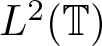 $L^2(\mathbb{T})$
- Part of
-
- Journal:
- Proceedings of the Edinburgh Mathematical Society / Volume 67 / Issue 1 / February 2024
- Published online by Cambridge University Press:
- 11 January 2024, pp. 261-286
-
- Article
- Export citation
-
Consider the multiplication operator MB in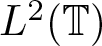 $L^2(\mathbb{T})$, where the symbol B is a finite Blaschke product. In this article, we characterize the commutant of MB in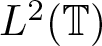 $L^2(\mathbb{T})$. As an application of this characterization result, we explicitly determine the class of conjugations commuting with $M_{z^2}$ or making $M_{z^2}$ complex symmetric by introducing a new class of conjugations in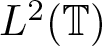 $L^2(\mathbb{T})$. Moreover, we analyse their properties while keeping the whole Hardy space, model space and Beurling-type subspaces invariant. Furthermore, we extended our study concerning conjugations in the case of finite Blaschke products.


Classifying spaces for families of abelian subgroups of braid groups, RAAGs and graphs of abelian groups
- Part of
-
- Journal:
- Glasgow Mathematical Journal / Volume 66 / Issue 2 / May 2024
- Published online by Cambridge University Press:
- 11 January 2024, pp. 290-307
-
- Article
-
- You have access
- Open access
- HTML
- Export citation
-
Given a group $G$ and an integer $n\geq 0$, we consider the family ${\mathcal F}_n$ of all virtually abelian subgroups of $G$ of $\textrm{rank}$ at most $n$. In this article, we prove that for each $n\ge 2$ the Bredon cohomology, with respect to the family ${\mathcal F}_n$, of a free abelian group with $\textrm{rank}$ $k \gt n$ is nontrivial in dimension $k+n$; this answers a question of Corob Cook et al. (Homology Homotopy Appl. 19(2) (2017), 83–87, Question 2.7). As an application, we compute the minimal dimension of a classifying space for the family ${\mathcal F}_n$ for braid groups, right-angled Artin groups, and graphs of groups whose vertex groups are infinite finitely generated virtually abelian groups, for all $n\ge 2$. The main tools that we use are the Mayer–Vietoris sequence for Bredon cohomology, Bass–Serre theory, and the Lück–Weiermann construction.


On traces of Bochner representable operators on the space of bounded measurable functions
- Part of
-
- Journal:
- Proceedings of the Edinburgh Mathematical Society / Volume 67 / Issue 1 / February 2024
- Published online by Cambridge University Press:
- 11 January 2024, pp. 224-235
-
- Article
- Export citation
-
Let Σ be a σ-algebra of subsets of a set Ω and $B(\Sigma)$ be the Banach space of all bounded Σ-measurable scalar functions on Ω. Let $\tau(B(\Sigma),ca(\Sigma))$ denote the natural Mackey topology on $B(\Sigma)$. It is shown that a linear operator T from $B(\Sigma)$ to a Banach space E is Bochner representable if and only if T is a nuclear operator between the locally convex space $(B(\Sigma),\tau(B(\Sigma),ca(\Sigma)))$ and the Banach space E. We derive a formula for the trace of a Bochner representable operator $T:B({\cal B} o)\rightarrow B({\cal B} o)$ generated by a function $f\in L^1({\cal B} o, C(\Omega))$, where Ω is a compact Hausdorff space.


Infinitesimally Moebius bendable hypersurfaces
- Part of
-
- Journal:
- Proceedings of the Edinburgh Mathematical Society / Volume 67 / Issue 1 / February 2024
- Published online by Cambridge University Press:
- 11 January 2024, pp. 236-260
-
- Article
- Export citation
-
Li, Ma and Wang have provided in [13] a partial classification of the so-called Moebius deformable hypersurfaces, that is, the umbilic-free Euclidean hypersurfaces $f\colon M^n\to \mathbb{R}^{n+1}$ that admit non-trivial deformations preserving the Moebius metric. For $n\geq 5$, the classification was completed by the authors in [12]. In this article we obtain an infinitesimal version of that classification. Namely, we introduce the notion of an infinitesimal Moebius variation of an umbilic-free immersion $f\colon M^n\to \mathbb{R}^m$ into Euclidean space as a one-parameter family of immersions $f_t\colon M^n\to \mathbb{R}^m$, with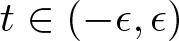 $t\in (-\epsilon, \epsilon)$ and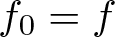 $f_0=f$, such that the Moebius metrics determined by ft coincide up to the first order. Then we characterize isometric immersions $f\colon M^n\to \mathbb{R}^m$ of arbitrary codimension that admit a non-trivial infinitesimal Moebius variation among those that admit a non-trivial conformal infinitesimal variation, and use such characterization to classify the umbilic-free Euclidean hypersurfaces of dimension $n\geq 5$ that admit non-trivial infinitesimal Moebius variations.


Goldie dimension for C*-algebras
- Part of
-
- Journal:
- Proceedings of the Edinburgh Mathematical Society / Volume 67 / Issue 1 / February 2024
- Published online by Cambridge University Press:
- 11 January 2024, pp. 200-223
-
- Article
- Export citation
Branching patterns of wave trains in mass-in-mass lattices
- Part of
-
- Journal:
- Proceedings of the Royal Society of Edinburgh. Section A: Mathematics / Volume 155 / Issue 4 / August 2025
- Published online by Cambridge University Press:
- 11 January 2024, pp. 1240-1266
- Print publication:
- August 2025
-
- Article
- Export citation
-
We investigate the existence and branching patterns of wave trains in the mass-in-mass (MiM) lattice, which is a variant of the Fermi–Pasta–Ulam (FPU) lattice. In contrast to FPU lattice, we have to solve coupled advance-delay differential equations, which are reduced to a finite-dimensional bifurcation equation with an inherited Hamiltonian structure by applying a Lyapunov–Schmidt reduction and invariant theory. We establish a link between the MiM lattice and the monatomic FPU lattice. That is, the monochromatic and bichromatic wave trains persist near $\mu =0$
 in the nonresonance case and in the resonance case $p:q$
 where $q$
 is not an integer multiple of $p$
 . Furthermore, we obtain the multiplicity of bichromatic wave trains in $p:q$
 resonance where $q$
 is an integer multiple of $p$
 , based on the singular theorem.


On a variant of the product replacement algorithm
- Part of
-
- Journal:
- Glasgow Mathematical Journal / Volume 66 / Issue 1 / January 2024
- Published online by Cambridge University Press:
- 09 January 2024, pp. 221-228
-
- Article
- Export citation
Adhesion and volume filling in one-dimensional population dynamics under Dirichlet boundary condition
- Part of
-
- Journal:
- Proceedings of the Royal Society of Edinburgh. Section A: Mathematics / Volume 155 / Issue 4 / August 2025
- Published online by Cambridge University Press:
- 08 January 2024, pp. 1174-1222
- Print publication:
- August 2025
-
- Article
- Export citation
Cavitation of a spherical body under mechanical and self-gravitational forces
- Part of
-
- Journal:
- Proceedings of the Royal Society of Edinburgh. Section A: Mathematics / Volume 155 / Issue 4 / August 2025
- Published online by Cambridge University Press:
- 08 January 2024, pp. 1143-1173
- Print publication:
- August 2025
-
- Article
- Export citation
-
In this paper, we look for minimizers of the energy functional for isotropic compressible elasticity taking into consideration the effect of a gravitational field induced by the body itself. We consider two types of problems: the displacement problem in which the outer boundary of the body is subjected to a Dirichlet-type boundary condition, and the one with zero traction on the boundary but with an internal pressure function. For a spherically symmetric body occupying the unit ball $\mathcal {B}\in \mathbb {R}^3$
 , the minimization is done within the class of radially symmetric deformations. We give conditions for the existence of such minimizers, for satisfaction of the Euler–Lagrange equations, and show that for large displacements or large internal pressures, the minimizer must develop a cavity at the centre. We discuss a numerical scheme for approximating the minimizers for the displacement problem, together with some simulations that show the dependence of the cavity radius and minimum energy on the displacement and mass density of the body.

GLOBAL HYPOELLIPTICITY OF SUMS OF SQUARES ON COMPACT MANIFOLDS
- Part of
-
- Journal:
- Journal of the Institute of Mathematics of Jussieu / Volume 23 / Issue 5 / September 2024
- Published online by Cambridge University Press:
- 05 January 2024, pp. 2405-2439
- Print publication:
- September 2024
-
- Article
- Export citation
-
We present necessary and sufficient conditions for an operator of the type sum of squares to be globally hypoelliptic on $T \times G$, where T is a compact Riemannian manifold and G is a compact Lie group. These conditions involve the global hypoellipticity of a system of vector fields on G and are weaker than Hörmander’s condition, while generalizing the well known Diophantine conditions on the torus. Examples of operators satisfying these conditions in the general setting are provided.

Nowhere scattered multiplier algebras
-
- Journal:
- Proceedings of the Royal Society of Edinburgh. Section A: Mathematics / Volume 155 / Issue 4 / August 2025
- Published online by Cambridge University Press:
- 05 January 2024, pp. 1113-1142
- Print publication:
- August 2025
-
- Article
- Export citation
-
We study sufficient conditions under which a nowhere scattered $\mathrm {C}^*$
 -algebra $A$
 has a nowhere scattered multiplier algebra $\mathcal {M}(A)$
 , that is, we study when $\mathcal {M}(A)$
 has no nonzero, elementary ideal-quotients. In particular, we prove that a $\sigma$
 -unital $\mathrm {C}^*$
 -algebra $A$
 of
of(i) finite nuclear dimension, or
(ii) real rank zero, or
(iii) stable rank one with $k$
 -comparison,
 is.
is.


