Contents
Research Article
Local and global existence and uniqueness of solution for abstract differential equations with state-dependent argument
- Part of:
-
- Published online by Cambridge University Press:
- 26 April 2023, pp. 305-345
-
- Article
- Export citation
Total mean curvature surfaces in the product space ${\mathbb{S}^{n}\times\mathbb{R}}$ and applications
- Part of:
-
- Published online by Cambridge University Press:
- 26 April 2023, pp. 346-365
-
- Article
- Export citation
-
The total mean curvature functional for submanifolds into the Riemannian product space $\mathbb{S}^n\times\mathbb{R}$ is considered and its first variational formula is presented. Later on, two second-order differential operators are defined and a nice integral inequality relating both of them is proved. Finally, we prove our main result: an integral inequality for closed stationary $\mathcal{H}$-surfaces in $\mathbb{S}^n\times\mathbb{R}$, characterizing the cases where the equality is attained.

Higher-order evolution inequalities involving convection and Hardy-Leray potential terms in a bounded domain
- Part of:
-
- Published online by Cambridge University Press:
- 05 May 2023, pp. 366-390
-
- Article
- Export citation
-
We consider a class of nonlinear higher-order evolution inequalities posed in $(0,\infty)\times B_1\backslash\{0\}$, subject to inhomogeneous Dirichlet-type boundary conditions, where B1 is the unit ball in $\mathbb{R}^N$. The considered class involves differential operators of the formwhere
 \begin{equation*}\mathcal{L}_{\mu_1,\mu_2}=-\Delta +\frac{\mu_1}{|x|^2}x\cdot \nabla +\frac{\mu_2}{|x|^2},\qquad x\in \mathbb{R}^N\backslash\{0\},\end{equation*}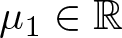 $\mu_1\in \mathbb{R}$ and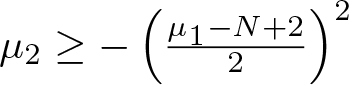 $\mu_2\geq -\left(\frac{\mu_1-N+2}{2}\right)^2$. Optimal criteria for the nonexistence of weak solutions are established. Our study yields naturally optimal nonexistence results for the corresponding class of elliptic inequalities. Notice that no restriction on the sign of solutions is imposed.

Local regularity for nonlinear elliptic and parabolic equations with anisotropic weights
- Part of:
-
- Published online by Cambridge University Press:
- 28 April 2023, pp. 391-436
-
- Article
- Export citation
On one-dimensional local rings and Berger’s conjecture
- Part of:
-
- Published online by Cambridge University Press:
- 23 May 2023, pp. 437-452
-
- Article
- Export citation
-
Let k be a field of characteristic zero and let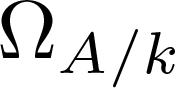 $\Omega_{A/k}$ be the universally finite differential module of a k-algebra A, which is the local ring of a closed point of an algebraic or algebroid curve over k. A notorious open problem, known as Berger’s Conjecture, predicts that A must be regular if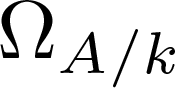 $\Omega_{A/k}$ is torsion-free. In this paper, assuming the hypotheses of the conjecture and observing that the module ${\rm Hom}_A(\Omega_{A/k}, \Omega_{A/k})$ is then isomorphic to an ideal of A, say $\mathfrak{h}$, we show that A is regular whenever the ring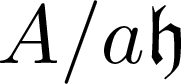 $A/a\mathfrak{h}$ is Gorenstein for some parameter a (and conversely). In addition, we provide various characterizations for the regularity of A in the context of the conjecture.

The Lp convergence of Fourier series on triangular domains
- Part of:
-
- Published online by Cambridge University Press:
- 19 June 2023, pp. 453-474
-
- Article
-
- You have access
- Open access
- HTML
- Export citation
-
We prove Lp norm convergence for (appropriate truncations of) the Fourier series arising from the Dirichlet Laplacian eigenfunctions on three types of triangular domains in $\mathbb{R}^2$: (i) the 45-90-45 triangle, (ii) the equilateral triangle and (iii) the hemiequilateral triangle (i.e. half an equilateral triangle cut along its height). The limitations of our argument to these three types are discussed in light of Lamé’s Theorem and the image method.

A strongly convergent algorithm for solving multiple set split equality equilibrium and fixed point problems in Banach spaces
- Part of:
-
- Published online by Cambridge University Press:
- 15 June 2023, pp. 475-515
-
- Article
- Export citation
Schwarz lemma for real harmonic functions onto surfaces with non-negative Gaussian curvature
- Part of:
-
- Published online by Cambridge University Press:
- 15 June 2023, pp. 516-531
-
- Article
- Export citation
-
Assume that f is a real ρ-harmonic function of the unit disk $\mathbb{D}$ onto the interval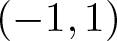 $(-1,1)$, where $\rho(u,v)=R(u)$ is a metric defined in the infinite strip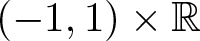 $(-1,1)\times \mathbb{R}$. Then we prove that $|\nabla f(z)|(1-|z|^2)\le \frac{4}{\pi}(1-f(z)^2)$ for all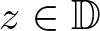 $z\in\mathbb{D}$, provided that ρ has a non-negative Gaussian curvature. This extends several results in the field and answers to a conjecture proposed by the first author in 2014. Such an inequality is not true for negatively curved metrics.

Baumslag–Solitar groups and residual nilpotence
- Part of:
-
- Published online by Cambridge University Press:
- 16 June 2023, pp. 532-547
-
- Article
- Export citation
-
Let G be a Baumslag–Solitar group. We calculate the intersection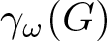 $\gamma_{\omega}(G)$ of all terms of the lower central series of G. Using this, we show that $[\gamma_{\omega}(G),G]=\gamma_{\omega}(G)$, thus answering a question of Bardakov and Neschadim [1]. For any $c \in \mathbb{N}$, with $c \geq 2$, we show, by using Lie algebra methods, that the quotient group $\gamma_{c}(G)/\gamma_{c+1}(G)$ of the lower central series of G is finite.


On the algebra of elliptic curves
- Part of:
-
- Published online by Cambridge University Press:
- 26 June 2023, pp. 548-556
-
- Article
-
- You have access
- Open access
- HTML
- Export citation
Surgeries on iterated torus knots bounding rational homology 4-balls
- Part of:
-
- Published online by Cambridge University Press:
- 23 June 2023, pp. 557-578
-
- Article
- Export citation
-
We show that all large enough positive integral surgeries on algebraic knots bound a 4-manifold with a negative definite plumbing tree, which we describe explicitly. Then we apply the lattice embedding obstruction coming from Donaldson’s Theorem to classify the ones of the form $S^3_n(T(p_1,k_1p_1+1; p_2, k_2p_2\pm 1))$ that also bound rational homology 4-balls.
A non-periodic indefinite variational problem in ℝN with critical exponent
- Part of:
-
- Published online by Cambridge University Press:
- 26 June 2023, pp. 579-612
-
- Article
- Export citation
-
We consider the non-linear Schrödinger equation(Pμ)
in \begin{equation*}\begin{array}{lc}-\Delta u + V(x) u = \mu f(u) + |u|^{2^*-2}u, &\end{array}\end{equation*} $\mathbb{R}^N$,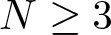 $N\geq3$, where V changes sign and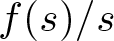 $f(s)/s$, s ≠ 0, is bounded, with V non-periodic in x. The existence of a solution is established employing spectral theory, a general linking theorem due to [12] and interaction between translated solutions of the problem at infinity with some qualitative properties of them.

Front Cover (OFC, IFC) and matter
PEM series 2 volume 66 issue 2 Cover and Front matter
-
- Published online by Cambridge University Press:
- 21 July 2023, pp. f1-f2
-
- Article
-
- You have access
- Export citation
Back Cover (IBC, OBC) and matter
PEM series 2 volume 66 issue 2 Cover and Back matter
-
- Published online by Cambridge University Press:
- 21 July 2023, pp. b1-b2
-
- Article
-
- You have access
- Export citation