Refine search
Actions for selected content:
26063 results in Abstract analysis
ON GROUPS OF UNITS OF SPECIAL AND ONE-RELATOR INVERSE MONOIDS
- Part of
-
- Journal:
- Journal of the Institute of Mathematics of Jussieu / Volume 23 / Issue 4 / July 2024
- Published online by Cambridge University Press:
- 21 November 2023, pp. 1875-1918
- Print publication:
- July 2024
-
- Article
-
- You have access
- Open access
- HTML
- Export citation
-
We investigate the groups of units of one-relator and special inverse monoids. These are inverse monoids which are defined by presentations, where all the defining relations are of the form $r=1$. We develop new approaches for finding presentations for the group of units of a special inverse monoid, and apply these methods to give conditions under which the group admits a presentation with the same number of defining relations as the monoid. In particular, our results give sufficient conditions for the group of units of a one-relator inverse monoid to be a one-relator group. When these conditions are satisfied, these results give inverse semigroup theoretic analogues of classical results of Adjan for one-relator monoids, and Makanin for special monoids. In contrast, we show that in general these classical results do not hold for one-relator and special inverse monoids. In particular, we show that there exists a one-relator special inverse monoid whose group of units is not a one-relator group (with respect to any generating set), and we show that there exists a finitely presented special inverse monoid whose group of units is not finitely presented.

Spread-out limit of the critical points for lattice trees and lattice animals in dimensions $\boldsymbol{d}\boldsymbol\gt \textbf{8}$
- Part of
-
- Journal:
- Combinatorics, Probability and Computing / Volume 33 / Issue 2 / March 2024
- Published online by Cambridge University Press:
- 20 November 2023, pp. 238-269
-
- Article
- Export citation
-
A spread-out lattice animal is a finite connected set of edges in $\{\{x,y\}\subset \mathbb{Z}^d\;:\;0\lt \|x-y\|\le L\}$. A lattice tree is a lattice animal with no loops. The best estimate on the critical point $p_{\textrm{c}}$ so far was achieved by Penrose (J. Stat. Phys. 77, 3–15, 1994) : $p_{\textrm{c}}=1/e+O(L^{-2d/7}\log L)$ for both models for all $d\ge 1$. In this paper, we show that $p_{\textrm{c}}=1/e+CL^{-d}+O(L^{-d-1})$ for all $d\gt 8$, where the model-dependent constant $C$ has the random-walk representationwhere
 \begin{align*} C_{\textrm{LT}}=\sum _{n=2}^\infty \frac{n+1}{2e}U^{*n}(o),&& C_{\textrm{LA}}=C_{\textrm{LT}}-\frac 1{2e^2}\sum _{n=3}^\infty U^{*n}(o), \end{align*} $U^{*n}$ is the $n$-fold convolution of the uniform distribution on the $d$-dimensional ball $\{x\in{\mathbb R}^d\;: \|x\|\le 1\}$. The proof is based on a novel use of the lace expansion for the 2-point function and detailed analysis of the 1-point function at a certain value of $p$ that is designed to make the analysis extremely simple.


7 - Second Order Differentiability of Convex Functions
- from Part II - Solution of the Monge Problem with Quadratic Cost: The Brenier–McCann Theorem
-
- Book:
- Optimal Mass Transport on Euclidean Spaces
- Published online:
- 02 November 2023
- Print publication:
- 16 November 2023, pp 77-85
-
- Chapter
- Export citation
4 - The Brenier Theorem
- from Part II - Solution of the Monge Problem with Quadratic Cost: The Brenier–McCann Theorem
-
- Book:
- Optimal Mass Transport on Euclidean Spaces
- Published online:
- 02 November 2023
- Print publication:
- 16 November 2023, pp 59-66
-
- Chapter
- Export citation
2 - Discrete Transport Problems
- from Part I - The Kantorovich Problem
-
- Book:
- Optimal Mass Transport on Euclidean Spaces
- Published online:
- 02 November 2023
- Print publication:
- 16 November 2023, pp 14-34
-
- Chapter
- Export citation
Epigraph
-
- Book:
- Optimal Mass Transport on Euclidean Spaces
- Published online:
- 02 November 2023
- Print publication:
- 16 November 2023, pp v-vi
-
- Chapter
- Export citation
Index
-
- Book:
- Optimal Mass Transport on Euclidean Spaces
- Published online:
- 02 November 2023
- Print publication:
- 16 November 2023, pp 294-296
-
- Chapter
- Export citation
14 - The Euler Equations and Isochoric Projections
- from Part III - Applications to PDE and the Calculus of Variations and the Wasserstein Space
-
- Book:
- Optimal Mass Transport on Euclidean Spaces
- Published online:
- 02 November 2023
- Print publication:
- 16 November 2023, pp 164-173
-
- Chapter
- Export citation
15 - Action Minimization, Eulerian Velocities, and Otto's Calculus
- from Part III - Applications to PDE and the Calculus of Variations and the Wasserstein Space
-
- Book:
- Optimal Mass Transport on Euclidean Spaces
- Published online:
- 02 November 2023
- Print publication:
- 16 November 2023, pp 174-192
-
- Chapter
- Export citation
Part III - Applications to PDE and the Calculus of Variations and the Wasserstein Space
-
- Book:
- Optimal Mass Transport on Euclidean Spaces
- Published online:
- 02 November 2023
- Print publication:
- 16 November 2023, pp 95-96
-
- Chapter
- Export citation
5 - First Order Differentiability of Convex Functions
- from Part II - Solution of the Monge Problem with Quadratic Cost: The Brenier–McCann Theorem
-
- Book:
- Optimal Mass Transport on Euclidean Spaces
- Published online:
- 02 November 2023
- Print publication:
- 16 November 2023, pp 67-72
-
- Chapter
- Export citation
Preface
-
- Book:
- Optimal Mass Transport on Euclidean Spaces
- Published online:
- 02 November 2023
- Print publication:
- 16 November 2023, pp xiii-xviii
-
- Chapter
- Export citation
13 - The Fokker–Planck Equation in the Wasserstein Space
- from Part III - Applications to PDE and the Calculus of Variations and the Wasserstein Space
-
- Book:
- Optimal Mass Transport on Euclidean Spaces
- Published online:
- 02 November 2023
- Print publication:
- 16 November 2023, pp 139-163
-
- Chapter
- Export citation
18 - Solution to the Monge Problem with Linear Cost
- from Part IV - Solution of the Monge Problem with Linear Cost: The Sudakov Theorem
-
- Book:
- Optimal Mass Transport on Euclidean Spaces
- Published online:
- 02 November 2023
- Print publication:
- 16 November 2023, pp 216-246
-
- Chapter
- Export citation
Part II - Solution of the Monge Problem with Quadratic Cost: The Brenier–McCann Theorem
-
- Book:
- Optimal Mass Transport on Euclidean Spaces
- Published online:
- 02 November 2023
- Print publication:
- 16 November 2023, pp 57-58
-
- Chapter
- Export citation
9 - Isoperimetric and Sobolev Inequalities in Sharp Form
- from Part III - Applications to PDE and the Calculus of Variations and the Wasserstein Space
-
- Book:
- Optimal Mass Transport on Euclidean Spaces
- Published online:
- 02 November 2023
- Print publication:
- 16 November 2023, pp 97-103
-
- Chapter
- Export citation
References
-
- Book:
- Optimal Mass Transport on Euclidean Spaces
- Published online:
- 02 November 2023
- Print publication:
- 16 November 2023, pp 288-293
-
- Chapter
- Export citation
The Bernoulli clock: probabilistic and combinatorial interpretations of the Bernoulli polynomials by circular convolution
- Part of
-
- Journal:
- Combinatorics, Probability and Computing / Volume 33 / Issue 2 / March 2024
- Published online by Cambridge University Press:
- 16 November 2023, pp. 210-237
-
- Article
- Export citation
-
The factorially normalized Bernoulli polynomials $b_n(x) = B_n(x)/n!$ are known to be characterized by $b_0(x) = 1$ and $b_n(x)$ for $n \gt 0$ is the anti-derivative of $b_{n-1}(x)$ subject to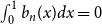 $\int _0^1 b_n(x) dx = 0$. We offer a related characterization: $b_1(x) = x - 1/2$ and $({-}1)^{n-1} b_n(x)$ for $n \gt 0$ is the $n$-fold circular convolution of $b_1(x)$ with itself. Equivalently, $1 - 2^n b_n(x)$ is the probability density at $x \in (0,1)$ of the fractional part of a sum of $n$ independent random variables, each with the beta $(1,2)$ probability density $2(1-x)$ at $x \in (0,1)$. This result has a novel combinatorial analog, the Bernoulli clock: mark the hours of a $2 n$ hour clock by a uniformly random permutation of the multiset $\{1,1, 2,2, \ldots, n,n\}$, meaning pick two different hours uniformly at random from the $2 n$ hours and mark them $1$, then pick two different hours uniformly at random from the remaining $2 n - 2$ hours and mark them $2$, and so on. Starting from hour $0 = 2n$, move clockwise to the first hour marked $1$, continue clockwise to the first hour marked $2$, and so on, continuing clockwise around the Bernoulli clock until the first of the two hours marked $n$ is encountered, at a random hour $I_n$ between $1$ and $2n$. We show that for each positive integer $n$, the event $( I_n = 1)$ has probability $(1 - 2^n b_n(0))/(2n)$, where $n! b_n(0) = B_n(0)$ is the $n$th Bernoulli number. For $ 1 \le k \le 2 n$, the difference $\delta _n(k)\,:\!=\, 1/(2n) -{\mathbb{P}}( I_n = k)$ is a polynomial function of $k$ with the surprising symmetry $\delta _n( 2 n + 1 - k) = ({-}1)^n \delta _n(k)$, which is a combinatorial analog of the well-known symmetry of Bernoulli polynomials $b_n(1-x) = ({-}1)^n b_n(x)$.


Part I - The Kantorovich Problem
-
- Book:
- Optimal Mass Transport on Euclidean Spaces
- Published online:
- 02 November 2023
- Print publication:
- 16 November 2023, pp 1-2
-
- Chapter
- Export citation
Dedication
-
- Book:
- Optimal Mass Transport on Euclidean Spaces
- Published online:
- 02 November 2023
- Print publication:
- 16 November 2023, pp vii-viii
-
- Chapter
- Export citation
