Refine search
Actions for selected content:
26070 results in Abstract analysis
18 - Solution to the Monge Problem with Linear Cost
- from Part IV - Solution of the Monge Problem with Linear Cost: The Sudakov Theorem
-
- Book:
- Optimal Mass Transport on Euclidean Spaces
- Published online:
- 02 November 2023
- Print publication:
- 16 November 2023, pp 216-246
-
- Chapter
- Export citation
Part II - Solution of the Monge Problem with Quadratic Cost: The Brenier–McCann Theorem
-
- Book:
- Optimal Mass Transport on Euclidean Spaces
- Published online:
- 02 November 2023
- Print publication:
- 16 November 2023, pp 57-58
-
- Chapter
- Export citation
9 - Isoperimetric and Sobolev Inequalities in Sharp Form
- from Part III - Applications to PDE and the Calculus of Variations and the Wasserstein Space
-
- Book:
- Optimal Mass Transport on Euclidean Spaces
- Published online:
- 02 November 2023
- Print publication:
- 16 November 2023, pp 97-103
-
- Chapter
- Export citation
References
-
- Book:
- Optimal Mass Transport on Euclidean Spaces
- Published online:
- 02 November 2023
- Print publication:
- 16 November 2023, pp 288-293
-
- Chapter
- Export citation
The Bernoulli clock: probabilistic and combinatorial interpretations of the Bernoulli polynomials by circular convolution
- Part of
-
- Journal:
- Combinatorics, Probability and Computing / Volume 33 / Issue 2 / March 2024
- Published online by Cambridge University Press:
- 16 November 2023, pp. 210-237
-
- Article
- Export citation
-
The factorially normalized Bernoulli polynomials $b_n(x) = B_n(x)/n!$ are known to be characterized by $b_0(x) = 1$ and $b_n(x)$ for $n \gt 0$ is the anti-derivative of $b_{n-1}(x)$ subject to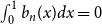 $\int _0^1 b_n(x) dx = 0$. We offer a related characterization: $b_1(x) = x - 1/2$ and $({-}1)^{n-1} b_n(x)$ for $n \gt 0$ is the $n$-fold circular convolution of $b_1(x)$ with itself. Equivalently, $1 - 2^n b_n(x)$ is the probability density at $x \in (0,1)$ of the fractional part of a sum of $n$ independent random variables, each with the beta $(1,2)$ probability density $2(1-x)$ at $x \in (0,1)$. This result has a novel combinatorial analog, the Bernoulli clock: mark the hours of a $2 n$ hour clock by a uniformly random permutation of the multiset $\{1,1, 2,2, \ldots, n,n\}$, meaning pick two different hours uniformly at random from the $2 n$ hours and mark them $1$, then pick two different hours uniformly at random from the remaining $2 n - 2$ hours and mark them $2$, and so on. Starting from hour $0 = 2n$, move clockwise to the first hour marked $1$, continue clockwise to the first hour marked $2$, and so on, continuing clockwise around the Bernoulli clock until the first of the two hours marked $n$ is encountered, at a random hour $I_n$ between $1$ and $2n$. We show that for each positive integer $n$, the event $( I_n = 1)$ has probability $(1 - 2^n b_n(0))/(2n)$, where $n! b_n(0) = B_n(0)$ is the $n$th Bernoulli number. For $ 1 \le k \le 2 n$, the difference $\delta _n(k)\,:\!=\, 1/(2n) -{\mathbb{P}}( I_n = k)$ is a polynomial function of $k$ with the surprising symmetry $\delta _n( 2 n + 1 - k) = ({-}1)^n \delta _n(k)$, which is a combinatorial analog of the well-known symmetry of Bernoulli polynomials $b_n(1-x) = ({-}1)^n b_n(x)$.


Part I - The Kantorovich Problem
-
- Book:
- Optimal Mass Transport on Euclidean Spaces
- Published online:
- 02 November 2023
- Print publication:
- 16 November 2023, pp 1-2
-
- Chapter
- Export citation
Dedication
-
- Book:
- Optimal Mass Transport on Euclidean Spaces
- Published online:
- 02 November 2023
- Print publication:
- 16 November 2023, pp vii-viii
-
- Chapter
- Export citation
Frontmatter
-
- Book:
- Optimal Mass Transport on Euclidean Spaces
- Published online:
- 02 November 2023
- Print publication:
- 16 November 2023, pp i-iv
-
- Chapter
- Export citation
Appendix A - Radon Measures on Rn and Related Topics
-
- Book:
- Optimal Mass Transport on Euclidean Spaces
- Published online:
- 02 November 2023
- Print publication:
- 16 November 2023, pp 268-280
-
- Chapter
- Export citation
10 - Displacement Convexity and Equilibrium of Gases
- from Part III - Applications to PDE and the Calculus of Variations and the Wasserstein Space
-
- Book:
- Optimal Mass Transport on Euclidean Spaces
- Published online:
- 02 November 2023
- Print publication:
- 16 November 2023, pp 104-117
-
- Chapter
- Export citation
Trend to equilibrium solution for the discrete Safronov–Dubovskiĭ aggregation equation with forcing
- Part of
-
- Journal:
- Proceedings of the Royal Society of Edinburgh. Section A: Mathematics / Volume 155 / Issue 3 / June 2025
- Published online by Cambridge University Press:
- 16 November 2023, pp. 869-892
- Print publication:
- June 2025
-
- Article
- Export citation
Contents
-
- Book:
- Optimal Mass Transport on Euclidean Spaces
- Published online:
- 02 November 2023
- Print publication:
- 16 November 2023, pp ix-xii
-
- Chapter
- Export citation
11 - The Wasserstein Distance W2 on P2(Rn)
- from Part III - Applications to PDE and the Calculus of Variations and the Wasserstein Space
-
- Book:
- Optimal Mass Transport on Euclidean Spaces
- Published online:
- 02 November 2023
- Print publication:
- 16 November 2023, pp 118-128
-
- Chapter
- Export citation
12 - Gradient Flows and the Minimizing Movements Scheme
- from Part III - Applications to PDE and the Calculus of Variations and the Wasserstein Space
-
- Book:
- Optimal Mass Transport on Euclidean Spaces
- Published online:
- 02 November 2023
- Print publication:
- 16 November 2023, pp 129-138
-
- Chapter
- Export citation
17 - Disintegration
- from Part IV - Solution of the Monge Problem with Linear Cost: The Sudakov Theorem
-
- Book:
- Optimal Mass Transport on Euclidean Spaces
- Published online:
- 02 November 2023
- Print publication:
- 16 November 2023, pp 204-215
-
- Chapter
- Export citation
Appendix B - Bibliographical Notes
-
- Book:
- Optimal Mass Transport on Euclidean Spaces
- Published online:
- 02 November 2023
- Print publication:
- 16 November 2023, pp 281-287
-
- Chapter
- Export citation
Part IV - Solution of the Monge Problem with Linear Cost: The Sudakov Theorem
-
- Book:
- Optimal Mass Transport on Euclidean Spaces
- Published online:
- 02 November 2023
- Print publication:
- 16 November 2023, pp 193-194
-
- Chapter
- Export citation
6 - The Brenier–McCann Theorem
- from Part II - Solution of the Monge Problem with Quadratic Cost: The Brenier–McCann Theorem
-
- Book:
- Optimal Mass Transport on Euclidean Spaces
- Published online:
- 02 November 2023
- Print publication:
- 16 November 2023, pp 73-76
-
- Chapter
- Export citation
Generalized divisor functions in arithmetic progressions: II
- Part of
-
- Journal:
- Proceedings of the Edinburgh Mathematical Society / Volume 67 / Issue 1 / February 2024
- Published online by Cambridge University Press:
- 16 November 2023, pp. 28-56
-
- Article
-
- You have access
- Open access
- HTML
- Export citation
Large cliques or cocliques in hypergraphs with forbidden order-size pairs
- Part of
-
- Journal:
- Combinatorics, Probability and Computing / Volume 33 / Issue 3 / May 2024
- Published online by Cambridge University Press:
- 16 November 2023, pp. 286-299
-
- Article
-
- You have access
- Open access
- HTML
- Export citation
-
The well-known Erdős-Hajnal conjecture states that for any graph $F$, there exists $\epsilon \gt 0$ such that every $n$-vertex graph $G$ that contains no induced copy of $F$ has a homogeneous set of size at least $n^{\epsilon }$. We consider a variant of the Erdős-Hajnal problem for hypergraphs where we forbid a family of hypergraphs described by their orders and sizes. For graphs, we observe that if we forbid induced subgraphs on $m$ vertices and $f$ edges for any positive $m$ and $0\leq f \leq \binom{m}{2}$, then we obtain large homogeneous sets. For triple systems, in the first nontrivial case $m=4$, for every $S \subseteq \{0,1,2,3,4\}$, we give bounds on the minimum size of a homogeneous set in a triple system where the number of edges spanned by every four vertices is not in $S$. In most cases the bounds are essentially tight. We also determine, for all $S$, whether the growth rate is polynomial or polylogarithmic. Some open problems remain.


