Refine search
Actions for selected content:
26070 results in Abstract analysis
16 - Optimal Transport Maps on the Real Line
- from Part IV - Solution of the Monge Problem with Linear Cost: The Sudakov Theorem
-
- Book:
- Optimal Mass Transport on Euclidean Spaces
- Published online:
- 02 November 2023
- Print publication:
- 16 November 2023, pp 195-203
-
- Chapter
- Export citation
Notation
-
- Book:
- Optimal Mass Transport on Euclidean Spaces
- Published online:
- 02 November 2023
- Print publication:
- 16 November 2023, pp xix-xx
-
- Chapter
- Export citation
8 - The Monge–Ampère Equation for Brenier Maps
- from Part II - Solution of the Monge Problem with Quadratic Cost: The Brenier–McCann Theorem
-
- Book:
- Optimal Mass Transport on Euclidean Spaces
- Published online:
- 02 November 2023
- Print publication:
- 16 November 2023, pp 86-94
-
- Chapter
- Export citation
19 - An Introduction to the Needle Decomposition Method
- from Part IV - Solution of the Monge Problem with Linear Cost: The Sudakov Theorem
-
- Book:
- Optimal Mass Transport on Euclidean Spaces
- Published online:
- 02 November 2023
- Print publication:
- 16 November 2023, pp 247-267
-
- Chapter
- Export citation
1 - An Introduction to the Monge Problem
- from Part I - The Kantorovich Problem
-
- Book:
- Optimal Mass Transport on Euclidean Spaces
- Published online:
- 02 November 2023
- Print publication:
- 16 November 2023, pp 3-13
-
- Chapter
- Export citation
3 - The Kantorovich Problem
- from Part I - The Kantorovich Problem
-
- Book:
- Optimal Mass Transport on Euclidean Spaces
- Published online:
- 02 November 2023
- Print publication:
- 16 November 2023, pp 35-56
-
- Chapter
- Export citation
ISOMETRIES AND HERMITIAN OPERATORS ON SPACES OF VECTOR-VALUED LIPSCHITZ MAPS
- Part of
-
- Journal:
- Journal of the Institute of Mathematics of Jussieu / Volume 23 / Issue 4 / July 2024
- Published online by Cambridge University Press:
- 14 November 2023, pp. 1857-1874
- Print publication:
- July 2024
-
- Article
-
- You have access
- Open access
- HTML
- Export citation
-
We study hermitian operators and isometries on spaces of vector-valued Lipschitz maps with the sum norm. There are two main theorems in this paper. Firstly, we prove that every hermitian operator on $\operatorname {Lip}(X,E)$, where E is a complex Banach space, is a generalized composition operator. Secondly, we give a complete description of unital surjective complex linear isometries on $\operatorname {Lip}(X,\mathcal {A})$, where $\mathcal {A}$ is a unital factor $C^{*}$-algebra. These results improve previous results stated by the author.


Spanning trees in graphs without large bipartite holes
- Part of
-
- Journal:
- Combinatorics, Probability and Computing / Volume 33 / Issue 3 / May 2024
- Published online by Cambridge University Press:
- 14 November 2023, pp. 270-285
-
- Article
-
- You have access
- HTML
- Export citation
-
We show that for any $\varepsilon \gt 0$ and $\Delta \in \mathbb{N}$, there exists $\alpha \gt 0$ such that for sufficiently large $n$, every $n$-vertex graph $G$ satisfying that $\delta (G)\geq \varepsilon n$ and $e(X, Y)\gt 0$ for every pair of disjoint vertex sets $X, Y\subseteq V(G)$ of size $\alpha n$ contains all spanning trees with maximum degree at most $\Delta$. This strengthens a result of Böttcher, Han, Kohayakawa, Montgomery, Parczyk, and Person.


Approximate discrete entropy monotonicity for log-concave sums
- Part of
-
- Journal:
- Combinatorics, Probability and Computing / Volume 33 / Issue 2 / March 2024
- Published online by Cambridge University Press:
- 13 November 2023, pp. 196-209
-
- Article
- Export citation
-
It is proven that a conjecture of Tao (2010) holds true for log-concave random variables on the integers: For every $n \geq 1$, if $X_1,\ldots,X_n$ are i.i.d. integer-valued, log-concave random variables, thenas
 \begin{equation*} H(X_1+\cdots +X_{n+1}) \geq H(X_1+\cdots +X_{n}) + \frac {1}{2}\log {\Bigl (\frac {n+1}{n}\Bigr )} - o(1) \end{equation*} $H(X_1) \to \infty$, where $H(X_1)$ denotes the (discrete) Shannon entropy. The problem is reduced to the continuous setting by showing that if $U_1,\ldots,U_n$ are independent continuous uniforms on $(0,1)$, thenas
 \begin{equation*} h(X_1+\cdots +X_n + U_1+\cdots +U_n) = H(X_1+\cdots +X_n) + o(1), \end{equation*} $H(X_1) \to \infty$, where $h$ stands for the differential entropy. Explicit bounds for the $o(1)$-terms are provided.


A special case of Vu’s conjecture: colouring nearly disjoint graphs of bounded maximum degree
- Part of
-
- Journal:
- Combinatorics, Probability and Computing / Volume 33 / Issue 2 / March 2024
- Published online by Cambridge University Press:
- 10 November 2023, pp. 179-195
-
- Article
-
- You have access
- Open access
- HTML
- Export citation
-
A collection of graphs is nearly disjoint if every pair of them intersects in at most one vertex. We prove that if $G_1, \dots, G_m$ are nearly disjoint graphs of maximum degree at most $D$, then the following holds. For every fixed $C$, if each vertex $v \in \bigcup _{i=1}^m V(G_i)$ is contained in at most $C$ of the graphs $G_1, \dots, G_m$, then the (list) chromatic number of $\bigcup _{i=1}^m G_i$ is at most $D + o(D)$. This result confirms a special case of a conjecture of Vu and generalizes Kahn’s bound on the list chromatic index of linear uniform hypergraphs of bounded maximum degree. In fact, this result holds for the correspondence (or DP) chromatic number and thus implies a recent result of Molloy and Postle, and we derive this result from a more general list colouring result in the setting of ‘colour degrees’ that also implies a result of Reed and Sudakov.


On the difference of two fourth powers
- Part of
-
- Journal:
- Proceedings of the Edinburgh Mathematical Society / Volume 67 / Issue 1 / February 2024
- Published online by Cambridge University Press:
- 10 November 2023, pp. 142-150
-
- Article
- Export citation
-
We investigate the equation $D=x^4-y^4$ in field extensions. As an application, for a prime number p, we find solutions to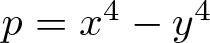 $p=x^4-y^4$ if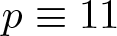 $p\equiv 11$ (mod 16) and $p^3=x^4-y^4$ if $p\equiv 3$ (mod 16) in all cubic extensions of $\mathbb{Q}(i)$.


PRM volume 153 issue 6 Cover and Front matter
-
- Journal:
- Proceedings of the Royal Society of Edinburgh. Section A: Mathematics / Volume 153 / Issue 6 / December 2023
- Published online by Cambridge University Press:
- 09 November 2023, pp. f1-f2
- Print publication:
- December 2023
-
- Article
-
- You have access
- Export citation
PRM volume 153 issue 6 Cover and Back matter
-
- Journal:
- Proceedings of the Royal Society of Edinburgh. Section A: Mathematics / Volume 153 / Issue 6 / December 2023
- Published online by Cambridge University Press:
- 09 November 2023, pp. b1-b2
- Print publication:
- December 2023
-
- Article
-
- You have access
- Export citation
Multiplicity and stability of normalized solutions to non-autonomous Schrödinger equation with mixed non-linearities
- Part of
-
- Journal:
- Proceedings of the Edinburgh Mathematical Society / Volume 67 / Issue 1 / February 2024
- Published online by Cambridge University Press:
- 09 November 2023, pp. 1-27
-
- Article
- Export citation
-
This paper first studies the multiplicity of normalized solutions to the non-autonomous Schrödinger equation with mixed nonlinearities
where \begin{equation*}\begin{cases}-\Delta u=\lambda u+h(\epsilon x)|u|^{q-2}u+\eta |u|^{p-2}u,\quad x\in \mathbb{R}^N, \\\int_{\mathbb{R}^N}|u|^2\,\textrm{d}x=a^2,\end{cases}\end{equation*}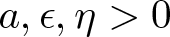 $a, \epsilon, \eta \gt 0$, q is L2-subcritical, p is L2-supercritical,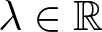 $\lambda\in \mathbb{R}$ is an unknown parameter that appears as a Lagrange multiplier and h is a positive and continuous function. It is proved that the numbers of normalized solutions are at least the numbers of global maximum points of h when ϵ is small enough. The solutions obtained are local minimizers and probably not ground state solutions for the lack of symmetry of the potential h. Secondly, the stability of several different sets consisting of the local minimizers is analysed. Compared with the results of the corresponding autonomous equation, the appearance of the potential h increases the number of the local minimizers and the number of the stable sets. In particular, our results cover the Sobolev critical case $p=2N/(N-2)$.
A natural pseudometric on homotopy groups of metric spaces
- Part of
-
- Journal:
- Glasgow Mathematical Journal / Volume 66 / Issue 1 / January 2024
- Published online by Cambridge University Press:
- 08 November 2023, pp. 162-174
-
- Article
- Export citation
-
For a path-connected metric space $(X,d)$, the $n$-th homotopy group $\pi _n(X)$ inherits a natural pseudometric from the $n$-th iterated loop space with the uniform metric. This pseudometric gives $\pi _n(X)$ the structure of a topological group, and when $X$ is compact, the induced pseudometric topology is independent of the metric $d$. In this paper, we study the properties of this pseudometric and how it relates to previously studied structures on $\pi _n(X)$. Our main result is that the pseudometric topology agrees with the shape topology on $\pi _n(X)$ if $X$ is compact and $LC^{n-1}$ or if $X$ is an inverse limit of finite polyhedra with retraction bonding maps.


On oriented cycles in randomly perturbed digraphs
- Part of
-
- Journal:
- Combinatorics, Probability and Computing / Volume 33 / Issue 2 / March 2024
- Published online by Cambridge University Press:
- 08 November 2023, pp. 157-178
-
- Article
-
- You have access
- Open access
- HTML
- Export citation
-
In 2003, Bohman, Frieze, and Martin initiated the study of randomly perturbed graphs and digraphs. For digraphs, they showed that for every $\alpha \gt 0$, there exists a constant $C$ such that for every $n$-vertex digraph of minimum semi-degree at least $\alpha n$, if one adds $Cn$ random edges then asymptotically almost surely the resulting digraph contains a consistently oriented Hamilton cycle. We generalize their result, showing that the hypothesis of this theorem actually asymptotically almost surely ensures the existence of every orientation of a cycle of every possible length, simultaneously. Moreover, we prove that we can relax the minimum semi-degree condition to a minimum total degree condition when considering orientations of a cycle that do not contain a large number of vertices of indegree $1$. Our proofs make use of a variant of an absorbing method of Montgomery.


Mastermind with a linear number of queries
-
- Journal:
- Combinatorics, Probability and Computing / Volume 33 / Issue 2 / March 2024
- Published online by Cambridge University Press:
- 08 November 2023, pp. 143-156
-
- Article
-
- You have access
- Open access
- HTML
- Export citation
-
Since the 1960s Mastermind has been studied for the combinatorial and information-theoretical interest the game has to offer. Many results have been discovered starting with Erdős and Rényi determining the optimal number of queries needed for two colours. For $k$ colours and $n$ positions, Chvátal found asymptotically optimal bounds when $k \le n^{1-\varepsilon }$. Following a sequence of gradual improvements for $k\geq n$ colours, the central open question is to resolve the gap between $\Omega (n)$ and $\mathcal{O}(n\log \log n)$ for $k=n$. In this paper, we resolve this gap by presenting the first algorithm for solving $k=n$ Mastermind with a linear number of queries. As a consequence, we are able to determine the query complexity of Mastermind for any parameters $k$ and $n$.
$n$.


Reversibility of affine transformations
- Part of
-
- Journal:
- Proceedings of the Edinburgh Mathematical Society / Volume 66 / Issue 4 / November 2023
- Published online by Cambridge University Press:
- 08 November 2023, pp. 1217-1228
-
- Article
- Export citation
-
An element g in a group G is called reversible if g is conjugate to g−1 in G. An element g in G is strongly reversible if g is conjugate to g−1 by an involution in G. The group of affine transformations of $\mathbb D^n$ may be identified with the semi-direct product $\mathrm{GL}(n, \mathbb D) \ltimes \mathbb D^n $, where $\mathbb D:=\mathbb R, \mathbb C$ or $ \mathbb H $. This paper classifies reversible and strongly reversible elements in the affine group $\mathrm{GL}(n, \mathbb D) \ltimes \mathbb D^n $.


LELONG NUMBERS OF m-SUBHARMONIC FUNCTIONS ALONG SUBMANIFOLDS
- Part of
-
- Journal:
- Journal of the Institute of Mathematics of Jussieu / Volume 23 / Issue 4 / July 2024
- Published online by Cambridge University Press:
- 07 November 2023, pp. 1797-1820
- Print publication:
- July 2024
-
- Article
-
- You have access
- Open access
- HTML
- Export citation
-
We study the possible singularities of an m-subharmonic function $\varphi $ along a complex submanifold V of a compact Kähler manifold, finding a maximal rate of growth for $\varphi $ which depends only on m and k, the codimension of V. When $k < m$, we show that $\varphi $ has at worst log poles along V, and that the strength of these poles is moreover constant along V. This can be thought of as an analogue of Siu’s theorem.


LINEAR GROWTH OF TRANSLATION LENGTHS OF RANDOM ISOMETRIES ON GROMOV HYPERBOLIC SPACES AND TEICHMÜLLER SPACES
- Part of
-
- Journal:
- Journal of the Institute of Mathematics of Jussieu / Volume 23 / Issue 4 / July 2024
- Published online by Cambridge University Press:
- 06 November 2023, pp. 1751-1795
- Print publication:
- July 2024
-
- Article
-
- You have access
- Open access
- HTML
- Export citation
-
We investigate the translation lengths of group elements that arise in random walks on the isometry groups of Gromov hyperbolic spaces. In particular, without any moment condition, we prove that non-elementary random walks exhibit at least linear growth of translation lengths. As a corollary, almost every random walk on mapping class groups eventually becomes pseudo-Anosov, and almost every random walk on $\mathrm {Out}(F_n)$ eventually becomes fully irreducible. If the underlying measure further has finite first moment, then the growth rate of translation lengths is equal to the drift, the escape rate of the random walk.
We then apply our technique to investigate the random walks induced by the action of mapping class groups on Teichmüller spaces. In particular, we prove the spectral theorem under finite first moment condition, generalizing a result of Dahmani and Horbez.

