Refine search
Actions for selected content:
26076 results in Abstract analysis
JMJ volume 22 issue 6 Cover and Back matter
-
- Journal:
- Journal of the Institute of Mathematics of Jussieu / Volume 22 / Issue 6 / November 2023
- Published online by Cambridge University Press:
- 12 October 2023, pp. b1-b2
- Print publication:
- November 2023
-
- Article
-
- You have access
- Export citation
Spectral mapping theorems for essential spectra and regularized functional calculi
- Part of
-
- Journal:
- Proceedings of the Royal Society of Edinburgh. Section A: Mathematics / Volume 155 / Issue 2 / April 2025
- Published online by Cambridge University Press:
- 12 October 2023, pp. 634-656
- Print publication:
- April 2025
-
- Article
-
- You have access
- Open access
- HTML
- Export citation
-
Gramsch and Lay [8] gave spectral mapping theorems for the Dunford-Taylor calculus of a closed linear operator $T$
 ,\[ \widetilde{\sigma}_i(f(T)) = f(\widetilde{\sigma}_i(T)), \]for several extended essential spectra $\widetilde {\sigma }_i$
 . In this work, we extend such theorems for the regularized functional calculus introduced by Haase [10, 11] assuming suitable conditions on $f$
 . At the same time, we answer in the positive a question made by Haase [11, Remark 5.4] regarding the conditions on $f$
 which are sufficient to obtain the spectral mapping theorem for the usual extended spectrum $\widetilde \sigma$
 . We use the model case of bisectorial-like operators, although the proofs presented here are generic, and are valid for similar functional calculi.


GMJ volume 65 issue 3 Cover and Front matter
-
- Journal:
- Glasgow Mathematical Journal / Volume 65 / Issue 3 / September 2023
- Published online by Cambridge University Press:
- 12 October 2023, pp. f1-f2
-
- Article
-
- You have access
- Export citation
Quantum symmetries of Cayley graphs of abelian groups
- Part of
-
- Journal:
- Glasgow Mathematical Journal / Volume 65 / Issue 3 / September 2023
- Published online by Cambridge University Press:
- 12 October 2023, pp. 655-686
-
- Article
- Export citation
JMJ volume 22 issue 6 Cover and Front matter
-
- Journal:
- Journal of the Institute of Mathematics of Jussieu / Volume 22 / Issue 6 / November 2023
- Published online by Cambridge University Press:
- 12 October 2023, pp. f1-f2
- Print publication:
- November 2023
-
- Article
-
- You have access
- Export citation
Fixed point sets and the fundamental group II: Euler characteristics
- Part of
-
- Journal:
- Proceedings of the Royal Society of Edinburgh. Section A: Mathematics / Volume 154 / Issue 6 / December 2024
- Published online by Cambridge University Press:
- 10 October 2023, pp. 1661-1680
- Print publication:
- December 2024
-
- Article
-
- You have access
- Open access
- HTML
- Export citation
-
For a finite group $G$
 of not prime power order, Oliver showed that the obstruction for a finite CW-complex $F$
 to be the fixed point set of a contractible finite $G$
 -CW-complex is determined by the Euler characteristic $\chi (F)$
 . (He also has similar results for compact Lie group actions.) We show that the analogous problem for $F$
 to be the fixed point set of a finite $G$
 -CW-complex of some given homotopy type is still determined by the Euler characteristic. Using trace maps on $K_0$
 [2, 7, 18], we also see that there are interesting roles for the fundamental group and the component structure of the fixed point set.


GENERALISED AUTOMORPHIC SHEAVES AND THE PROPORTIONALITY PRINCIPLE OF HIRZEBRUCH-MUMFORD
- Part of
-
- Journal:
- Journal of the Institute of Mathematics of Jussieu / Volume 23 / Issue 4 / July 2024
- Published online by Cambridge University Press:
- 10 October 2023, pp. 1567-1605
- Print publication:
- July 2024
-
- Article
-
- You have access
- Open access
- HTML
- Export citation
Topological regularity of isoperimetric sets in PI spaces having a deformation property
- Part of
-
- Journal:
- Proceedings of the Royal Society of Edinburgh. Section A: Mathematics / Volume 155 / Issue 2 / April 2025
- Published online by Cambridge University Press:
- 09 October 2023, pp. 611-633
- Print publication:
- April 2025
-
- Article
- Export citation
-
We prove topological regularity results for isoperimetric sets in PI spaces having a suitable deformation property, which prescribes a control on the increment of the perimeter of sets under perturbations with balls. More precisely, we prove that isoperimetric sets are open, satisfy boundary density estimates and, under a uniform lower bound on the volumes of unit balls, are bounded. Our results apply, in particular, to the class of possibly collapsed $\mathrm {RCD}(K,N)$
 spaces. As a consequence, the rigidity in the isoperimetric inequality on possibly collapsed $\mathrm {RCD}(0,N)$
 spaces with Euclidean volume growth holds without the additional assumption on the boundedness of isoperimetric sets. Our strategy is of interest even in the Euclidean setting, as it simplifies some classical arguments.


On weakly almost square Banach spaces
- Part of
-
- Journal:
- Proceedings of the Edinburgh Mathematical Society / Volume 66 / Issue 4 / November 2023
- Published online by Cambridge University Press:
- 05 October 2023, pp. 979-997
-
- Article
- Export citation
-
We prove some results on weakly almost square Banach spaces and their relatives. On the one hand, we discuss weak almost squareness in the setting of Banach function spaces. More precisely, let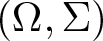 $(\Omega,\Sigma)$ be a measurable space, let E be a Banach lattice and let $\nu:\Sigma \to E^+$ be a non-atomic countably additive measure having relatively norm compact range. Then the space $L_1(\nu)$ is weakly almost square. This result applies to some abstract Cesàro function spaces. Similar arguments show that the Lebesgue–Bochner space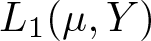 $L_1(\mu,Y)$ is weakly almost square for any Banach space Y and for any non-atomic finite measure µ. On the other hand, we make some progress on the open question of whether there exists a locally almost square Banach space, which fails the diameter two property. In this line, we prove that if X is any Banach space containing a complemented isomorphic copy of c0, then for every $0 \lt \varepsilon \lt 1$, there exists an equivalent norm $|\cdot|$ on X satisfying the following: (i) every slice of the unit ball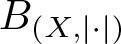 $B_{(X,|\cdot|)}$ has diameter 2; (ii)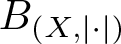 $B_{(X,|\cdot|)}$ contains non-empty relatively weakly open subsets of arbitrarily small diameter and (iii)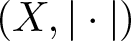 $(X,|\cdot|)$ is (r, s)-SQ for all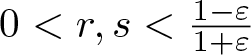 $0 \lt r,s \lt \frac{1-\varepsilon}{1+\varepsilon}$.


Long-time dynamics and semi-wave of a delayed nonlocal epidemic model with free boundaries
- Part of
-
- Journal:
- Proceedings of the Royal Society of Edinburgh. Section A: Mathematics / Volume 155 / Issue 2 / April 2025
- Published online by Cambridge University Press:
- 05 October 2023, pp. 564-610
- Print publication:
- April 2025
-
- Article
- Export citation
A Helfrich functional for compact surfaces in $\mathbb{C}P^{2}$
- Part of
-
- Journal:
- Glasgow Mathematical Journal / Volume 66 / Issue 1 / January 2024
- Published online by Cambridge University Press:
- 04 October 2023, pp. 36-50
-
- Article
- Export citation
-
Let $f\;:\; M\rightarrow \mathbb{C}P^{2}$ be an isometric immersion of a compact surface in the complex projective plane $\mathbb{C}P^{2}$. In this paper, we consider the Helfrich-type functional $\mathcal{H}_{\lambda _{1},\lambda _{2}}(f)=\int _{M}(|H|^{2}+\lambda _{1}+\lambda _{2} C^{2})\textrm{d} M$, where $\lambda _{1}, \lambda _{2}\in \mathbb{R}$ with $\lambda _{1}\geqslant 0$, $H$ and $C$ are respectively the mean curvature vector and the Kähler function of $M$ in $\mathbb{C}P^{2}$. The critical surfaces of $\mathcal{H}_{\lambda _{1},\lambda _{2}}(f)$ are called Helfrich surfaces. We compute the first variation of $\mathcal{H}_{\lambda _{1},\lambda _{2}}(f)$ and classify the homogeneous Helfrich tori in $\mathbb{C}P^{2}$. Moreover, we study the Helfrich energy of the homogeneous tori and show the lower bound of the Helfrich energy for such tori.


Reconstruction of topological graphs and their Hilbert bimodules
- Part of
-
- Journal:
- Proceedings of the Royal Society of Edinburgh. Section A: Mathematics / Volume 155 / Issue 2 / April 2025
- Published online by Cambridge University Press:
- 02 October 2023, pp. 514-539
- Print publication:
- April 2025
-
- Article
-
- You have access
- Open access
- HTML
- Export citation
-
We show that the Hilbert bimodule associated with a compact topological graph can be recovered from the $C^*$
 -algebraic triple consisting of the Toeplitz algebra of the graph, its gauge action and the commutative subalgebra of functions on the vertex space of the graph. We discuss connections with work of Davidson–Katsoulis and of Davidson–Roydor on local conjugacy of topological graphs and isomorphism of their tensor algebras. In particular, we give a direct proof that a compact topological graph can be recovered up to local conjugacy from its Hilbert bimodule, and present an example of nonisomorphic locally conjugate compact topological graphs with isomorphic Hilbert bimodules. We also give an elementary proof that for compact topological graphs with totally disconnected vertex space the notions of local conjugacy, Hilbert bimodule isomorphism, isomorphism of $C^*$
 -algebraic triples, and isomorphism all coincide.


Many Hamiltonian subsets in large graphs with given density
- Part of
-
- Journal:
- Combinatorics, Probability and Computing / Volume 33 / Issue 1 / January 2024
- Published online by Cambridge University Press:
- 02 October 2023, pp. 110-120
-
- Article
- Export citation
-
A set of vertices in a graph is a Hamiltonian subset if it induces a subgraph containing a Hamiltonian cycle. Kim, Liu, Sharifzadeh, and Staden proved that for large $d$, among all graphs with minimum degree $d$,
$d$,  $K_{d+1}$ minimises the number of Hamiltonian subsets. We prove a near optimal lower bound that takes also the order and the structure of a graph into account. For many natural graph classes, it provides a much better bound than the extremal one ( $\approx 2^{d+1}$). Among others, our bound implies that an $n$-vertex $C_4$-free graph with minimum degree $d$ contains at least $n2^{d^{2-o(1)}}$ Hamiltonian subsets.


Intersecting families without unique shadow
- Part of
-
- Journal:
- Combinatorics, Probability and Computing / Volume 33 / Issue 1 / January 2024
- Published online by Cambridge University Press:
- 02 October 2023, pp. 91-109
-
- Article
- Export citation
-
Let $\mathcal{F}$ be an intersecting family. A $(k-1)$-set $E$ is called a unique shadow if it is contained in exactly one member of $\mathcal{F}$. Let ${\mathcal{A}}=\{A\in \binom{[n]}{k}\colon |A\cap \{1,2,3\}|\geq 2\}$. In the present paper, we show that for $n\geq 28k$, $\mathcal{A}$ is the unique family attaining the maximum size among all intersecting families without unique shadow. Several other results of a similar flavour are established as well.


From the Mayer–Vietoris spectral sequence to überhomology
- Part of
-
- Journal:
- Proceedings of the Royal Society of Edinburgh. Section A: Mathematics / Volume 155 / Issue 2 / April 2025
- Published online by Cambridge University Press:
- 02 October 2023, pp. 540-563
- Print publication:
- April 2025
-
- Article
-
- You have access
- Open access
- HTML
- Export citation
-
We prove that the second page of the Mayer–Vietoris spectral sequence, with respect to anti-star covers, can be identified with another homological invariant of simplicial complexes: the $0$
 -degree überhomology. Consequently, we obtain a combinatorial interpretation of the second page of the Mayer–Vietoris spectral sequence in this context. This interpretation is then used to extend the computations of bold homology, which categorifies the connected domination polynomial at $-1$
 .
.


Nonlinear elasticity with vanishing nonlocal self-repulsion
- Part of
-
- Journal:
- Proceedings of the Royal Society of Edinburgh. Section A: Mathematics / Volume 155 / Issue 2 / April 2025
- Published online by Cambridge University Press:
- 28 September 2023, pp. 496-513
- Print publication:
- April 2025
-
- Article
- Export citation
-
We prove that for nonlinear elastic energies with strong enough energetic control of the outer distortion of admissible deformations, almost everywhere global invertibility as constraint can be obtained in the $\Gamma$
 -limit of the elastic energy with an added nonlocal self-repulsion term with asymptocially vanishing coefficient. The self-repulsion term considered here formally coincides with a Sobolev–Slobodeckiĭ seminorm of the inverse deformation. Variants near the boundary or on the surface of the domain are also studied.

Null hypersurfaces in 4-manifolds endowed with a product structure
- Part of
-
- Journal:
- Glasgow Mathematical Journal / Volume 66 / Issue 1 / January 2024
- Published online by Cambridge University Press:
- 28 September 2023, pp. 24-35
-
- Article
- Export citation
The Excluded Tree Minor Theorem Revisited
-
- Journal:
- Combinatorics, Probability and Computing / Volume 33 / Issue 1 / January 2024
- Published online by Cambridge University Press:
- 27 September 2023, pp. 85-90
-
- Article
- Export citation
-
We prove that for every tree $T$ of radius $h$, there is an integer $c$ such that every $T$-minor-free graph is contained in $H\boxtimes K_c$ for some graph $H$ with pathwidth at most $2h-1$. This is a qualitative strengthening of the Excluded Tree Minor Theorem of Robertson and Seymour (GM I). We show that radius is the right parameter to consider in this setting, and $2h-1$ is the best possible bound.


Generic ill-posedness of the energy–momentum equations and differential inclusions
- Part of
-
- Journal:
- Proceedings of the Royal Society of Edinburgh. Section A: Mathematics / Volume 155 / Issue 2 / April 2025
- Published online by Cambridge University Press:
- 26 September 2023, pp. 470-495
- Print publication:
- April 2025
-
- Article
- Export citation
-
We show that the energy–momentum equations arising from inner variations whose Lagrangian satisfies a generic symmetry condition are ill-posed. This is done by proving that there exists a subclass of Lipschitz solutions that are also solutions to a differential inclusion into the orthogonal group and in particular these solutions can be nowhere $C^1$
 . We prove that these solutions are not stationary points if the Lagrangian $W$
 is $C^1$
 and strictly rank-one convex. In view of the Lipschitz regularity result of Iwaniec, Kovalev and Onninen for solution of the energy–momentum equation in dimension 2, we give a sufficient condition for the non-existence of a partial $C^1$
 -regularity result even under the condition that the mappings satisfy a positive Jacobian determinant condition. Finally, we consider a number of well-known functionals studied in non-linear elasticity and geometric function theory and show that these do not satisfy this obstruction to partial regularity.


Generalised solution to a 2D parabolic-parabolic chemotaxis system for urban crime: Global existence and large-time behaviour
- Part of
-
- Journal:
- European Journal of Applied Mathematics / Volume 35 / Issue 3 / June 2024
- Published online by Cambridge University Press:
- 25 September 2023, pp. 409-429
-
- Article
-
- You have access
- Open access
- HTML
- Export citation
-
We consider a parabolic-parabolic chemotaxis system with singular chemotactic sensitivity and source functions, which is originally introduced by Short et al to model the spatio-temporal behaviour of urban criminal activities with the particular value of the chemotactic sensitivity parameter $\chi =2$. The available analytical findings for this urban crime model including $\chi =2$ are restricted either to one-dimensional setting, or to initial data and source functions with appropriate smallness, or to initial data and source functions with some radial symmetry. In the present work, our first result asserts that for any $\chi \gt 0$ the initial-boundary value problem of this urban crime model possesses a global generalised solution in the two-dimensional setting, without imposing any small or radial conditions on initial data and source functions. Our second result presents the asymptotic behaviour of such solution, under some additional assumptions on source functions.


