Refine search
Actions for selected content:
26076 results in Abstract analysis
Arens regularity of ideals of the group algebra of a compact Abelian group
- Part of
-
- Journal:
- Proceedings of the Royal Society of Edinburgh. Section A: Mathematics / Volume 155 / Issue 2 / April 2025
- Published online by Cambridge University Press:
- 27 October 2023, pp. 718-734
- Print publication:
- April 2025
-
- Article
-
- You have access
- Open access
- HTML
- Export citation
-
Let $G$
 be a compact Abelian group and $E$
 a subset of the group $\widehat {G}$
 of continuous characters of $G$
 . We study Arens regularity-related properties of the ideals $L_E^1(G)$
 of $L^1(G)$
 that are made of functions whose Fourier transform is supported on $E\subseteq \widehat {G}$
 . Arens regularity of $L_E^1(G)$
 , the centre of $L_E^1(G)^{\ast \ast }$
 and the size of $L_E^1(G)^\ast /\mathcal {WAP}(L_E^1(G))$
 are studied. We establish general conditions for the regularity of $L_E^1(G)$
 and deduce from them that $L_E^1(G)$
 is not strongly Arens irregular if $E$
 is a small-2 set (i.e. $\mu \ast \mu \in L^1(G)$
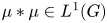 for every $\mu \in M_E^1(G)$
 ), which is not a $\Lambda (1)$
 -set, and it is extremely non-Arens regular if $E$
 is not a small-2 set. We deduce also that $L_E^1(G)$
 is not Arens regular when $\widehat {G}\setminus E$
 is a Lust-Piquard set.


Prescribing nearly constant curvatures on balls
- Part of
-
- Journal:
- Proceedings of the Royal Society of Edinburgh. Section A: Mathematics / Volume 155 / Issue 3 / June 2025
- Published online by Cambridge University Press:
- 27 October 2023, pp. 756-791
- Print publication:
- June 2025
-
- Article
- Export citation
-
In this paper, we address two boundary cases of the classical Kazdan–Warner problem. More precisely, we consider the problem of prescribing the Gaussian and boundary geodesic curvature on a disk of $\mathbb {R}^2$
 , and the scalar and mean curvature on a ball in higher dimensions, via a conformal change of the metric. We deal with the case of negative interior curvature and positive boundary curvature. Using a Ljapunov–Schmidt procedure, we obtain new existence results when the prescribed functions are close to constants.

Autocorrelations of characteristic polynomials for the Alternative Circular Unitary Ensemble
- Part of
-
- Journal:
- Glasgow Mathematical Journal / Volume 66 / Issue 1 / January 2024
- Published online by Cambridge University Press:
- 27 October 2023, pp. 51-64
-
- Article
-
- You have access
- Open access
- HTML
- Export citation
On Liouville theorems of a Hartree–Poisson system
- Part of
-
- Journal:
- Proceedings of the Edinburgh Mathematical Society / Volume 66 / Issue 4 / November 2023
- Published online by Cambridge University Press:
- 26 October 2023, pp. 1154-1178
-
- Article
- Export citation
-
In this paper, we are concerned with the non-existence of positive solutions of a Hartree–Poisson system:
where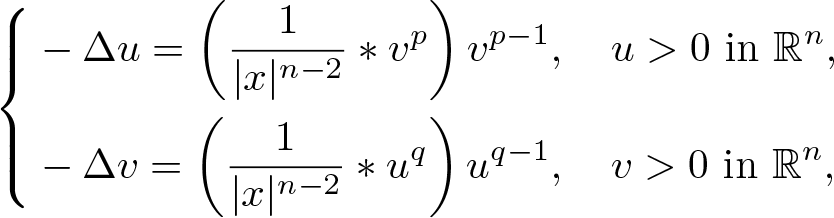 \begin{equation*}\left\{\begin{aligned}&-\Delta u=\left(\frac{1}{|x|^{n-2}}\ast v^p\right)v^{p-1},\quad u \gt 0\ \text{in} \ \mathbb{R}^{n},\\&-\Delta v=\left(\frac{1}{|x|^{n-2}}\ast u^q\right)u^{q-1},\quad v \gt 0\ \text{in} \ \mathbb{R}^{n},\end{aligned}\right.\end{equation*} $n \geq3$ and $\min\{p,q\} \gt 1$. We prove that the system has no positive solution under a Serrin-type condition. In addition, the system has no positive radial classical solution in a Sobolev-type subcritical case. In addition, the system has no positive solution with some integrability in this Sobolev-type subcritical case. Finally, the relation between a Liouville theorem and the estimate of boundary blowing-up rates is given.

Burstein’s permutation conjecture, Hong and Li’s inversion sequence conjecture and restricted Eulerian distributions
- Part of
-
- Journal:
- Proceedings of the Edinburgh Mathematical Society / Volume 66 / Issue 4 / November 2023
- Published online by Cambridge University Press:
- 23 October 2023, pp. 1179-1201
-
- Article
- Export citation
-
Recently, Hong and Li launched a systematic study of length-four pattern avoidance in inversion sequences, and in particular, they conjectured that the number of 0021-avoiding inversion sequences can be enumerated by the OEIS entry A218225. Meanwhile, Burstein suggested that the same sequence might also count three sets of pattern-restricted permutations. The objective of this paper is not only a confirmation of Hong and Li’s conjecture and Burstein’s first conjecture but also two more delicate generating function identities with the $\mathsf{ides}$ statistic concerned in the restricted permutation case and the $\mathsf{asc}$ statistic concerned in the restricted inversion sequence case, which yield a new equidistribution result.


Classification of subpencils for hyperplane sections on certain K3 surfaces
- Part of
-
- Journal:
- Proceedings of the Edinburgh Mathematical Society / Volume 66 / Issue 4 / November 2023
- Published online by Cambridge University Press:
- 23 October 2023, pp. 1022-1043
-
- Article
- Export citation
Normal families and quasiregular mappings
- Part of
-
- Journal:
- Proceedings of the Edinburgh Mathematical Society / Volume 67 / Issue 1 / February 2024
- Published online by Cambridge University Press:
- 23 October 2023, pp. 79-112
-
- Article
- Export citation
Stable solutions to double phase problems involving a nonlocal term
- Part of
-
- Journal:
- Proceedings of the Edinburgh Mathematical Society / Volume 66 / Issue 4 / November 2023
- Published online by Cambridge University Press:
- 23 October 2023, pp. 1119-1141
-
- Article
- Export citation
-
In this paper, we study weak solutions, possibly unbounded and sign-changing, to the double phase problem
where \begin{equation*}-\text{div} (|\nabla u|^{p-2} \nabla u + w(x)|\nabla u|^{q-2} \nabla u) = \left(\frac{1}{|x|^{N-\mu}}*f|u|^r\right) f(x)|u|^{r-2}u \quad\text{in}\ \mathbb{R}^N,\end{equation*}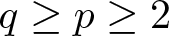 $q\ge p\ge2$, r > q, $0 \lt \mu \lt N$ and $w,f \in L^1_{\rm loc}(\mathbb{R}^N)$ are two non-negative functions such that $w(x) \le C_1|x|^a$ and $f(x) \ge C_2|x|^b$ for all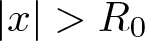 $|x| \gt R_0$, where $R_0,C_1,C_2 \gt 0$ and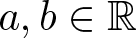 $a,b\in\mathbb{R}$. Under some appropriate assumptions on p, q, r, µ, a, b and N, we prove various Liouville-type theorems for weak solutions which are stable or stable outside a compact set of $\mathbb{R}^N$. First, we establish the standard integral estimates via stability property to derive the non-existence results for stable weak solutions. Then, by means of the Pohožaev identity, we deduce the Liouville-type theorem for weak solutions which are stable outside a compact set.

Leveraging memory effects and gradient information in consensus-based optimisation: On global convergence in mean-field law
- Part of
-
- Journal:
- European Journal of Applied Mathematics / Volume 35 / Issue 4 / August 2024
- Published online by Cambridge University Press:
- 20 October 2023, pp. 483-514
-
- Article
-
- You have access
- Open access
- HTML
- Export citation
Spanning subdivisions in Dirac graphs
- Part of
-
- Journal:
- Combinatorics, Probability and Computing / Volume 33 / Issue 1 / January 2024
- Published online by Cambridge University Press:
- 20 October 2023, pp. 121-128
-
- Article
- Export citation
-
We show that for every $n\in \mathbb N$ and $\log n\le d\lt n$, if a graph $G$ has $N=\Theta (dn)$ vertices and minimum degree $(1+o(1))\frac{N}{2}$, then it contains a spanning subdivision of every $n$-vertex $d$-regular graph.


Inequalities concerning maximum modulus and zeros of random entire functions
- Part of
-
- Journal:
- Proceedings of the Edinburgh Mathematical Society / Volume 67 / Issue 1 / February 2024
- Published online by Cambridge University Press:
- 19 October 2023, pp. 57-78
-
- Article
- Export citation
-
Let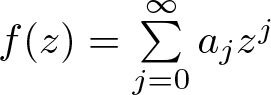 $f(z)=\sum\limits_{j=0}^{\infty} a_j z^j$ be a transcendental entire function and let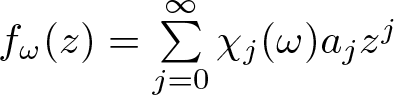 $f_\omega(z)=\sum\limits_{j=0}^{\infty}\chi_j(\omega) a_j z^j$ be a random entire function, where $\chi_j(\omega)$ are independent and identically distributed random variables defined on a probability space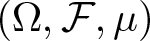 $(\Omega, \mathcal{F}, \mu)$. In this paper, we first define a family of random entire functions, which includes Gaussian, Rademacher and Steinhaus entire functions. We prove that, for almost all functions in the family and for any constant C > 1, there exist a constant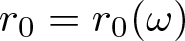 $r_0=r_0(\omega)$ and a set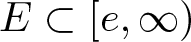 $E\subset [e, \infty)$ of finite logarithmic measure such that, for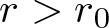 $r \gt r_0$ and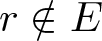 $r\notin E$,
 \begin{equation*}|\log M(r, f)- N(r,0, f_\omega)|\le (C/A)^{\frac1{B}}\,\log^{\frac1{B}}\,\log M(r,f) +\log\,\log M(r, f), \qquad a.s.\end{equation*}
where $A, B$ are constants,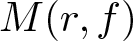 $M(r, f)$ is the maximum modulus and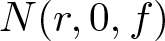 $N(r, 0, f)$ is the integrated zero-counting function of f. As a by-product of our main results, we prove Nevanlinna’s second main theorem for random entire functions. Thus, the characteristic function of almost all functions in the family is bounded above by an integrated counting function, rather than by two integrated counting functions as in the classical Nevanlinna theory. For instance, we show that, for almost all Gaussian entire functions fω and for any ϵ > 0, there is r0 such that, for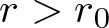 $r \gt r_0$,
 \begin{equation*}T(r, f) \le N(r,0, f_\omega)+\left(\tfrac12+\epsilon\right) \log T(r, f).\end{equation*}


Representatives of similarity classes of matrices over PIDs corresponding to ideal classes
- Part of
-
- Journal:
- Glasgow Mathematical Journal / Volume 66 / Issue 1 / January 2024
- Published online by Cambridge University Press:
- 18 October 2023, pp. 88-103
-
- Article
-
- You have access
- Open access
- HTML
- Export citation
-
For a principal ideal domain $A$, the Latimer–MacDuffee correspondence sets up a bijection between the similarity classes of matrices in $\textrm{M}_{n}(A)$ with irreducible characteristic polynomial $f(x)$ and the ideal classes of the order $A[x]/(f(x))$. We prove that when $A[x]/(f(x))$ is maximal (i.e. integrally closed, i.e. a Dedekind domain), then every similarity class contains a representative that is, in a sense, close to being a companion matrix. The first step in the proof is to show that any similarity class corresponding to an ideal (not necessarily prime) of degree one contains a representative of the desired form. The second step is a previously unpublished result due to Lenstra that implies that when $A[x]/(f(x))$ is maximal, every ideal class contains an ideal of degree one.


On the vanishing of the coefficients of CM eta quotients
- Part of
-
- Journal:
- Proceedings of the Edinburgh Mathematical Society / Volume 66 / Issue 4 / November 2023
- Published online by Cambridge University Press:
- 18 October 2023, pp. 1202-1216
-
- Article
- Export citation
-
This work characterizes the vanishing of the Fourier coefficients of all CM (Complex Multiplication) eta quotients. As consequences, we recover Serre’s characterization about that of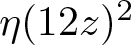 $\eta(12z)^{2}$ and recent results of Chang on the pth coefficients of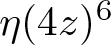 $\eta(4z)^{6}$ and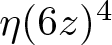 $\eta(6z)^{4}$. Moreover, we generalize the results on the cases of weight 1 to the setting of binary quadratic forms.
Effects of concurrency on epidemic spreading in Markovian temporal networks
- Part of
-
- Journal:
- European Journal of Applied Mathematics / Volume 35 / Issue 3 / June 2024
- Published online by Cambridge University Press:
- 18 October 2023, pp. 430-461
-
- Article
-
- You have access
- Open access
- HTML
- Export citation
UNIFORM BOUNDS FOR $\operatorname {GL}(3)\times \operatorname {GL}(2)$ L-FUNCTIONS
- Part of
-
- Journal:
- Journal of the Institute of Mathematics of Jussieu / Volume 23 / Issue 4 / July 2024
- Published online by Cambridge University Press:
- 17 October 2023, pp. 1607-1650
- Print publication:
- July 2024
-
- Article
- Export citation
-
In this paper, we prove uniform bounds for $\operatorname {GL}(3)\times \operatorname {GL}(2) \ L$-functions in the $\operatorname {GL}(2)$ spectral aspect and the t aspect by a delta method. More precisely, let $\phi $ be a Hecke–Maass cusp form for $\operatorname {SL}(3,\mathbb {Z})$ and f a Hecke–Maass cusp form for $\operatorname {SL}(2,\mathbb {Z})$ with the spectral parameter $t_f$. Then for $t\in \mathbb {R}$ and any $\varepsilon>0$, we have Moreover, we get subconvexity bounds for
 $$\begin{align*}L(1/2+it,\phi\times f) \ll_{\phi,\varepsilon} (t_f+|t|)^{27/20+\varepsilon}. \end{align*}$$ $L(1/2+it,\phi \times f)$ whenever $|t|-t_f \gg (|t|+t_f)^{3/5+\varepsilon }$.


Lipschitz-free spaces and subsets of finite-dimensional spaces
- Part of
-
- Journal:
- Proceedings of the Royal Society of Edinburgh. Section A: Mathematics / Volume 155 / Issue 2 / April 2025
- Published online by Cambridge University Press:
- 17 October 2023, pp. 657-686
- Print publication:
- April 2025
-
- Article
-
- You have access
- Open access
- HTML
- Export citation
-
We consider two questions on the geometry of Lipschitz-free $p$
 -spaces $\mathcal {F}_p$
 , where $0< p\leq 1$
 , over subsets of finite-dimensional vector spaces. We solve an open problem and show that if $(\mathcal {M}, \rho )$
 is an infinite doubling metric space (e.g. an infinite subset of an Euclidean space), then $\mathcal {F}_p (\mathcal {M}, \rho ^\alpha )\simeq \ell _p$
 for every $\alpha \in (0,\,1)$
 and $0< p\leq 1$
 . An upper bound on the Banach–Mazur distance between the spaces $\mathcal {F}_p ([0, 1]^d, |\cdot |^\alpha )$
 and $\ell _p$
 is given. Moreover, we tackle a question due to Albiac et al. [4] and expound the role of $p$
 , $d$
, $d$ for the Lipschitz constant of a canonical, locally coordinatewise affine retraction from $(K, |\cdot |_1)$
 , where $K=\cup _{Q\in \mathcal {R}} Q$
 is a union of a collection $\emptyset \neq \mathcal {R} \subseteq \{ Rw + R[0,\,1]^d: w\in \mathbb {Z}^d\}$
 of cubes in $\mathbb {R}^d$
 with side length $R>0$
 , into the Lipschitz-free $p$
 -space $\mathcal {F}_p (V, |\cdot |_1)$
 over their vertices.


A weakened Markus–Yamabe condition for planar polynomial differential systems of degree $(1,n)$
- Part of
-
- Journal:
- Proceedings of the Edinburgh Mathematical Society / Volume 66 / Issue 4 / November 2023
- Published online by Cambridge University Press:
- 17 October 2023, pp. 1110-1118
-
- Article
-
- You have access
- Open access
- HTML
- Export citation
-
For a general autonomous planar polynomial differential system, it is difficult to find conditions that are easy to verify and which guarantee global asymptotic stability, weakening the Markus–Yamabe condition. In this paper, we provide three conditions that guarantee the global asymptotic stability for polynomial differential systems of the form $x^{\prime}=f_1(x,y)$, $y^{\prime}=f_2(x,y)$, where f1 has degree one, f2 has degree $n\ge 1$ and has degree one in the variable y. As a consequence, we provide sufficient conditions, weaker than the Markus–Yamabe conditions that guarantee the global asymptotic stability for any generalized Liénard polynomial differential system of the form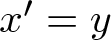 $x^{\prime}=y$, $y^{\prime}=g_1(x) +y g_2(x)$ with g1 and g2 polynomials of degrees n and m, respectively.


Sharp asymptotic profile of the solution to a West Nile virus model with free boundary
- Part of
-
- Journal:
- European Journal of Applied Mathematics / Volume 35 / Issue 3 / June 2024
- Published online by Cambridge University Press:
- 13 October 2023, pp. 462-482
-
- Article
-
- You have access
- Open access
- HTML
- Export citation
-
We consider the long-time behaviour of a West Nile virus (WNv) model consisting of a reaction–diffusion system with free boundaries. Such a model describes the spreading of WNv with the free boundary representing the expanding front of the infected region, which is a time-dependent interval $[g(t), h(t)]$ in the model (Lin and Zhu, Spatial spreading model and dynamics of West Nile virus in birds and mosquitoes with free boundary. J. Math. Biol. 75, 1381–1409, 2017). The asymptotic spreading speed of the front has been determined in Wang et al. (Spreading speed for a West Nile virus model with free boundary. J. Math. Biol. 79, 433–466, 2019) by making use of the associated semi-wave solution, namely $\lim _{t\to \infty } h(t)/t=\lim _{t\to \infty }[\!-g(t)/t]=c_\nu$, with $c_\nu$ the speed of the semi-wave solution. In this paper, by employing new techniques, we significantly improve the estimate in Wang et al. (Spreading speed for a West Nile virus model with free boundary. J. Math. Biol. 79, 433–466, 2019): we show that $h(t)-c_\nu t$ and $g(t)+c_\nu t$ converge to some constants as $t\to \infty$, and the solution of the model converges to the semi-wave solution. The results also apply to a wide class of analogous Ross–MacDonold epidemic models.


Mutating signed $\tau$-exceptional sequences
- Part of
-
- Journal:
- Glasgow Mathematical Journal / Volume 65 / Issue 3 / September 2023
- Published online by Cambridge University Press:
- 12 October 2023, pp. 716-729
-
- Article
- Export citation
-
We establish some properties of $\tau$-exceptional sequences for finite-dimensional algebras. In an earlier paper, we established a bijection between the set of ordered support $\tau$-tilting modules and the set of complete signed $\tau$-exceptional sequences. We describe the action of the symmetric group on the latter induced by its natural action on the former. Similarly, we describe the effect on a $\tau$-exceptional sequence obtained by mutating the corresponding ordered support $\tau$-tilting module via a construction of Adachi-Iyama-Reiten.


GMJ volume 65 issue 3 Cover and Back matter
-
- Journal:
- Glasgow Mathematical Journal / Volume 65 / Issue 3 / September 2023
- Published online by Cambridge University Press:
- 12 October 2023, pp. b1-b2
-
- Article
-
- You have access
- Export citation
