Refine search
Actions for selected content:
26070 results in Abstract analysis
Tropical invariants for binary quintics and reduction types of Picard curves
- Part of
-
- Journal:
- Glasgow Mathematical Journal / Volume 66 / Issue 1 / January 2024
- Published online by Cambridge University Press:
- 06 November 2023, pp. 65-87
-
- Article
- Export citation
-
In this paper, we express the reduction types of Picard curves in terms of tropical invariants associated with binary quintics. We also give a general framework for tropical invariants associated with group actions on arbitrary varieties. The problem of finding tropical invariants for binary forms fits in this general framework by mapping the space of binary forms to symmetrized versions of the Deligne–Mumford compactification $\overline{M}_{0,n}$.

CODIMENSION ONE FOLIATIONS IN POSITIVE CHARACTERISTIC
- Part of
-
- Journal:
- Journal of the Institute of Mathematics of Jussieu / Volume 23 / Issue 4 / July 2024
- Published online by Cambridge University Press:
- 06 November 2023, pp. 1705-1750
- Print publication:
- July 2024
-
- Article
- Export citation
A Lebesgue–Lusin property for linear operators of first and second order
- Part of
-
- Journal:
- Proceedings of the Royal Society of Edinburgh. Section A: Mathematics / Volume 155 / Issue 3 / June 2025
- Published online by Cambridge University Press:
- 06 November 2023, pp. 858-868
- Print publication:
- June 2025
-
- Article
- Export citation
-
We prove that for a homogeneous linear partial differential operator $\mathcal {A}$
 of order $k \le 2$
 and an integrable map $f$
 taking values in the essential range of that operator, there exists a function $u$
 of special bounded variation satisfying\[ \mathcal{A} u(x)= f(x) \qquad \text{almost everywhere}. \]This extends a result of G. Alberti for gradients on $\mathbf {R}^N$
 . In particular, for $0 \le m < N$
 , it is shown that every integrable $m$
 -vector field is the absolutely continuous part of the boundary of a normal $(m+1)$
 -current.


Bohr radius for Banach spaces on simply connected domains
- Part of
-
- Journal:
- Proceedings of the Edinburgh Mathematical Society / Volume 67 / Issue 1 / February 2024
- Published online by Cambridge University Press:
- 03 November 2023, pp. 113-141
-
- Article
- Export citation
-
Let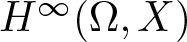 $H^{\infty}(\Omega,X)$ be the space of bounded analytic functions $f(z)=\sum_{n=0}^{\infty} x_{n}z^{n}$ from a proper simply connected domain Ω containing the unit disk $\mathbb{D}:=\{z\in \mathbb{C}:|z| \lt 1\}$ into a complex Banach space X with $\left\lVert f\right\rVert_{H^{\infty}(\Omega,X)} \leq 1$. Let $\phi=\{\phi_{n}(r)\}_{n=0}^{\infty}$ with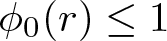 $\phi_{0}(r)\leq 1$ such that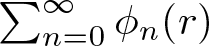 $\sum_{n=0}^{\infty} \phi_{n}(r)$ converges locally uniformly with respect to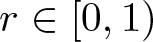 $r \in [0,1)$. For $1\leq p,q \lt \infty$, we denoteand define the Bohr radius associated with ϕ by
 \begin{equation*}R_{p,q,\phi}(f,\Omega,X)= \sup \left\{r \geq 0: \left\lVert x_{0}\right\rVert^p \phi_{0}(r) + \left(\sum_{n=1}^{\infty} \left\lVert x_{n}\right\rVert\phi_{n}(r)\right)^q \leq \phi_{0}(r)\right\}\end{equation*}In this article, we extensively study the Bohr radius
 \begin{equation*}R_{p,q,\phi}(\Omega,X)=\inf \left\{R_{p,q,\phi}(f,\Omega,X): \left\lVert f\right\rVert_{H^{\infty}(\Omega,X)} \leq 1\right\}.\end{equation*} $R_{p,q,\phi}(\Omega,X)$, when X is an arbitrary Banach space, and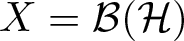 $X=\mathcal{B}(\mathcal{H})$ is the algebra of all bounded linear operators on a complex Hilbert space $\mathcal{H}$. Furthermore, we establish the Bohr inequality for the operator-valued Cesáro operator and Bernardi operator.

On the choosability of $H$-minor-free graphs
- Part of
-
- Journal:
- Combinatorics, Probability and Computing / Volume 33 / Issue 2 / March 2024
- Published online by Cambridge University Press:
- 03 November 2023, pp. 129-142
-
- Article
-
- You have access
- Open access
- HTML
- Export citation
-
Given a graph $H$, let us denote by $f_\chi (H)$ and $f_\ell (H)$, respectively, the maximum chromatic number and the maximum list chromatic number of $H$-minor-free graphs. Hadwiger’s famous colouring conjecture from 1943 states that $f_\chi (K_t)=t-1$ for every $t \ge 2$. A closely related problem that has received significant attention in the past concerns $f_\ell (K_t)$, for which it is known that $2t-o(t) \le f_\ell (K_t) \le O(t (\!\log \log t)^6)$. Thus, $f_\ell (K_t)$ is bounded away from the conjectured value $t-1$ for $f_\chi (K_t)$ by at least a constant factor. The so-called $H$-Hadwiger’s conjecture, proposed by Seymour, asks to prove that $f_\chi (H)={\textrm{v}}(H)-1$ for a given graph $H$ (which would be implied by Hadwiger’s conjecture).
In this paper, we prove several new lower bounds on $f_\ell (H)$, thus exploring the limits of a list colouring extension of $H$-Hadwiger’s conjecture. Our main results are:
For every $\varepsilon \gt 0$ and all sufficiently large graphs $H$ we have $f_\ell (H)\ge (1-\varepsilon )({\textrm{v}}(H)+\kappa (H))$, where $\kappa (H)$ denotes the vertex-connectivity of $H$.
$H$.For every $\varepsilon \gt 0$ there exists $C=C(\varepsilon )\gt 0$ such that asymptotically almost every $n$-vertex graph $H$ with $\left \lceil C n\log n\right \rceil$ edges satisfies $f_\ell (H)\ge (2-\varepsilon )n$.
The first result generalizes recent results on complete and complete bipartite graphs and shows that the list chromatic number of $H$-minor-free graphs is separated from the desired value of $({\textrm{v}}(H)-1)$ by a constant factor for all large graphs $H$ of linear connectivity. The second result tells us that for almost all graphs $H$ with superlogarithmic average degree $f_\ell (H)$ is separated from $({\textrm{v}}(H)-1)$ by a constant factor arbitrarily close to $2$. Conceptually these results indicate that the graphs $H$ for which $f_\ell (H)$ is close to the conjectured value $({\textrm{v}}(H)-1)$ for $f_\chi (H)$ are typically rather sparse.


Rigidity of Ext and Tor via flat–cotorsion theory
- Part of
-
- Journal:
- Proceedings of the Edinburgh Mathematical Society / Volume 66 / Issue 4 / November 2023
- Published online by Cambridge University Press:
- 03 November 2023, pp. 1142-1153
-
- Article
- Export citation
-
Let $\mathfrak{p}$ be a prime ideal in a commutative noetherian ring R and denote by $k(\mathfrak{p})$ the residue field of the local ring $R_\mathfrak{p}$. We prove that if an R-module M satisfies $\operatorname{Ext}_R^{n}(k(\mathfrak{p}),M)=0$ for some $n\geqslant\dim R$, then $\operatorname{Ext}_R^i(k(\mathfrak{p}),M)=0$ holds for all $i \geqslant n$. This improves a result of Christensen, Iyengar and Marley by lowering the bound on n. We also improve existing results on Tor-rigidity. This progress is driven by the existence of minimal semi-flat-cotorsion replacements in the derived category as recently proved by Nakamura and Thompson.


Cohomology of a real toric variety and shellability of posets arising from a graph
- Part of
-
- Journal:
- Proceedings of the Edinburgh Mathematical Society / Volume 66 / Issue 4 / November 2023
- Published online by Cambridge University Press:
- 03 November 2023, pp. 1044-1084
-
- Article
- Export citation
-
Given a graph G without loops, the pseudograph associahedron PG is a smooth polytope, so there is a projective smooth toric variety XG corresponding to PG. Taking the real locus of XG, we have the projective smooth real toric variety $X^{\mathbb{R}}_G$. The integral cohomology groups of $X^{\mathbb{R}}_G$ can be computed by studying the topology of certain posets of even subgraphs of G; such a poset is neither pure nor shellable in general. We completely characterize the graphs whose posets of even subgraphs are always shellable. It follows that we get a family of projective smooth real toric varieties whose integral cohomology groups are torsion-free or have only 2-torsion.



Optimal Mass Transport on Euclidean Spaces
-
- Published online:
- 02 November 2023
- Print publication:
- 16 November 2023
On the reducing projective dimension over local rings
- Part of
-
- Journal:
- Glasgow Mathematical Journal / Volume 66 / Issue 1 / January 2024
- Published online by Cambridge University Press:
- 31 October 2023, pp. 104-118
-
- Article
- Export citation
Existence of renormalized solutions to fully anisotropic and inhomogeneous elliptic problems
- Part of
-
- Journal:
- Proceedings of the Royal Society of Edinburgh. Section A: Mathematics / Volume 155 / Issue 3 / June 2025
- Published online by Cambridge University Press:
- 31 October 2023, pp. 821-857
- Print publication:
- June 2025
-
- Article
- Export citation
Smooth integers and de Bruijn's approximation Ʌ
- Part of
-
- Journal:
- Proceedings of the Royal Society of Edinburgh. Section A: Mathematics / Volume 155 / Issue 3 / June 2025
- Published online by Cambridge University Press:
- 31 October 2023, pp. 792-820
- Print publication:
- June 2025
-
- Article
-
- You have access
- Open access
- HTML
- Export citation
-
This paper is concerned with the relationship of $y$
 -smooth integers and de Bruijn's approximation $\Lambda (x,\,y)$
 . Under the Riemann hypothesis, Saias proved that the count of $y$
 -smooth integers up to $x$
 , $\Psi (x,\,y)$
 , is asymptotic to $\Lambda (x,\,y)$
 when $y \ge (\log x)^{2+\varepsilon }$
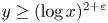 . We extend the range to $y \ge (\log x)^{3/2+\varepsilon }$
 by introducing a correction factor that takes into account the contributions of zeta zeros and prime powers. We use this correction term to uncover a lower order term in the asymptotics of $\Psi (x,\,y)/\Lambda (x,\,y)$
 . The term relates to the error term in the prime number theorem, and implies that large positive (resp. negative) values of $\sum _{n \le y} \Lambda (n)-y$
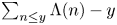 lead to large positive (resp. negative) values of $\Psi (x,\,y)-\Lambda (x,\,y)$
 , and vice versa. Under the Linear Independence hypothesis, we show a Chebyshev's bias in $\Psi (x,\,y)-\Lambda (x,\,y)$
 .
.


Notes on hyperelliptic mapping class groups
- Part of
-
- Journal:
- Glasgow Mathematical Journal / Volume 66 / Issue 1 / January 2024
- Published online by Cambridge University Press:
- 31 October 2023, pp. 126-161
-
- Article
- Export citation
-
Hyperelliptic mapping class groups are defined either as the centralizers of hyperelliptic involutions inside mapping class groups of oriented surfaces of finite type or as the inverse images of these centralizers by the natural epimorphisms between mapping class groups of surfaces with marked points. We study these groups in a systematic way. An application of this theory is a counterexample to the genus $2$ case of a conjecture by Putman and Wieland on virtual linear representations of mapping class groups. In the last section, we study profinite completions of hyperelliptic mapping class groups: we extend the congruence subgroup property to the general class of hyperelliptic mapping class groups introduced above and then determine the centralizers of multitwists and of open subgroups in their profinite completions.

Differential Harnack estimates for a weighted nonlinear parabolic equation under a super Perelman–Ricci flow and implications
- Part of
-
- Journal:
- Proceedings of the Royal Society of Edinburgh. Section A: Mathematics / Volume 155 / Issue 2 / April 2025
- Published online by Cambridge University Press:
- 27 October 2023, pp. 687-717
- Print publication:
- April 2025
-
- Article
-
- You have access
- Open access
- HTML
- Export citation
-
In this paper, we derive new differential Harnack estimates of Li–Yau type for positive smooth solutions to a class of nonlinear parabolic equations in the form
\[ {\mathscr L}_\phi^{\mathsf a} [w]:= \left[ \frac{\partial}{\partial t} - \mathsf{a}(x,t) - \Delta_\phi \right] w (x,t) = \mathscr G(t, x, w(x,t)), \quad t>0, \]on smooth metric measure spaces where the metric and potential are time dependent and evolve under a $({\mathsf k},\, m)$
 -super Perelman–Ricci flow. A number of consequences, most notably, a parabolic Harnack inequality, a class of Hamilton type global curvature-free estimates and a general Liouville type theorem together with some consequences are established. Some special cases are presented to illustrate the strength of the results.

The space of commuting elements in a Lie group and maps between classifying spaces
- Part of
-
- Journal:
- Proceedings of the Royal Society of Edinburgh. Section A: Mathematics / Volume 155 / Issue 3 / June 2025
- Published online by Cambridge University Press:
- 27 October 2023, pp. 735-755
- Print publication:
- June 2025
-
- Article
- Export citation
-
Let $\pi$
 be a discrete group, and let $G$
 be a compact-connected Lie group. Then, there is a map $\Theta \colon \mathrm {Hom}(\pi,G)_0\to \mathrm {map}_*(B\pi,BG)_0$
 between the null components of the spaces of homomorphisms and based maps, which sends a homomorphism to the induced map between classifying spaces. Atiyah and Bott studied this map for $\pi$
 a surface group, and showed that it is surjective in rational cohomology. In this paper, we prove that the map $\Theta$
 is surjective in rational cohomology for $\pi =\mathbb {Z}^m$
 and the classical group $G$
 except for $SO(2n)$
 , and that it is not surjective for $\pi =\mathbb {Z}^m$
 with $m\ge 3$
 and $G=SO(2n)$
 with $n\ge 4$
 . As an application, we consider the surjectivity of the map $\Theta$
 in rational cohomology for $\pi$
 a finitely generated nilpotent group. We also consider the dimension of the cokernel of the map $\Theta$
 in rational homotopy groups for $\pi =\mathbb {Z}^m$
 and the classical groups $G$
 except for $SO(2n)$
 .
.


Arens regularity of ideals of the group algebra of a compact Abelian group
- Part of
-
- Journal:
- Proceedings of the Royal Society of Edinburgh. Section A: Mathematics / Volume 155 / Issue 2 / April 2025
- Published online by Cambridge University Press:
- 27 October 2023, pp. 718-734
- Print publication:
- April 2025
-
- Article
-
- You have access
- Open access
- HTML
- Export citation
-
Let $G$
 be a compact Abelian group and $E$
 a subset of the group $\widehat {G}$
 of continuous characters of $G$
 . We study Arens regularity-related properties of the ideals $L_E^1(G)$
 of $L^1(G)$
 that are made of functions whose Fourier transform is supported on $E\subseteq \widehat {G}$
 . Arens regularity of $L_E^1(G)$
 , the centre of $L_E^1(G)^{\ast \ast }$
 and the size of $L_E^1(G)^\ast /\mathcal {WAP}(L_E^1(G))$
 are studied. We establish general conditions for the regularity of $L_E^1(G)$
 and deduce from them that $L_E^1(G)$
 is not strongly Arens irregular if $E$
 is a small-2 set (i.e. $\mu \ast \mu \in L^1(G)$
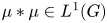 for every $\mu \in M_E^1(G)$
 ), which is not a $\Lambda (1)$
 -set, and it is extremely non-Arens regular if $E$
 is not a small-2 set. We deduce also that $L_E^1(G)$
 is not Arens regular when $\widehat {G}\setminus E$
 is a Lust-Piquard set.


Prescribing nearly constant curvatures on balls
- Part of
-
- Journal:
- Proceedings of the Royal Society of Edinburgh. Section A: Mathematics / Volume 155 / Issue 3 / June 2025
- Published online by Cambridge University Press:
- 27 October 2023, pp. 756-791
- Print publication:
- June 2025
-
- Article
- Export citation
-
In this paper, we address two boundary cases of the classical Kazdan–Warner problem. More precisely, we consider the problem of prescribing the Gaussian and boundary geodesic curvature on a disk of $\mathbb {R}^2$
 , and the scalar and mean curvature on a ball in higher dimensions, via a conformal change of the metric. We deal with the case of negative interior curvature and positive boundary curvature. Using a Ljapunov–Schmidt procedure, we obtain new existence results when the prescribed functions are close to constants.

Autocorrelations of characteristic polynomials for the Alternative Circular Unitary Ensemble
- Part of
-
- Journal:
- Glasgow Mathematical Journal / Volume 66 / Issue 1 / January 2024
- Published online by Cambridge University Press:
- 27 October 2023, pp. 51-64
-
- Article
-
- You have access
- Open access
- HTML
- Export citation
On Liouville theorems of a Hartree–Poisson system
- Part of
-
- Journal:
- Proceedings of the Edinburgh Mathematical Society / Volume 66 / Issue 4 / November 2023
- Published online by Cambridge University Press:
- 26 October 2023, pp. 1154-1178
-
- Article
- Export citation
-
In this paper, we are concerned with the non-existence of positive solutions of a Hartree–Poisson system:
where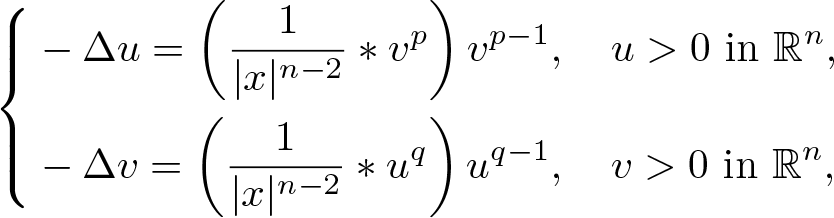 \begin{equation*}\left\{\begin{aligned}&-\Delta u=\left(\frac{1}{|x|^{n-2}}\ast v^p\right)v^{p-1},\quad u \gt 0\ \text{in} \ \mathbb{R}^{n},\\&-\Delta v=\left(\frac{1}{|x|^{n-2}}\ast u^q\right)u^{q-1},\quad v \gt 0\ \text{in} \ \mathbb{R}^{n},\end{aligned}\right.\end{equation*} $n \geq3$ and $\min\{p,q\} \gt 1$. We prove that the system has no positive solution under a Serrin-type condition. In addition, the system has no positive radial classical solution in a Sobolev-type subcritical case. In addition, the system has no positive solution with some integrability in this Sobolev-type subcritical case. Finally, the relation between a Liouville theorem and the estimate of boundary blowing-up rates is given.

Burstein’s permutation conjecture, Hong and Li’s inversion sequence conjecture and restricted Eulerian distributions
- Part of
-
- Journal:
- Proceedings of the Edinburgh Mathematical Society / Volume 66 / Issue 4 / November 2023
- Published online by Cambridge University Press:
- 23 October 2023, pp. 1179-1201
-
- Article
- Export citation
-
Recently, Hong and Li launched a systematic study of length-four pattern avoidance in inversion sequences, and in particular, they conjectured that the number of 0021-avoiding inversion sequences can be enumerated by the OEIS entry A218225. Meanwhile, Burstein suggested that the same sequence might also count three sets of pattern-restricted permutations. The objective of this paper is not only a confirmation of Hong and Li’s conjecture and Burstein’s first conjecture but also two more delicate generating function identities with the $\mathsf{ides}$ statistic concerned in the restricted permutation case and the $\mathsf{asc}$ statistic concerned in the restricted inversion sequence case, which yield a new equidistribution result.


Classification of subpencils for hyperplane sections on certain K3 surfaces
- Part of
-
- Journal:
- Proceedings of the Edinburgh Mathematical Society / Volume 66 / Issue 4 / November 2023
- Published online by Cambridge University Press:
- 23 October 2023, pp. 1022-1043
-
- Article
- Export citation
