Refine search
Actions for selected content:
26063 results in Abstract analysis
Necessary and sufficient conditions for ground state solutions to planar Kirchhoff-type equations
- Part of
-
- Journal:
- Proceedings of the Royal Society of Edinburgh. Section A: Mathematics / Volume 155 / Issue 5 / October 2025
- Published online by Cambridge University Press:
- 11 March 2024, pp. 1938-1959
- Print publication:
- October 2025
-
- Article
- Export citation
-
In this paper, we are concerned with the ground states of the following planar Kirchhoff-type problem:
\[ -\left(1+b\displaystyle\int_{\mathbb{R}^2}|\nabla u|^2\,{\rm d}x\right)\Delta u+\omega u=|u|^{p-2}u, \quad x\in\mathbb{R}^2. \]where $b,\, \omega >0$
 are constants, $p>2$
 . Based on variational methods, regularity theory and Schwarz symmetrization, the equivalence of ground state solutions for the above problem with the minimizers for some minimization problems is obtained. In particular, a new scale technique, together with Lagrange multipliers, is delicately employed to overcome some intrinsic difficulties.


A boundary maximum principle for stationary pairs of varifolds with fixed contact angle
- Part of
-
- Journal:
- Proceedings of the Edinburgh Mathematical Society / Volume 67 / Issue 2 / May 2024
- Published online by Cambridge University Press:
- 08 March 2024, pp. 316-335
-
- Article
- Export citation
Unbounded Sturm attractors for quasilinear parabolic equations
- Part of
-
- Journal:
- Proceedings of the Edinburgh Mathematical Society / Volume 67 / Issue 2 / May 2024
- Published online by Cambridge University Press:
- 08 March 2024, pp. 542-565
-
- Article
- Export citation
Structure of generalized Yamabe solitons and its applications
- Part of
-
- Journal:
- Proceedings of the Edinburgh Mathematical Society / Volume 67 / Issue 2 / May 2024
- Published online by Cambridge University Press:
- 07 March 2024, pp. 336-348
-
- Article
- Export citation
Optimal inverse problems of potentials for two given eigenvalues of Sturm–Liouville problems
- Part of
-
- Journal:
- Proceedings of the Royal Society of Edinburgh. Section A: Mathematics / Volume 155 / Issue 5 / October 2025
- Published online by Cambridge University Press:
- 07 March 2024, pp. 1914-1937
- Print publication:
- October 2025
-
- Article
- Export citation
AN EFFECTIVE UPPER BOUND FOR ANTI-CANONICAL VOLUMES OF SINGULAR FANO THREEFOLDS
- Part of
-
- Journal:
- Journal of the Institute of Mathematics of Jussieu / Volume 23 / Issue 6 / November 2024
- Published online by Cambridge University Press:
- 07 March 2024, pp. 2631-2646
- Print publication:
- November 2024
-
- Article
- Export citation
-
For a real number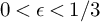 $0<\epsilon <1/3$, we show that the anti-canonical volume of an $\epsilon $-klt Fano $3$-fold is at most $3,200/\epsilon ^4$, and the order $O(1/\epsilon ^4)$ is sharp.


Unit sphere fibrations in Euclidean space
- Part of
-
- Journal:
- Proceedings of the Edinburgh Mathematical Society / Volume 67 / Issue 2 / May 2024
- Published online by Cambridge University Press:
- 07 March 2024, pp. 287-298
-
- Article
- Export citation
-
We show that if an open set in $\mathbb{R}^d$ can be fibered by unit n-spheres, then $d \geq 2n+1$, and if $d = 2n+1$, then the spheres must be pairwise linked, and $n \in \left\{0, 1, 3, 7 \right\}$. For these values of n, we construct unit n-sphere fibrations in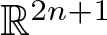 $\mathbb{R}^{2n+1}$.

Proof of some conjectural congruences involving Apéry and Apéry-like numbers
- Part of
-
- Journal:
- Proceedings of the Edinburgh Mathematical Society / Volume 67 / Issue 2 / May 2024
- Published online by Cambridge University Press:
- 07 March 2024, pp. 508-527
-
- Article
- Export citation
-
In this paper, we mainly prove the following conjectures of Sun [16]: Let p > 3 be a prime. Then
 \begin{align*}&A_{2p}\equiv A_2-\frac{1648}3p^3B_{p-3}\ ({\rm{mod}}\ p^4),\\&A_{2p-1}\equiv A_1+\frac{16p^3}3B_{p-3}\ ({\rm{mod}}\ p^4),\\&A_{3p}\equiv A_3-36738p^3B_{p-3}\ ({\rm{mod}}\ p^4),\end{align*}
where $A_n=\sum_{k=0}^n\binom{n}k^2\binom{n+k}{k}^2$ is the nth Apéry number, and Bn is the nth Bernoulli number.

Index estimates of compact hypersurfaces in smooth metric measure spaces
- Part of
-
- Journal:
- Proceedings of the Royal Society of Edinburgh. Section A: Mathematics / Volume 155 / Issue 5 / October 2025
- Published online by Cambridge University Press:
- 07 March 2024, pp. 1895-1913
- Print publication:
- October 2025
-
- Article
- Export citation
Antidirected subgraphs of oriented graphs
- Part of
-
- Journal:
- Combinatorics, Probability and Computing / Volume 33 / Issue 4 / July 2024
- Published online by Cambridge University Press:
- 06 March 2024, pp. 446-466
-
- Article
- Export citation
-
We show that for every $\eta \gt 0$ every sufficiently large $n$-vertex oriented graph $D$ of minimum semidegree exceeding $(1+\eta )\frac k2$ contains every balanced antidirected tree with $k$ edges and bounded maximum degree, if $k\ge \eta n$. In particular, this asymptotically confirms a conjecture of the first author for long antidirected paths and dense digraphs.
Further, we show that in the same setting, $D$ contains every $k$-edge antidirected subdivision of a sufficiently small complete graph, if the paths of the subdivision that have length $1$ or $2$ span a forest. As a special case, we can find all antidirected cycles of length at most $k$.
$k$.Finally, we address a conjecture of Addario-Berry, Havet, Linhares Sales, Reed, and Thomassé for antidirected trees in digraphs. We show that this conjecture is asymptotically true in $n$-vertex oriented graphs for all balanced antidirected trees of bounded maximum degree and of size linear in $n$.
$n$.


Large monochromatic components in expansive hypergraphs
- Part of
-
- Journal:
- Combinatorics, Probability and Computing / Volume 33 / Issue 4 / July 2024
- Published online by Cambridge University Press:
- 05 March 2024, pp. 467-483
-
- Article
-
- You have access
- Open access
- HTML
- Export citation
-
A result of Gyárfás [12] exactly determines the size of a largest monochromatic component in an arbitrary $r$-colouring of the complete $k$-uniform hypergraph $K_n^k$ when $k\geq 2$ and $k\in \{r-1,r\}$. We prove a result which says that if one replaces $K_n^k$ in Gyárfás’ theorem by any ‘expansive’ $k$-uniform hypergraph on $n$ vertices (that is, a $k$-uniform hypergraph $G$ on $n$ vertices in which $e(V_1, \ldots, V_k)\gt 0$ for all disjoint sets $V_1, \ldots, V_k\subseteq V(G)$ with $|V_i|\gt \alpha$ for all $i\in [k]$), then one gets a largest monochromatic component of essentially the same size (within a small error term depending on $r$ and $\alpha$). As corollaries we recover a number of known results about large monochromatic components in random hypergraphs and random Steiner triple systems, often with drastically improved bounds on the error terms.
Gyárfás’ result is equivalent to the dual problem of determining the smallest possible maximum degree of an arbitrary $r$-partite $r$-uniform hypergraph $H$ with $n$ edges in which every set of $k$ edges has a common intersection. In this language, our result says that if one replaces the condition that every set of $k$ edges has a common intersection with the condition that for every collection of $k$ disjoint sets $E_1, \ldots, E_k\subseteq E(H)$ with $|E_i|\gt \alpha$, there exists $(e_1, \ldots, e_k)\in E_1\times \cdots \times E_k$ such that $e_1\cap \cdots \cap e_k\neq \emptyset$, then the smallest possible maximum degree of $H$ is essentially the same (within a small error term depending on $r$ and $\alpha$). We prove our results in this dual setting.


PRM volume 154 issue 2 Cover and Back matter
-
- Journal:
- Proceedings of the Royal Society of Edinburgh. Section A: Mathematics / Volume 154 / Issue 2 / April 2024
- Published online by Cambridge University Press:
- 05 March 2024, pp. b1-b2
- Print publication:
- April 2024
-
- Article
-
- You have access
- Export citation
A class of graphs of zero Turán density in a hypercube
- Part of
-
- Journal:
- Combinatorics, Probability and Computing / Volume 33 / Issue 3 / May 2024
- Published online by Cambridge University Press:
- 05 March 2024, pp. 404-410
-
- Article
-
- You have access
- Open access
- HTML
- Export citation
-
For a graph $H$ and a hypercube $Q_n$, $\textrm{ex}(Q_n, H)$ is the largest number of edges in an $H$-free subgraph of $Q_n$. If $\lim _{n \rightarrow \infty } \textrm{ex}(Q_n, H)/|E(Q_n)| \gt 0$, $H$ is said to have a positive Turán density in a hypercube or simply a positive Turán density; otherwise, it has zero Turán density. Determining $\textrm{ex}(Q_n, H)$ and even identifying whether $H$ has a positive or zero Turán density remains a widely open question for general $H$. By relating extremal numbers in a hypercube and certain corresponding hypergraphs, Conlon found a large class of graphs, ones having so-called partite representation, that have zero Turán density. He asked whether this gives a characterisation, that is, whether a graph has zero Turán density if and only if it has partite representation. Here, we show that, as suspected by Conlon, this is not the case. We give an example of a class of graphs which have no partite representation, but on the other hand, have zero Turán density. In addition, we show that any graph whose every block has partite representation has zero Turán density in a hypercube.


PRM volume 154 issue 2 Cover and Front matter
-
- Journal:
- Proceedings of the Royal Society of Edinburgh. Section A: Mathematics / Volume 154 / Issue 2 / April 2024
- Published online by Cambridge University Press:
- 05 March 2024, pp. f1-f2
- Print publication:
- April 2024
-
- Article
-
- You have access
- Export citation
Sharp bounds for a discrete John’s theorem
- Part of
-
- Journal:
- Combinatorics, Probability and Computing / Volume 33 / Issue 4 / July 2024
- Published online by Cambridge University Press:
- 05 March 2024, pp. 484-486
-
- Article
- Export citation
-
Tao and Vu showed that every centrally symmetric convex progression $C\subset \mathbb{Z}^d$ is contained in a generalized arithmetic progression of size $d^{O(d^2)} \# C$. Berg and Henk improved the size bound to $d^{O(d\log d)} \# C$. We obtain the bound $d^{O(d)} \# C$, which is sharp up to the implied constant and is of the same form as the bound in the continuous setting given by John’s theorem.


Invariant measures and large deviation principles for stochastic Schrödinger delay lattice systems
- Part of
-
- Journal:
- Proceedings of the Royal Society of Edinburgh. Section A: Mathematics / Volume 155 / Issue 5 / October 2025
- Published online by Cambridge University Press:
- 04 March 2024, pp. 1813-1854
- Print publication:
- October 2025
-
- Article
- Export citation
-
This paper is concerned with stochastic Schrödinger delay lattice systems with both locally Lipschitz drift and diffusion terms. Based on the uniform estimates and the equicontinuity of the segment of the solution in probability, we show the tightness of a family of probability distributions of the solution and its segment process, and hence the existence of invariant measures on $l^2\times L^2((-\rho,\,0);l^2)$
 with $\rho >0$
 . We also establish a large deviation principle for the solutions with small noise by the weak convergence method.

Bifurcations and pattern formation in a host–parasitoid model with nonlocal effect
- Part of
-
- Journal:
- Proceedings of the Royal Society of Edinburgh. Section A: Mathematics / Volume 155 / Issue 5 / October 2025
- Published online by Cambridge University Press:
- 04 March 2024, pp. 1855-1894
- Print publication:
- October 2025
-
- Article
- Export citation
ENERGY BOUNDS FOR MODULAR ROOTS AND THEIR APPLICATIONS
- Part of
-
- Journal:
- Journal of the Institute of Mathematics of Jussieu / Volume 24 / Issue 5 / September 2025
- Published online by Cambridge University Press:
- 04 March 2024, pp. 1765-1806
- Print publication:
- September 2025
-
- Article
-
- You have access
- Open access
- HTML
- Export citation
JMJ volume 23 issue 2 Cover and Back matter
-
- Journal:
- Journal of the Institute of Mathematics of Jussieu / Volume 23 / Issue 2 / March 2024
- Published online by Cambridge University Press:
- 19 March 2024, pp. b1-b2
- Print publication:
- March 2024
-
- Article
-
- You have access
- Export citation
JMJ volume 23 issue 2 Cover and Front matter
-
- Journal:
- Journal of the Institute of Mathematics of Jussieu / Volume 23 / Issue 2 / March 2024
- Published online by Cambridge University Press:
- 19 March 2024, pp. f1-f2
- Print publication:
- March 2024
-
- Article
-
- You have access
- Export citation
