Refine search
Actions for selected content:
26063 results in Abstract analysis
Skew group categories, algebras associated to Cartan matrices and folding of root lattices
- Part of
-
- Journal:
- Proceedings of the Royal Society of Edinburgh. Section A: Mathematics / Volume 155 / Issue 6 / December 2025
- Published online by Cambridge University Press:
- 01 April 2024, pp. 2240-2284
- Print publication:
- December 2025
-
- Article
- Export citation
-
For an action of a finite group on a finite EI quiver, we construct its ‘orbifold’ quotient EI quiver. The free EI category associated to the quotient EI quiver is equivalent to the skew group category with respect to the given group action. Specializing the result to a finite group action on a finite acyclic quiver, we prove that, under reasonable conditions, the skew group category of the path category is equivalent to a finite EI category of Cartan type. If the ground field is of characteristic $p$
 and the acting group is a cyclic $p$
 -group, we prove that the skew group algebra of the path algebra is Morita equivalent to the algebra associated to a Cartan matrix, defined in [C. Geiss, B. Leclerc, and J. Schröer, Quivers with relations for symmetrizable Cartan matrices I: Foundations, Invent. Math. 209 (2017), 61–158]. We apply the Morita equivalence to construct a categorification of the folding projection between the root lattices with respect to a graph automorphism. In the Dynkin cases, the restriction of the categorification to indecomposable modules corresponds to the folding of positive roots.


On the reconstruction of unknown driving forces from low-mode observations in the 2D Navier–Stokes equations
- Part of
-
- Journal:
- Proceedings of the Royal Society of Edinburgh. Section A: Mathematics / Volume 155 / Issue 6 / December 2025
- Published online by Cambridge University Press:
- 01 April 2024, pp. 2171-2194
- Print publication:
- December 2025
-
- Article
- Export citation
Torsion in classifying spaces of gauge groups
- Part of
-
- Journal:
- Proceedings of the Royal Society of Edinburgh. Section A: Mathematics / Volume 155 / Issue 6 / December 2025
- Published online by Cambridge University Press:
- 01 April 2024, pp. 2224-2239
- Print publication:
- December 2025
-
- Article
-
- You have access
- Open access
- HTML
- Export citation
-
We determine when the integral homology of the classifying space of a $PU(n)$
 -gauge group over the sphere $S^2$
 has torsion.


Tropical graph curves
-
- Journal:
- Proceedings of the Royal Society of Edinburgh. Section A: Mathematics / Volume 155 / Issue 6 / December 2025
- Published online by Cambridge University Press:
- 01 April 2024, pp. 2195-2223
- Print publication:
- December 2025
-
- Article
-
- You have access
- Open access
- HTML
- Export citation
-
We study tropical line arrangements associated to a three-regular graph $G$
 that we refer to as tropical graph curves. Roughly speaking, the tropical graph curve associated to $G$
 , whose genus is $g$
 , is an arrangement of $2g-2$
 lines in tropical projective space that contains $G$
 (more precisely, the topological space associated to $G$
 ) as a deformation retract. We show the existence of tropical graph curves when the underlying graph is a three-regular, three-vertex-connected planar graph. Our method involves explicitly constructing an arrangement of lines in projective space, i.e. a graph curve whose tropicalization yields the corresponding tropical graph curve and in this case, solves a topological version of the tropical lifting problem associated to canonically embedded graph curves. We also show that the set of tropical graph curves that we construct are connected via certain local operations. These local operations are inspired by Steinitz’ theorem in polytope theory.


Generalized second order vectorial ∞-eigenvalue problems
- Part of
-
- Journal:
- Proceedings of the Royal Society of Edinburgh. Section A: Mathematics / Volume 155 / Issue 6 / December 2025
- Published online by Cambridge University Press:
- 27 March 2024, pp. 2150-2170
- Print publication:
- December 2025
-
- Article
-
- You have access
- Open access
- HTML
- Export citation
-
We consider the problem of minimizing the $L^\infty$
 norm of a function of the hessian over a class of maps, subject to a mass constraint involving the $L^\infty$
 norm of a function of the gradient and the map itself. We assume zeroth and first order Dirichlet boundary data, corresponding to the “hinged” and the “clamped” cases. By employing the method of $L^p$
 approximations, we establish the existence of a special $L^\infty$
 minimizer, which solves a divergence PDE system with measure coefficients as parameters. This is a counterpart of the Aronsson-Euler system corresponding to this constrained variational problem. Furthermore, we establish upper and lower bounds for the eigenvalue.


Measuring multidimensional heterogeneity in emergent social phenomena
- Part of
-
- Journal:
- European Journal of Applied Mathematics / Volume 36 / Issue 2 / April 2025
- Published online by Cambridge University Press:
- 25 March 2024, pp. 316-327
-
- Article
-
- You have access
- Open access
- HTML
- Export citation
Minimal monoids generating varieties with complex subvariety lattices
- Part of
-
- Journal:
- Proceedings of the Edinburgh Mathematical Society / Volume 67 / Issue 2 / May 2024
- Published online by Cambridge University Press:
- 22 March 2024, pp. 617-642
-
- Article
- Export citation
Triangular matrix categories over quasi-hereditary categories
- Part of
-
- Journal:
- Glasgow Mathematical Journal / Volume 66 / Issue 3 / September 2024
- Published online by Cambridge University Press:
- 21 March 2024, pp. 449-470
-
- Article
- Export citation
-
In this paper, we prove that the lower triangular matrix category $\Lambda =\left [ \begin{smallmatrix} \mathcal{T}&0\\ M&\mathcal{U} \end{smallmatrix} \right ]$, where $\mathcal{T}$ and $\mathcal{U}$ are $\textrm{Hom}$-finite, Krull–Schmidt $K$-quasi-hereditary categories and $M$ is an $\mathcal{U}\otimes _K \mathcal{T}^{op}$-module that satisfies suitable conditions, is quasi-hereditary. This result generalizes the work of B. Zhu in his study on triangular matrix algebras over quasi-hereditary algebras. Moreover, we obtain a characterization of the category of the $_\Lambda \Delta$-filtered $\Lambda$-modules.


Limit cycles in a rotated family of generalized Liénard systems allowing for finitely many switching lines
- Part of
-
- Journal:
- Proceedings of the Royal Society of Edinburgh. Section A: Mathematics / Volume 155 / Issue 6 / December 2025
- Published online by Cambridge University Press:
- 21 March 2024, pp. 2121-2149
- Print publication:
- December 2025
-
- Article
- Export citation
-
Analytic rotated vector fields have four significant properties: as the rotated parameter $\alpha$
 changes, the amplitude of each stable (or unstable) limit cycle varies monotonically, each semi-stable limit cycle bifurcates at most two limit cycles, the isolated homoclinic loop (if exists) disappears while a unique limit cycle with the same stability arises or no closed orbits arise oppositely, and a unique limit cycle arises near the weak focus (if exists). In this paper, we prove that the four properties remain true for a rotated family of generalized Liénard systems having finitely many switching lines. Furthermore, we discuss variational exponent and use it to formulate multiplicity of limit cycles. Then we apply our results to give exact number of limit cycles to a continuous piecewise linear system with three zones and answer to a question on the maximum number of limit cycles in an SD oscillator.

On the structure of some one-generator braces
- Part of
-
- Journal:
- Proceedings of the Edinburgh Mathematical Society / Volume 67 / Issue 2 / May 2024
- Published online by Cambridge University Press:
- 20 March 2024, pp. 566-576
-
- Article
- Export citation
-
We describe the one-generator braces A satisfying the condition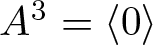 $A^3 = \langle 0 \rangle$.
Global index of real polynomials
- Part of
-
- Journal:
- Proceedings of the Royal Society of Edinburgh. Section A: Mathematics / Volume 155 / Issue 6 / December 2025
- Published online by Cambridge University Press:
- 18 March 2024, pp. 2020-2048
- Print publication:
- December 2025
-
- Article
- Export citation
-
We develop two methods for expressing the global index of the gradient of a 2 variable polynomial function $f$
 : in terms of the atypical fibres of $f$
 , and in terms of the clusters of Milnor arcs at infinity. These allow us to derive upper bounds for the global index, in particular refining the one that was found by Durfee in terms of the degree of $f$
 .
.


A mathematical analysis of the Kakinuma model for interfacial gravity waves. Part II: justification as a shallow water approximation
- Part of
-
- Journal:
- Proceedings of the Royal Society of Edinburgh. Section A: Mathematics / Volume 155 / Issue 6 / December 2025
- Published online by Cambridge University Press:
- 18 March 2024, pp. 2049-2120
- Print publication:
- December 2025
-
- Article
-
- You have access
- Open access
- HTML
- Export citation
-
We consider the Kakinuma model for the motion of interfacial gravity waves. The Kakinuma model is a system of Euler–Lagrange equations for an approximate Lagrangian, which is obtained by approximating the velocity potentials in the Lagrangian of the full model. Structures of the Kakinuma model and the well-posedness of its initial value problem were analysed in the companion paper [14]. In this present paper, we show that the Kakinuma model is a higher order shallow water approximation to the full model for interfacial gravity waves with an error of order $O(\delta _1^{4N+2}+\delta _2^{4N+2})$
 in the sense of consistency, where $\delta _1$
 and $\delta _2$
 are shallowness parameters, which are the ratios of the mean depths of the upper and the lower layers to the typical horizontal wavelength, respectively, and $N$
 is, roughly speaking, the size of the Kakinuma model and can be taken an arbitrarily large number. Moreover, under a hypothesis of the existence of the solution to the full model with a uniform bound, a rigorous justification of the Kakinuma model is proved by giving an error estimate between the solution to the Kakinuma model and that of the full model. An error estimate between the Hamiltonian of the Kakinuma model and that of the full model is also provided.


Models and integral differentials of hyperelliptic curves
- Part of
-
- Journal:
- Glasgow Mathematical Journal / Volume 66 / Issue 2 / May 2024
- Published online by Cambridge University Press:
- 18 March 2024, pp. 382-439
-
- Article
-
- You have access
- Open access
- HTML
- Export citation
-
Let $C\; : \;y^2=f(x)$ be a hyperelliptic curve of genus $g\geq 1$, defined over a complete discretely valued field $K$, with ring of integers $O_K$. Under certain conditions on $C$, mild when residue characteristic is not $2$, we explicitly construct the minimal regular model with normal crossings $\mathcal{C}/O_K$ of $C$. In the same setting we determine a basis of integral differentials of $C$, that is an $O_K$-basis for the global sections of the relative dualising sheaf $\omega _{\mathcal{C}/O_K}$.


L2 to Lp bounds for spectral projectors on the Euclidean two-dimensional torus
- Part of
-
- Journal:
- Proceedings of the Edinburgh Mathematical Society / Volume 67 / Issue 2 / May 2024
- Published online by Cambridge University Press:
- 15 March 2024, pp. 431-459
-
- Article
- Export citation
-
We consider spectral projectors associated to the Euclidean Laplacian on the two-dimensional torus, in the case where the spectral window is narrow. Bounds for their L2 to Lp operator norm are derived, extending the classical result of Sogge; a new question on the convolution kernel of the projector is introduced. The methods employed include $\ell^2$ decoupling, small cap decoupling and estimates of exponential sums.

THERMODYNAMIC FORMALISM FOR AMENABLE GROUPS AND COUNTABLE STATE SPACES
- Part of
-
- Journal:
- Journal of the Institute of Mathematics of Jussieu / Volume 23 / Issue 6 / November 2024
- Published online by Cambridge University Press:
- 15 March 2024, pp. 2647-2711
- Print publication:
- November 2024
-
- Article
-
- You have access
- Open access
- HTML
- Export citation
Eternal solutions to a porous medium equation with strong non-homogeneous absorption. Part I: radially non-increasing profiles
- Part of
-
- Journal:
- Proceedings of the Royal Society of Edinburgh. Section A: Mathematics / Volume 155 / Issue 6 / December 2025
- Published online by Cambridge University Press:
- 14 March 2024, pp. 1998-2019
- Print publication:
- December 2025
-
- Article
- Export citation
-
Existence of specific eternal solutions in exponential self-similar form to the following quasilinear diffusion equation with strong absorption
\[ \partial_t u=\Delta u^m-|x|^{\sigma}u^q, \]posed for $(t,\,x)\in (0,\,\infty )\times \mathbb {R}^N$
 , with $m>1$
 , $q\in (0,\,1)$
 and $\sigma =\sigma _c:=2(1-q)/ (m-1)$
 is proved. Looking for radially symmetric solutions of the form\[ u(t,x)={\rm e}^{-\alpha t}f(|x|\,{\rm e}^{\beta t}), \quad \alpha=\frac{2}{m-1}\beta, \]we show that there exists a unique exponent $\beta ^*\in (0,\,\infty )$
 for which there exists a one-parameter family $(u_A)_{A>0}$
 of solutions with compactly supported and non-increasing profiles $(f_A)_{A>0}$
 satisfying $f_A(0)=A$
 and $f_A'(0)=0$
 . An important feature of these solutions is that they are bounded and do not vanish in finite time, a phenomenon which is known to take place for all non-negative bounded solutions when $\sigma \in (0,\,\sigma _c)$
 .
.


Canonical decompositions and algorithmic recognition of spatial graphs
- Part of
-
- Journal:
- Proceedings of the Edinburgh Mathematical Society / Volume 67 / Issue 2 / May 2024
- Published online by Cambridge University Press:
- 14 March 2024, pp. 388-430
-
- Article
- Export citation
On the moduli of hypersurfaces in toric orbifolds
- Part of
-
- Journal:
- Proceedings of the Edinburgh Mathematical Society / Volume 67 / Issue 2 / May 2024
- Published online by Cambridge University Press:
- 14 March 2024, pp. 577-616
-
- Article
- Export citation
-
We construct and study the moduli of stable hypersurfaces in toric orbifolds. Let X be a projective toric orbifold and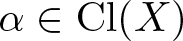 $\alpha \in \operatorname{Cl}(X)$ an ample class. The moduli space is constructed as a quotient of the linear system $|\alpha|$ by $G = \operatorname{Aut}(X)$. Since the group G is non-reductive in general, we use new techniques of non-reductive geometric invariant theory. Using the A-discriminant of Gelfand, Kapranov and Zelevinsky, we prove semistability for quasismooth hypersurfaces of toric orbifolds. Further, we prove the existence of a quasi-projective moduli space of quasismooth hypersurfaces in a weighted projective space when the weighted projective space satisfies a certain condition. We also discuss how to proceed when this condition is not satisfied. We prove that the automorphism group of a quasismooth hypersurface of weighted projective space is finite excluding some low degrees.


Decay at infinity for solutions to some fractional parabolic equations
- Part of
-
- Journal:
- Proceedings of the Royal Society of Edinburgh. Section A: Mathematics / Volume 155 / Issue 6 / December 2025
- Published online by Cambridge University Press:
- 14 March 2024, pp. 1961-1997
- Print publication:
- December 2025
-
- Article
- Export citation
-
For $s\in [\tfrac {1}{2},\, 1)$
 , let $u$
 solve $(\partial _t - \Delta )^s u = Vu$
 in $\mathbb {R}^{n} \times [-T,\, 0]$
 for some $T>0$
 where $||V||_{ C^2(\mathbb {R}^n \times [-T, 0])} < \infty$
 . We show that if for some $0<\mathfrak {K} < T$
 and $\epsilon >0$
 \[ {\unicode{x2A0D}}-_{[-\mathfrak{K},\, 0]} u^2(x, t) {\rm d}t \leq Ce^{-|x|^{2+\epsilon}}\ \forall x \in \mathbb{R}^n, \]then $u \equiv 0$
 in $\mathbb {R}^{n} \times [-T,\, 0]$
 .
.


Examples of hyperbolic spaces without the properties of quasi-ball or bounded eccentricity
- Part of
-
- Journal:
- Glasgow Mathematical Journal / Volume 66 / Issue 2 / May 2024
- Published online by Cambridge University Press:
- 11 March 2024, pp. 440-448
-
- Article
- Export citation
-
In this note, we present examples of non-quasi-geodesic metric spaces which are hyperbolic (i.e., satisfying Gromov’s $4$-point condition) while the intersection of any two metric balls therein does not either ‘look like’ a ball or has uniformly bounded eccentricity. This answers an open question posed by Chatterji and Niblo.

