Refine search
Actions for selected content:
26063 results in Abstract analysis
The Brun–Hooley sieve for 𝔽2[X] and squarefree shifts of integer polynomials
- Part of
-
- Journal:
- Proceedings of the Edinburgh Mathematical Society / Volume 67 / Issue 4 / November 2024
- Published online by Cambridge University Press:
- 06 November 2024, pp. 1171-1195
-
- Article
- Export citation
-
Let f(x) and g(x) be polynomials in $\mathbb F_{2}[x]$ with ${\rm deg}\text{ } f=n$. It is shown that for $n\gg 1$, there is an $g_{1}(x)\in \mathbb F_{2}[x]$ with ${\rm deg}\text{ } g_{1}\leqslant \max\{{\rm deg}\text{ } g, 6.7\log n\}$ and $g(x)-g_{1}(x)$ having $ \lt 6.7\log n$ terms such that $\gcd(f(x), g_{1}(x))=1$. As an application, it is established using a result of Dubickas and Sha that given $f(x)\in \mathbb F_{2}[x]$ of degree $n\geqslant 1$, there is a separable $g(x)\in 2[x]$ with ${\rm deg}\text{ } g= {\rm deg}\text{ } f$ and satisfying that $f(x)-g(x)$ has $\leqslant 6.7\log n$ terms. As a simple consequence, the latter result holds in $\mathbb Z[x]$ after replacing ‘number of terms’ by the L1-norm of a polynomial and $6.7\log n$ by $6.8\log n$. This improves the bound $(\log n)^{\log 4 +\operatorname{\varepsilon}}$ obtained by Filaseta and Moy.


Kernels of minimal characters of solvable groups
- Part of
-
- Journal:
- Proceedings of the Edinburgh Mathematical Society / Volume 67 / Issue 4 / November 2024
- Published online by Cambridge University Press:
- 06 November 2024, pp. 1167-1170
-
- Article
-
- You have access
- Open access
- HTML
- Export citation
-
Let G be a finite solvable group. We prove that if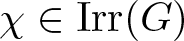 $\chi\in{{\operatorname{Irr}}}(G)$ has odd degree and $\chi(1)$ is the minimal degree of the nonlinear irreducible characters of G, then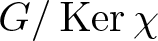 $G/\operatorname{Ker}\chi$ is nilpotent-by-abelian.

GMJ volume 66 issue 2 Cover and Back matter
-
- Journal:
- Glasgow Mathematical Journal / Volume 66 / Issue 2 / May 2024
- Published online by Cambridge University Press:
- 05 November 2024, pp. b1-b2
-
- Article
-
- You have access
- Export citation
GMJ volume 66 issue 2 Cover and Front matter
-
- Journal:
- Glasgow Mathematical Journal / Volume 66 / Issue 2 / May 2024
- Published online by Cambridge University Press:
- 05 November 2024, pp. f1-f2
-
- Article
-
- You have access
- Export citation
Dynamical behaviour of a logarithmically sensitive chemotaxis model under time-dependent boundary conditions
- Part of
-
- Journal:
- European Journal of Applied Mathematics / Volume 36 / Issue 3 / June 2025
- Published online by Cambridge University Press:
- 04 November 2024, pp. 638-664
-
- Article
-
- You have access
- Open access
- HTML
- Export citation
-
This article studies the dynamical behaviour of classical solutions of a hyperbolic system of balance laws, derived from a chemotaxis model with logarithmic sensitivity, with time-dependent boundary conditions. It is shown that under suitable assumptions on the boundary data, solutions starting in the $H^2$-space exist globally in time and the differences between the solutions and their corresponding boundary data converge to zero as time goes to infinity. There is no smallness restriction on the magnitude of the initial perturbations. Moreover, numerical simulations show that the assumptions on the boundary data are necessary for the above-mentioned results to hold true. In addition, numerical results indicate that the solutions converge asymptotically to time-periodic states if the boundary data are time-periodic.

JMJ volume 23 issue 6 Cover and Back matter
-
- Journal:
- Journal of the Institute of Mathematics of Jussieu / Volume 23 / Issue 6 / November 2024
- Published online by Cambridge University Press:
- 15 November 2024, pp. b1-b2
- Print publication:
- November 2024
-
- Article
-
- You have access
- Export citation
JMJ volume 23 issue 6 Cover and Front matter
-
- Journal:
- Journal of the Institute of Mathematics of Jussieu / Volume 23 / Issue 6 / November 2024
- Published online by Cambridge University Press:
- 15 November 2024, pp. f1-f2
- Print publication:
- November 2024
-
- Article
-
- You have access
- Export citation

Functional Analysis Revisited
- An Essay on Completeness
-
- Published online:
- 31 October 2024
- Print publication:
- 04 July 2024
A sub-functor for Ext and Cohen–Macaulay associated graded modules with bounded multiplicity-II
- Part of
-
- Journal:
- Glasgow Mathematical Journal / Volume 67 / Issue 1 / January 2025
- Published online by Cambridge University Press:
- 30 October 2024, pp. 86-106
-
- Article
- Export citation
-
Let $(A,\mathfrak{m})$ be a Cohen–Macaulay local ring, and then the notion of a $T$-split sequence was introduced in the part-1 of this paper for the $\mathfrak{m}$-adic filtration with the help of the numerical function $e^T_A$. In this article, we explore the relation between Auslander–Reiten (AR)-sequences and $T$-split sequences. For a Gorenstein ring $(A,\mathfrak{m})$, we define a Hom-finite Krull–Remak–Schmidt category $\mathcal{D}_A$ as a quotient of the stable category $\underline{\mathrm{CM}}(A)$. This category preserves isomorphism, that is, $M\cong N$ in $\mathcal{D}_A$ if and only if $M\cong N$ in $\underline{\mathrm{CM}}(A)$.This article has two objectives: first objective is to extend the notion of $T$-split sequences, and second objective is to explore the function $e^T_A$ and $T$-split sequences. When $(A,\mathfrak{m})$ is an analytically unramified Cohen–Macaulay local ring and $I$ is an $\mathfrak{m}$-primary ideal, then we extend the techniques in part-1 of this paper to the integral closure filtration with respect to $I$ and prove a version of Brauer–Thrall-II for a class of such rings.


A diffusive plant-sulphide model: spatio-temporal dynamics contrast between discrete and distributed delay
- Part of
-
- Journal:
- European Journal of Applied Mathematics / Volume 36 / Issue 4 / August 2025
- Published online by Cambridge University Press:
- 28 October 2024, pp. 811-828
-
- Article
-
- You have access
- Open access
- HTML
- Export citation
The evolution problem for the 1D nonlocal Fisher-KPP equation with a top hat kernel. Part 1. The Cauchy problem on the real line
- Part of
-
- Journal:
- European Journal of Applied Mathematics / Volume 36 / Issue 4 / August 2025
- Published online by Cambridge University Press:
- 25 October 2024, pp. 775-810
-
- Article
-
- You have access
- Open access
- HTML
- Export citation
-
We study the Cauchy problem on the real line for the nonlocal Fisher-KPP equation in one spatial dimension,
where \begin{equation*} u_t = D u_{xx} + u(1-\phi *u), \end{equation*} $\phi *u$ is a spatial convolution with the top hat kernel, $\phi (y) \equiv H\left (\frac{1}{4}-y^2\right )$. After observing that the problem is globally well-posed, we demonstrate that positive, spatially periodic solutions bifurcate from the spatially uniform steady state solution $u=1$ as the diffusivity, $D$, decreases through $\Delta _1 \approx 0.00297$ (the exact value is determined in Section 3). We explicitly construct these spatially periodic solutions as uniformly valid asymptotic approximations for $D \ll 1$, over one wavelength, via the method of matched asymptotic expansions. These consist, at leading order, of regularly spaced, compactly supported regions with width of $O(1)$ where $u=O(1)$, separated by regions where $u$ is exponentially small at leading order as $D \to 0^+$. From numerical solutions, we find that for $D \geq \Delta _1$, permanent form travelling waves, with minimum wavespeed, $2 \sqrt{D}$, are generated, whilst for $0 \lt D \lt \Delta _1$, the wavefronts generated separate the regions where $u=0$ from a region where a steady periodic solution is created via a distinct periodic shedding mechanism acting immediately to the rear of the advancing front, with this mechanism becoming more pronounced with decreasing $D$. The structure of these transitional travelling wave forms is examined in some detail.


Wake flow past a submerged plate near a free surface
- Part of
-
- Journal:
- European Journal of Applied Mathematics / Volume 36 / Issue 3 / June 2025
- Published online by Cambridge University Press:
- 25 October 2024, pp. 524-537
-
- Article
-
- You have access
- Open access
- HTML
- Export citation
Derived functors and Hilbert polynomials over regular local rings
- Part of
-
- Journal:
- Proceedings of the Edinburgh Mathematical Society / Volume 67 / Issue 4 / November 2024
- Published online by Cambridge University Press:
- 23 October 2024, pp. 1137-1147
-
- Article
- Export citation
-
Let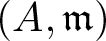 $(A,\mathfrak{m})$ be a regular local ring of dimension $d \geq 1$, I an $\mathfrak{m}$-primary ideal. Let N be a nonzero finitely generated A-module. Consider the functions
 \begin{equation*}t^I(N, n) = \sum_{i = 0}^{d}\ell(\text{Tor}^A_i(N, A/I^n)) \ \text{and}\ e^I(N, n) = \sum_{i = 0}^{d}\ell(\text{Ext}_A^i(N, A/I^n))\end{equation*}
of polynomial type and let their degrees be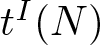 $t^I(N) $ and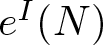 $e^I(N)$. We prove that $t^I(N) = e^I(N) = \max\{\dim N, d -1 \}$. A crucial ingredient in the proof is that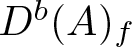 $D^b(A)_f$, the bounded derived category of A with finite length cohomology, has no proper thick subcategories.


Cyclic orders and graphs of groups
- Part of
-
- Journal:
- Proceedings of the Edinburgh Mathematical Society / Volume 67 / Issue 4 / November 2024
- Published online by Cambridge University Press:
- 21 October 2024, pp. 1125-1136
-
- Article
- Export citation
Cokernel statistics for walk matrices of directed and weighted random graphs
- Part of
-
- Journal:
- Combinatorics, Probability and Computing / Volume 34 / Issue 1 / January 2025
- Published online by Cambridge University Press:
- 18 October 2024, pp. 131-150
-
- Article
-
- You have access
- Open access
- HTML
- Export citation
-
The walk matrix associated to an $n\times n$ integer matrix $\mathbf{X}$ and an integer vector $b$ is defined by ${\mathbf{W}} \,:\!=\, (b,{\mathbf{X}} b,\ldots, {\mathbf{X}}^{n-1}b)$. We study limiting laws for the cokernel of $\mathbf{W}$ in the scenario where $\mathbf{X}$ is a random matrix with independent entries and $b$ is deterministic. Our first main result provides a formula for the distribution of the $p^m$-torsion part of the cokernel, as a group, when $\mathbf{X}$ has independent entries from a specific distribution. The second main result relaxes the distributional assumption and concerns the ${\mathbb{Z}}[x]$-module structure.
The motivation for this work arises from an open problem in spectral graph theory, which asks to show that random graphs are often determined up to isomorphism by their (generalised) spectrum. Sufficient conditions for generalised spectral determinacy can, namely, be stated in terms of the cokernel of a walk matrix. Extensions of our results could potentially be used to determine how often those conditions are satisfied. Some remaining challenges for such extensions are outlined in the paper.


On a weighted anisotropic eigenvalue problem
- Part of
-
- Journal:
- Glasgow Mathematical Journal / Volume 67 / Issue 1 / January 2025
- Published online by Cambridge University Press:
- 17 October 2024, pp. 72-85
-
- Article
- Export citation
-
In this paper, we deal with a weighted eigenvalue problem for the anisotropic $(p,q)$-Laplacian with Dirichlet boundary conditions. We study the main properties of the first eigenvalue and a reverse Hölder type inequality for the corresponding eigenfunctions.

Embedding theorems for random graphs with specified degrees
- Part of
-
- Journal:
- Combinatorics, Probability and Computing / Volume 34 / Issue 1 / January 2025
- Published online by Cambridge University Press:
- 16 October 2024, pp. 115-130
-
- Article
- Export citation
-
Given an $n\times n$ symmetric matrix $W\in [0,1]^{[n]\times [n]}$, let ${\mathcal G}(n,W)$ be the random graph obtained by independently including each edge $jk\in \binom{[n]}{2}$ with probability $W_{jk}=W_{kj}$. Given a degree sequence $\textbf{d}=(d_1,\ldots, d_n)$, let ${\mathcal G}(n,\textbf{d})$ denote a uniformly random graph with degree sequence $\textbf{d}$. We couple ${\mathcal G}(n,W)$ and ${\mathcal G}(n,\textbf{d})$ together so that asymptotically almost surely ${\mathcal G}(n,W)$ is a subgraph of ${\mathcal G}(n,\textbf{d})$, where $W$ is some function of $\textbf{d}$. Let $\Delta (\textbf{d})$ denote the maximum degree in $\textbf{d}$. Our coupling result is optimal when $\Delta (\textbf{d})^2\ll \|\textbf{d}\|_1$, that is, $W_{ij}$ is asymptotic to ${\mathbb P}(ij\in{\mathcal G}(n,\textbf{d}))$ for every $i,j\in [n]$. We also have coupling results for $\textbf{d}$ that are not constrained by the condition $\Delta (\textbf{d})^2\ll \|\textbf{d}\|_1$. For such $\textbf{d}$ our coupling result is still close to optimal, in the sense that $W_{ij}$ is asymptotic to ${\mathbb P}(ij\in{\mathcal G}(n,\textbf{d}))$ for most pairs $ij\in \binom{[n]}{2}$.


PEM series 2 volume 67 issue 3 Cover and Back matter
-
- Journal:
- Proceedings of the Edinburgh Mathematical Society / Volume 67 / Issue 3 / August 2024
- Published online by Cambridge University Press:
- 15 October 2024, pp. b1-b2
-
- Article
-
- You have access
- Export citation
PEM series 2 volume 67 issue 3 Cover and Front matter
-
- Journal:
- Proceedings of the Edinburgh Mathematical Society / Volume 67 / Issue 3 / August 2024
- Published online by Cambridge University Press:
- 15 October 2024, pp. f1-f2
-
- Article
-
- You have access
- Export citation
Sampling repulsive Gibbs point processes using random graphs
- Part of
-
- Journal:
- Combinatorics, Probability and Computing / Volume 34 / Issue 1 / January 2025
- Published online by Cambridge University Press:
- 11 October 2024, pp. 63-89
-
- Article
-
- You have access
- Open access
- HTML
- Export citation
